


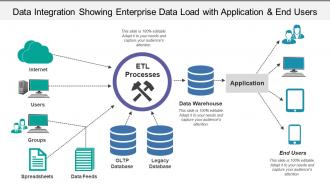
Data integration showing enterprise data load with application and end users






Try Before you Buy Download Free Sample Product
 Impress Your
 Audience
 100%
100% Editable
 Save Hours
 of Time


Slideteam’s data analytics ppt templates can give you the deep insights you need about how your enterprise data is being loaded and accessed by users. With our templates, you can see where bottlenecks are occurring and make the necessary changes to improve performance. So don’t wait any longer – grab our templates now and start getting the insights you need to take your business to the next level.
People who downloaded this PowerPoint presentation also viewed the following :
Data integration showing enterprise data load with application and end users with all 5 slides:
Convince folks to indulge in dialogue with our Data Integration Showing Enterprise Data Load With Application And End Users. Discredit any hostile acts.




FAQs for Data integration showing enterprise data load with application
Oh man, data quality is gonna be your worst nightmare. Everything's in different formats - XML here, JSON there, databases that don't match up. It's like herding cats honestly. Legacy systems are the absolute worst because they weren't built to work with anything modern. You've also got all the politics around who controls what data, plus security headaches when you're connecting stuff together. My advice? Map out what you're actually working with first. Can't fix a mess you haven't seen yet, you know?
Honestly, data integration is a game changer because it stops that annoying thing where sales and marketing have totally different numbers. You pull everything into one spot instead of having info scattered everywhere. Suddenly you're spotting trends way faster and catching issues before they blow up. No more wasting hours trying to figure out which spreadsheet is actually up to date - been there, way too many times. Quick pivots become actually possible when market conditions shift. I'd start with whatever your worst data silos are and connect those first. You'll see the difference immediately.
So ETL is how you actually get data from different places to work together. You extract it from whatever systems you're using, transform it so everything matches up (clean formats, remove duplicates, all that fun stuff), then load it into your final destination. Without it you'd just have a bunch of random data that can't talk to each other - honestly pretty useless. I always tell people to map out their sources first and figure out what transformations they need. Makes the whole pipeline build way smoother. It's basically like being a data translator between systems.
Honestly, data integration is kinda like cleaning your room - you'll find stuff you forgot about (duplicates, weird inconsistencies) but also create some mess in the process. The good news? Spotting those hidden problems across different systems actually helps clean things up. Bad news is when your source data has totally different formats or standards. That's where things get messy real quick. You definitely need good validation rules before throwing everything together - learned that one the hard way! I'd start with something small first, test it out. Way easier than fixing a giant disaster later.
So batch processing handles data in chunks - think overnight jobs updating your warehouse while you sleep. Real-time streaming pushes data instantly as stuff happens. Batch works great for reports and historical analysis. Way less headache when debugging too, honestly. Real-time's your go-to for fraud alerts, live dashboards, anything where waiting kills you. I'd go batch for heavy lifting and bulk operations. Real-time when you can't afford delays. Really depends on whether you need that instant gratification or can wait til tomorrow.
Honestly, cloud stuff is a total game-changer for data connections. No more buying expensive hardware when you need to scale - just dial it up or down instantly. Most platforms already have connectors built in for the apps you're probably using anyway. The crazy part? I've watched teams dump their overnight batch jobs and switch to real-time processing without killing their local systems. My buddy's team went from waiting 8 hours for reports to getting them instantly. Figure out where your data's getting stuck first, then find the cloud tools that actually fix those specific headaches.
Encrypt everything - data moving around and data sitting still. That's step one. Don't hardcode your credentials (we've all done it, no judgment). Use proper auth tokens and role-based access so people can't snoop where they shouldn't. Always sanitize incoming data to block injection attacks. Monitor for weird access patterns and log who's accessing what. Honestly, scheduled pen testing is clutch if your budget allows it. I'd start with encryption and auth first, then expand from there. The monitoring stuff can wait a bit.
ML can handle all the boring data integration stuff for you - schema matching, finding duplicates, quality checks. Why manually map fields when algorithms can spot patterns from past integrations and suggest matches? Honestly saves so much time on repetitive work. For anomaly detection, it'll catch data problems before they screw up everything downstream. You can even predict optimal ETL timing based on data volume trends (though that might be overkill at first). I'd start with automated schema matching - you'll immediately see why it's worth it.
So for data integration, you'll need ETL tools like Talend or Informatica to move stuff around. Cloud platforms are clutch - AWS Glue and Azure Data Factory handle the big workloads. APIs are super important since they connect everything. Message queues like Kafka are honestly amazing for real-time data (I'm kind of obsessed with Kafka lately). Database connectors and transformation tools fill out the rest. But here's the thing - there's no magic "best" setup. Map out where your data lives and where it needs to go first. That'll tell you way more about what tools you actually need than me just listing random tech.
So data silos are when departments hoard their info and won't play nice together. Marketing's got one set of customer numbers, sales has totally different ones - drives me crazy honestly. Your systems can't talk to each other, so you're making decisions with half the picture. Really annoying when you're trying to figure out what's actually happening. The departments end up working against each other instead of together. Best way to fix it? Find out which teams need the same data and connect those systems first. Oh, and maybe bribe IT with coffee because they'll be doing most of the heavy lifting.
Honestly, start with data quality metrics - accuracy rates and how complete your data sets are. If that's trash, everything else is pointless. Processing speed matters too because slow dashboards drive everyone crazy. User adoption is huge - are people actually using what you built? I always forget to check this one early on. ROI calculation shows time saved and better decisions made. Oh, and don't skip system uptime tracking. Four metrics total, but data quality first since it's the foundation for everything else working right.
Figure out what your company actually gives a damn about first - revenue, customer happiness, whatever. Map your data work straight to those goals. Customer experience matters? Start with customer touchpoint data, not every random data source that looks cool. Honestly, I've watched teams burn months on stuff that sounds important but doesn't actually help. Each integration phase needs real business metrics tied to it. Check regularly if you're delivering something stakeholders can actually see and get excited about. Otherwise you're just playing with data for no reason.
Dude, compliance totally changes the game - you can't just wing it with data anymore. GDPR will absolutely wreck you with fines if you mess up EU customer stuff. You'll need encryption, access controls, audit trails, the whole nine yards. Data classification and retention policies become mandatory too. Honestly, retrofitting this stuff later is such a pain. Oh and don't forget data masking for sensitive fields - learned that one the hard way. Build compliance into your pipelines from the start. Your future self will thank you when auditors come knocking.
So basically, data integration fixes that nightmare where your customer info lives in the CRM, sales numbers are in some other system, and marketing data is scattered everywhere else. It pulls everything together so you're not constantly arguing about which report has the "real" numbers. Once it's all in one place, teams can actually trust what they're looking at. Honestly, half the battle is just getting everyone to stop using different spreadsheets for the same thing. I'd start by figuring out your main data sources first - see where they overlap and build from there.
Honestly, AI tools are already doing the heavy lifting on data mapping and quality checks - stuff that used to be a total pain. You'll definitely want to get familiar with streaming platforms since everything's moving away from batch processing. Edge computing is pretty cool too, it basically brings the processing right to where your data lives. The whole cloud-native thing makes scaling way easier than the old on-premise setups we're used to. My advice? Start playing around with AI-powered integration tools now. Those skills are gonna be huge. Real-time data flows are becoming standard, so might as well get ahead of it.
-
Great designs, Easily Editable.
-
Great experience, I would definitely use your services further.