Data pipelines with data integration

Slide 1 of 2
Favourites Favourites

Try Before you Buy Download Free Sample Product

Audience Impress Your
Audience
Editable 100%
Editable
Time Save Hours
of Time
The Biggest Sale is ending soon in
0
0
:
0
0
:
0
0
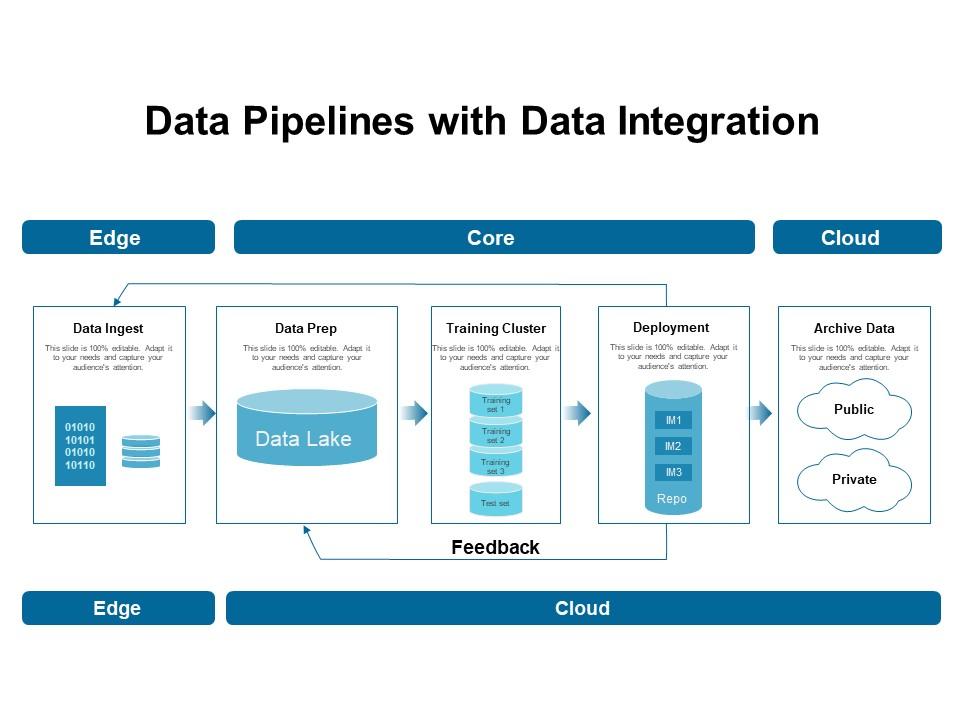
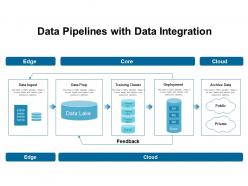
Presenting this set of slides with name Data Pipelines With Data Integration. This is a five stage process. The stages in this process are Data Ingest, Data Prep, Training Cluster, Deployment, Archive Data. This is a completely editable PowerPoint presentation and is available for immediate download. Download now and impress your audience.

FAQs for Data pipelines

Honestly, data integration is a game changer once you get it right. No more teams arguing over different numbers for the same thing - that alone saves so much headache. You get one source of truth, which makes your analytics actually trustworthy instead of guesswork. Reporting becomes automatic, and you start seeing patterns across departments that were invisible before. Your people stop wasting hours digging for data and can focus on the real work. Oh, and decision-making gets so much cleaner when everyone's looking at the same facts. Just pick your most annoying data problems first and work from there.

Get your validation rules sorted right from the start - seriously, this will save you tons of pain later. Clean up formats and kill duplicates before anything else. Set up monitoring that actually catches problems early instead of finding broken data weeks later (learned this the hard way). Validate at the source first, then double-check during transformations. Dashboards help track what's going wrong, and you'll definitely want rollback options ready. The feedback loop thing is huge - don't skip it.

So ETL is basically how you move data around - pulling from different sources, cleaning it up, then dumping it somewhere useful. Used to be all batch processing overnight (those 3am failures were the worst). Now everything's real-time streaming or ELT where you load first, transform later. Cloud tools made everything way more flexible than those old rigid workflows. Quick tip though - ask yourself if you really need that transform step before loading. Sometimes just getting raw data into your warehouse first gives you way more options down the road.

So here's the deal - batch processing is perfect for stuff that can wait, like running those big ETL jobs overnight to crunch sales numbers. Real-time kicks in when you need instant updates, like inventory changing the second someone buys something. Batch is way cheaper and more stable, but obviously slower. Real-time costs more and honestly can be a pain to debug when things break. My take? Figure out what actually needs to happen immediately vs what's fine sitting in a queue for a few hours. Most things can probably wait longer than you think.

Honestly, you're gonna hit three main walls: crappy data quality, formats that don't match up, and systems that basically hate each other. Legacy stuff is the worst - it's like trying to connect a flip phone to your smart TV. Start by checking your data quality super early, before things get messy. Good ETL tools are worth the money for handling format conversions. Set up data governance right away too. But here's the thing - get everyone on the same page about standards first. Trust me, it'll save you so many fights later when people expect totally different results.

So data integration is basically pulling together info from everywhere - your website, app, support calls, purchase records, all that stuff. Creates this complete customer picture that's actually useful. You can finally do proper personalization instead of shooting in the dark. No more customers getting frustrated because they told support something and sales has zero clue about it (seriously, why is that still a thing?). Best part? You'll start catching what people want before they even realize it themselves. I'd map out your biggest data sources first and connect the ones that'll move the needle most.

Honestly, cloud integration is just way easier to deal with. No servers to buy or maintain, and it scales up automatically when you get hit with tons of data. Remote work becomes actually doable since everyone can access everything from wherever. The catch is you're stuck if your internet craps out, and yeah, some third party has all your stuff. On-premises means you control everything but wow, the upfront costs and IT headaches are brutal. Maybe try a small cloud pilot first? See how it works for your team before committing to anything major.

Start with encryption - both when data's moving and sitting around. Don't hardcode any credentials, seriously, I've watched that blow up in people's faces so many times. Set up proper API authentication and make sure people can only access what they actually need through role-based controls. Audit logs are huge for tracking who touched what - compliance folks eat that up. Oh, and mask your data in test environments. Run security scans on those integration points regularly too. Basically, assume everything's trying to bite you and lock it down accordingly.

Set up dashboards tracking your key stuff - data latency, throughput, error rates, data quality scores. Real-time monitoring is clutch. Datadog and New Relic work great, though we've had good luck with custom Grafana dashboards too. Don't sleep on monitoring your source systems - they'll bite you when you least expect it. Automated alerts are a must because nobody wants angry users calling about broken data pipelines first thing Monday morning. Honestly, that's happened to me more times than I care to admit. Start with your most critical flows, then build out from there.

Okay so data integration - there's tons of options but it totally depends on what you're working with. Apache Airflow is solid for orchestrating stuff, and Talend or Informatica handle ETL pretty well. Cloud-wise, AWS Glue and Azure Data Factory are popular choices. Real-time data? Kafka or Confluent are your friends. Actually, if you just need basic integrations, Zapier might be enough - no point overcomplicating things. My take is map out where your data's coming from and going to first. Then pick whatever tool actually connects to your systems. Budget matters too, obviously.

Honestly, data integration is a game changer because it pulls all your random data sources together so you can actually see what's happening. Right now you're probably making decisions with like half the info you need. When sales data sits over here, customer stuff lives somewhere else, and operations has their own thing going - you're just guessing half the time. Integration fixes that mess and gives everyone the same numbers to work with. No more awkward meetings where marketing says one thing and sales says something totally different. I'd start by figuring out what decisions you're struggling with, then work backwards to see what data you need.

APIs are how your business tools actually talk to each other instead of you doing everything manually (which is honestly a nightmare). Your CRM can automatically sync with marketing tools, inventory updates your e-commerce site, payment data flows straight to accounting - all without you lifting a finger. The cool part? You can set up workflows where one action triggers a chain reaction across different systems. I'd start by figuring out which tools you're currently copying data between. Those are your biggest wins waiting to happen. Way better than those old batch updates that only run once daily.

So your data governance framework basically dictates how you build integrations from day one. Check those rules first - they'll tell you what data sources you can touch and how everything needs to be formatted. Build in your lineage tracking and validation stuff upfront because retrofitting that later is honestly such a pain (learned that one the hard way). Access controls too. The whole compliance piece shapes your pipeline design whether you like it or not. Way easier to bake it all in from the start than scramble to add it after.

Honestly, data integration is a game changer for ML stuff. You get way better datasets when you pull together customer info, sales data, web analytics - all that good stuff. Your models will be so much more accurate. Think of it like doing a puzzle with all the pieces instead of just random bits. Short version: more complete data = better insights. Just make sure you're not mixing garbage data together (learned that one the hard way). Start by figuring out which data sources would actually move the needle for your specific project.

Okay so data integration is basically your best friend for compliance stuff. You pull everything from HR, finance, operations - whatever - into one place so your numbers actually match when auditors show up. No more embarrassing "wait, why does our finance report say something totally different?" moments. Set up some automated checks too so you catch problems early instead of scrambling later. Honestly, I'd start by just figuring out what data feeds into your main compliance reports, then find tools that can connect everything smoothly. It's way less stressful than trying to manually sync everything constantly.

Ratings and Reviews

0% of 100
Review Form
Write a review
Most Relevant Reviews

No Reviews