


Brand Communication Powerpoint Presentation Slides





Try Before you Buy Download Free Sample Product
 Impress Your
 Audience
 100%
100% Editable
 Save Hours
 of Time


Excite the investors with our Brand Communication Powerpoint Presentation Slides. Create a buzz around your endeavour.
People who downloaded this PowerPoint presentation also viewed the following :
Content of this Powerpoint Presentation
Slide 1: This slide introduces Brand Communication. State your Company Name and get started.
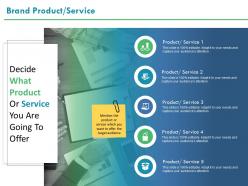
Slide 2: This slide presents Brand Product/Service. Mention the product or service which you want to offer the target audience
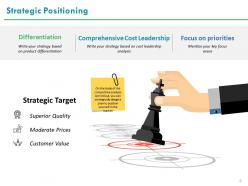
Slide 3: This slide displays Strategic Positioning. You can use these following startegy for your business or add your own- Differentiation, Comprehensive Cost Leadership, Focus on priorities, On the basis of the competitive analysis carried out, you can strategically design a plan to position yourself in the market.
Slide 4: This slide showcases Brand Mission Statement. Mention the Brand mission in this slide indicating the Brand’s purpose
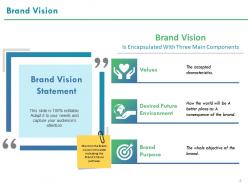
Slide 5: This slide shows Brand Vision. Mention the Brand vision in this slide indicating the Brand’s future pathway
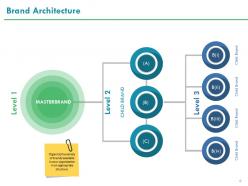
Slide 6: This slide displays Brand Architecture. Organize the variety of brands available in your organization in an appropriate structure
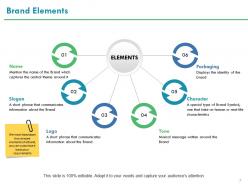
Slide 7: This slide showcases Brand Elements ELEMENTS, Name, Slogan, Packaging, Logo, Character, Tone, We have listed down the relevant elements of a Brand, you can customize it basis your requirements
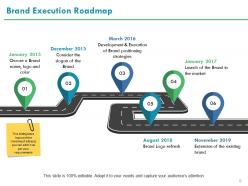
Slide 8: Brand Execution Roadmap This slide gives a layout of the timeline of a Brand, you can alter it as per your requirements.
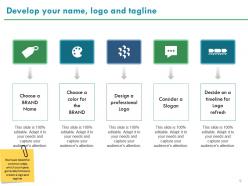
Slide 9: Develop your name, logo and tagline. We have listed the common steps which a company generally follows to create a logo and tagline.
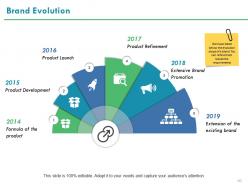
Slide 10: This slide showcases Brand Evolution. We have listed below the evolution steps of a brand. You can refine them bases the requirements
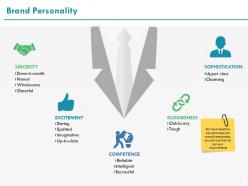
Slide 11: This slide displays Brand Personality. We have listed the key attributes of a brand’s personality, you can use them as per your requirements.
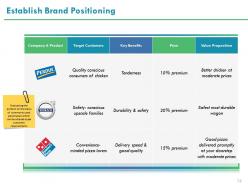
Slide 12: Establish Brand Positioning 12 Evaluating the product on the basis of commonly used parameters which can be altered as per customer requirements
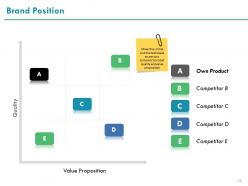
Slide 13: This slide shows Brand Position. You can add information as per your company’s product quality and value proposition
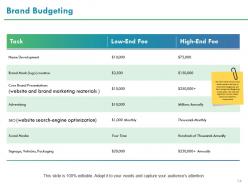
Slide 14: This slide showcases Brand Budgeting. We have listed various ways which needs to be kept in mind while budgeting. We have categorized Budgeting in two parts: Low end and High End. You can choose based on company’s requirement
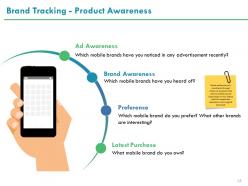
Slide 15: This slide showsBrand Tracking - Product Awareness.Brand performance is monitored through means of questionnaire and the inferences are listed down in this slide to track the awareness, experience and usage of the brand.
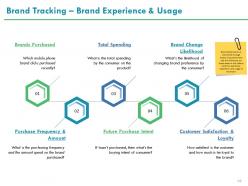
Slide 16: This slide showcases Brand Tracking – Brand Experience & Usage. Brand performance is monitored through means of questionnaire and the inferences are listed down in this slide to track the awareness, experience and usage of the brand
Slide 17: This is a Coffee Break slide to halt. You may change it as per requirement.
Slide 18: This slide is titled Charts & Graphs to move forward.
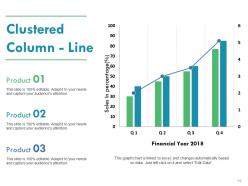
Slide 19: This slide showcases Clustered Column - Line for the comparison of three product.
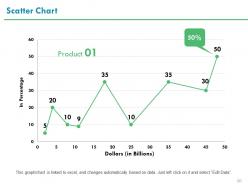
Slide 20: This is a Competitive Analysis Scatter Chart slide to present- Data Import, Example, Pricing, Support, Update, Tutorials, Easy to use, Users Interface.
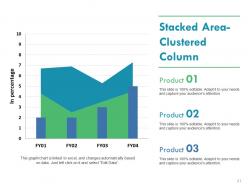
Slide 21: This slide shows a Stacked Line graph in terms of percentage and years for comparison of Product 01, Product 02, Product 03 etc.
Slide 22: This slide is titled Additional Slides.
Slide 23: This slide represents Our Mission. State your mission, goals etc.
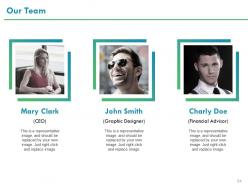
Slide 24: This slide showcases Our Team with Name and Designation to fill.
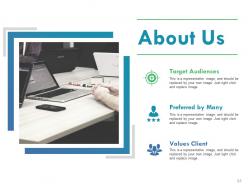
Slide 25: This is an About Us slide. State company or team specifications here.
Slide 26: This is an Our Goal slide. State your important goals here.
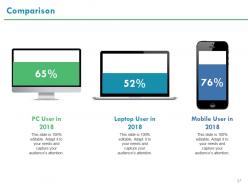
Slide 27: This slide shows Comparison of two entities in butterfly chart form.
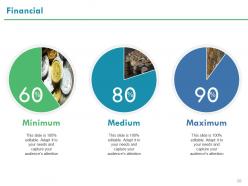
Slide 28: This slide presents Financial scores to display.
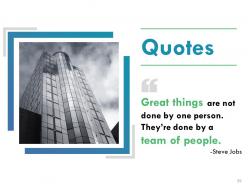
Slide 29: This is a Quotes slide to highlight, or state anything specific.
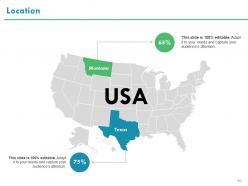
Slide 30: This slide showcases Global Project Locations with a World map and text boxes to make it explicit
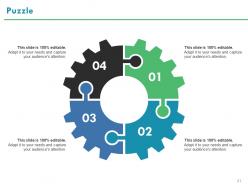
Slide 31: This slide presents a PUZZLE slide with the following subheadings- Integrity and Judgment, Critical and Decision Making, Leadership, Agility.
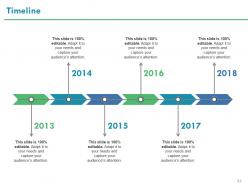
Slide 32: This slide presents a Timeline to show growth, milestones etc.
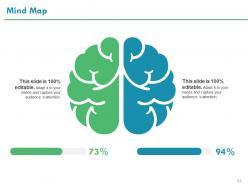
Slide 33: This slide presents a Mind map with text boxes.
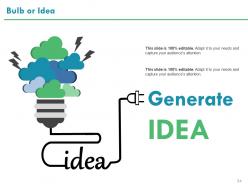
Slide 34: This idea shows an image of Bulb Or Idea to state your facts, notes etc.
Slide 35: This is a Thank You slide with Address# street number, city, state, Contact Numbers, Email Address.
Brand Communication Powerpoint Presentation Slides with all 35 slides:
Appreciate te exposure of facts with our Brand Communication Powerpoint Presentation Slides. Congratulate the journalists involved.


FAQs for Brand Communication
Honestly, most brands screw this up by trying to appeal to literally everyone. Start with a brand voice that actually matches your values - then stick to it everywhere. Your website, social, customer service... it should all feel like the same company, you know? Visual stuff matters too but don't overthink it. Listen to what people are saying back to you (this isn't just you talking at them). I'd audit what you've got first. Look for weird inconsistencies or places where your messaging feels off. The brands I remember tell one clear story instead of being all over the place.
Okay so basically, stories beat boring sales pitches every time. People remember them way better. Think about it - when someone tells you about a product, do you remember the specs or the story about how it helped them? Your brain loves narratives. Stories hit you in the feelings, which is honestly where most buying decisions happen anyway. Plus they make complicated stuff actually make sense. Here's what I'd do: figure out your main "why we exist" story first. Then just tell different versions of it everywhere - social media, your website, whatever. Don't overthink it, but be consistent with the core message.
So here's the thing - you can't just spray the same message everywhere and hope it sticks. Different groups care about totally different stuff. Like, what resonates with millennials? Completely different from what baby boomers respond to. Your tone, where you post, which benefits you push - all of it changes based on who you're talking to. Honestly, trying to appeal to everyone usually means you end up appealing to no one. I'd start simple though. Pick 2-3 main groups and build separate messaging for each. It's way more work but actually gets results.
Visual branding is seriously underrated - it can totally make or break your message. People process images way faster than text, so good visuals give you this instant head start. When everything's consistent (colors, fonts, imagery), you build recognition super quick. Like, you know a Nike ad before reading anything, right? The emotional connection part is huge too. Words are great, but visuals hit different - they create feelings that stick. Just make sure your images actually support what you're saying instead of fighting against it. Oh, and don't overthink it too much - sometimes the simplest approach works best.
Oh man, cultural differences can totally make or break your brand messaging. Colors, humor, even how direct you are - it all hits different across cultures. I had this campaign that I thought was brilliant completely bomb in Japan because it was way too in-your-face for their style. Honestly, it was embarrassing. So now I always dig into local communication norms first. Don't just translate your stuff either - you've got to rethink the whole approach. What's hilarious in the US might be super offensive elsewhere, you know?
Honestly, start with the free stuff first - Google Analytics and whatever analytics your social platforms give you. That'll show reach and engagement numbers. For tracking how people actually *feel* about your brand, you'll need surveys over time to see if awareness is shifting. I'd also grab a tool like Brandwatch to monitor what people are saying online. Fair warning though - you'll probably get buried in data at first. UTM codes are clutch for seeing which specific campaigns actually convert. Once you figure out what you're missing, then spend money on fancier tools.
Honestly, just pick one platform where your people actually are and focus there first. Show behind-the-scenes stuff instead of that polished corporate nonsense. People can smell fake from a mile away, so let your team's actual personalities come through when you respond to comments. I mean, it's kinda wild how much people care about brands feeling human these days. Talk less about your values and more about actually doing them. Oh, and don't just post your own content - jump into conversations your community's already having. Real engagement beats perfect marketing posts every time.
Oh man, where do I start? Brands constantly mess up by saying different things on different platforms - like, pick a lane already. They also love using fancy corporate speak that nobody understands. Stop talking AT people and actually have conversations with them. Another thing I see all the time? Jumping on every single trend without thinking if it makes sense for their brand. You can't be everything to everyone either. And honestly, the worst part is when they ignore feedback or refuse to pivot when something's clearly not working. Just stay true to yourself and solve actual problems instead of bragging about features.
Honestly, consistency is everything when it comes to building trust with your audience. Your Instagram can't feel like a totally different company than your website - I've watched brands crash and burn from that mistake. People should recognize your voice whether they're reading your newsletter or seeing a random LinkedIn post. Here's what works: nail down your core voice and values first. Then you can tweak the tone slightly for each platform while keeping those fundamentals solid. Oh, and definitely start by looking at what you've got right now - might surprise you how all over the place it actually is.
Okay so three things that actually work: Set up live chat or chatbots on your site - seriously, people expect instant answers now. Social listening is huge too. Jump on mentions and comments fast, like within a few hours if you can. Oh and live streaming! Instagram, LinkedIn, YouTube - whatever works for your audience. Do Q&As or show behind-the-scenes stuff. The whole point is being real and conversational, not some corporate robot. I'd start with brand mention alerts first since that's the easiest win.
Customer feedback is basically your cheat sheet for messaging that actually works. When people say they love your product but your website copy is confusing as hell, that's pure gold! I'd set up surveys, check social media mentions, dig through support tickets - whatever gets you real voices instead of guessing. Their complaints become your blog topics. Success stories turn into case studies. Plus you can literally copy how they talk about your stuff and use that same language. It's like having a crystal ball, honestly. Short feedback loops keep you from going off into la-la land with your marketing.
Okay so crisis communication basics: move FAST because silence just lets people make up their own (usually terrible) stories. Get your first response out within hours, not days. If you screwed up, own it completely and be transparent about your fix. Keep messaging consistent everywhere - social, press, internal stuff, all of it. Honestly, people respect action more than endless apologies anyway. Focus on what you're actually doing to solve things. Oh and have your crisis plan ready beforehand because scrambling in the moment sucks. Speed really is everything here.
Honestly, actions matter way more than whatever you're posting on social media. Your whole vibe needs to match up - like if you're preaching sustainability but shipping everything in plastic bubble wrap, people will notice (and call you out). Tell actual stories about living your values, not just generic feel-good stuff. Also, don't forget your team - they're basically walking advertisements for your brand, so they better actually believe in what you're selling. Maybe start by looking at everything you put out there and asking yourself if it's actually authentic or just marketing fluff.
Dude, influencer marketing totally flips the script on how brands talk to people. You're basically piggybacking on someone else's trust with their followers. Way smarter than just throwing ads at everyone, honestly. When an influencer mentions your brand, it feels like your friend recommending something rather than a company trying to sell you stuff. People actually listen because they already follow and trust that person. Just don't pick some random influencer who doesn't match your vibe - I've seen that blow up in brands' faces before. The whole thing works because it doesn't feel like traditional advertising at all.
Dude, AI is totally changing the game for connecting with people. You can personalize content for thousands of users and get real-time responses through chatbots that don't suck anymore. The sentiment analysis stuff is crazy - you'll know instantly if your messaging hits or misses. I've been playing around with some of these tools lately and honestly? They're getting scary good at predicting what works. But here's what I think matters most: your actual brand voice becomes way more important now. Everyone's using the same AI, so authentic storytelling is how you stand out. Start testing AI for insights and content ideas, just don't go full robot on your audience.
-
Commendable slides with attractive designs. Extremely pleased with the fact that they are easy to modify. Great work!
-
Great quality product.