



 0 Comment
 Customer Reviews

Body positivity, responsible eating, and keeping fit are a boon and a luxury in times like ours. However, the highly impressionable generation is often seen struggling with this utopian concept of wanting a perfect body and veering toward eating disorders to achieve the impossible. Today, humans need to be of a wiser stature to prioritize their well-being over forces that want to take us down. Of course, this understanding is influenced by one’s physical, mental, emotional, and psychological state. Only those who balance these four aspects lead happy and healthy lives.

Yet, humans often undergo moments of weakness when self-control goes for a toss. Binge eating, over-exercising, or being extremely sensitive to the changing standards of what times refer to as trends have taken down so many of us.
As a result, we often see people succumbing to these self-created and nurtured pirates of well-being. Look around yourself. How many times do our own family members, friends, colleagues, and members of our community become victims of poor self-image, keeping up with absurd societal standards, or adopting excessive eating to cope with mental issues?
Of course, the real trouble begins when these temporary escapes become habits, branching into physical ailments and full-blown diseases that stick with us for life.
Obesity, hypertension, and diabetes have enslaved a major chunk of the human population today, and unregulated eating habits are to blame. The key to avoiding these infirmities is awareness and keeping potential addictive habits in check.
If this blog has come across your path, it’s a sign for you to awaken your community and society and contribute to their wellbeing. Because in the wise words of Malcolm X, "If not now, then when? If not me, then who?"
Speak Up with Our Eating Disorders PowerPoint Templates
SlideTeam presents the ultimate PPT Toolkit to attract attention to this serious issue. Our eating disorders PowerPoint Templates reinforce your crusade against unhealthy eating habits.
Educate the masses on the before-and-after of abnormal eating behaviors (both restrictive and unrestrained eating) with powerful visuals and templates. Emphasize the importance of healthy and regulated diets to restore ease in the minds of millions easily manipulated by air-brushed videos on social media.
Tap into these expert-approved eating disorders PowerPoint Templates now!
Template 1: Neuroscience and Eating Disorders PowerPoint Templates
With this PPT Deck, explore the precision of neuroscience to address patients with eating disorders and handle their core issues.
Emphasize how overeating, not eating enough, or turning down healthy eating has more to do with psychological processing than out of whim. Such patients would have had their fair share of exposure to stimuli that affect their eating behavior. Use this PPT Deck to encourage understanding of this behavior and suggest cognitive recuperative means, relying on support groups and encouraging exercises that help the affected develop better control and judgment in food choices.
Mindfulness, personalized treatment plans, and medications can further be discussed while facilitating a holistic approach to recovery.
[product_image id=1281273]
Template 2: Acculturation and Eating Disorders PPT Guidelines
This PPT Deck explores how acculturation influences eating habits and dietary choices. Use this presentation layout to present your research findings and deliver a consolidated report.
Highlight cultures' culinary richness, showcasing healthy and unhealthy foods. Discuss how acculturation shapes eating habits and practices, encouraging mindful and healthy choices while navigating cultural influences for improved mental and physical well-being.
Stress the importance of body positivity and avoiding harmful practices linked to unrealistic body standards. You can also include a culture-specific snapshot of eating disorder prevalence to help individuals make informed dietary decisions for themselves and their families.
This PPT Presentation will equip your audience with insights into the potential challenges and opportunities of acculturation, guiding them toward balanced and informed eating habits.
[product_image id=1388066]
Template 3: Eating Disorders and Paleo Diet PPT Template
This complete deck focuses on identifying, addressing, and treating eating-related disorders. It emphasizes the importance of the paleo diet and encourages those suffering to switch to the early man’s diet of farm-free, processed-free, raw food such as lean meat, fruits, veggies, eggs, and nuts.
Design a relevant diet chart to monitor your healthy nutrient intake for those on a paleo diet. Identify classes of health disorders and how they can be targeted with a regulated diet. Emphasize when and how intervention needs to be done for patients and how to encourage consistent healthy eating.
Further along in this complete deck, you can also help build sustainable healthy eating habits with a special focus on support groups, practicing mindful eating, and self-compassion. Get this insightful Eating Disorders PowerPoint Template today!
[product_image id=1362871]
Template 4: Brain Structures Involved in Eating Disorders PPT Template
Amidst all this talk about eating disorders, we cannot ignore how our bodies are triggered or programmed to react when eating or developing eating habits. This PPT Flowchart associates eating habits and behavior with four significant brain areas.
These are the hypothalamus, amygdala, prefrontal cortex, and insula.
While the hypothalamus regulates hunger and satiety signals, the amygdala processes food-related emotional responses. The prefrontal cortex is involved in eating-related decision-making, while the Insula integrates interoceptive awareness of hunger.
Although our brain responds to external stimuli with its sensors and receptors, it’s all about self-control that must be developed and mastered to avert eating disorders by training these receptors. Share this bit with your audience to inform them that they hold the upper hand in overcoming their eating disorders.

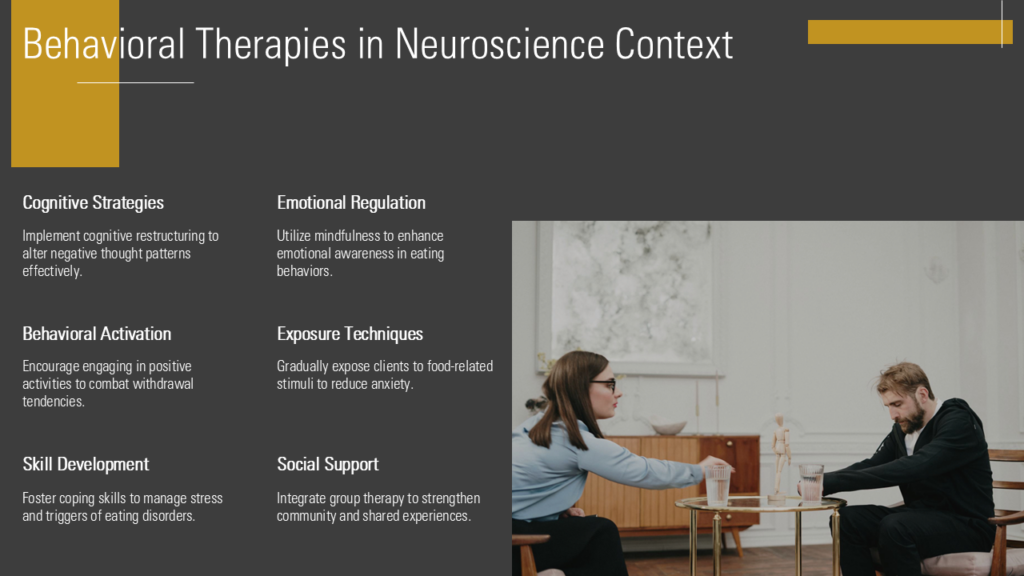
Template 5: Behavioural Therapies in Neuroscience Context PPT Template
This index slide uses neuroscience to help people recover from eating disorders. It highlights potent behavioral therapies that rely on cognitive strategies, behavioral activation, emotional regulation, exposure techniques, and social support.
These techniques are aimed at reducing the addictive levels of unhealthy goods in case of binge eating and resuming healthy eating for anorexic patients. You can also target other disorders that branch from unhealthy eating and indicate behavioral therapies to simultaneously address them with this PPT Preset.
Template 6: Cultural Influences on Eating Behavior PPT Template
Highlight the importance of cultural norms in eating behaviors in triggering eating disorders with this PPT Layout. While heavy carbs and fat-loaded diets are staples in some cultures, evolving society may direct otherwise. This will encourage anorexic or bulimic tendencies by interfering with the body image.
Similarly, eating habits, food preferences, and cultural staples may clash with peer pressures, media portrayal, and acculturation stress, thus impacting an individual's mental well-being. This could, in turn, result in eating disorders where there weren’t any earlier.
Indicate the role of each of these factors in aggravating eating disorders and their development in even the most healthy of individuals. Use this easy-to-follow diagrammatic layout to point out these factors.

Template 7: Role of Families in Eating Disorder PPT Template
Emphasize the role of family in developing or preventing eating disorders. Associate each family member with their anticipated role in a subject’s development of eating disorders.
For instance, parents are the primary caregivers. One is a nurturing figure, and the other is a disciplinarian. The former will provide and regulate what features are on the dining table. Similarly, siblings can provide a dynamic set of traits, like supporting certain eating habits, while others may monitor meal times.
This family structure can also help restore healthy eating by becoming the needed support group for the affected. Download this PPT Layout now and encourage the positive role of families in supporting the victim of an eating disorder.

Template 8: Causes and Risk Factors of Eating Disorders PPT Template
To develop awareness about eating disorders, it’s important to trace their origins and risk factors. This PPT Diagram showcases seven prominent causes that lead to the development and intensification of eating disorders.
Family history, trauma exposure, dietary trends, and developing low self-esteem are factors that aggravate and result in sleep disorders. When awareness reaches the potential patients of eating disorder or their peers, they are more likely to stay conscious, avoid risk factors, or even seek intervention to avoid its repercussions.
You can play an efficient role in raising this awareness.

Template 9: Nutritional Benefits Paleo Diet PPT Template
The paleo diet is an increasingly popular choice among diet enthusiasts today when evaluating healthy eating options. Although there’s little research to back it up, this PPT dashboard provides plenty of nutritional benefits that can be researched and monitored via graphs.
Emphasize the importance of cutting carbs and fatty meat while substituting them with vitamin—and protein-rich goods. These nutrients can be derived from naturally growing (farming-free) foods that were also part of early humans' diets.
Removing processed foods and dairy products and adding salts will also exclude the addictive and harmful consumption related to diseases such as obesity, heart disease, and diabetes. After consuming the paleo diet, you may monitor your overall satisfaction as you keep yourself motivated enough to follow through.

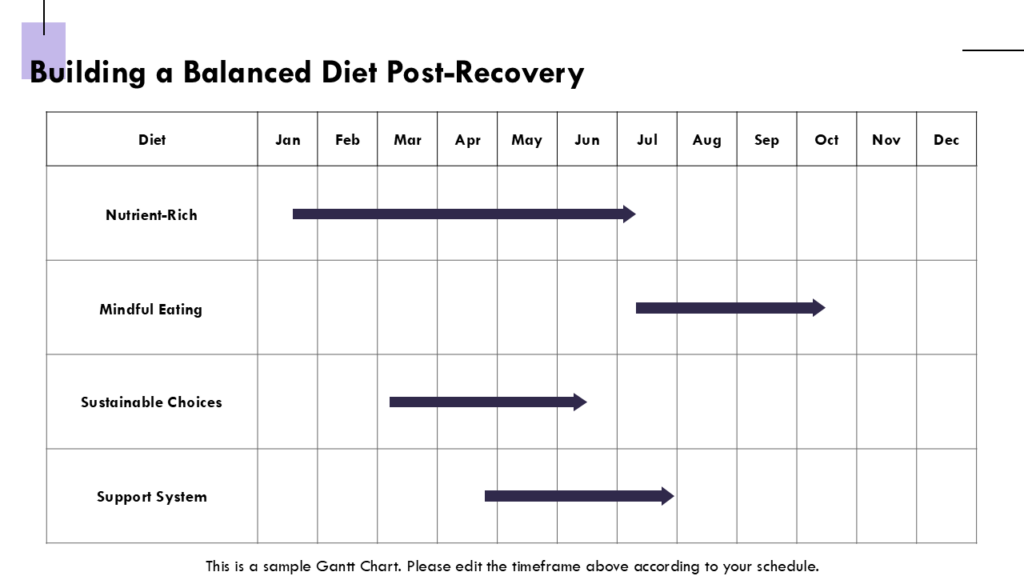
Template 10: Building a Balanced Diet Post Recovery
To prevent an eating disorder from recurring, one of the key practices of post-recovery is to create a balanced diet calendar and encourage practices that lead to healthy consumption. This PPT Chart will help you plan your post-recovery period stretched over a year.
You can begin your recovery by focusing on a strict nutrient-rich diet in the early stages. As this Gantt Chart representation indicates, you can switch to sustainable consumption choices when the same recipes become mundane. To stay focused on your recovery, especially following a strict diet system, you may become part of support groups to keep you motivated.
Lastly, as your routine builds up, you may encourage mindful eating by matching your consumption with the ideal food requirement (neither less nor excessive). Encourage your audience to keep this chart handy as they embark on their healthy eating journey.
Template 11: Long-Term Strategies for Healthy Eating
Discuss long-term strategies for healthy eating. This PowerPoint Slide is especially directed toward people in recovery and those willing to commence their healthy eating journey.
Begin by planning your meals in advance so you don’t come up with anything unhealthy at the last minute. Next, focus on mindful eating by avoiding distractions. Ensure your meals fulfill your nutritional requirements alongside your water consumption.
To reinforce healthy eating, support your journey with regular exercise. Finally, having a support system of peers who are partners in your journey will keep a person motivated. Motivate your audience with these key strategies now!

Eating Disorders Can Be Tackled
Eating disorders are not diseases; rather, they are signs of underlying health conditions that can be mental, physical, or chemical. It’s important to understand that identifying and addressing those underlying diseases plays a critical role in targeting these eating disorders and preventing further damage.
Those affected by these disorders need to be convinced that it’s not the end of the world. Rather, they need to be educated on techniques and help available to navigate the pressures of unhealthy eating and get back on track to mindful consumption while being self-compassionate all along.
Want to play your role in educating and raising awareness? Take the lead now with our purpose-oriented eating disorders PowerPoint Templates!