


Research proposal steps powerpoint presentation slides






Try Before you Buy Download Free Sample Product
 Impress Your
 Audience
 100%
100% Editable
 Save Hours
 of Time


If you are confused to kick start your next research proposal steps slide presentation, then we can help. With help of our sample research proposal presentation deck you can lay emphasis on different components as well as elements of research proposal thereby helping students in writing proposals. Besides this, using PowerPoint presentation slides of our pictorial show you can also illustrate the purpose of research proposal. Additionally, our PPT sample file supports in briefing students about the procedure for writing a research proposal. Furthermore, with help of this visual communication you can easily convince the audience about problem purpose to investigate is significant enough. To make this PPT model even more precise innovative presentation templates like methods of approach – limitations, work plan with timetable, implication of research etc. are just a few to name here. Good thing here is that to get the customized PowerPoint show you can also contact our graphic designers. Why to wait now? With our PowerPoint presentation example of research proposal you can easily get the best results. Just click to quickly download. Bank on your judgement with our Research Proposal Steps Powerpoint Presentation Slides. Allow your inner belief to assert itself.
People who downloaded this PowerPoint presentation also viewed the following :
Content of this Powerpoint Presentation
If you’ve drafted a research proposal, you must be aware of the rigor and effort required. Sleepless nights, struggles to find inspiration, and living off caffeine for days.
For students, researchers, and writers, drafting a research proposal from scratch is intimidating. To complete their professional degrees or to get funded for sponsored research projects, these proposals are crucial.
A research proposal is a detailed plan outlining the objectives, methodology, and expected outcomes of a research project. Typically, researchers, academics, or graduate students write these to seek funding or approval to conduct their research. Research proposals serve to communicate the significance of the study, demonstrate the feasibility of the research plan, and secure resources or institutional support. They are essential for gaining funding, academic approval, or collaboration opportunities for research endeavors.
The primary audience of these research proposals are academic advisors, instructors, funding agencies or institutions. Therefore, the proposal should be tailored to an academic audience with expertise in the relevant field of study.
With industry experts reviewing your proposal, you wouldn't wanna miss a chance to impress them. SlideTeam experts have prepared an Academic Proposal Template to help you with laying a strong foundation for your research paper. The 100% customizable nature of the template provides you with the desired flexibility to edit your presentations. The content-ready slides give you a structure to get started.
Template 1: Abstract
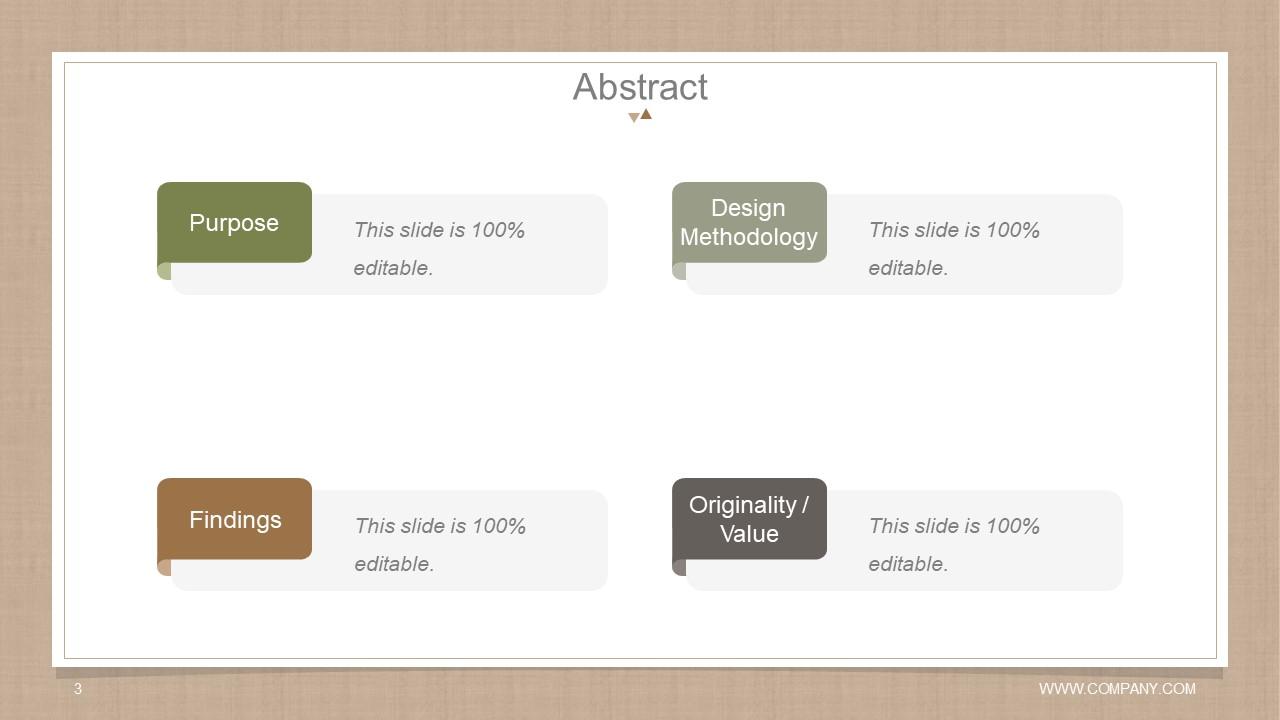
This PPT Template allows you to prepare the foundation for your research proposal. Compile your opening thoughts in the slide. The purpose section of the research project will highlight the intent and aim. Use the design methodology to list the approaches that you plan to use while carrying out the research. Write down the factors and variables in which the findings will be compiled. In the last column, originality/value, write the sources of data, a brief of references and credits.
Template 2: Introduction
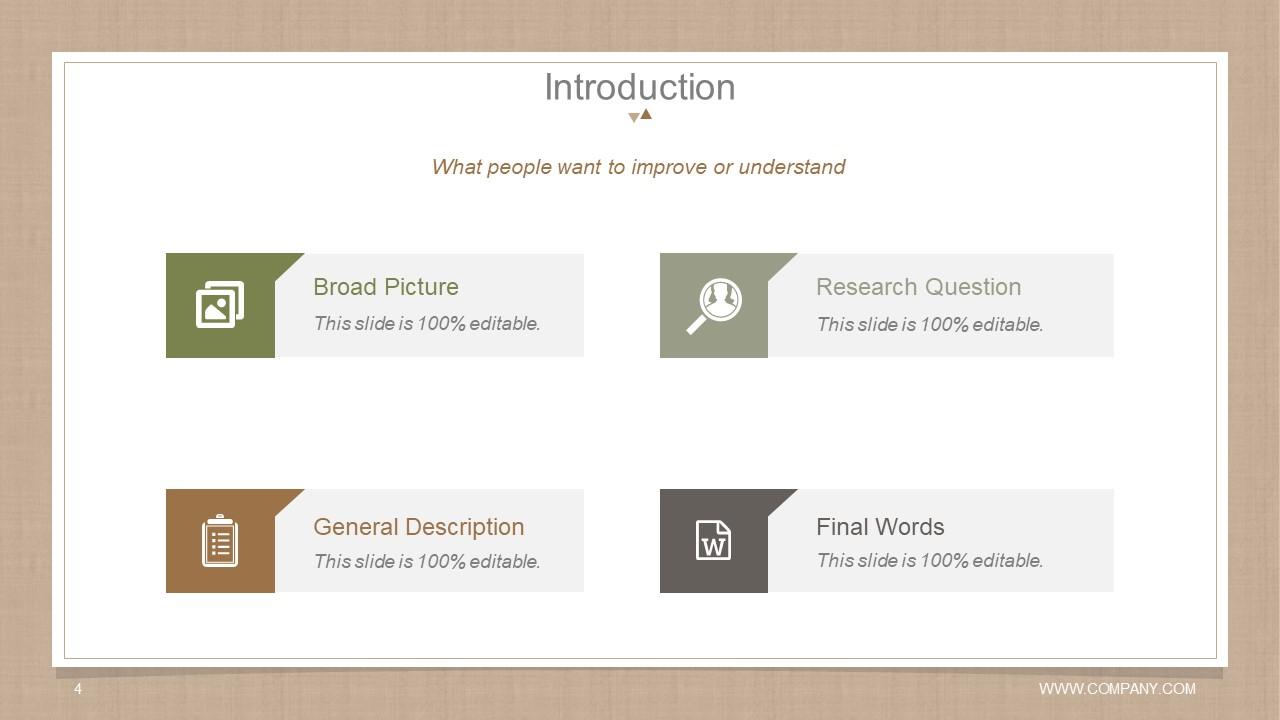
This Slide helps you to give your readers an overview of your research project. Start off by giving a broad picture of your research hypothesis in the first column. In one line mention your research question, this is the core idea of your work. The general description will include the brief elements of your argument and sources of evidence. The final words are the closing ideas, quantitative and qualitative results, and the research conclusion. You can insert information into each section in bullet points for enhanced clarity.
Template 3: Thesis Statement
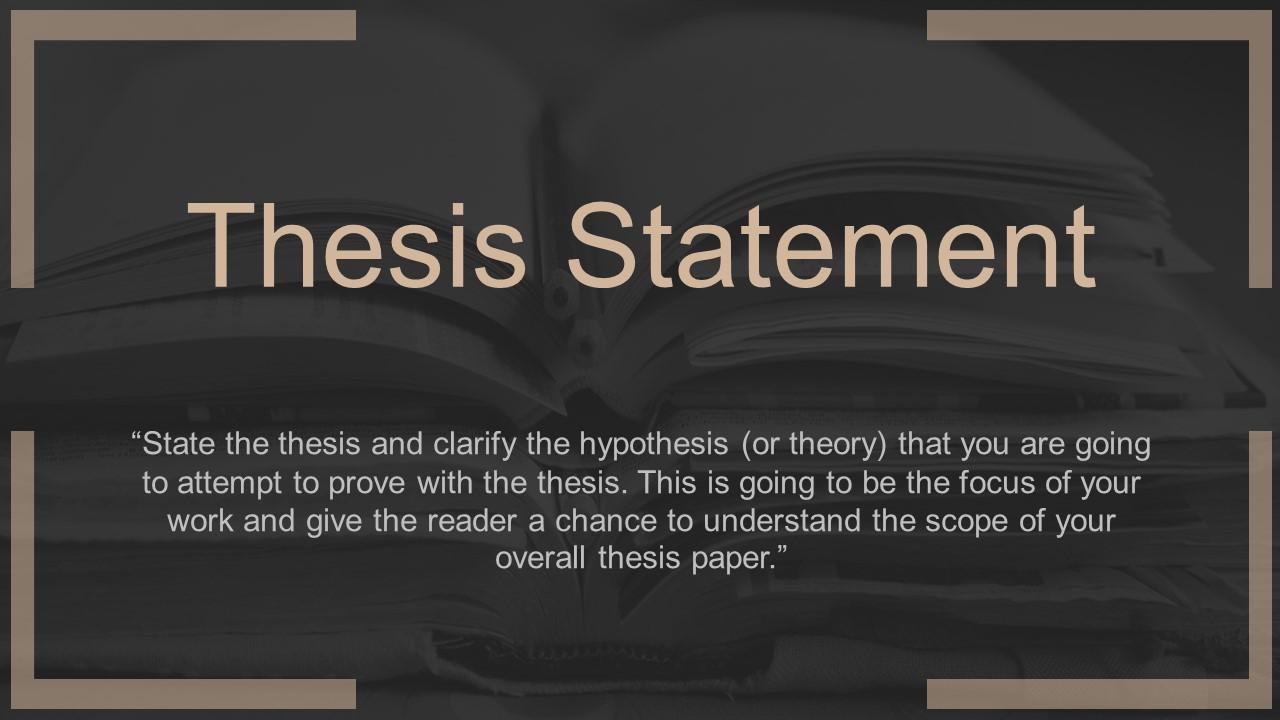
A thesis statement summarizes the central argument of an essay or research paper. Be sure to include the topic of discussion, your position or claim on the topic, the supporting evidence or reasoning, and the scope or parameters of the argument in the PPT Layout. This statement slide will serve as a roadmap for the reader, guiding them through the main points and focus of your research paper. Write a concise statement to capture the reader's attention.
Template 4: Methods or Approach
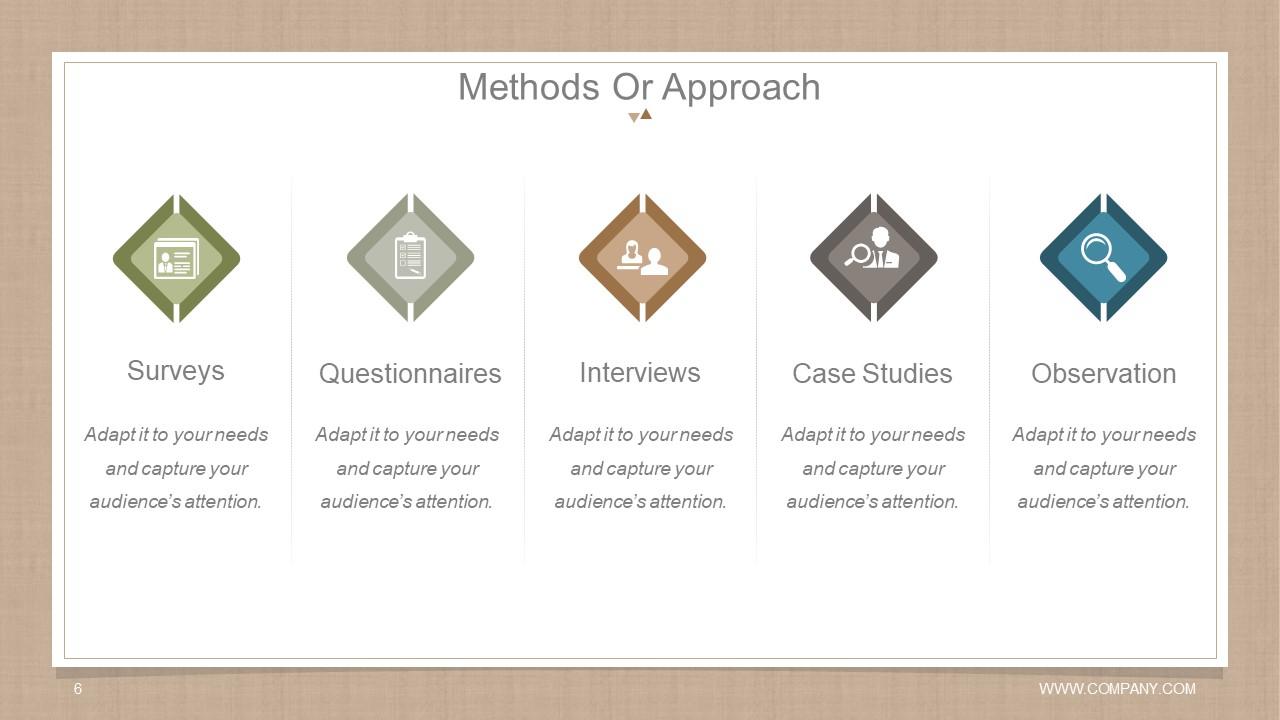
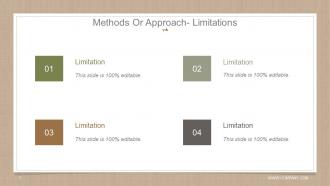
When it comes to conducting thorough research, it's crucial to have a unique and detailed approach. The research method is a strategic plan that outlines specific techniques and procedures to gather, analyze, and interpret data. This layout helps you plan your research approach or methods you will adopt, like surveys, questionnaires, interviews, case studies, and observations. As this data is crucial for the proposal you should follow a systematic approach towards gathering data, and use this PPT Template to do it well.
Template 5: Preliminary Discussion and Results
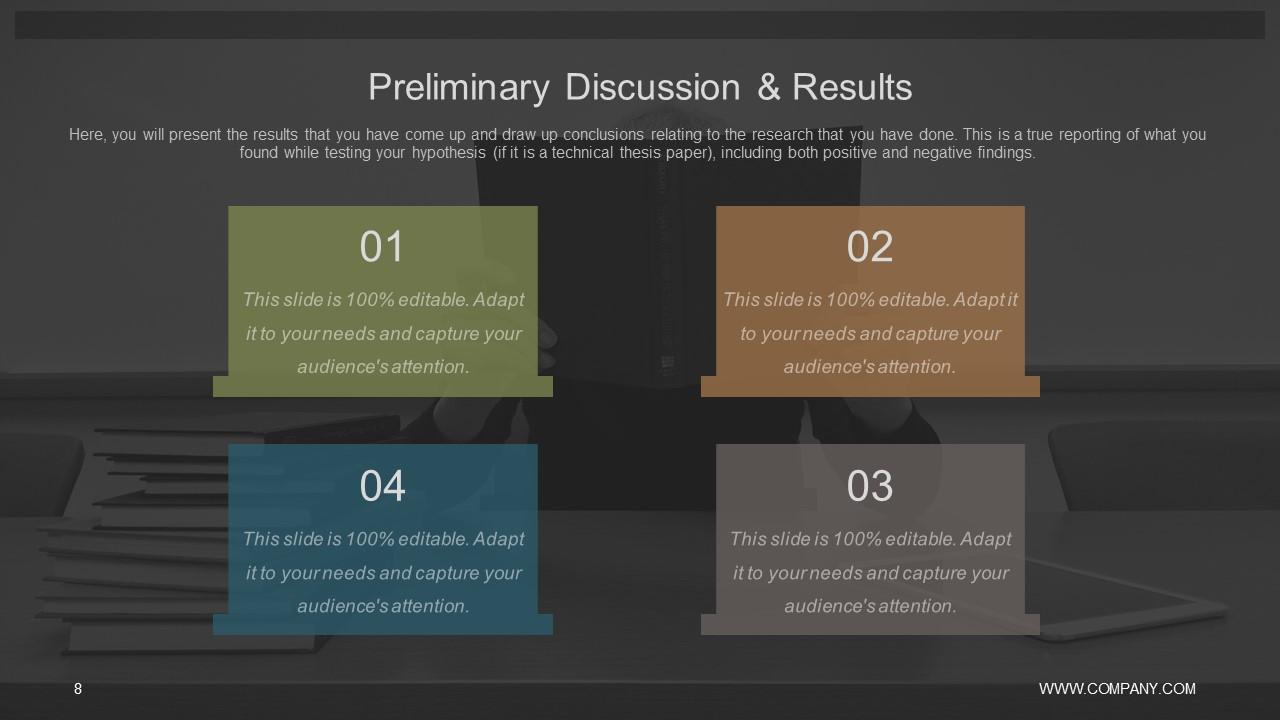
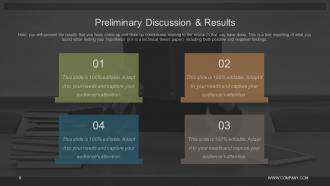
The template compiles information on two areas; the preliminary discussion and the results. The former section focuses on outlining the research conducted, including the hypothesis being tested. Whereas the next section can be used to present the findings of the research, including both positive and negative outcomes. This template offers a clear and concise way to communicate research progress and findings. You can present up to four key ideas.
Template 6: Work Plan With Timetable Template with Activities and Month
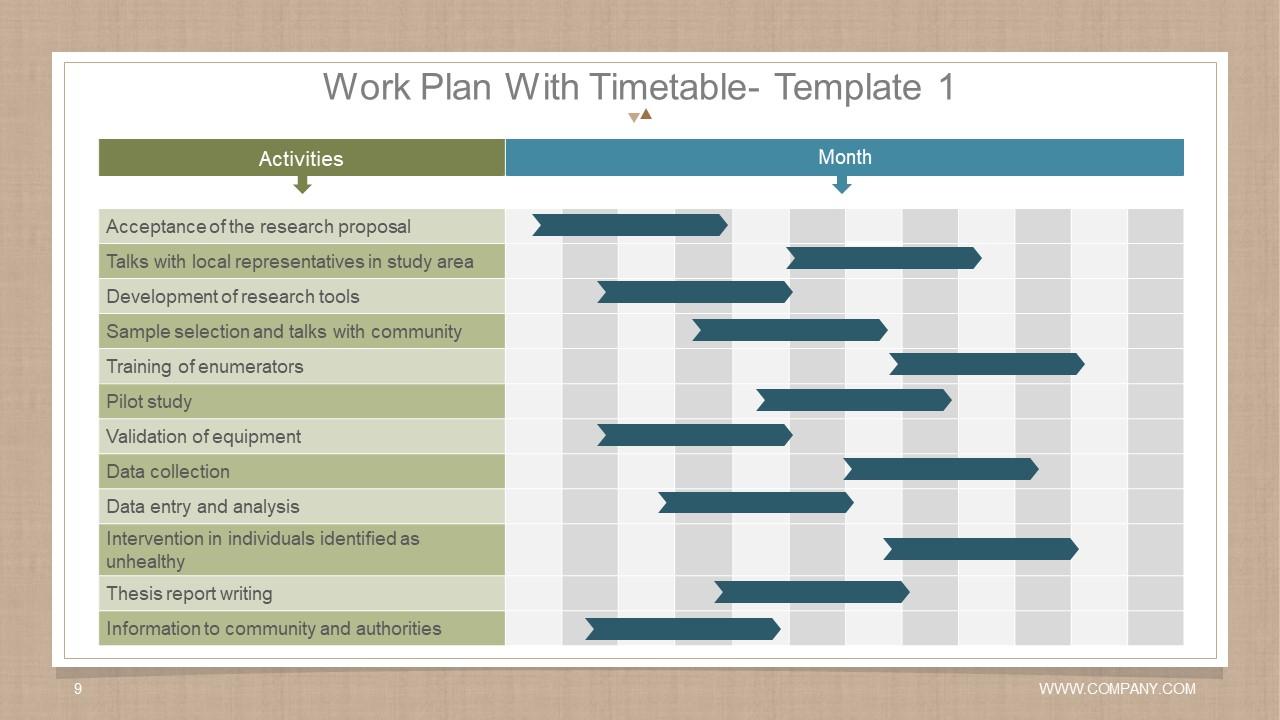
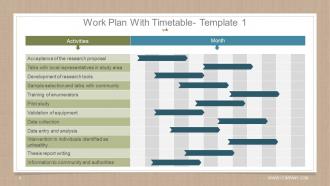
Before writing your research proposal, it is vital to map out an action plan on how to stay on track and build a strong foundation. With this Work Plan PPT Template, you can use the chart to map out activities like the acceptance of the research proposal, connecting with locals in the study area, developing research tools, sample selection, data collection, report writing etc. Use the arrows provided in the slide to mark the tentative time span and the month in which the action will take place. Plan your monthly, weekly, or daily activities with the table provided.
Template 7: Work Plan Timetable Template with Weekly Activities
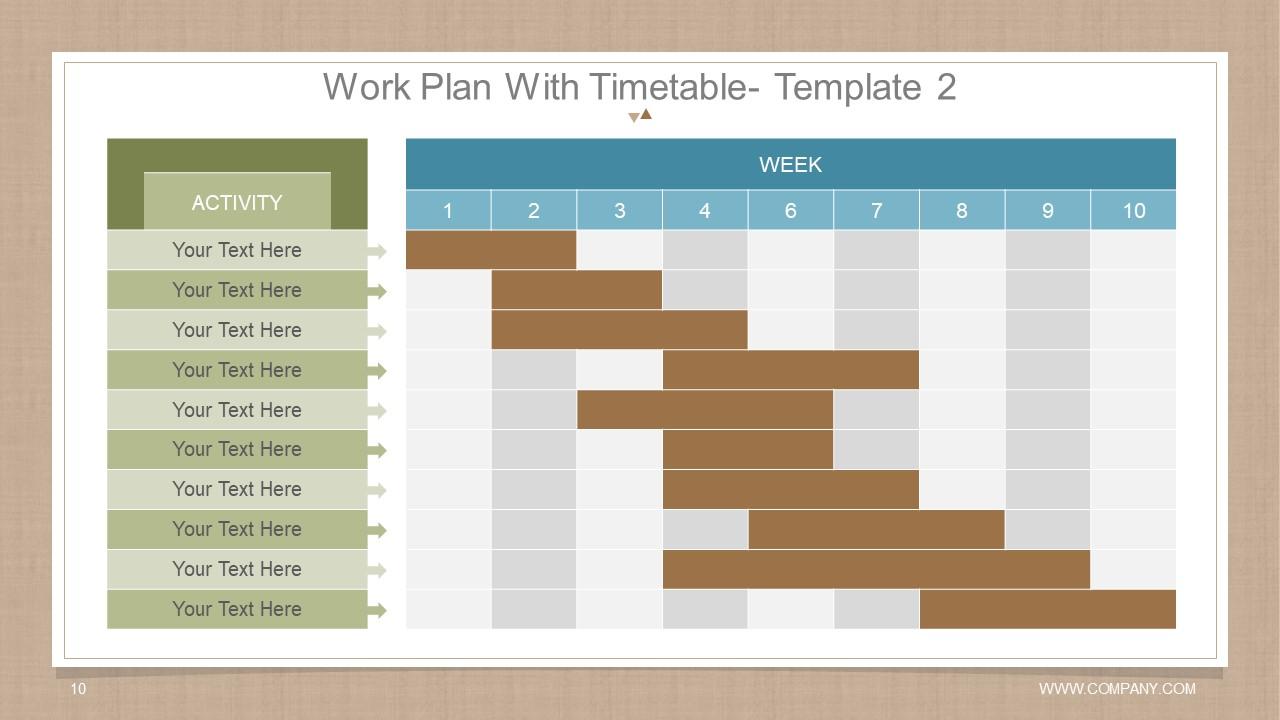
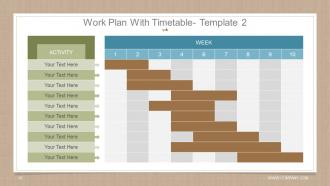
This PPT Deck offers you multiple formats to prepare a work plan timetable. This Gantt Chart Template enables you to present your action plan in a clear and concise manner. You can list down all the steps involved in drafting your research proposal. You can use the format to make a weekly or a monthly work plan. Based on this chart, you can prepare detailed action plans and manage your resources.
Template 8: Work Plan Timetable Template with Seven Stages and Time Frame
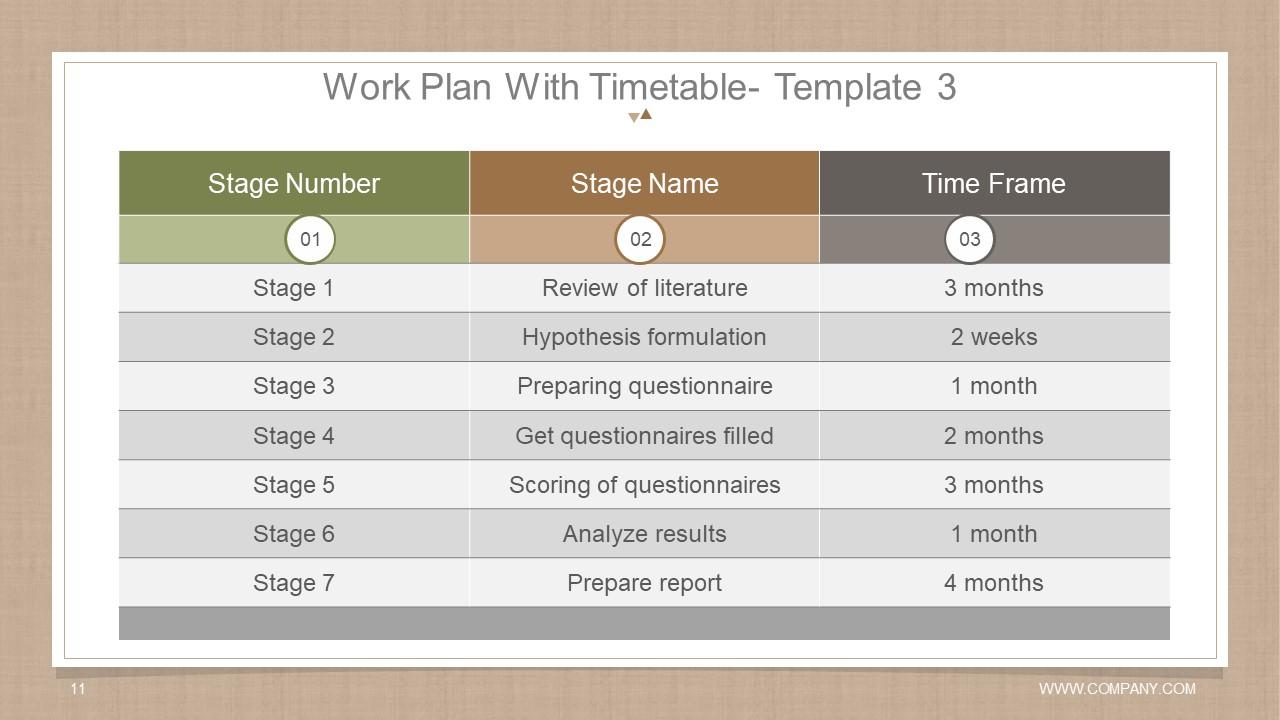
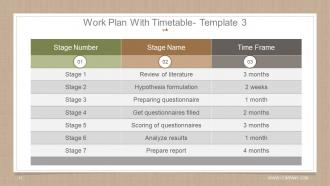
Use this slide to prepare a workplan in a tabular format. Categorize activities involved in preparing a research proposal into stages. Write a brief description of each stage in the second column of the table. Use the column provided in the slide to mention the tentative time frame of the stage. This will showcase your readiness and commitment towards the research project to your academic advisors or funding agents.
Template 9: Implication of Research
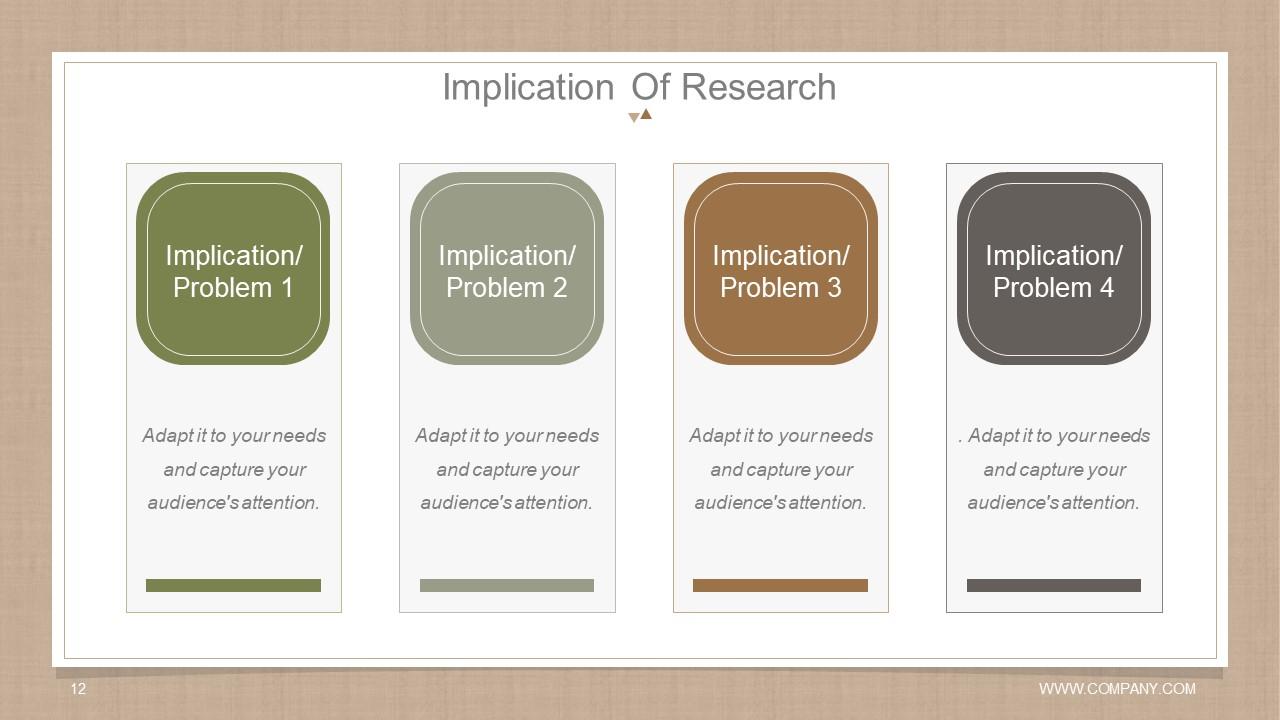
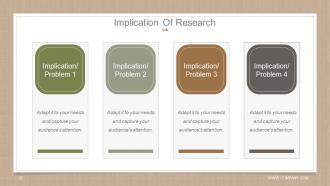
The template on implications of research refers to the potential consequences or applications of its findings in practical, theoretical, or societal contexts. These should be included in research proposals to demonstrate the significance and relevance of the study's potential outcomes, guiding future actions and understanding. This PPT Template can record up to four potential implications or problems in your research. Based on this, you can make contingency plans and suggest methods to lower their impact on the project.
Template 10: List of References/Bibliography
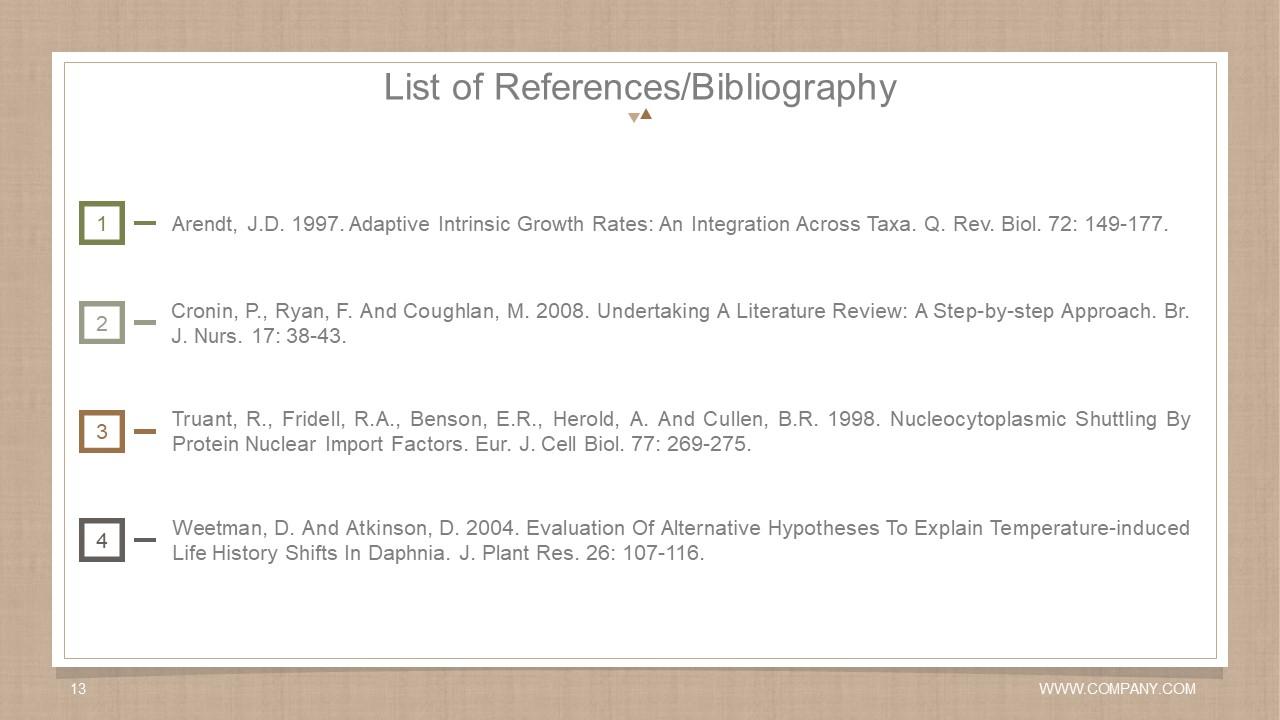
References establish the credibility of your work, demonstrate the knowledge of existing research, and provide a basis for your research's theoretical framework. Use this presentation template to list referencing conventions used in your academic proposal. Ensure that you cite both primary and secondary sources referred to in your research.
Ace your Research Proposals!
When creating an academic research proposal, it's crucial to present a well-structured, professionally crafted document with credible backing. Maintain consistency in formatting, adhere to citation guidelines, and provide a detailed list of credible sources. A polished proposal demonstrates your commitment and makes a strong case for your research's credibility, increasing the likelihood of approval and funding from academic committees or institutions.
You can streamline this process by using our content-ready research proposal PPT template, saving valuable time and effort. With this template, you can focus on the content of your proposal, allowing your ideas to shine through, while the template handles the visual part of the presentation and keeps the audience engaged.
Research proposal steps powerpoint presentation slides with all 29 slides:
Highlight the ingenuity of your creation with our Research Proposal Steps Powerpoint Presentation Slides. Elaborate on your invention.







FAQs for Research proposal steps
So you need a solid research question first - that's your foundation. Literature review comes next to show what's already out there. Your methodology section is honestly where most people mess up, so nail that part since it proves you can actually do what you're proposing. Timeline and budget are pretty straightforward. Don't skip the abstract though, reviewers hit that first! Expected outcomes wrap it up nicely. Pro tip: work backwards from your research question to make sure everything actually connects. Each piece should logically lead to the next, you know?
Start broad, then narrow it down until you've got something you can actually tackle in one study. What are you *really* trying to figure out? Make it specific enough that another researcher could copy your methods, but don't go so narrow it becomes pointless. Honestly, I cringe whenever I see research questions starting with "How can we improve..." - total recipe for disaster. You'll be wandering around with no clear direction. Focus on relationships between things, comparisons, or specific phenomena instead. Try explaining your question to someone completely outside your field in one sentence. If you can't do that clearly, you're not there yet.
Start with PubMed and Google Scholar - honestly I probably waste too much time scrolling through Scholar but whatever, it's got everything. Use Boolean searches with keywords for your topic. Citation tracking is clutch - see who cited important papers and what they referenced. Conference proceedings matter too, not just journal articles. Set up alerts so new stuff comes to you automatically. Zotero will save your sanity, trust me. I learned this the hard way after manually organizing like 200 references. Short sentences work. Longer ones help you build momentum and actually explain the process better.
Match your research questions to the right methods first - that's honestly the most important part. Exploring "how" or "why"? Go with interviews or other qualitative stuff. Testing relationships between variables? You'll want quantitative approaches. Think of it like picking the right tool for the job (I know that sounds cliche but it's true). Don't just choose methods because they sound fancy or impressive. Your sample size and analysis should actually serve what you're trying to figure out. Each choice needs a solid reason that connects back to your main research goals.
Okay so first thing - ditch the boring dictionary openings. Nobody cares about "Webster defines..." Trust me on this one. You want to grab them right away with something that actually matters. Maybe throw in a crazy statistic or ask a question that makes them think "oh shit, I need to know more about this." Paint a picture of why your research problem is worth their time. Then - and this is key - slide into what you're actually studying and why it fills some gap nobody else has tackled. Keep it punchy but don't skimp on the substance. Those opening paragraphs? They're doing all the heavy lifting for the rest of your paper.
Okay so first thing - break everything into categories like personnel, equipment, supplies, travel, indirect costs. List out what you actually need and don't try to lowball the numbers because you think it looks better. Seriously, running out of funding halfway through is a nightmare. For personnel, use real hourly rates and time commitments. I always throw in a 10-15% buffer for random stuff that pops up. Your institution probably has set indirect cost rates you'll need to factor in too. Funders can smell BS budgets from across the room, so be detailed and realistic.
So you'll definitely need informed consent and privacy stuff covered. Data protection is massive now - spell out how you're storing everything securely. Working with kids or vulnerable groups? That's gonna be way more complicated. Check your institution's IRB requirements first because every place has different forms. Honestly, the approval process is such a pain and takes forever. Potential risks need to be in there too, plus what happens if you stumble across unexpected findings. My advice? Get someone to review your ethics section super early. I learned that the hard way - IRB can drag on for weeks.
Honestly, start with a brutal reality check on your timeline - like actual deadlines, not the ones you hope will work out. Make sure you can actually get the data and participants you need upfront. That's where so many people get screwed over later. If you can, test your approach on something smaller first. Budget-wise, do the math twice and then add extra time because stuff always goes wrong. Oh, and find colleagues who'll tell you the truth, not just say "sounds great!" The whole thing comes down to being realistic about what you can pull off.
Look, the significance section is where you answer "who cares?" about your research. You're basically selling why your study matters - will it solve actual problems? Fill gaps that need filling? I always tell people it's like your elevator pitch to reviewers. Don't just say you'll "advance knowledge" because that's way too vague and honestly sounds lazy. Be specific about who benefits and how. This part can totally make or break your proposal since it shows you get the bigger picture. Maybe mention if it'll help certain communities or industries? That always helps your case.
Ok so basically you need to show how your research actually matters in three ways. First, explain what knowledge gaps you're filling - like what theories you're testing or advancing. Then get super specific about who's gonna use this stuff. Policymakers? Other researchers? How will it change what they do? I always do this "so what?" test where I keep asking that until I hit something real. The bigger picture stuff matters too - think long-term impacts on society or your industry. Oh and try to make it measurable when you can. People love concrete numbers and outcomes, not just vague promises about "contributing to the field."
So for your conclusion, tie everything back to your main goal—but don't just rehash the intro, you know? Show how it all clicks together. Definitely play up why you're perfect for this project (I know, I know, feels weird but they need to hear it). Here's where I get a little dramatic with the impact stuff—what changes if your research actually happens? Oh, and make sure there's a clear ask at the end. You want them thinking "hell yes, let's fund this" not feeling like you're twisting their arm. Keep it confident but chill.
Get a few rounds of feedback before you submit - trust me on this one. Find colleagues who actually know your field and ask them specific stuff about your methodology and whether it all makes sense. I usually give people a little checklist so they know what to focus on (saves me from getting random comments about font choices lol). Track everything in a spreadsheet so you can see which feedback you've handled and which suggestions totally contradict each other. You don't have to use every single comment, but at least explain why you didn't when you send drafts back.
Okay so first thing - grab their specific guidelines because every place is completely different. Most want the usual stuff: double-spaced, 12pt Times New Roman, 1-inch margins. Page limits are no joke though, seriously don't go over even by half a page. They'll specify citation styles and section headings too. Some places still want paper copies which is honestly ridiculous in 2024 but whatever. Oh, and download their template if they have one - trust me on this. Formatting mistakes make you look careless and reviewers definitely notice that stuff.
Break your proposal into chunks with actual deadlines - like 2 weeks for lit review, 1 week for methodology. Trust me, I learned this after way too many 3am library sessions lol. Research and reading should come first since they always take forever. Instead of just thinking "I'll work on it today," block out real hours. The writing part? It's gonna take longer than you think. Way longer. Revisions are honestly the worst part - you think you're done but then you're not. Oh and definitely build in buffer time because something will definitely go wrong or take twice as long.
Vague methodology will kill you instantly - reviewers hate that. Your research question can't be massive either, you'll just confuse everyone. Honestly, the timeline thing trips up so many people - don't promise stuff you obviously can't deliver with your budget. I've seen way too many proposals that dump a ton of background lit without connecting it to their actual project. Super annoying. Your significance section needs to answer "so what?" not just describe what you're doing. Oh, and everything has to circle back to your main question. Stay specific and realistic basically.
-
Best Representation of topics, really appreciable.
-
Awesome presentation, really professional and easy to edit.