

Restaurant Business Plan Powerpoint Presentation Slides




Try Before you Buy Download Free Sample Product
 Impress Your
 Audience
 100%
100% Editable
 Save Hours
 of Time


Our Restaurant Business Plan Powerpoint Presentation Slides are topically designed to provide an attractive backdrop to any subject. Use them to look like a presentation pro.
People who downloaded this PowerPoint presentation also viewed the following :
Content of this Powerpoint Presentation
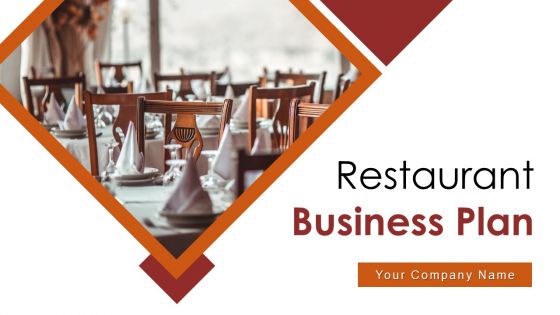
Slide 1: This is the cover slide of Restaurant Business Plan PowerPoint Presentation.
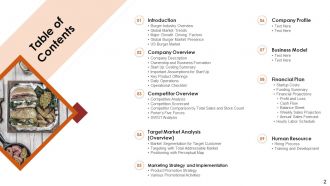
Slide 2: This is the Table of Contents slide that lists out all the essential elements covered in the deck.
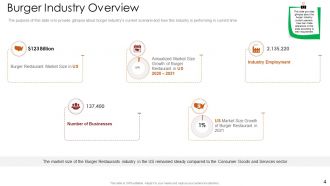
Slide 4: This slide provides glimpse about the burger industry current scenario.
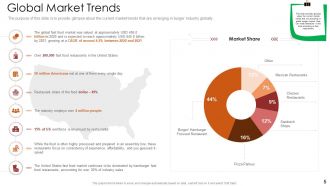
Slide 5: This slide provides glimpse about the current market trends that are prevailing in global burger market.
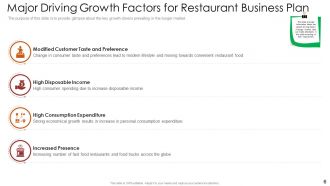
Slide 6: This slide provides information about key growth driving factors in burger market.
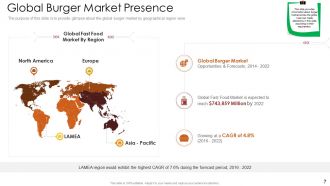
Slide 7: This slide provides information about burger market across the globe.
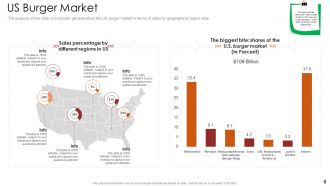
Slide 8: This slide provides information about burger market in US.
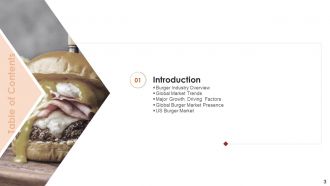
Slide 9: This slide presents the Introduction to Burger Industry Overview.
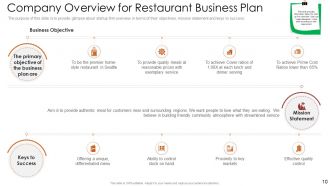
Slide 10: This slide provides information about the start-up firm overview. User can made alterations in this slide according to their requirement
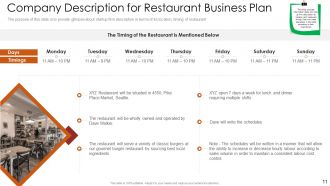
Slide 11: This slide provides information about the start-up firm description by location and restaurant timing.
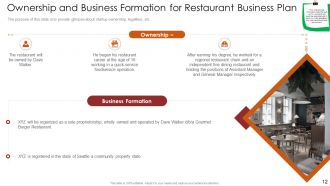
Slide 12: This slide provides information about the start-up firm ownership and legalities associated with it.
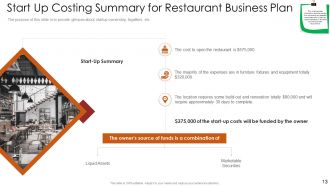
Slide 13: This slide provides information about the start-up firm ownership and legalities associated with it.
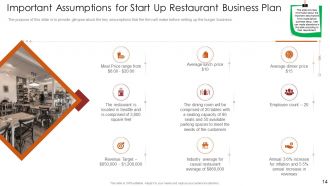
Slide 14: This slide provides information about the important assumptions firms made before business setup.
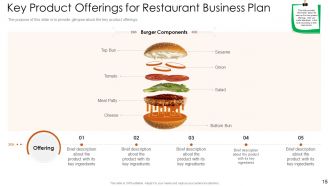
Slide 15: This slide provides information about the start-up firm key product offerings.
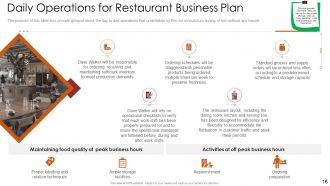
Slide 16: This slide provides information about the start-up firm key product offerings.
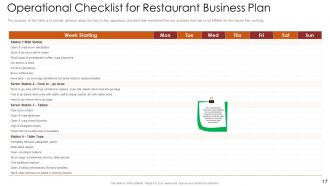
Slide 17: This slide provides information about checklist of key activities that is required for day to day operations.
Slide 18: This slide presents competitor overview.
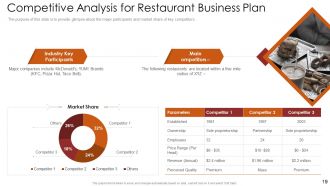
Slide 19: The purpose of this slide is to provide glimpse about the major participants and market share of key competitors.
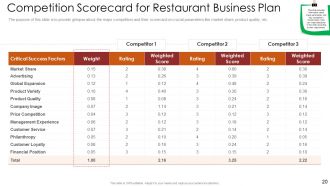
Slide 20: This slide provides information about major participants and key competitor’s market share. User can made alterations in this slide according to their requirement.
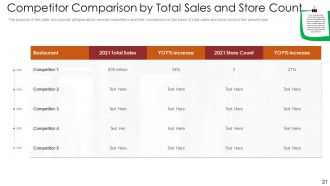
Slide 21: This slide provides information about the various competitors and their comparison on the basis of total sales and store counts. User can made alterations in this slide according to their requirement
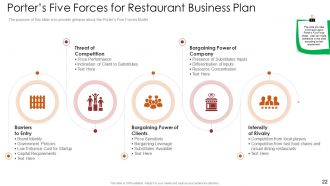
Slide 22: This slide provides information about Porter’s Five Force Model. User can made alterations in this slide according to their requirement.
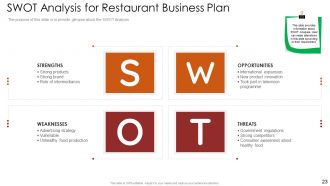
Slide 23: This slide provides information about SWOT Analysis. User can made alterations in this slide according to their requirement.
Slide 24: This slide provides Target Market Analysis overview.
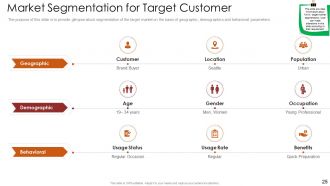
Slide 25: This slide provides information about firm’s target market segmentation. User can made alterations in this slide according to their requirement.
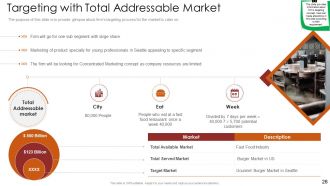
Slide 26: This slide provides information about firm’s targeting concept. User can made alterations in this slide according to their requirement.
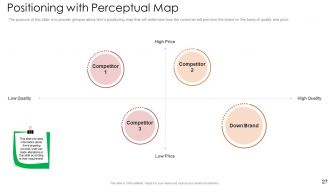
Slide 27: This slide provides information about firm’s targeting concept. User can made alterations in this slide according to their requirement.
Slide 28: This slide presents Marketing Strategy and Implementation.
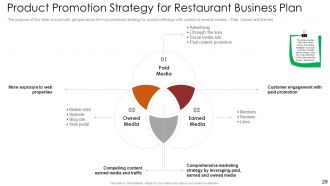
Slide 29: This slide provides information about various promotional strategies for product promotion through several medias. User can made alterations in this slide according to their requirement.
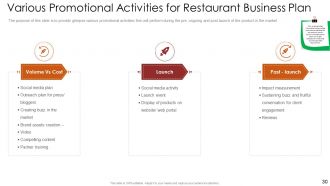
Slide 30: This slide provides information about various promotional activities for pre product launch, launch and post launch. User can made alterations in this slide according to their requirement.
Slide 31: This slide presents Company Profile.
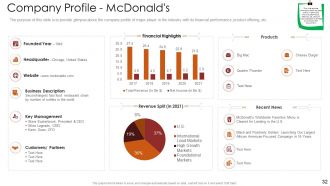
Slide 32: This slide provides information about key player profile in terms of its financial performance , offerings, etc. User can made alterations in this slide according to their requirement.
Slide 33: This slide presents Business Model.
Slide 34: This slide provides information about the firm’s business model with cost structure, revenue streams, etc.
Slide 35: This slide presents the Financial Plan.
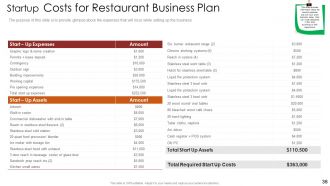
Slide 36: This slide provides information about the several expenses that will incur while business setup.
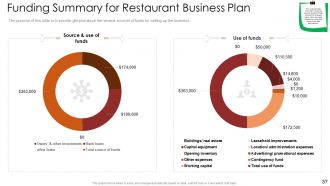
Slide 37: This slide provides information about the several sources of funds required for business setup.
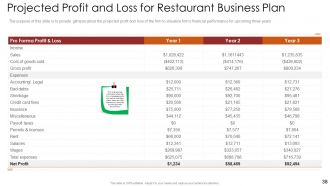
Slide 38: This slide provides information about the firm’s forecasted profit and lost for next three years.
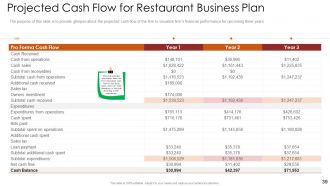
Slide 39: This slide provides information about the firm’s forecasted cash flow for next three years.
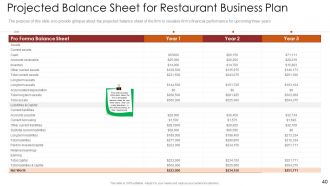
Slide 40: This slide provides information about the firm’s forecasted balance sheet for next three years. User can made alterations in this slide according to their requirement.
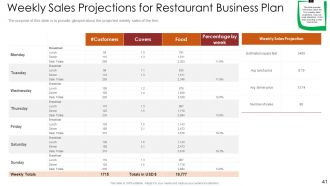
Slide 41: This slide provides information about the firm’s weekly sales projections.
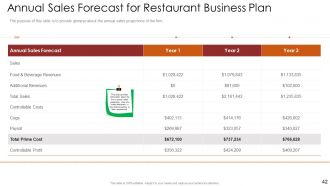
Slide 42: This slide provides information about the firm’s annual sales projections.
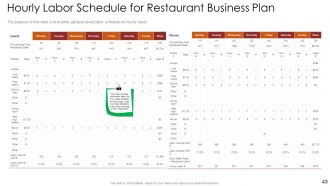
Slide 43: This slide provides information about the firm’s labor schedule on hourly basis.
Slide 44: This slide presents Human Resource.
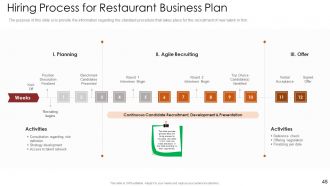
Slide 45: This slide provides glimpse about the hiring process for recruiting new talent in firm.
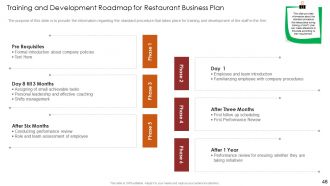
Slide 46: This slide provides information about the standard procedure that takes place during training of staff.
Slide 47: This is an Icon Slide. Use it as per your needs.
Slide 48: This is an Additional Slide.
Slide 49: This is a 30 60 90 Days Plan that can be used to create robust plans.
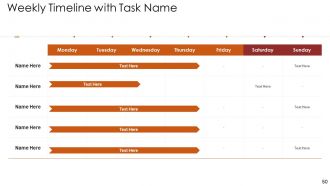
Slide 50: This Weekly Timeline slide that can be used to assign weekly task to team members.
Slide 51: This is Our Mission slide that can be used to present your company's mission and vision.
Slide 52: This is Our Team slide with name and designation to fill.
Slide 53: This is About us slide that can be used to give a brief overview of the company.
Slide 54: This is a Timeline slide that can be used to present chronological sequence of events.
Slide 55: This is a Quotes slide that can be used to write down quotes.
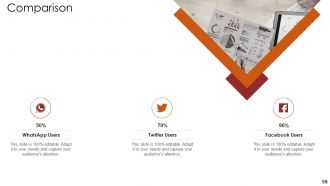
Slide 56: This is a Comparison slide that can be used to compare different elements.
Slide 57: This is a Bulb or Idea slide that can be used to present innovative ideas.
Slide 58: This is a Thank You slide for acknowledgment. You can share your contact details here.
Restaurant Business Plan Powerpoint Presentation Slides with all 58 slides:
Use our Restaurant Business Plan Powerpoint Presentation Slides to effectively help you save your valuable time. They are readymade to fit into any presentation structure.



FAQs for Restaurant Business Plan
Okay so you'll want an executive summary, market analysis, your menu with pricing, marketing plan, operations stuff, management structure, and financials - startup costs plus 3-year projections. Honestly the money part trips everyone up but investors care about it most. Competitive analysis matters too - gotta know your competition and what makes you different. Location is massive since foot traffic literally makes or breaks restaurants. Oh and write the executive summary last, once you've figured out all the other sections. Way easier to summarize when you actually have something to work with, you know?
Look, market research and knowing your audience literally drives every big choice you'll make. You gotta understand your local scene - what competitors charge, which cuisines are hot, current dining trends. That way you're positioning smart instead of crossing your fingers. Target audience data tells you menu prices, how to design the space, everything really. I've watched way too many places crash because they just winged it. Oh and definitely stalk your competition's reviews - customers spell out exactly what they want. The research guides your location, portion sizes, service style. Even social media stuff. Start with local demographics then dive into those reviews.
Dude, location is everything - seriously, it'll make or break you before you even flip your first burger. Look for decent foot traffic and parking that doesn't suck. I've seen amazing restaurants fail because customers couldn't find a spot within three blocks. Check out your competition too, but don't overthink it. The vibe has to match though - putting a fancy steakhouse next to a Subway just feels weird, you know? Drive by at different times to see how busy it gets. Oh, and ask about future construction plans because nothing kills business like six months of road work right outside your door.
So basically, your financial projections are like showing investors your restaurant homework. They need to see you actually get the numbers - realistic revenue, when you'll break even, cash flow that won't leave you scrambling for more cash in six months. Nobody wants that headache. Break down your food costs, labor, how many customers you're expecting. Be optimistic but don't go crazy with it - investors can smell BS projections from a mile away. I've seen too many people tank their pitch with numbers that look like pure fantasy. Make it believable but exciting.
Honestly, you gotta nail down what makes your place different and lean hard into that. Maybe it's some crazy fusion cuisine nobody's doing, or you're sourcing everything locally, or the whole dining experience is interactive somehow. Location can be huge too - like being the only decent spot in a neighborhood that's blowing up. I've noticed the restaurants that actually make it usually do one thing really, really well instead of trying to be everything. Oh, and whatever angle you pick needs to make sense for your customers - investors want to see why people would drive past three other places to eat at yours.
Okay so you need to map out your whole team structure in the business plan - kitchen staff, servers, management, all of it. Include the positions you're hiring for, wages, and who reports to who. Don't overlook dishwashers and bussers because honestly, they make or break your operation. Labor costs usually run 25-35% of revenue, so investors will scrutinize this hard. Add your management style and training approach too. Oh and create a realistic hiring timeline - like how you'll staff up for busy seasons. Shows you get that running a restaurant is way more complex than just having good food.
Okay so you need to figure out four main things for your restaurant marketing. First, who's actually eating at your place - like their age, how often they go out, what they spend. Then work out what makes you different from every other spot around (honestly, this part's harder than it sounds). Social media's obviously huge, but don't forget local partnerships and maybe a loyalty thing. Traditional ads too if you've got the cash. The trick is picking stuff you can actually keep up with long-term. I've seen too many places start strong then just... stop posting after two weeks.
So first thing - skip the boring "upscale Italian bistro" generic crap and actually paint a picture. Start with your concept, then throw in specifics like who's eating there, what's on the menu, how it looks inside. I'd honestly add mood boards or sample menus if you can. Maybe even playlist ideas? Sounds weird but it works. The whole point is making investors feel the vibe, not just read about it. Every section should reinforce your concept with concrete details and descriptions that hit their senses. Don't just tell them what you're doing - show them exactly what it means.
Okay so definitely nail down your food costs first - shoot for 28-35% of revenue. Labor should be around 25-35% too. Break-even timeline is huge, most places need like 6-12 months minimum. Your rent better be under 10% of revenue or you're screwed from day one. Map out monthly cash flow for the whole first year, and honestly? Be super conservative with your customer counts and ticket averages. Those daily numbers literally make or break everything else. Oh and don't expect to get rich - most restaurants only hit 3-6% profit margins. Build a few different scenarios so you're not flying blind.
Definitely focus on three main things when you're putting your business plan together: sourcing, operations, and waste. Local suppliers are your best friend - cuts shipping costs plus customers love that eco-friendly angle. For operations, budget for energy-efficient equipment and LED lights, water-saving stuff too. Waste management is honestly where you'll see the biggest impact. Plan for composting, ditch excessive packaging, work on portion control. I know a place that saved like $15K just from reducing food waste - it's actually crazy how much gets thrown out. Oh, and don't forget these changes cost money upfront but they'll save you tons later, so factor that into your projections.
Dude, the two big killers I always see are crazy optimistic revenue numbers and totally lowballing startup costs. Everything's gonna cost way more than you think - trust me on that one. Also don't be all vague about who you're targeting or act like you have zero competition. Investors roll their eyes hard when someone says "everyone will love our tacos" or whatever. Labor and food waste will absolutely wreck your margins if you're not careful about those projections. Oh, and actually talk to other restaurant owners in your area - their real numbers beat made-up spreadsheet dreams every time.
Look, supply chain stuff is literally what makes or breaks restaurants - I've seen so many places fail because they couldn't manage inventory properly. You need to map out your supplier relationships, ordering schedules, and how you'll track everything. Don't forget seasonal changes mess with availability and pricing. Having backup suppliers is clutch when your main guy runs out of something random on a Friday night. Show investors you're using actual inventory software to minimize waste and spoilage. Storage systems matter too. This directly hits your food costs and whether you can consistently serve customers what's on the menu.
Dude, tech is basically non-negotiable now for restaurants. You'll need a decent POS system, online ordering setup, and integrations with DoorDash/Uber - those apps can literally save your ass or destroy you. Budget for a simple website too, plus social media stuff. Inventory software is clutch if you're doing real volume. Oh and all those monthly subscriptions? They sneak up on you fast, like $20 here, $50 there. I'd say nail the basics first - POS and delivery platforms - then add the fancy stuff later once you see what's actually moving the needle.
Build feedback loops right into your plan - customer surveys, online reviews, social media mentions. Honestly, I'm obsessed with Yelp reviews because there's so much good stuff in there! Set up quarterly reviews where you analyze trends and tweak your menu, pricing, or service. Budget for customer-driven changes too - new equipment, staff training, whatever. Your business plan should evolve with what customers actually want, not what you think they want. Oh, and make it a living document - sounds cheesy but it works.
Dude, health regs basically control everything about how you set up and run the place. Commercial equipment, kitchen layout, staff training, inspections - it all adds up fast in your budget. The licensing stuff alone is a nightmare to get through first. Here's the scary part though - one violation can literally close you down overnight. I've seen it happen to places that seemed solid. Don't even think about cutting corners when money gets tight. Build all those compliance costs into your projections from the start, and honestly? Budget extra because inspectors always find something they want upgraded.
-
Nice and innovative design.
-
Great quality product.
-
Easy to edit slides with easy to understand instructions.
-
Informative presentations that are easily editable.
-
Very helpful
-
Helpful product design for delivering presentation.
-
Really like the color and design of the presentation.
-
Out of the box and creative design.