


Food startup business powerpoint presentation slides




Try Before you Buy Download Free Sample Product
 Impress Your
 Audience
 100%
100% Editable
 Save Hours
 of Time


Our Food Startup Business Powerpoint Presentation Slides are topically designed to provide an attractive backdrop to any subject. Use them to look like a presentation pro.
People who downloaded this PowerPoint presentation also viewed the following :
Content of this Powerpoint Presentation
Are you a passionate entrepreneur with an innovative restaurant concept, a skilled baker looking to take your skills to the next level, or someone who wants to hit the road with a food truck? Starting a new food business can be an exciting adventure, but it can be full of unexpected challenges and bureaucratic roadblocks that need business knowledge and determination to overcome.
Is now a good time to launch a food business?
It turns out that now could be a good time to take the plunge. According to Fortune Business Insights research, the food service industry is expected to grow from $2,647 billion in 2023 to $5,424 billion by 2030, with a Compounded Annual Growth Forecast (CAGR) of 10.8 % over the forecast period.
Know everything about Online Food Delivery Business Plan with a click here.
Despite the numbers above, the bleak outlook for start-ups could be a dampener.
Research indicates that up to 90% of new restaurants fail. Furthermore, restaurateurs and other hospitality business owners have recently expressed their concerns about the impact of rising labor, energy, and inflation costs on market produce prices. Even seasoned professionals are finding it difficult to keep a hold on the market as overheads rise.
There is no such thing as a perfect time to begin in business. Even under ideal conditions, a business may fail. However, some of the most successful businesses have grown out of difficult circumstances and economic hardship. If a company can thrive during difficult times, it shows resilience and the ability to overcome future challenges. Don't wait for the ideal moment. Take the risk and give your business every chance of success.
To help you get started, experts at SlideTeam have prepared a game-changer: Food Startup Business PowerPoint Template. The 100% editable and customizable nature of this PPT provides you with the structure and the desired flexibility to edit your presentations.
Let’s explore!
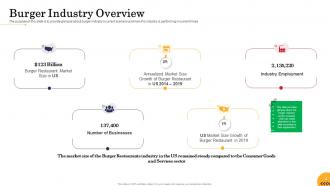
Template 1: Burger Industry Overview
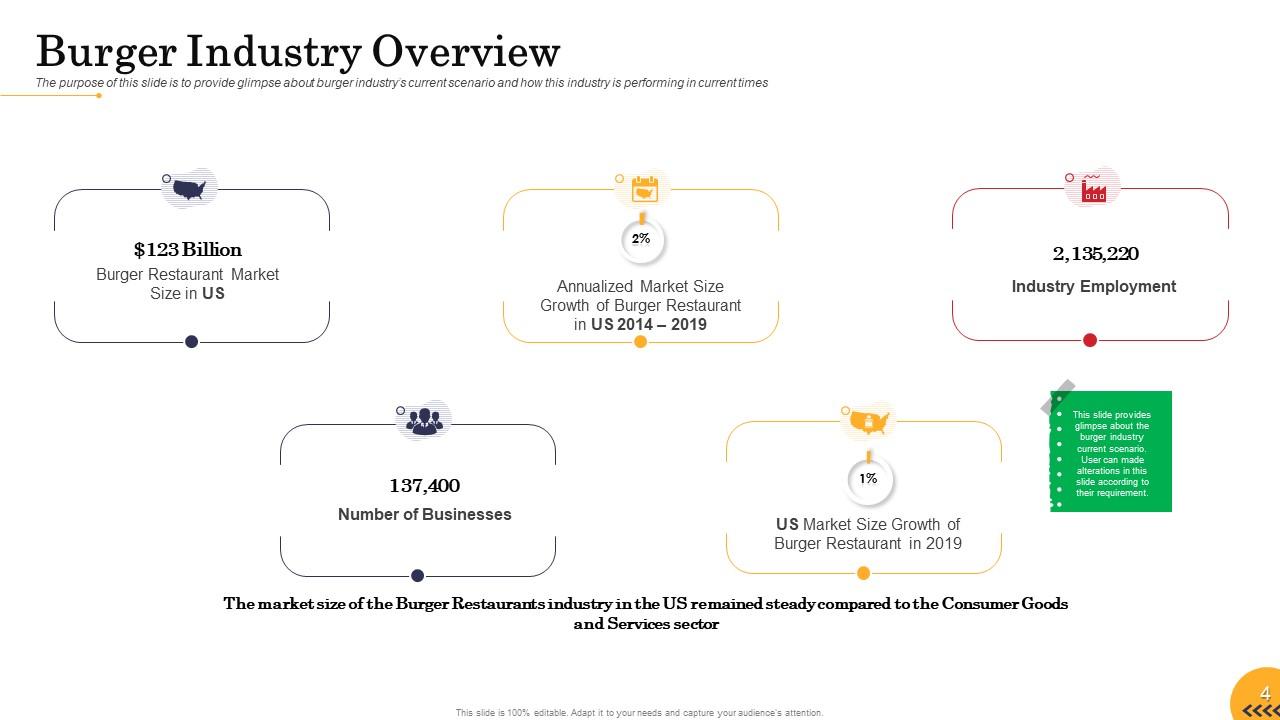
Before diving into any business, one must have hands-on knowledge of the industry's size and profitability. The above PPT Set offers an overview of the burger industry, underlining the market-size, expected market growth, industry employment, and number of businesses in that sector. This helps you evaluate your chances of success and build strategies accordingly.
Template 2: Global Market Trends for Food Startup Business
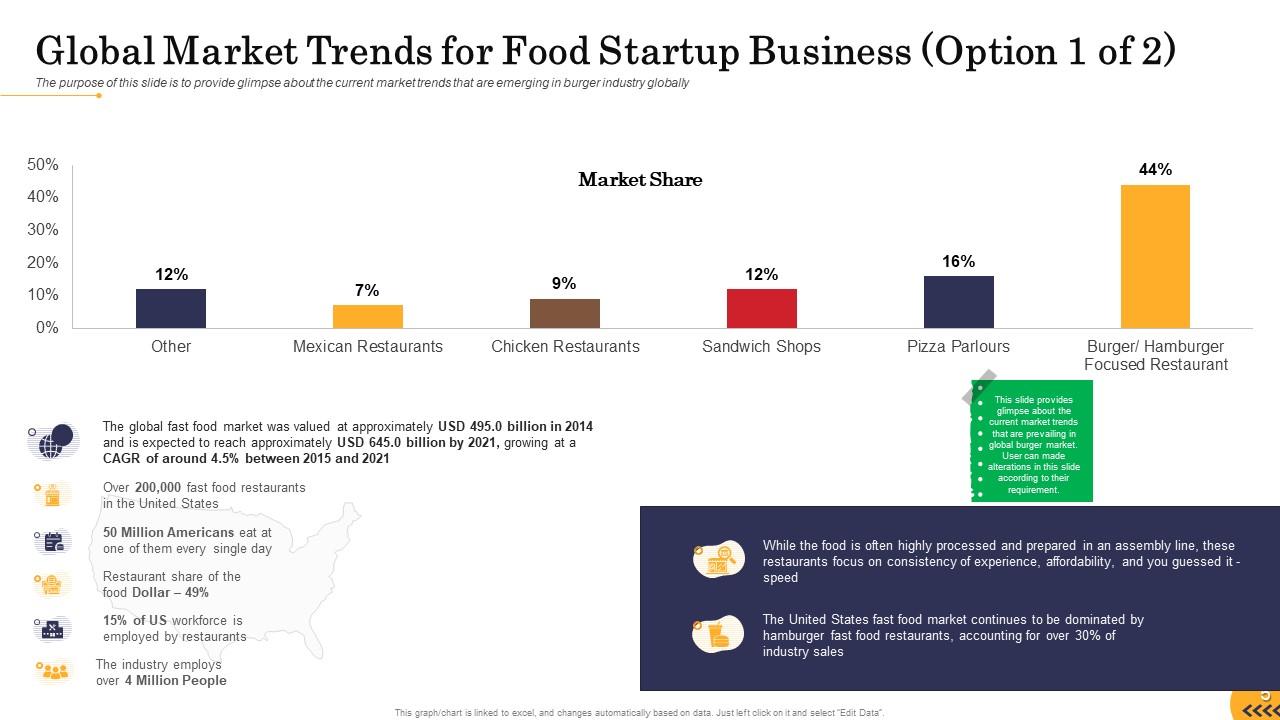
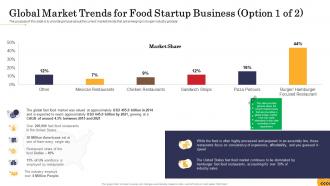
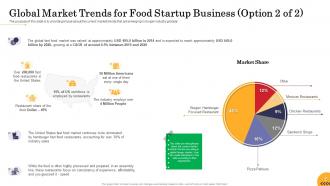
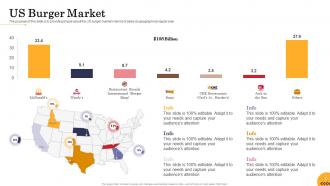
This PPT Preset addresses global market trends concerning food startup businesses. It has a predesigned bar graph that can be used to highlight the market share of food ventures. In the PPT Slide, burger/hamburger-focused restaurants, pizza parlors, sandwich shops, chicken restaurants, and Mexican restaurants are given special attention. At the bottom right, there is a section you can use to record insights that must be presented to the stakeholders.
Template 3: Major Driving Growth Factors
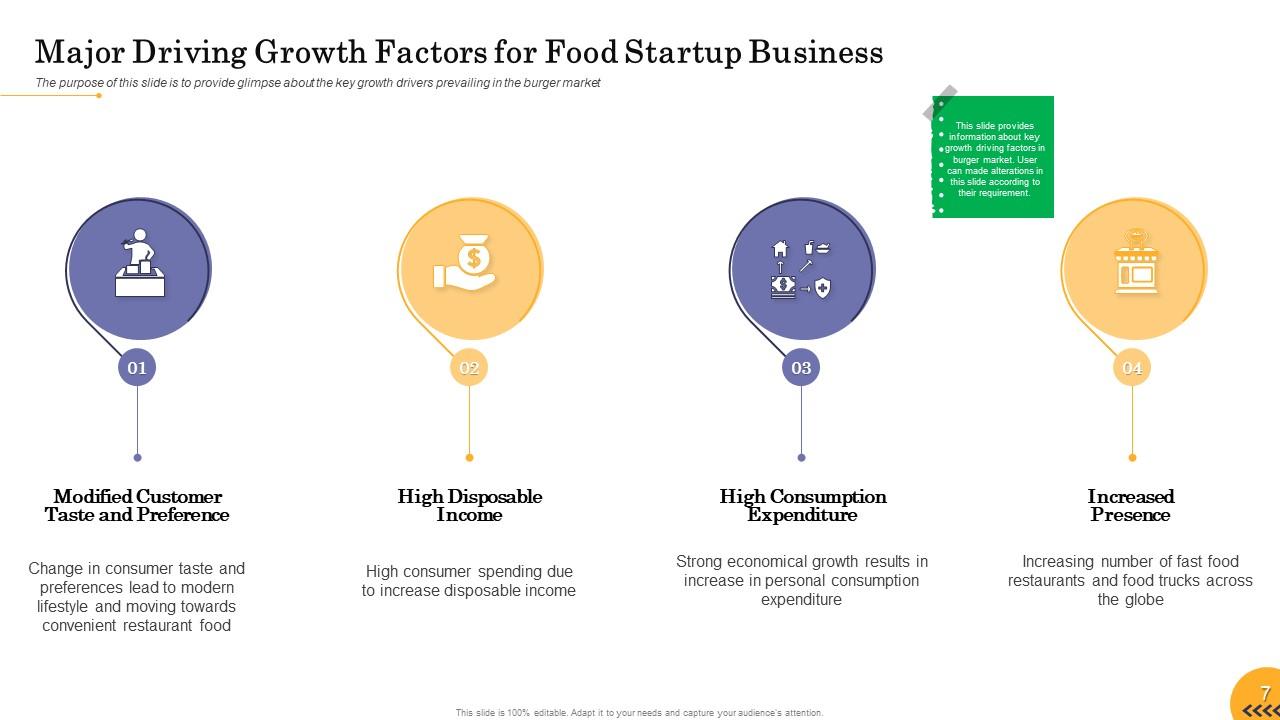
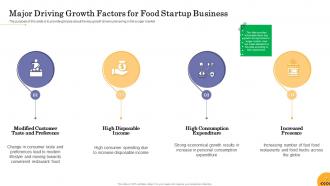
Knowledge of the industry growth factors you are entering is key to sustaining longevity. The above PPT Slide discusses growth drivers using individual icons and a dedicated color scheme that promotes easy comprehension. The growth factors explained here are customer tastes and preferences, disposable income, and consumption expenditure. Space is provided under each factor to record important notes.
Template 4: Global Burger Market Presence
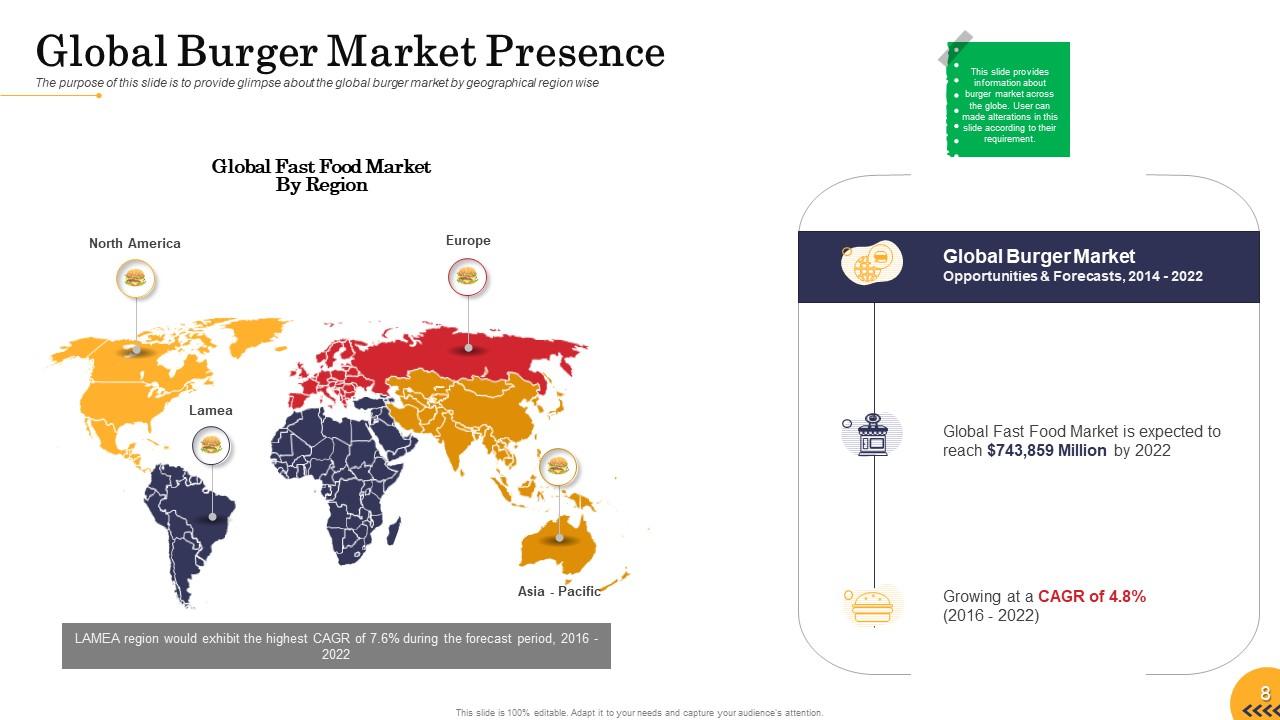
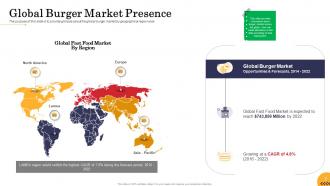
This PPT Slide presents the global market of the burger industry using a well-made graphic of the world map. At the right is a section that records insights, such as market forecast, CAGR rate, etc. This clear representation of global market data helps users understand the market and equips them with relevant information for making decisions.
Template 5: Company Overview
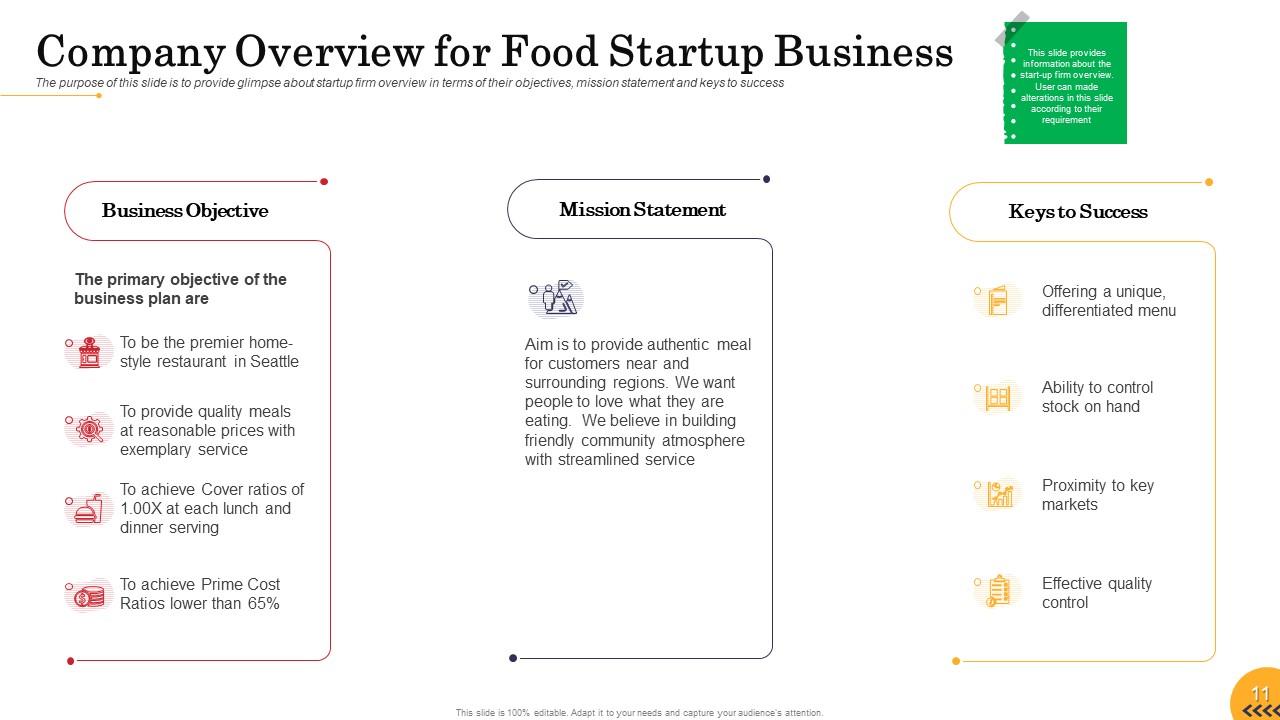
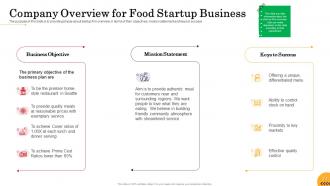
This predesigned PPT Layout helps you craft an inclusive company overview for your food startup business. It starts with drafting business objectives, which are divided into four key pointers. Then, there is a prewritten mission statement that you can use or edit to suit your needs. At the rightmost corner of the slide, there is a section that discusses four keys to success: offering a unique and differentiated menu, the ability to control stock, proximity to the market, and quality control.
Template 6: Company Description
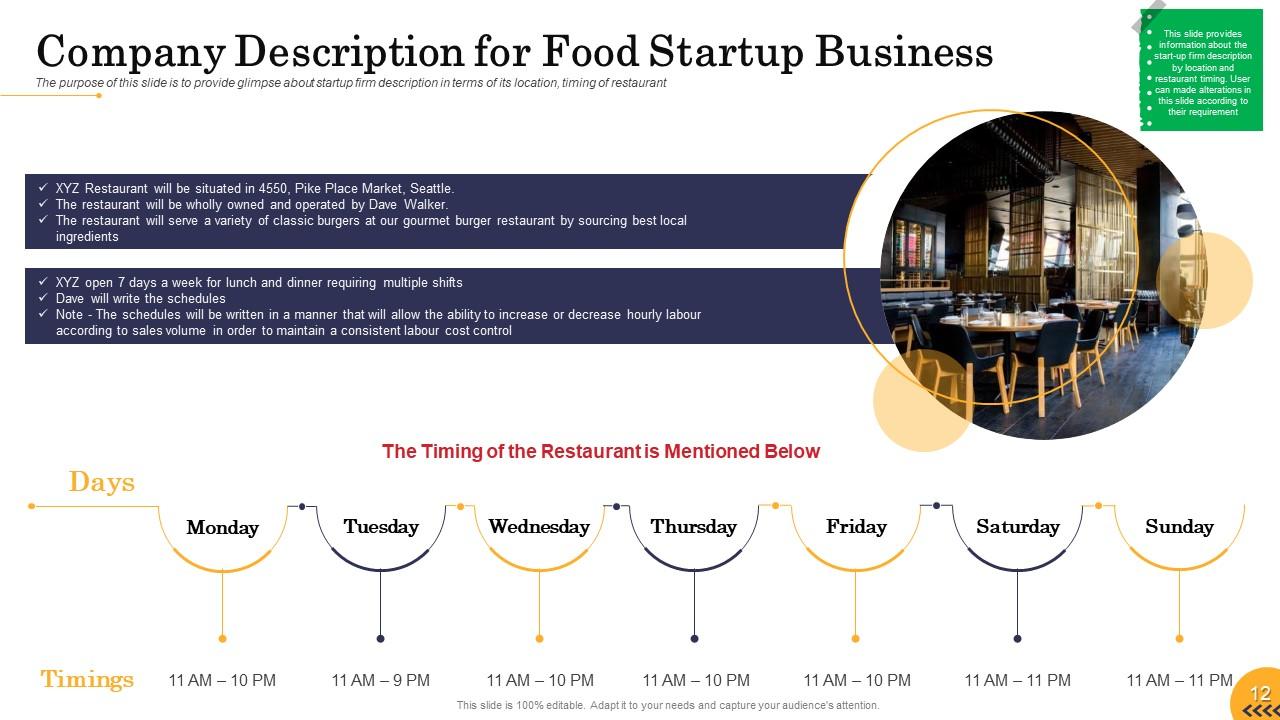
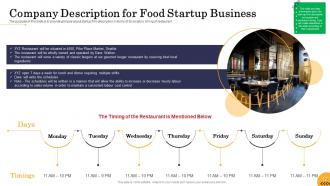
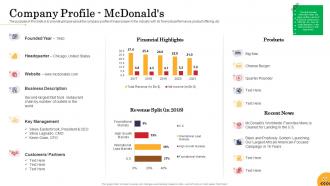
Your customers become loyal ones when they feel they know your business personally. This PPT Slide helps showcase details about your business. It highlights your business address, people who are behind the wheel, your USP, and more. There’s a section at the bottom that displays information regarding the days and times your business is open.
Template 7: Ownership and Business Formation
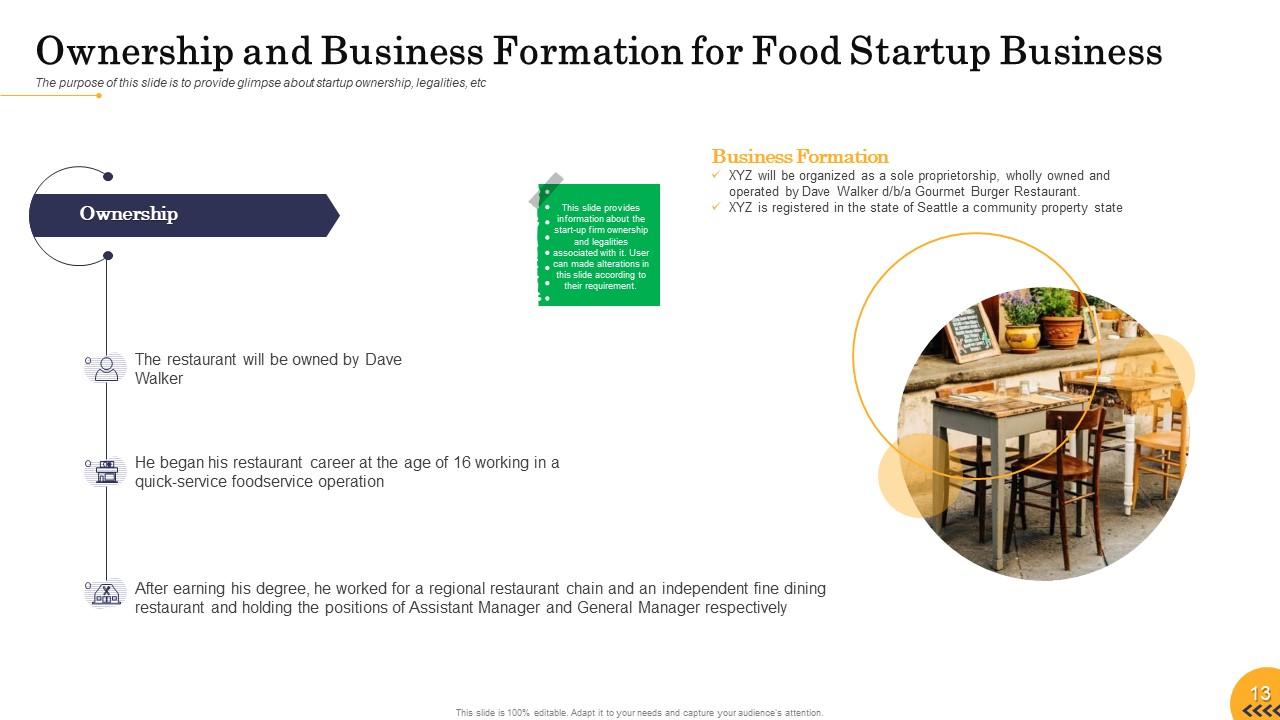
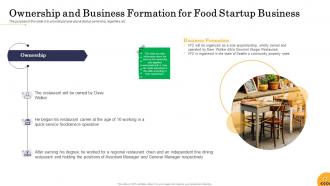
This is a continuation of the previous slide. It presents an overview of the ownership of your venture and its formation. This PPT traces the details of the Founding Father of the business on a vertical timeline graphic. On the right is a section that explains the business formation from the outset. For example, the slide mentions that the business is registered as a Sole Proprietorship, owned and operated by a single person.
*****
The Takeaway
And with that, we'll leave you with one final piece of advice for success: work hard, don't give up, and be willing to break the mold. The bottom line is the measure of success, but it is critical to assess, track, and review performance across a variety of metrics to reevaluate and tweak your business model as you go.
Starting a new business will be difficult and likely uphill, but in the end, nothing tastes sweeter than success.
P.S. If you need a business plan for your startup in the food industry, we have just the solution. Click here to explore our premium product on the Food Industry Business Plan.
Food startup business powerpoint presentation slides with all 60 slides:
Use our Food Startup Business Powerpoint Presentation Slides to effectively help you save your valuable time. They are readymade to fit into any presentation structure.
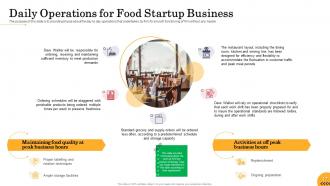
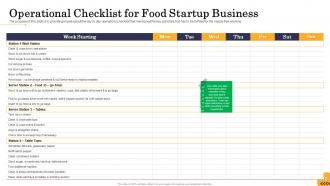
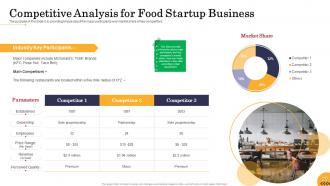
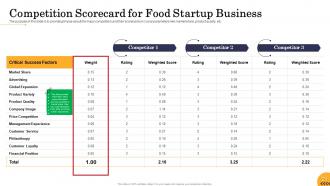
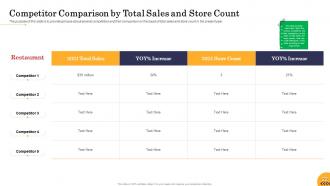
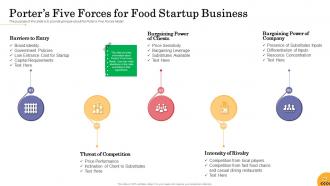
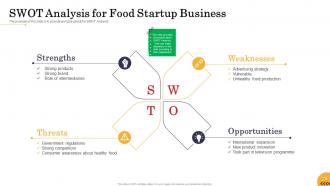


FAQs for Food startup business
Honestly, everyone's obsessed with sustainability right now - like, eco-friendly packaging is basically non-negotiable. Personalized nutrition is massive too. Plant-based stuff is still everywhere but it's getting crowded, which makes sense. Direct-to-consumer brands are killing it on social instead of dealing with traditional retail headaches. AI's popping up in weird places like supply chains and recipe creation. Ghost kitchens aren't slowing down either, same with meal kits. But real talk - don't just chase trends. Find an actual problem people have and solve that instead.
Honestly, you've gotta find what makes you different - could be targeting some weird dietary need nobody talks about, or maybe killer packaging, or just a story people actually care about. Yeah the food space is insane right now, but there's still room if you're solving something real. Think about what the big guys totally miss - like actually healthy stuff for parents who are drowning, or flavors from your grandma's recipes that aren't watered down. Whatever angle you pick though, make sure you can actually pull it off consistently. Start by just asking people what they wish existed but can't find anywhere.
Honestly, sustainability can make or break food startups now. Younger customers especially will straight up choose your competitors if you don't care about the environment - it's wild how much it affects loyalty. The cool part? Most sustainable practices actually save you money through less waste and better efficiency. Perfect when cash is tight, right? Investors are obsessed with ESG stuff these days too, so it opens funding opportunities. My advice would be pick one thing you can actually stick to and do it well. Don't try to be everything at once.
Start with your own money, then hit up family and friends. Crowdfunding is actually perfect for food - people get to try your stuff instead of pretending to understand some weird app idea. After that, look for CPG-focused angels, then VCs if you're growing like crazy. Oh and there are food accelerators too like Techstars Farm to Fork. Track your numbers from day one though. Investors will definitely want to see your unit costs and supply chain breakdown - that stuff gets messy fast in food.
Oh man, branding is EVERYTHING for food startups. Seriously, walk down any grocery aisle - you'll see what I mean. Your packaging and logo need to scream your vibe before anyone even tries your product. Look at Sweetgreen or Halo Top - you know exactly what they're about just from seeing them. Colors, fonts, the whole visual thing should match who you're trying to reach. I always tell people to nail down your brand personality first, then build everything else around that. Also, your brand story matters way more than you'd think. Skip this and you're just another random product competing on price.
Ugh, the regulations are honestly such a pain but you gotta deal with them. FDA stuff first - get your facility registered and figure out HACCP plans. Then there's state licensing (every state's different of course). Health department will want to inspect if you're manufacturing anything. Labeling is where they really get you - nutrition facts, ingredients, don't even think about making health claims without checking the rules first. Oh and make sure your location is zoned right. Seriously though, find a good food lawyer now before you get too deep into this. Budget for all these compliance costs upfront or you'll hate yourself later.
Honestly, behind-the-scenes stuff kills it every time - show your prep work, how customers react when they taste your food, tell stories about where you source ingredients. TikTok and Instagram are obvious choices, but Facebook's actually great for building a real community around your brand. Show the people! Your story, team goofing around, even when stuff goes wrong in the kitchen (trust me, people eat that up). Post maybe 3-4 times weekly and actually reply to comments fast. Consistency matters, but so does being real with your followers - that's what separates you from chains.
Definitely start with surveys and focus groups - seriously, people LOVE sharing their food opinions so you'll get tons of feedback. Hit up your competitors too. Visit their spots, check out menus, read reviews online. Demographics matter way more than you'd think, so dig into what your target customers actually spend and eat. Pop-ups and farmers markets are perfect for getting real reactions from people. Oh, and look into licensing stuff early because every city has different weird rules. Honestly though, nothing beats just talking to potential customers face-to-face instead of staring at data all day.
Your ingredients basically decide what shelf you're on and what you can charge. Go with organic or grass-fed stuff? You're in premium territory. Stick with conventional ingredients and you're looking at mass market pricing. People judge your product before they even try it - they read that ingredient list first thing. I've seen brands mess this up by not matching their ingredients to what their customers actually want or can afford. Short sentences work. Make sure whatever you pick aligns with your target market's values and budget, then tell that story well on your packaging. It's honestly one of your biggest positioning tools.
So D2C gives you way better margins and you actually get to know your customers. But damn, you're doing everything - marketing, shipping, the whole deal. Can get pretty crazy honestly. Retail gets your stuff everywhere and they handle logistics, which is nice. You'll lose a chunk of profit though, plus zero direct customer contact. Most food startups I know do both actually. They start D2C to test things out and build the brand first. Once they've got some traction, then they move into stores. I'd probably go D2C initially just to see if people actually want what you're making.
Get your processes locked down first - that's everything. Write out detailed recipes and quality standards that literally anyone can follow, not just you. I've watched so many companies mess this up and suddenly their product tastes different every single time. Train your staff properly and find reliable suppliers. Don't go from making 100 units straight to 10,000 either - that's asking for trouble. Test each level first. Your customers will definitely notice if quality drops, so honestly it's better to grow slower and keep what made people fall in love with your product originally.
Honestly, farmers markets are where it's at when you're starting. You'll get instant feedback, build real relationships, and test your prices without dropping tons of cash upfront. Local grocery stores work great for consistent sales once you prove people actually want your stuff. Your own website or Amazon gives better margins plus you get all that customer data - super valuable. Oh, and food trucks might work depending on what you're making. My advice? Pick one thing and absolutely crush it before moving on. I've seen too many people try everything at once and just burn out completely.
Your first customers are everything - treat them like gold and they'll spread the word for you. Get on social media and actually reply to people personally, don't just post and ghost. Pop-ups and tastings work crazy well for food stuff, people need to taste it to buy it. Always ask what they think and actually use their feedback. Email lists are huge from the start - share your story, the messy behind-the-scenes moments, even when things go wrong. People eat that up. Oh and obviously don't mess up the basics like quality and showing up on time, but you probably knew that already.
Honestly, start with automation and analytics - biggest impact for your money. Cloud inventory systems will save you from those "oh crap we're out" moments (been there, it sucks). AI demand forecasting is pretty solid now for predicting what people actually buy. Mobile POS and contactless ordering? Yeah, you kinda need those at this point. IoT sensors for tracking temps and food safety are huge if you're doing perishables - which, let's be real, most places are. Pick maybe two things that fix your worst headaches first, then add more later. Don't try to do everything at once.
Oh man, definitely get cozy with multiple suppliers ASAP - I got burned by putting all my eggs in one basket early on. Payment terms are huge for cash flow, so negotiate those hard. Distributors can be lifesavers for logistics when you're starting out, honestly saves so much headache. Track your inventory like a hawk and try to forecast demand, though that's basically impossible when you're scaling fast lol. Food supply chains are completely unpredictable, so build in extra time for everything. Having backup plans ready before shit hits the fan is clutch.
-
Best way of representation of the topic.
-
Perfect template with attractive color combination.
-
Best Representation of topics, really appreciable.
-
Enough space for editing and adding your own content.
-
Great designs, Easily Editable.