


Business Plan Overview Powerpoint Presentation Slides





Try Before you Buy Download Free Sample Product
 Impress Your
 Audience
 100%
100% Editable
 Save Hours
 of Time


If you are bothered about how to write a perfect business plan for startups, then the content-ready startup business plan PowerPoint presentation slides can be really helpful for you. The content-ready presentation can help you make strategies and plans for your organization effectively and efficiently. Our company strategy summary presentation has templates on vision & mission, departments and teams, organizational structure, our team, mobile app showcase, press and media coverage, traction, e-commerce, infographic process, milestone achieved, core values, export analysis, organizational structure and geographical reach topics which will be helpful for you to present your audience. Not just this, if you are looking to create a PPT on company overview, industry overview, company description, decision making, growth opportunities, executive summary, marketing strategy, operational planning, & financial development then you can go for this business idea PPT slides. Elaborate on the relevance of displaying a commitment to our business plan overview presentation templates. Your thoughts are about to boil the ocean. Generate the waves with our Business Plan Overview PowerPoint Presentation Slides.
People who downloaded this PowerPoint presentation also viewed the following :
Content of this Powerpoint Presentation
When Airbnb was founded in 2008, the founders Brian Chesky, Joe Gebbia and Nathen Blecharczyk struggled to attract investors. However they gave in to draft a detailed business plan which outlined their vision, mission and an overview of the business goals. With help of a well-developed business plan overview they managed to secure funding and investors. Today, Airbnb is one of the leading names in the hospitality industry with millions of listings worldwide and its value in billions.
A business plan highlights a company’s goals and how it plans to achieve them. It is beneficial for a start-up as well as an established enterprise.
Using SlideTeam’s professionally curated PPT Template on Digital Sales Business Plan Overview, improve sales by reaching maximum audience.
A business plan overview highlights the general explanation of a business. It is an elevator pitch of your company highlighting its values, structure, vision and offering that differentiates your company from the competitors. It emphasizes the benefits and advantages it offers.
Using a custom-ready PowerPoint Template with professionally curated layouts and visuals save time and effort. They provide consistency and coherence which enhances the overall impact of the presentation. These slides are 100% editable and customizable, giving you the flexibility to adapt it according to your specific business requirements.
Template 1: Company Overview
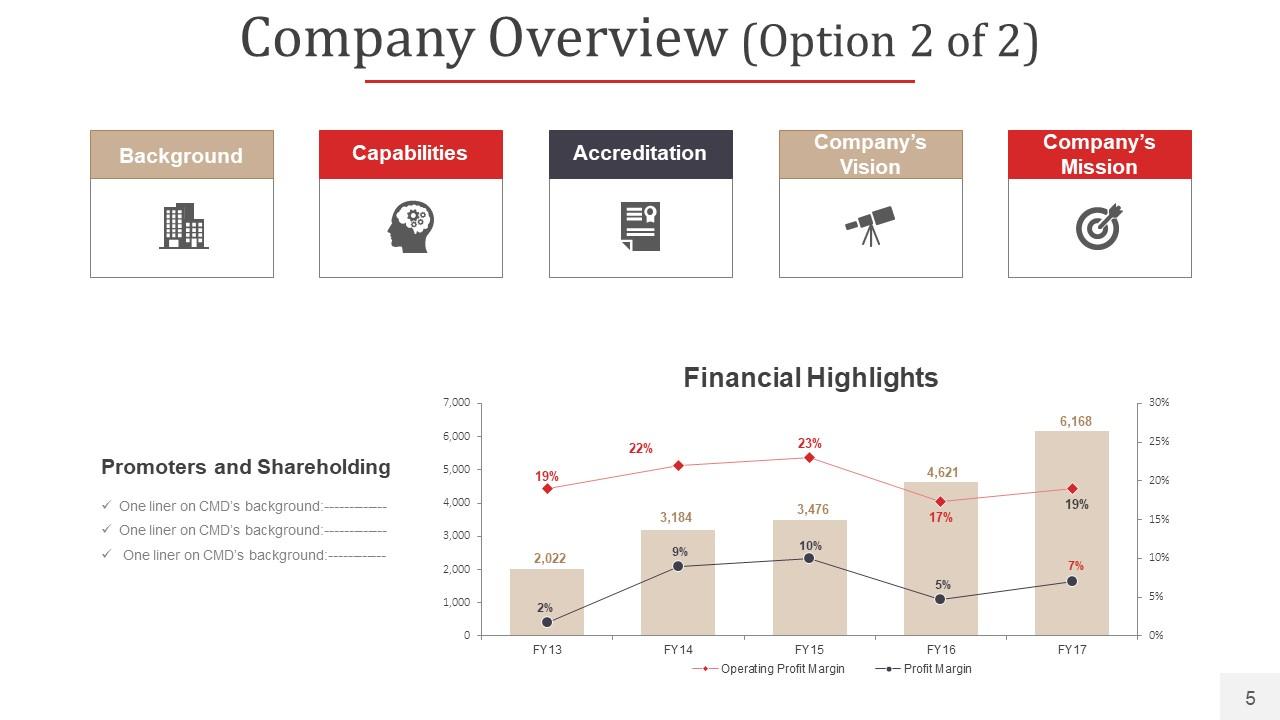
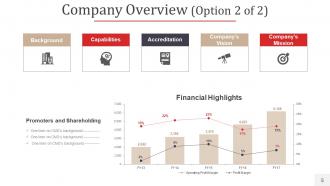
This Slide provides the overview of the company by providing the background, capabilities, accreditation, company’s vision and mission. These elements are accompanied with their dedicated icons for better comprehension. It has a separate dedicated section which illustrates a graph showcasing the financial highlights of the company with operating profit margin in red and profit margin in blue.
Template 2: Departments and Teams
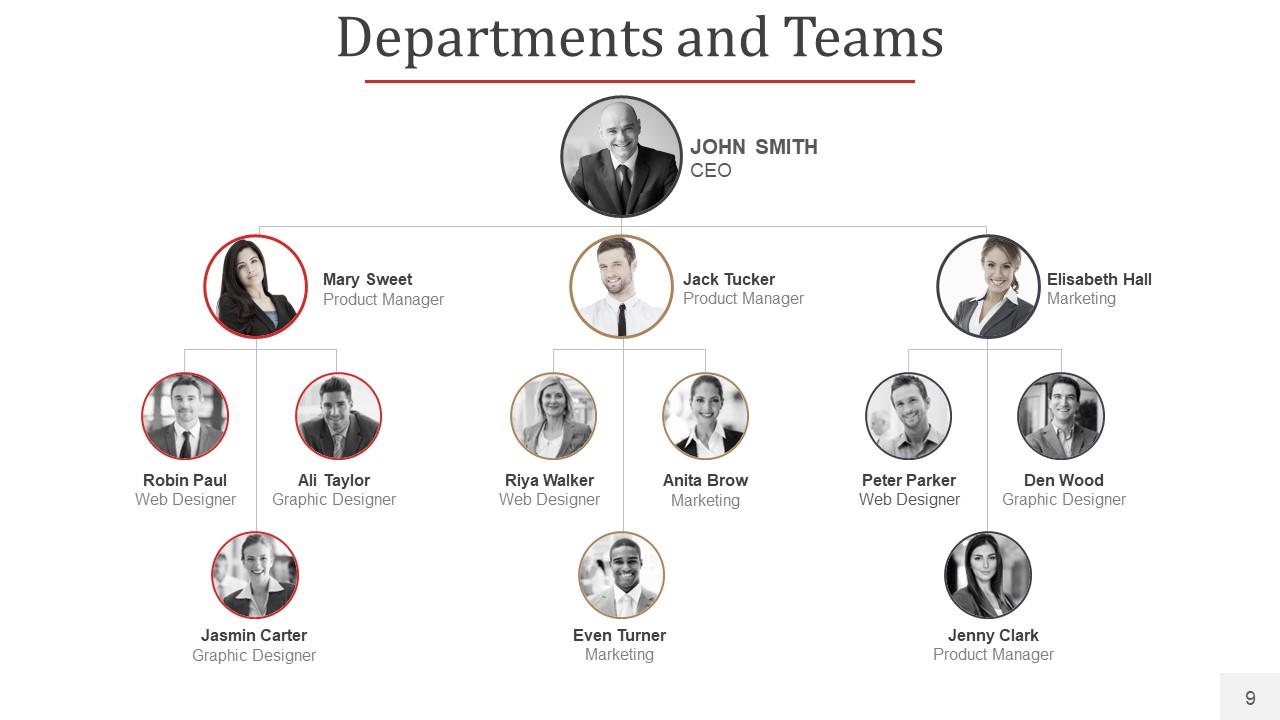
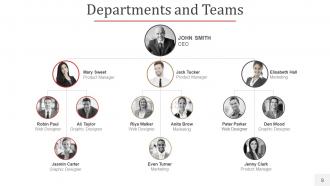
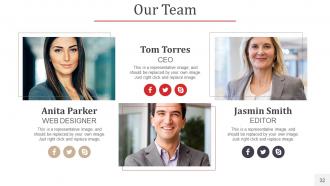
This Slide highlights the departments and teams of the organization which are responsible for the project and business. It is represented in the form of a hierarchy tree which includes the CEO of the company, product managers, web designers and graphic designers under them with their pictures. Including this slide in the overview of the company provides confidence to the stakeholders and makes them aware of the people involved.
Template 3: Milestones Achieved
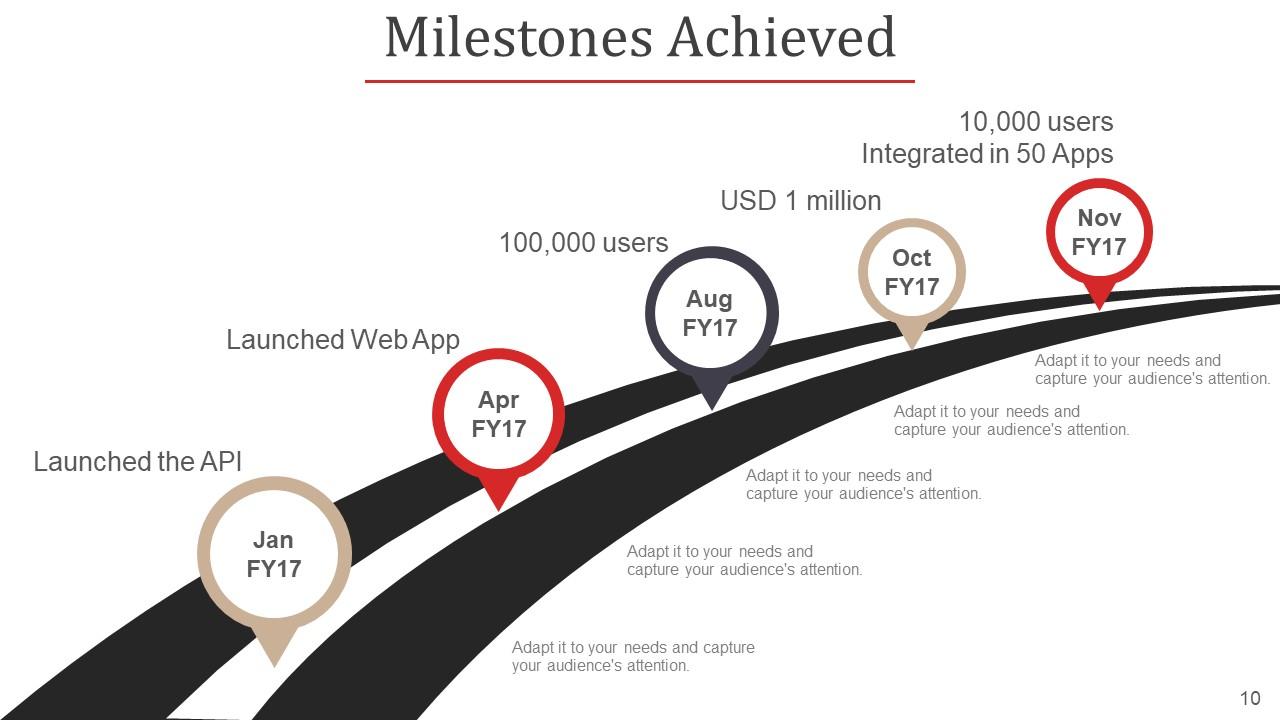
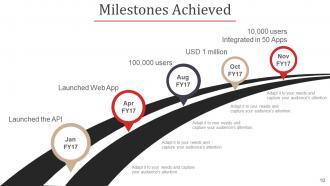
Milestones are the goals that a company targets to achieve in a specific period of time. These instill confidence in the investors about the vision of the company. The mentioned slide illustrates a roadmap with the milestones achieved by the company through the months and years. The template highlights the milestones like launch of the API, launch of the web-app, reaching the milestone of achieving 100,000 users, and more.
Template 4: Core Values
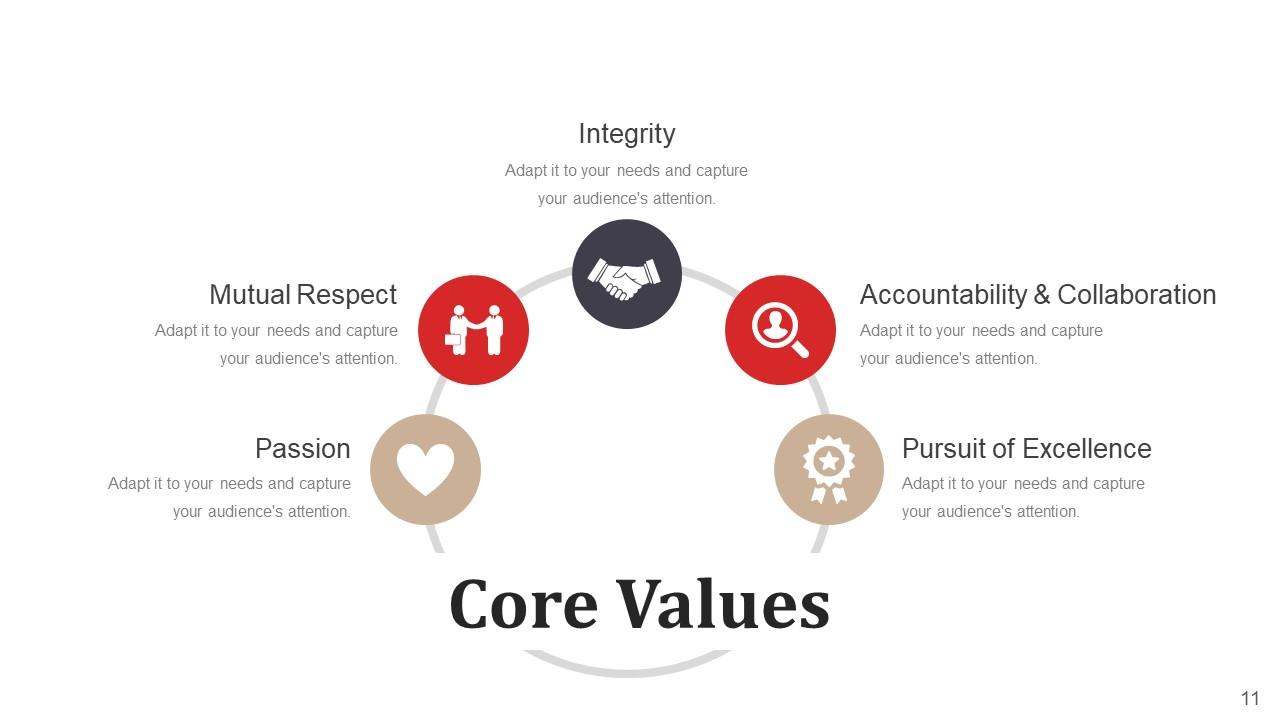
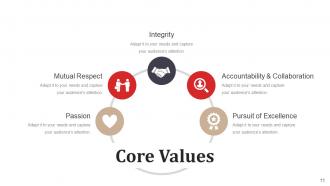
The core values of a company define a company’s culture and behavior. Through these, the investors gain insight into the company’s ethics which promotes trust and transparency. This attracts like-minded employees and partners. The core values included in this slide are passion, mutual respect, integrity, accountability and collaboration and pursuit of excellence with their respective icons.
Template 5: Organization Structure
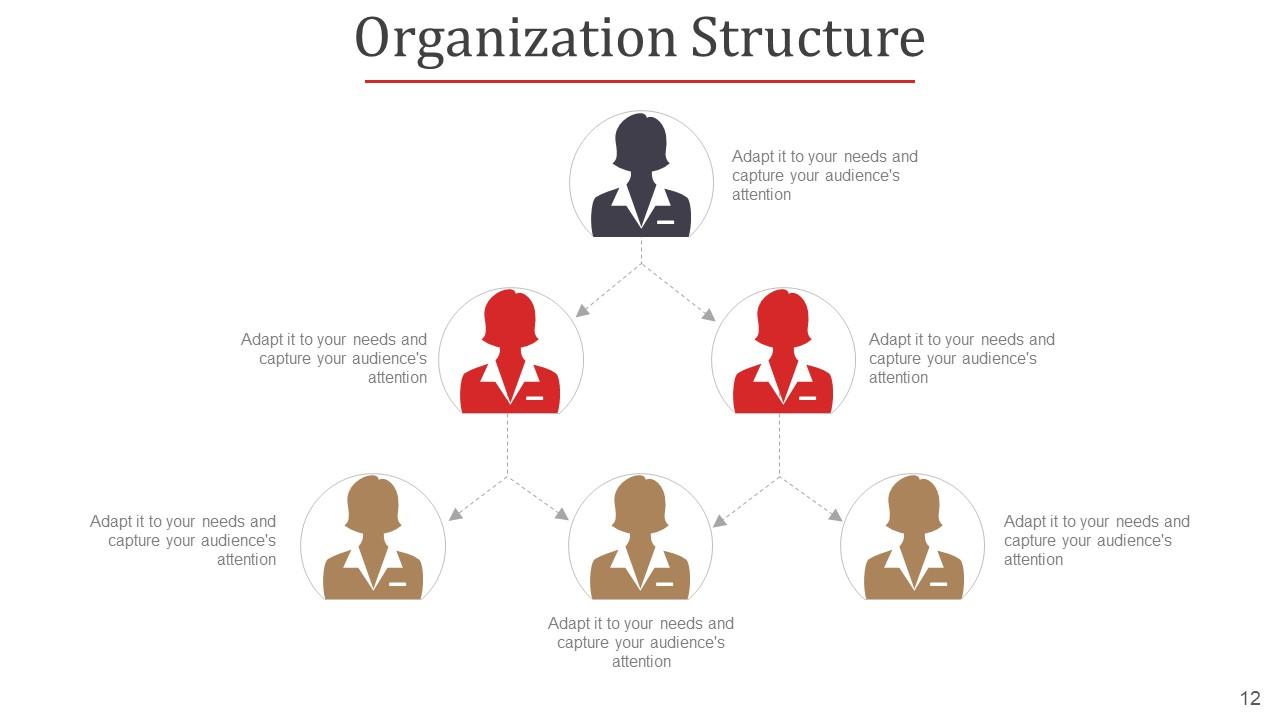
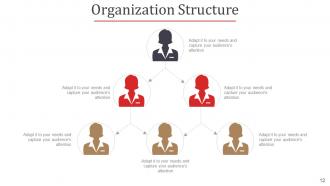
This slide provides the stakeholders with an understanding of the structure of the company and how the final decisions are processed. It helps in understanding the key roles and responsibilities within the company. The structure is presented in form of a web with the pictures of the members included.
Template 6: Mobile App Showcase
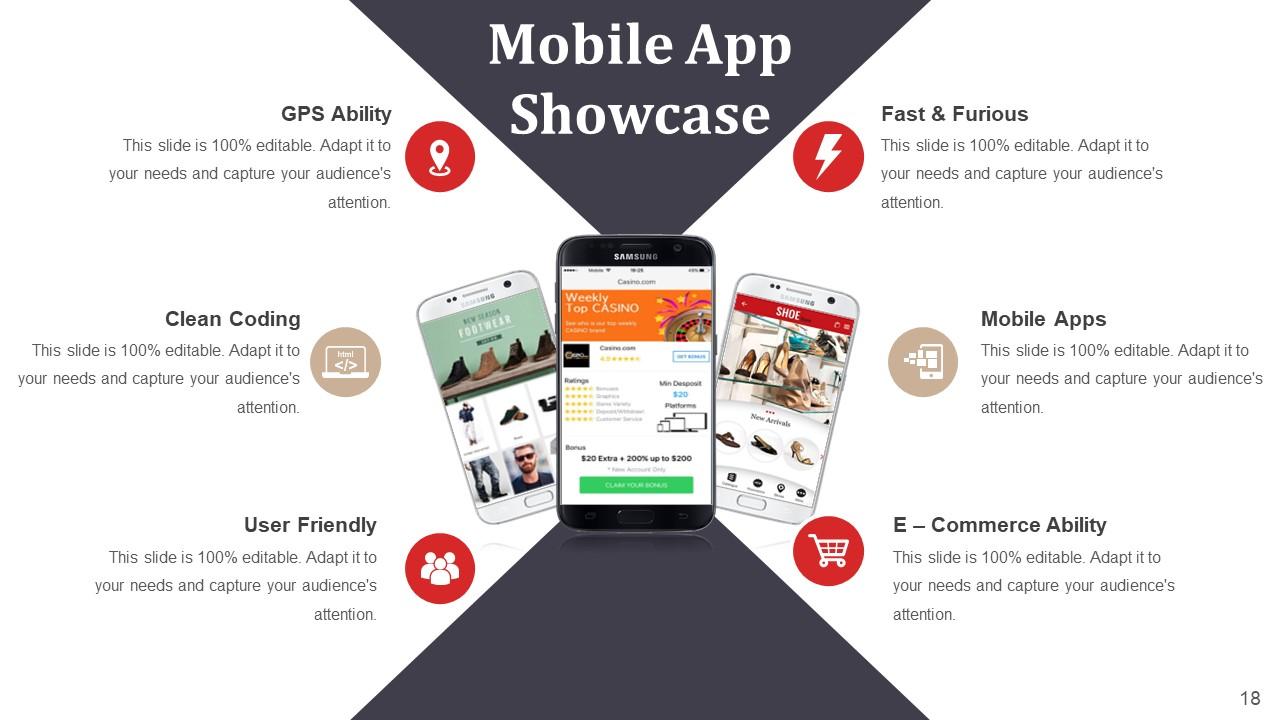
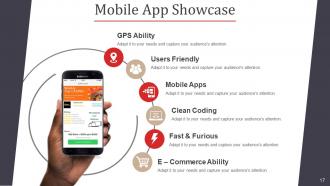
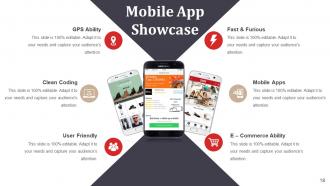
Adding a mobile app showcase in the company overview demonstrates the technological relevance of the organization. It highlights the company’s dedication towards modern customer-base and flexibility to adapt to the evolving market trends. This slide highlights the elements like GPS Ability, clean coding, user friendliness, fast and furious, mobile apps, and E-commerce ability.
Template 7: Our Services
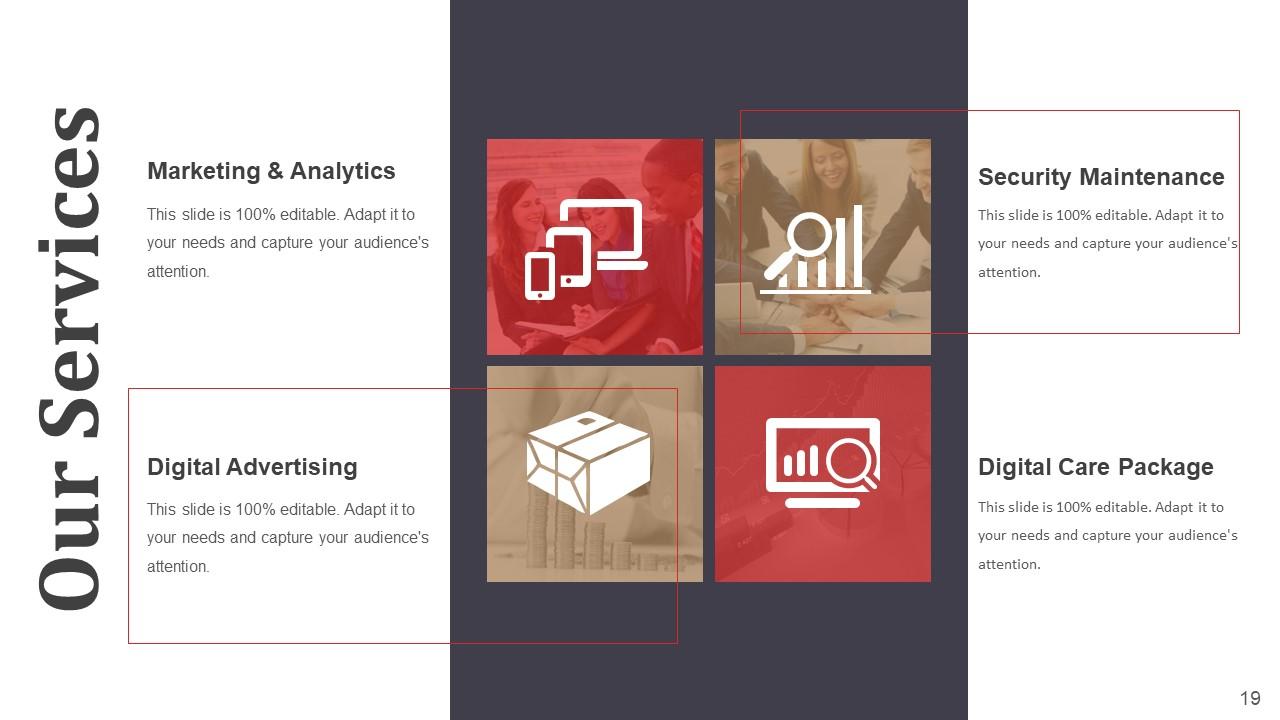
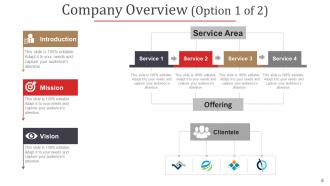
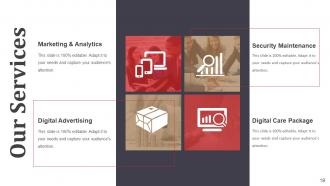
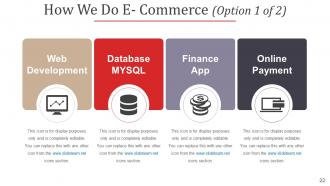
This slide showcases the services that the company provides to its clients. These services may include Marketing and Analytics, Security Maintenance, Digital Advertising, Digital Care Package. It is represented in the form of 4 boxes which are color coded with their respective icons. There is a dedicated space under each service where you can write a brief description about what is presented under each service.
Template 8: How we do our job
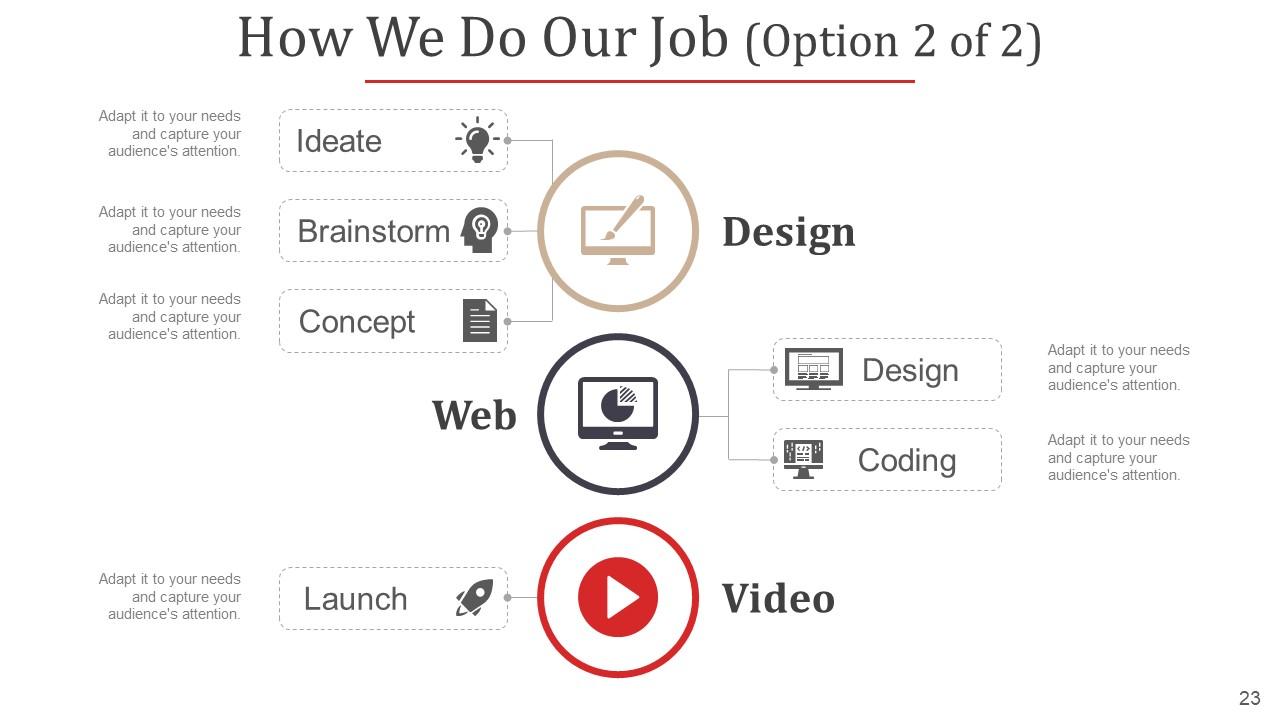
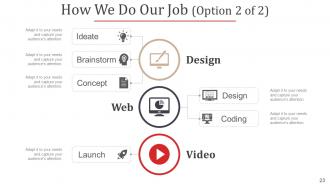
The process flow of how a company does its job is an essential element of the company overview. The process flow initiates with an idea and shares it with the team. This is followed by brainstorming and concept creation. Once the design is clear, the next step is to bring that design to life by designing it. This process includes designing and coding for the final launch. This facilitates better understanding of the time the company takes to fulfill a specific service.
Template 9: Infographic Process
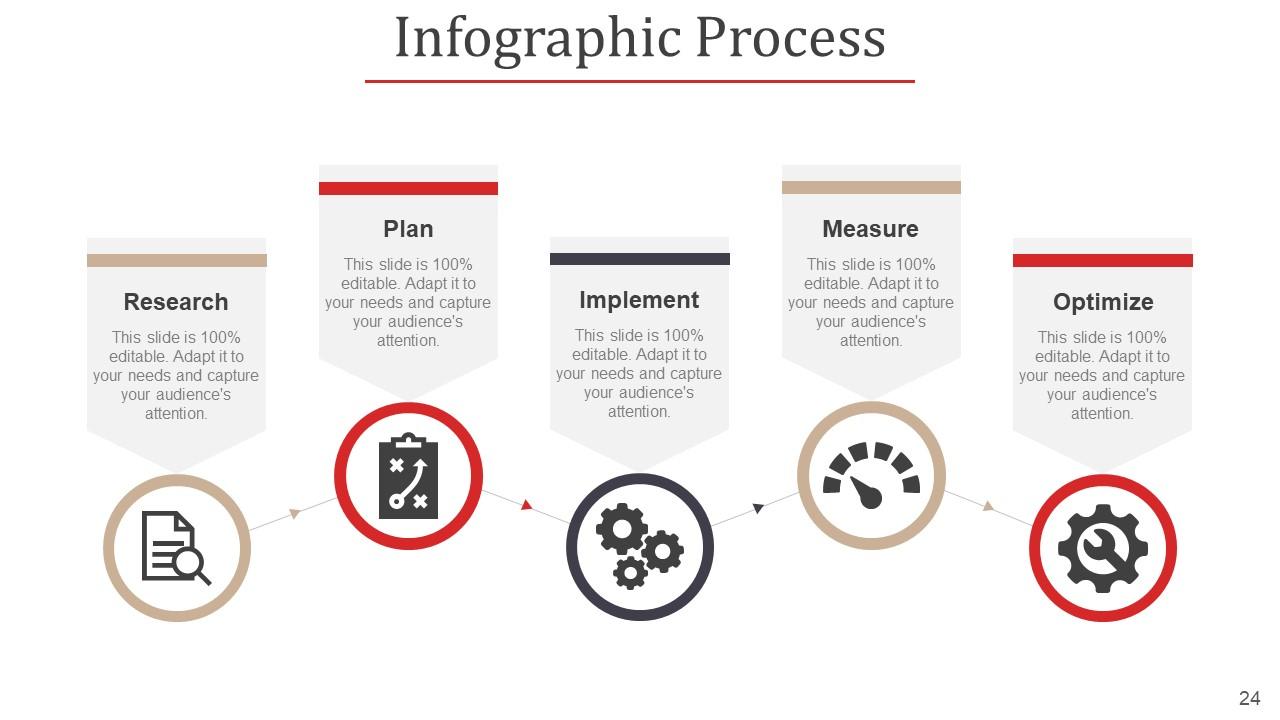
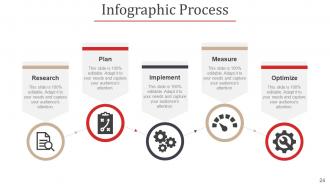
This given slide showcases an infographic process a company undertakes to fulfill a project. It starts with researching followed by creating a plan and implementing it. Next comes the measures undertaken and how efficiently it is optimized. There is a dedicated space under each of the elements with different color combinations and respective icons aiding in better comprehension and layout of the information for the viewers.
Template 10: Some Quick Facts
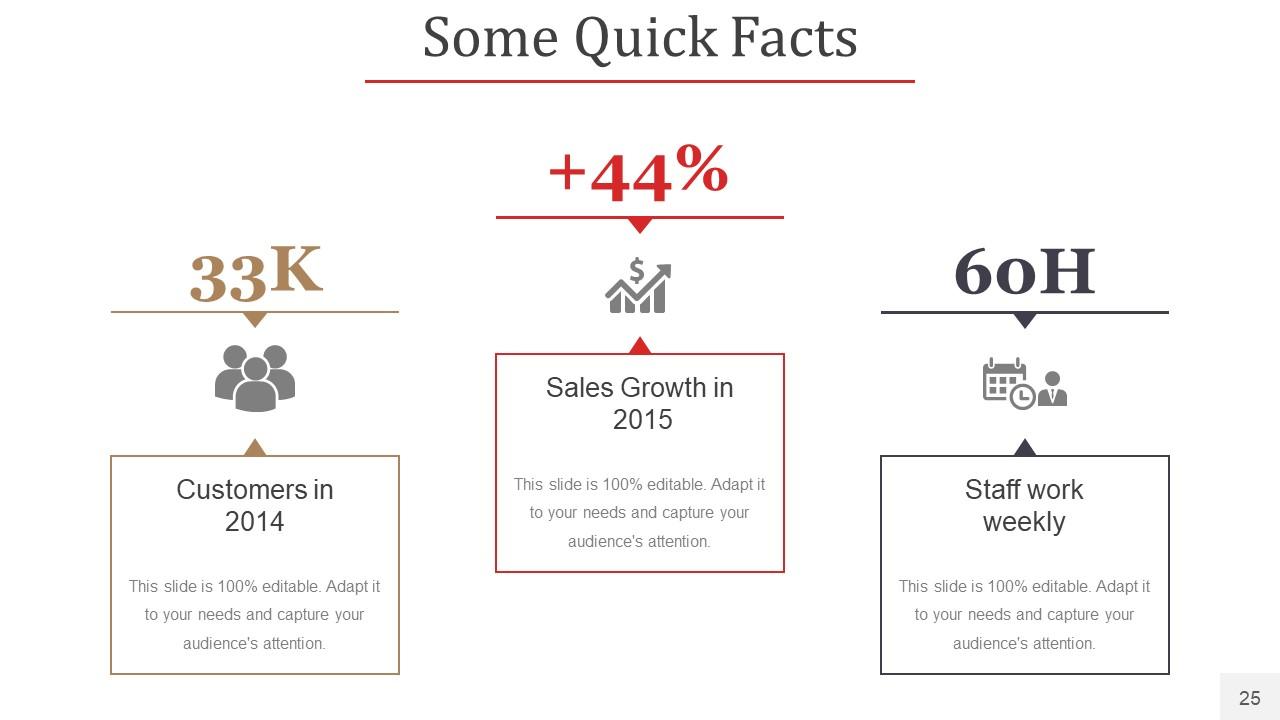
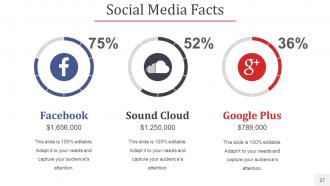
Showcasing facts about a company in its overview provides the investors with a snapshot of the accomplishments the company has achieved over the years. These are the facts which make the company different from its competitors. The facts could be related to growth in the number of customers, hike in sales and staff work on a weekly basis. You can also add statistics for the same along with dedicated icons for each.
Wrapping Up
The overview of a business plan concludes with a call to action which invites the investors to further engage with the company. A well-drafted business plan overview makes all the difference. It captures the investor’s attention, gathers interests and communicates the company’s value, setting a stage for the company's success. Employing this powerpoint template bundle by Slideteam, provides you with a structure that allows you to effectively develop an overview without the tedious task of starting from scratch.
PS: Check out our professionally curated PowerPoint Template design for strategic HR business plan overview.
Business Plan Overview Powerpoint Presentation Slides with all 66 slides:
The harder the test the better we get. Our Business Plan Overview Powerpoint Presentation Slides will rise to any challenge.



















FAQs for Business Plan Overview
So you'll want an executive summary, market analysis, product description, marketing strategy, operations plan, team info, and financial projections. Honestly, most investors just skim the executive summary first - sometimes that's all they read. Your market research needs to prove you actually get your customers and competitors. Oh, and don't go crazy optimistic with the money stuff. VCs can smell BS financial projections from a mile away. The whole thing should flow like a story about why you're gonna win. Start with just one page though - way less overwhelming than diving into a massive document right away.
Look, investors want proof you're not just throwing stuff at the wall and hoping something sticks. Your business plan shows you actually get your market and have realistic money projections - not those crazy hockey stick charts everyone makes. They need to see your competitive edge and exactly how their cash will help you grow. Honestly, most people skip the boring financial details, but that's where you prove you're serious. Keep projections conservative (you can always beat them later) and spell out specific milestones for the funding. It's basically showing you can think AND execute.
Dude, you gotta do market research first - it's literally what makes or breaks your whole plan. Skip it and you're just guessing about what customers actually want (which never ends well). Start with surveys and check out your competition. Industry reports help too. This stuff feeds into everything - your pricing, marketing strategy, financial projections. Investors will spot BS assumptions from a mile away. I learned this the hard way with my first startup idea... anyway, get real data before you write anything else. It'll save you tons of headaches later.
Start with people who actually have your problem AND can pay to fix it. Get specific about demographics, behaviors, what's bugging them - "everyone" isn't a real target (trust me on this one). Surveys and customer interviews are your best bet for validation, plus checking out what competitors are doing. Build detailed buyer personas your team can actually picture. Short sentences work. Longer ones should flow naturally when you're explaining the reasoning behind choices. The real test? Can you clearly explain why these specific people would pick you over other options? That's honestly where most people mess up.
Dude, the worst thing you can do is inflate your numbers - like claiming you'll capture 10% of some massive market. Investors roll their eyes at that stuff instantly. Keep it under 20 pages too, because honestly, who has time? Don't pretend competitors don't exist either. That screams "I didn't do my research." Oh, and here's something I see all the time - people get obsessed with listing every cool feature instead of explaining what problem they're actually fixing. Focus on the customer's pain point first. Make it real, make it short, and you'll be golden.
Honestly, I'd say quarterly reviews work best - way better than just doing it once a year. Market stuff changes so fast these days. If you get new funding or pivot your whole strategy, update it right away though. Don't wait around. I always think of it like... you know when your GPS has to recalculate after you take a wrong turn? Same concept. Just set a calendar reminder or you'll totally forget (I always do). The worst thing is having this business plan that's completely disconnected from what you're actually doing day-to-day.
Definitely need your revenue projections and operating expenses - like 3-5 years out. Cash flow statements too, plus profit/loss forecasts. Break-even analysis is huge because investors want to know when you'll actually turn a profit. Also throw in key ratios like gross margin and customer acquisition costs. Monthly burn rate if you're just starting out. Three scenarios work best: realistic, best-case, worst-case. Nobody likes founders who seem too optimistic, you know? Oh and make your assumptions really detailed - back everything up with actual market research or solid reasoning. The granular stuff makes you look legit.
Dude, just put real numbers on everything instead of being vague. Like don't say "boost sales" - say "hit $500K by December" or "get 200 new customers in 6 months." Your financial section already forces you to do this anyway. Marketing goals should be specific too - "1,000 monthly website leads" beats "improve online presence." Most business plans are honestly trash because they're so wishy-washy. Every big goal needs a number and deadline, period. That way you'll actually know if you're crushing it or if it's time to change course. Makes tracking progress way easier.
So basically, traditional business plans are these massive 20-40 page beasts with all the financial projections and market research - think bank loan application vibes. Lean startup plans? More like a one-page sketch of your main ideas and how you'll test them fast. Real talk though - I've never met anyone who actually finished writing one of those huge traditional plans. Way too much work for something that'll probably change anyway. Lean plans make way more sense when you're starting out since you can tweak them without wanting to cry. Plus you don't have to pretend you know stuff you don't yet. Start lean, then beef it up once you've got actual numbers to back things up.
Right after your market analysis, throw in a competitive analysis section. I know, I know - researching competitors is boring as hell, but investors expect it. Map out your direct and indirect competitors first. Break down their pricing, how they market themselves, strengths, weaknesses, all that stuff. Don't trash talk them though - be fair about what they actually do well. A comparison chart works great here since people love visuals. The whole point is proving you get your competitive landscape and can explain why you're different. Oh, and update it regularly because things shift pretty quickly.
Okay so here's the thing - you've got to turn those big vague ideas into actual tasks with deadlines and names attached. Like instead of "boost sales," make it "get 50 new customers by end of Q2" and give it to Sarah or whoever. I've watched so many solid plans just die because they stayed too fluffy, you know? Set up monthly meetings to see what's working and what isn't. Oh and make everything specific enough that if someone random picked up your plan, they'd know exactly what step to take first. That's honestly the difference between plans that work and ones that collect dust.
So if you're doing a startup plan, spend most of your time proving people will actually buy your thing - like, really proving it, not just assuming. Market validation is huge. Also cover how much cash you need and when. Been there, seen so many plans bomb because they skip the "will customers pay?" part. For established companies? You can skip all that existential stuff since you already have revenue coming in. Focus more on beating competitors and scaling what's working. They've got historical data to lean on, which honestly makes everything easier. Just match what you write to who's reading it - investors want different stuff than your board does.
Dude, be super careful with IP stuff - don't spill too many sensitive details about your product or process. Financial projections need to be realistic and backed up, not pie-in-the-sky numbers that'll come back to haunt you when investors expect results. Check that you actually have rights to any trademarks or copyrighted stuff you're planning to use. Sounds boring as hell, I know, but it becomes a nightmare fast if you mess it up. Get a lawyer to look it over before you start sharing with investors or partners - trust me on this one.
Honestly, visual aids are a game changer for business plans. Charts showing your revenue projections beat boring text walls every time. People process images way faster than paragraphs - it's just how our brains work. You can use infographics for market analysis, diagrams for your business model, that kind of stuff. Makes everything look more professional too. I'd start with your key metrics and turn those into simple, clean visuals. Way easier for investors to get what you're doing at a quick glance. Trust me, they'll thank you for not making them read through pages of dense financial data.
Dude, start with the free SBA templates - they're actually pretty solid and won't cost you anything. SCORE has good ones too. If those feel too basic after you mess around with them, then maybe check out LivePlan or Bizplan for more guidance. Honestly though? A Google Doc template works fine if you're just getting started. Oh, and you'll definitely want IBISWorld for industry research - that data's gold. Don't forget financial projection templates to nail down your numbers. I went the free route first and upgraded later when I needed fancier features.
-
Wonderful templates design to use in business meetings.
-
Professional and unique presentations.
-
Good