

 0 Comment
 Customer Reviews

In today’s fast-paced business world, an office space business plan is more than just a strategic blueprint—it’s the foundation for sustainable growth and operational success. With workplace strategy now as crucial as financial planning, a well-structured real estate plan helps businesses make informed decisions about their office needs.
Balancing affordability with top-notch amenities is key to maximizing value for tenants. A well-managed space not only reduces overhead costs but also fosters creativity and productivity. Office space marketing isn’t just about buying or leasing property; it’s about creating an environment where businesses can thrive.
By staying ahead of workspace trends, optimizing layouts, and adopting innovative leasing strategies, companies can remain flexible, competitive, and ready for the future.
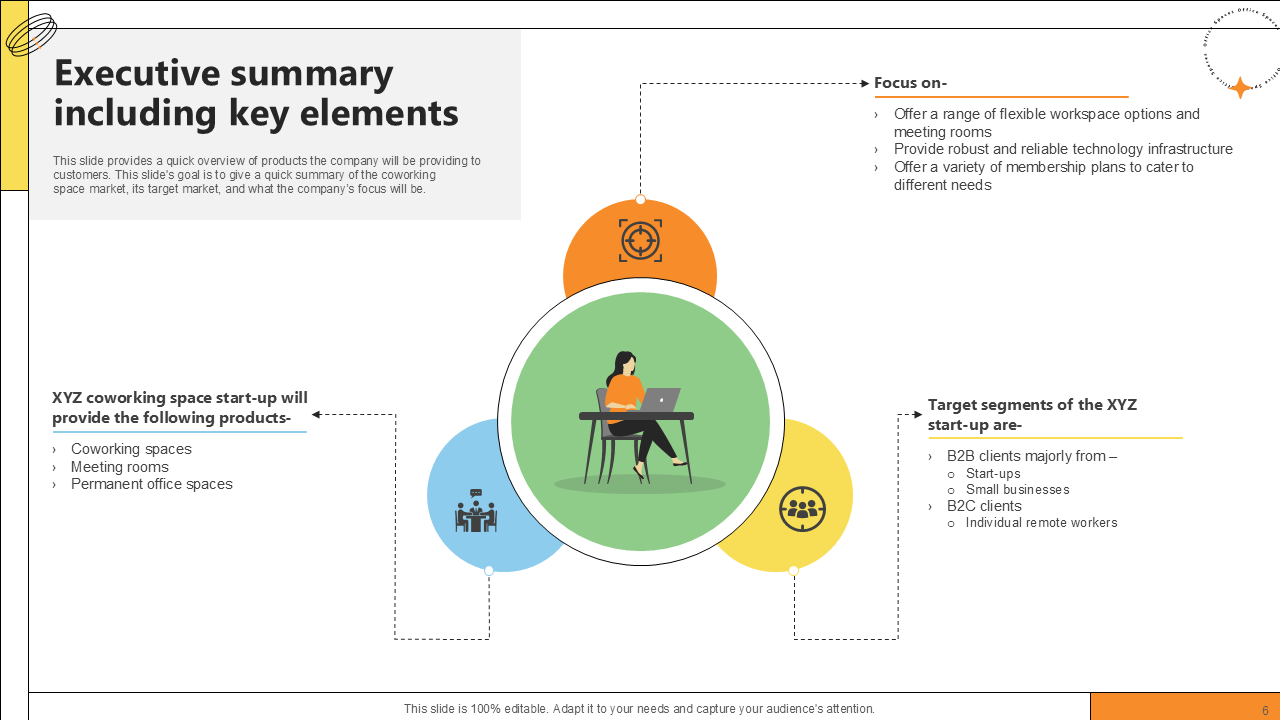
Template 1 - Executive Summary Including Key Elements Template
The business executive summary provides a concise yet powerful overview that captures the essence of a strategy, goal, or investment. It is the gateway to a comprehensive company plan, directing traders, stakeholders, or decision-makers through the key elements and compelling arguments. The government summary ensures impact, readability, and direction in a rapidly changing company environment and continuously changing market factors.
This template provides a quick overview of products the company will be providing to its customers. This slide summarizes the coworking space market, its target market, and the company’s focus. This template becomes an essential tool for understanding every opportunity as an imaginative, prescient detail and gives it clarity.
Template 2 - Detailed Introduction to Coworking Space Start-Up Template
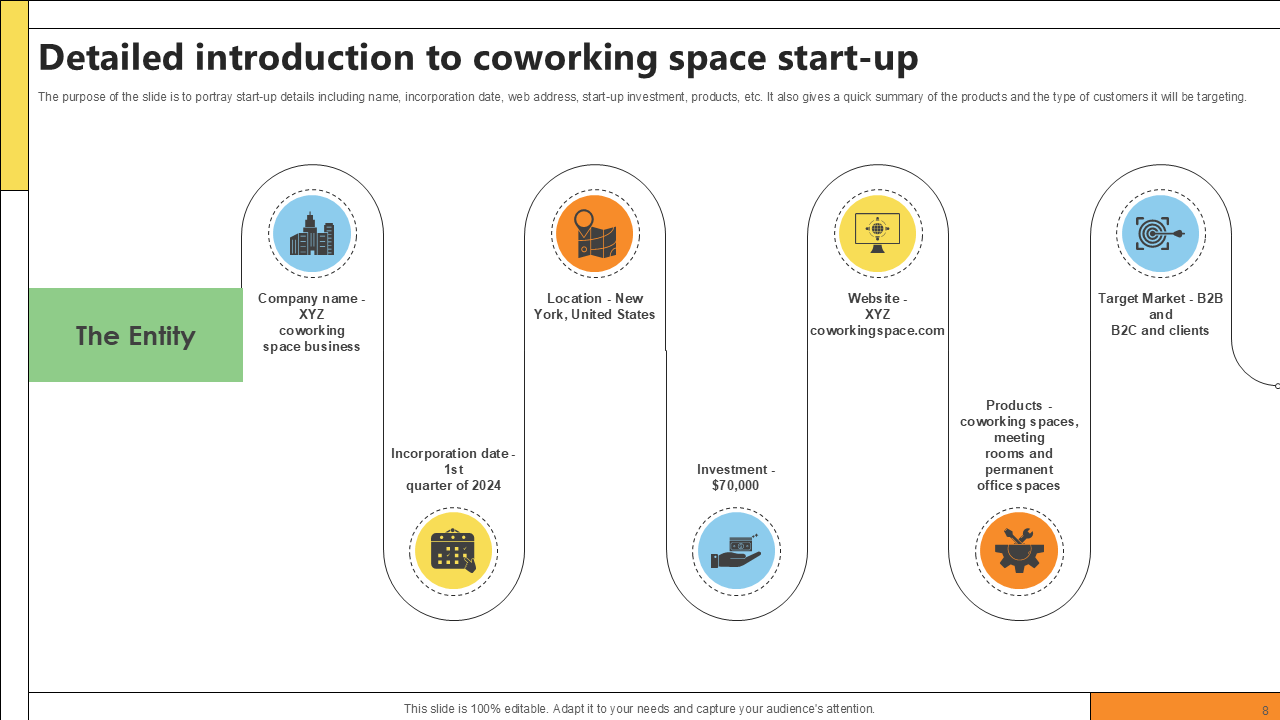
Coworking spaces, which provide dynamic, adaptable solutions for contemporary organizations, have completely changed traditional workspaces. They are an excellent option for new businesses, entrepreneurs, and established enterprises since they achieve the optimal mix between performance and price. In order to remain adaptable and competitive, companies are reconsidering their real estate strategy in response to the growing demand for flexible office solutions.
Marketers entering the office leasing business must adapt their real estate funding strategies to align with market trends and diverse industry needs. This deck portrays start-up details, including name, incorporation date, web address, start-up investment, and products; it also summarizes the products and the type of customers it will target. This strategy guarantees long-term viability in a constantly changing market while fortifying the commercial real estate framework.
Template 3 - Fundamental Business Goals: Strategic and Operational Template
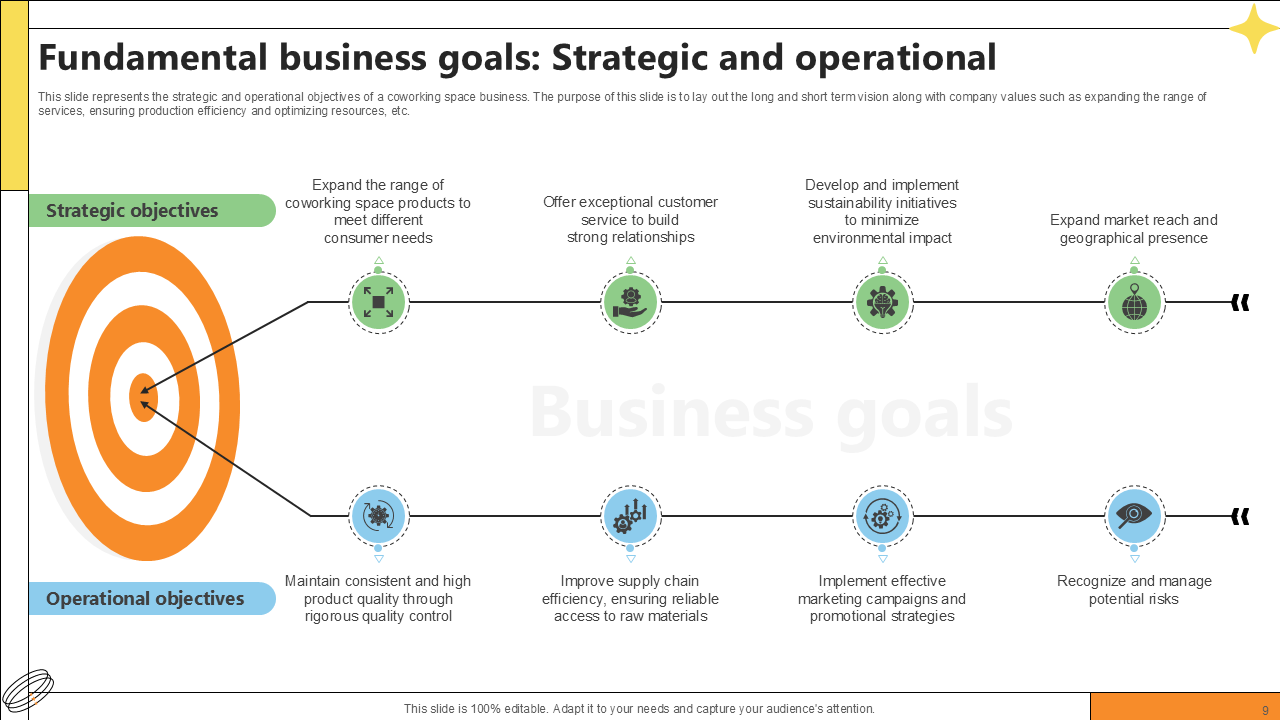
A company's basic business goals, which direct operational and strategic decisions, are the cornerstone of its success. Whether they are start-ups or big multinational enterprises, organizations depend on a clear plan that focuses their resources, infrastructure, and personnel on sustainability and long-term success. Businesses run the danger of getting distracted, misallocating resources, and becoming unable to adjust to shifting market conditions when they don't have clear goals. As businesses look for locations that strike a mix between comfort, community involvement, and infrastructure, business hub development will play a critical role in shaping the future of workspaces. By making strategic investments in corporate real estate, agencies may guarantee suitable sites and a future that encourages innovation and expansion.
The strategic and operational objectives of a coworking space company are described in this presentation. It emphasizes both short- and long-term goals as well as important principles including resource optimization, efficiency, and service expansion. Prioritizing long-term sustainability in a dynamic market guarantees security, stability, and faith in the future of your business.
Template 4 - Identifying Pain Points and Solutions Template
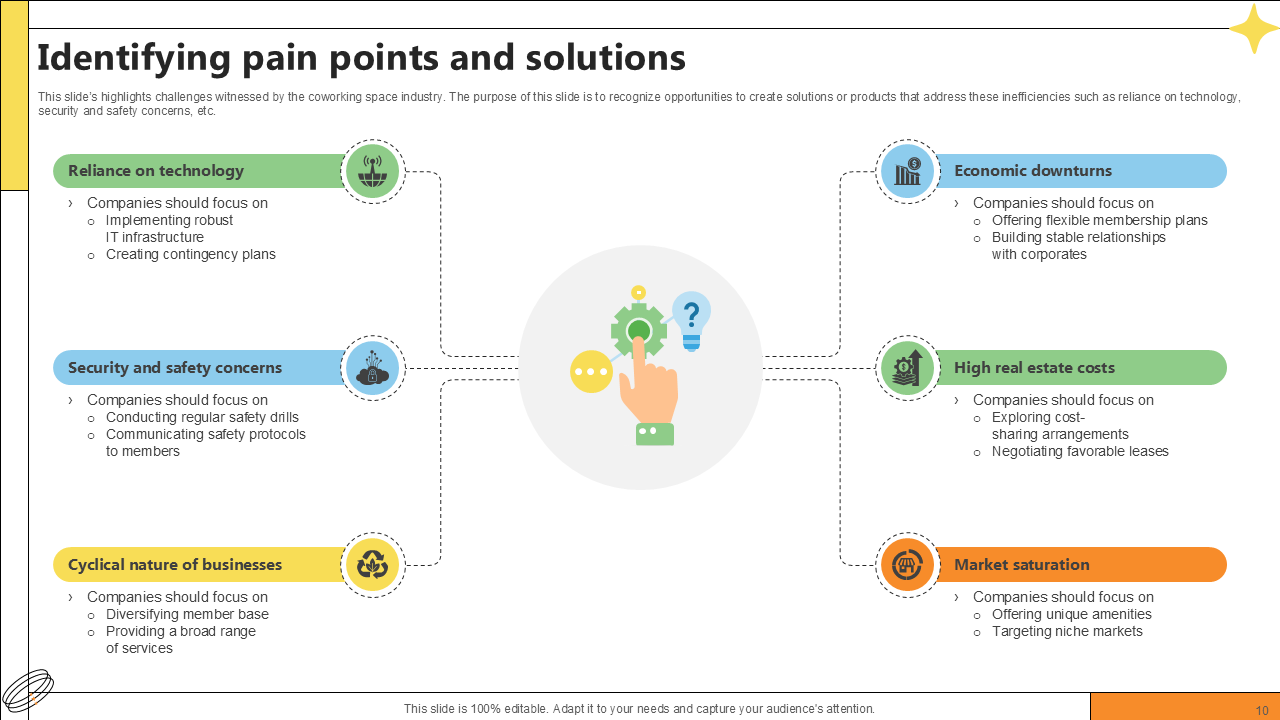
Finding problems and putting workable solutions in place are essential components of a successful company plan, particularly in the rapidly changing workspace design industry. Effectively tackling critical concerns is essential for long-term success, whether a company is honing its real estate strategy or a startup is negotiating commercial office-apartment settings.
For independent contractors and new businesses, the flexible coworking model presents an alluring substitute for conventional leases. This template identifies potential for creative solutions while highlighting industrial challenges including security concerns and dependency on technology. It investigates company cycles, tackles pain spots, and aids in the development of plans to boost productivity and expansion.
Template 5 - Selecting Optimal Business Location for Business Template
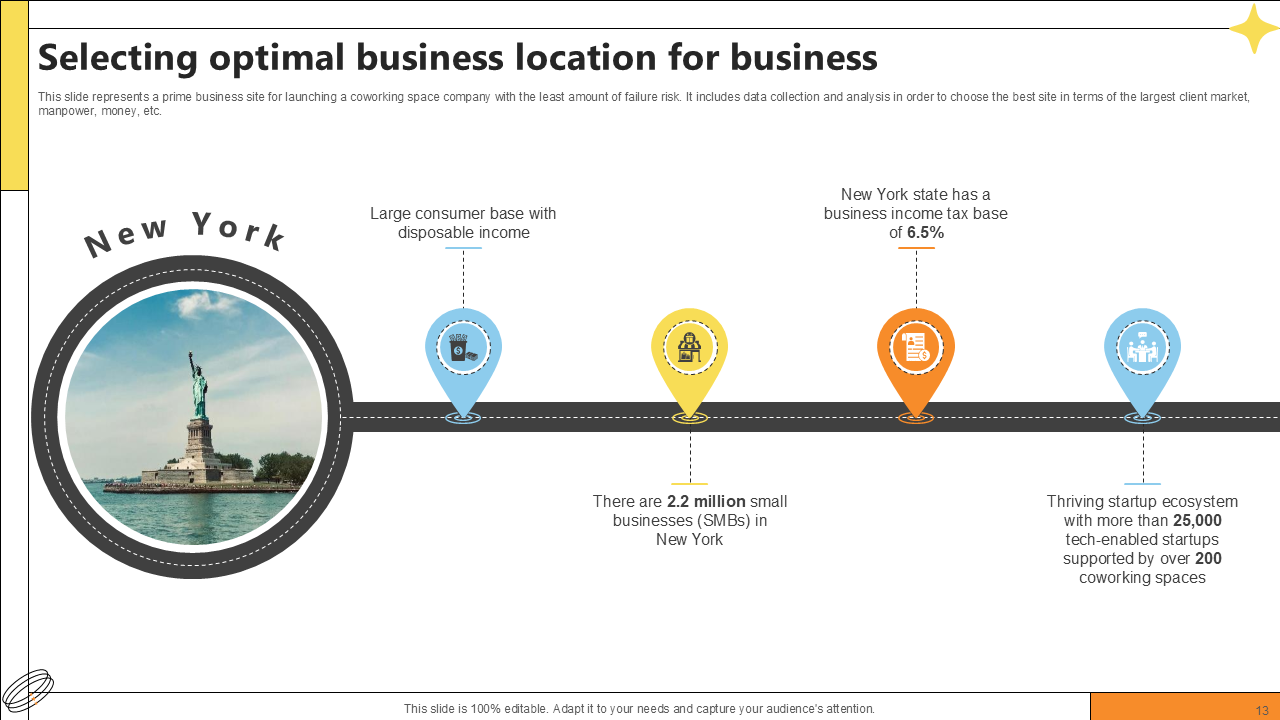
Choosing the location of a business is one of the most critical choices an entrepreneur or company can make. This choice is less about picking a site and more focused on ensuring sustained growth, improved productivity, and developing an ecosystem that fosters progress. When an employer pays attention to fosters, it propels the attainment of an agency’s goals, increases productivity, and makes things easier. Business name recognition, as well as operational performance, is influenced by employer location regardless of how long the company has been in existence. This template has the lowest initial potential for failure, and at the same time, it makes it remarkably simple to start a coworking space business. Collecting and evaluating pertinent economic and marketing data to determine the most appropriate placement.
Template 6 - Major Trends Driving Market Growth Template
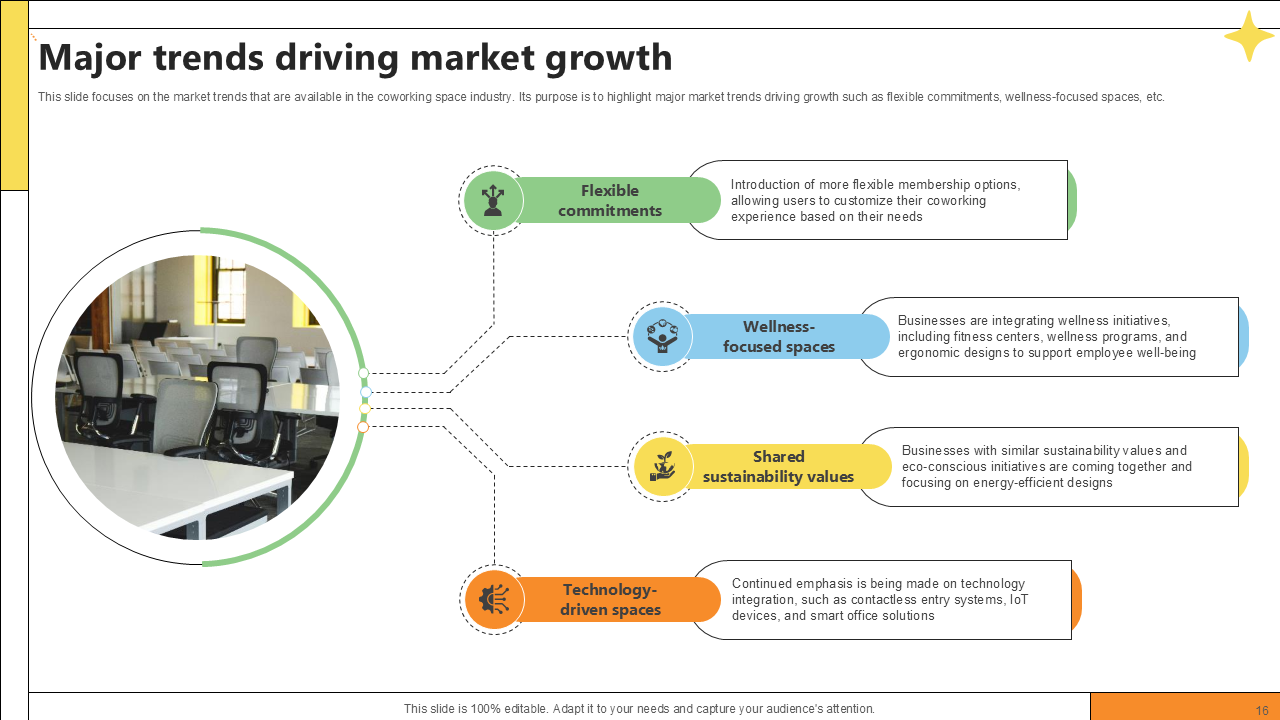
Rapid changes in labor demand, technological advancements, and shifting economic conditions all impact how businesses perceive their workplaces. The days of depending only on quick and easy office settings are long gone. Companies are implementing flexible workplace solutions that support dynamic work environments while ensuring affordability, productivity, and employee satisfaction. Nowadays, having a well-thought-out workspace technique is essential rather than optional.
This slide focuses on the market trends in the coworking space industry. It highlights significant market trends driving growth, such as flexible commitments and wellness-focused spaces. Companies that embrace these market characteristics will be ahead of the curve, promoting growth, innovation, and long-term viability in a globalized world where efficiency and flexibility are critical success factors.
Template 7 - Market Challenges Impacting Business Growth Template
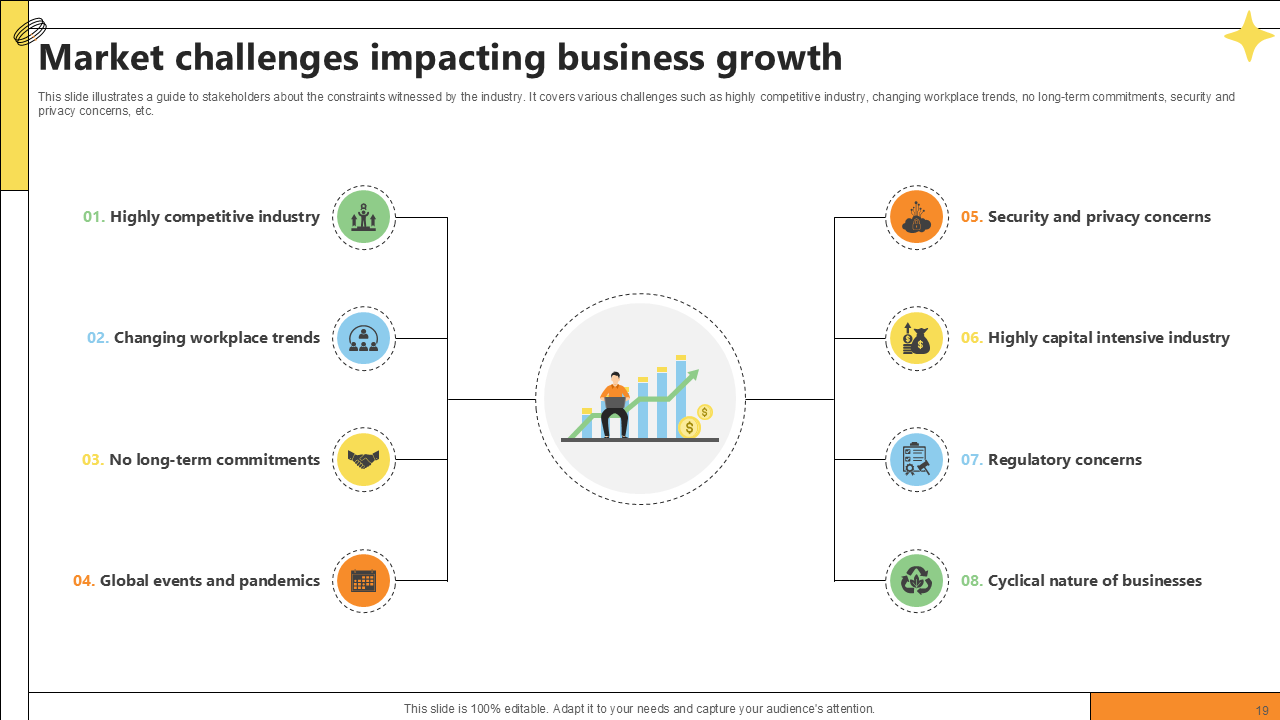
In today’s fast-paced business world, companies face market constraints that impact growth. A well-planned workspace layout is essential for staying competitive. The rise of coworking models is reshaping traditional office rental strategies, offering businesses flexibility and scalability at any stage. This shift allows companies to reduce costs while maintaining professionalism.
Tenant engagement strategies are at the core of all these developments, as companies collaborate closely with property managers and landlords to meet the latter's demands. This slide illustrates a guide to stakeholders about the constraints witnessed by the industry. It covers challenges such as highly competitive salaries, changing workplace trends, no long-term commitments, and security and privacy concerns. If businesses want to flourish, they must integrate these tactics into a single framework for business real estate. In a world where flexibility is essential, businesses must reconsider how they handle their workspace. Using such contemporary characteristics, businesses may grow sustainably, adapt to change, and stay competitive in a changing market.
Template 8 - Key Drivers Responsible for Growth of Business Template
In the modern, ever-evolving commercial enterprise environment, staying ahead of the competition requires attention to the key variables driving growth. A well-planned industrial real estate strategy ensures businesses can efficiently manage their workspaces, cutting costs and boosting productivity. As companies increasingly shift toward flexible office solutions that better align with their space and operational needs, this trend will only grow in importance. Additionally, a solid industrial real estate framework focusing on sustainability and long-term costs can enhance savings and the company’s reputation. A strong office leasing strategy keeps businesses adaptable and ensures they secure the right location to support their goals.
This slide outlines several key growth factors contributing to success amid shifting corporate needs and urbanization. Its goal is to highlight the market drivers of flexible work arrangements, entrepreneurship, startups, and cost efficiency. The slide also covers the gig economy, the rise of freelancing, and the growing demand for adaptable workspaces in response to these shifts.

Template 9 - Porter’s Five Forces Analysis for Evaluating Investment Options Template
Porter's Five Forces Analysis is essential for evaluating potential investments, particularly in commercial real estate. In today’s fast-evolving market, understanding the factors influencing investment decisions is more important than ever to ensure success. The increasing demand for flexible office solutions, leasing, and workspace strategies has gradually reshaped the commercial real estate landscape. Using Porter's Five Forces, investors can create a comprehensive investment strategy by analyzing the competitive forces in a specific market and predicting future trends.
Porter's Five Forces gives investors a clearer picture of the commercial real estate market. It helps them determine whether a property or leasing strategy is viable and assess the competition.

Template 10 - Five-Year Milestones for Successful Growth of Start-Up Template
Creating a corporate strategy that can change to meet changing needs is a crucial component of the plan. A carefully thought-out real estate strategy can help Beginning-USA locate an office location that complements its brand, boosts output, and promotes worker wellbeing. In addition to acquiring a location, the emphasis is on maximizing workspace sharing to align with the dynamic nature of the business.
Because it gives companies the freedom to grow without the significant financial burden of typical leases, the cooperative workspace model has grown in popularity. A defined growth path, flexibility in workspace layout, increased employee happiness, and profitability are all provided by setting five-year targets.

Conclusion
A strong industrial real estate plan becomes essential as the demand for flexibility and adaptability increases. Instead of being restricted to inflexible office architecture, businesses seek dynamic environments that foster creativity, collaboration, and manufacturing. The co-running space business model has transformed the sport by providing businesses with the freedom they need and utilizing available space to its fullest potential. Office spaces must evolve with businesses to become more flexible, environmentally friendly, and collaborative. Determining how workplaces will evolve requires thoroughly understanding office space marketing strategies. By exercising caution regarding workspace strategy, real estate investment, and facility management, businesses may establish dynamic settings that meet their operational needs and direct their long-term performance.