

 0 Comment
 Customer Reviews

Sensory Processing Disorder (SPD) affects how the brain interacts with the sensory input from a person's surroundings. It changes how people involved respond to things like sound, touch, light, and movement. Studies show that SPD impacts at least one out of every six kids. It is found with higher rates in those who have developmental issues such as autism or ADHD.
Check out more blogs on sensory integration here.
While SPD can occur on its own, spotting and addressing it plays a key role. Kids and grown-ups with SPD might be too sensitive to sensory input, not sensitive enough, or have responses that go back and forth. These sensory challenges can lead to trouble with learning, behavior, physical skills, and controlling emotions. As an example, a child might find normal sounds too much to handle, have issues with how certain clothes feel, or struggle with staying balanced and coordinated.
This talk will give you a quick, evidence-based look at SPD, along with useful ways to help people who have it. With the help of these templates, you can get help to check out how to assess it. What it means for doctors, and how they treat it. You can use these as real cases to show how things can get better. By knowing more and using targeted help, people with SPD can get better at handling sensory input. Are you ready to learn more about sensory processing disorders?
Check out our blog on Top 10 Autism PPT Templates With Examples and Samples
Template 1: Sensory Processing Disorder Polyhydramnios PPT Slide
The slide permits the understanding of polyhydramnios. Four key points are highlighted here. Definition: Polyhydramnios describes an abnormal quantity of amniotic fluid present during pregnancy, complicating the outcome. Common symptoms include rapid growth of the abdomen coupled with incapacitating pain, and in extreme cases, premature delivery.
Centre-based management includes rigorous monitoring, lifestyle modifications, as well as therapeutic procedures such as amniocentesis. Lastly, patient education concerning the existence of risks and the importance of prenatal care may help with the management of polyhydramnios. An engaging infographic of a pregnant woman undergoing an ultrasound procedure supports the content visually.

Template 2: Understanding Sensory Processing Disorder and Polyhydramnios PPT Summary ACP Template
This slide illustrates the connection between Sensory Processing Disorder (SPD) and polyhydramnios. A funnel format consisting of six steps is used to show the connection.
It begins with understanding how SPD affects daily life. Then, second in the line comes diagnosis through clinical assessments. Tedious research explores the possibility of potential links between SPD and polyhydramnios. The third stage focuses on raising awareness and knowledge. In the end, offering support to affected families and implementing targeted interventions. Each step builds on the previous, emphasizing a comprehensive approach from recognition to actionable care.

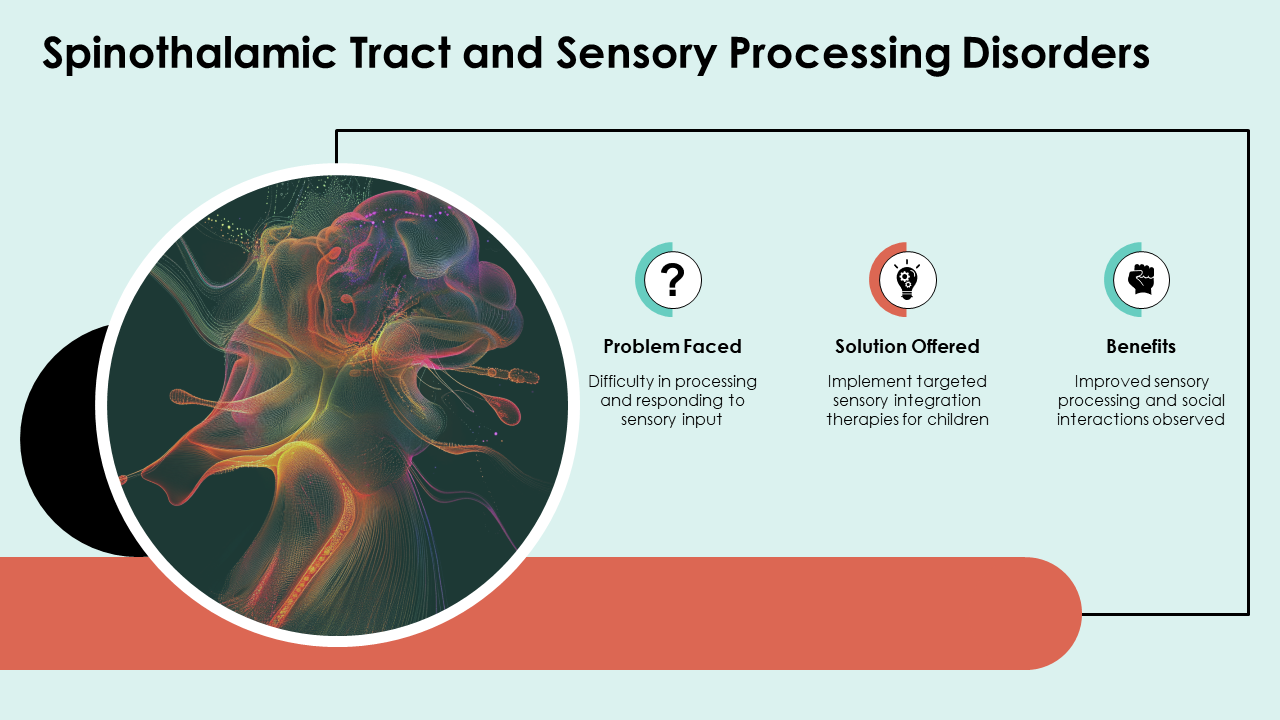
Template 3: Spinothalamic Tract And Sensory Processing Disorders Lateral Spinothalamic PPT Slide
The slide exhibits a link between the spinothalamic tract and sensory processing disorders. The first line talks about the common problem: difficulty with processing and responding to sensory input. To solve this problem, targeted sensory integration therapies are applied, especially for children.
This solution will bring about some improvements in sensory processing and social interaction. The composition features a neuron-themed image to portray the biological aspect of sensory challenges and their therapeutic interventions.
Template 4: Neurological Disorders Affecting Sensory Processing PPT Presentation
The slide highlights neurological disorders affecting sensory processing. It focuses on Autism Spectrum and Sensory Processing Disorder (SPD). It is explained that individuals on the autism spectrum may have sensory integration problems. Those individuals need therapies specifically designed to improve their response to certain stimuli.
SPD is described as a condition that interferes with the weighing of sensory information. Individualized treatment is required in the form of sensory diets to enhance daily functioning. The image draws attention back to the complex neurological pathology.

Get Access to this Template here!
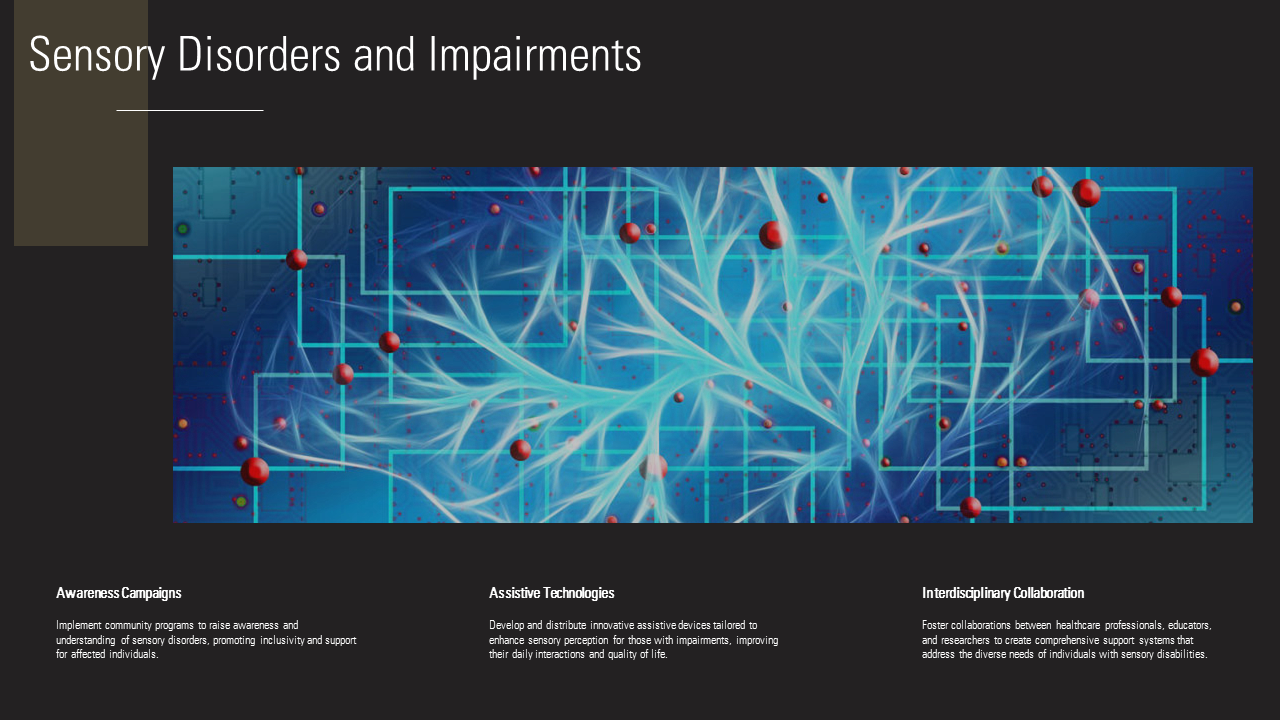
Template 5: Sensory Disorders And Impairments Human Sensorium PPT Presentation
This slide outlines important strategies for addressing sensory disorders and impairments. The awareness campaigns aimed at promoting understanding and inclusivity for individuals affected by these conditions. The development and distribution of newer assistive technology and the opportunity to enhance sensory perception to better life are highlighted.
Interdisciplinary collaboration between healthcare professionals, educators, and researchers in setting up complete support systems. These are individualized to cater to the needs of different individuals with sensory challenges is also emphasized.
Template 6: Public Health Impact of Sensory Disorders PPT Slides
The slide highlights the public health impacts of sensory problems in five major ways. The first concern would be prevalence-sensory disorders that affect millions all over the world, adversely affecting daily activities. Second, economic burden-the cost of healthcare and support services places a heavy demand on public health systems.
Thirdly, access to education: students with sensory challenges could face barriers to effective learning. The fourth being social integration-communication and interaction barriers become blocks to community participation. Fifth and lastly, early intervention-early diagnosis and treatment significantly improve long-term outcomes and reduce permanent disability.

Get Access To The Template Link
Template 7: Interdisciplinary Approaches To Sensory Systems PPT Presentation
This slide presents an overview of interdisciplinary approaches to advancing sensory system understanding and support. It points out the importance of collaborative research, combining neuroscientists and sensory experts, and integrating AI to manage cross-disciplinary data analysis.
Educational programs are aimed at the training of students and professionals across disciplines. The emphasis is on the development of new sensory technologies, from psychology, biology, and engineering. Clinical applications translate research into therapeutic interventions.
Public awareness campaigns aim to educate communities concerning sensory systems. Policy advocacy strives to seek evidence-based support for ongoing sensory research activities.

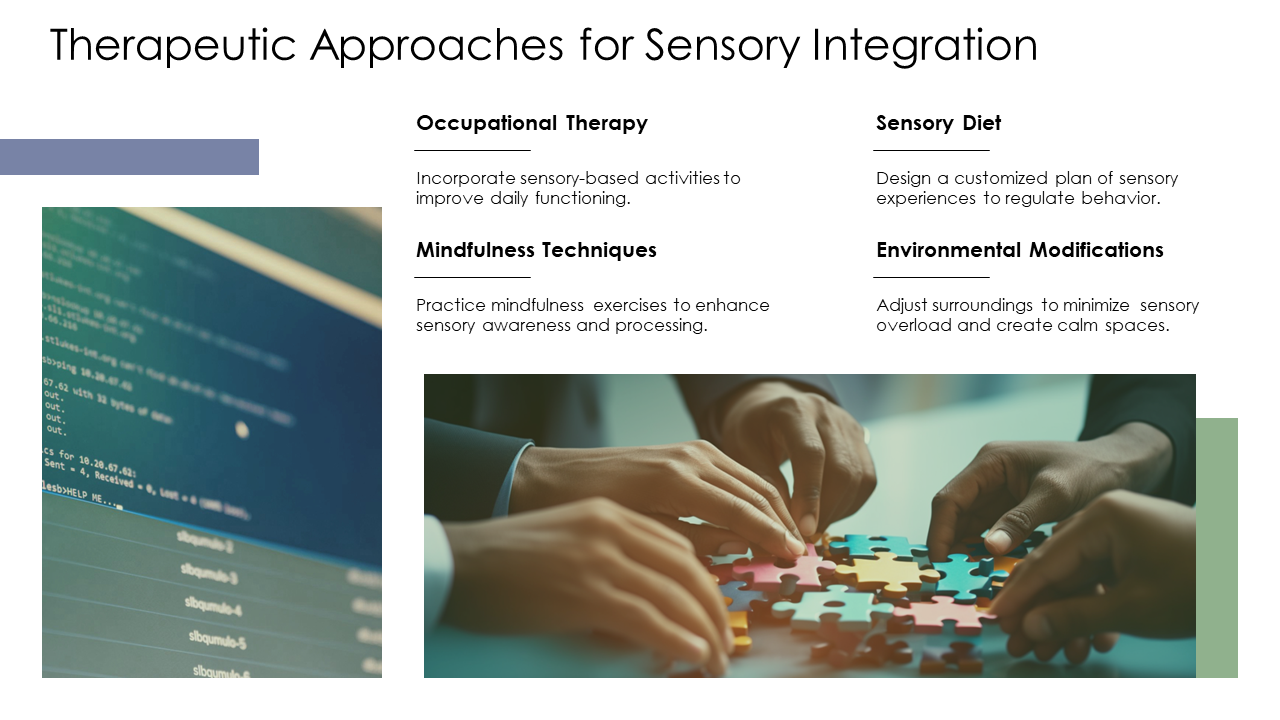
Template 8: Therapeutic Approaches For Sensory Integration PPT Template
This template showcases therapeutic approaches for sensory integration. It discusses four of those approaches. First, occupational therapy incorporates sensory-based activities to improve daily functioning. Sensory diet aims to design a customized plan of sensory experiences to regulate behaviour.
Mindfulness techniques include practicing mindfulness exercises to enhance sensory awareness and processing. And lastly, environmental modifications to minimize sensory overloads and create calm spaces. Accompanying images highlight personalized care and interactive, hands-on support, which promotes the holistic approach of sensory integration therapy. For more, read our blog on the Top 10 neurodevelopment disorders.
Template 9: Clinical Implications Of Sensory Dysfunction PPT Slide
The slide highlights the clinical implications of sensory disorders. It emphasizes the identification of sensory disorders with the help of standardized assessment tools. Application of specially designed sensory integration therapies for specific needs.
Creation of sensory-friendly environments, caregivers' training, and adoption of a multidisciplinary approach with various professionals are key support strategies. Such an intervention calls for the development of self-regulation skills to help individuals respond to sensory overload, with regular follow-up assessment to monitor and adapt treatment procedures for maximum benefit.

Template 10: Case Studies On Sensory Systems Disorders PPT Template
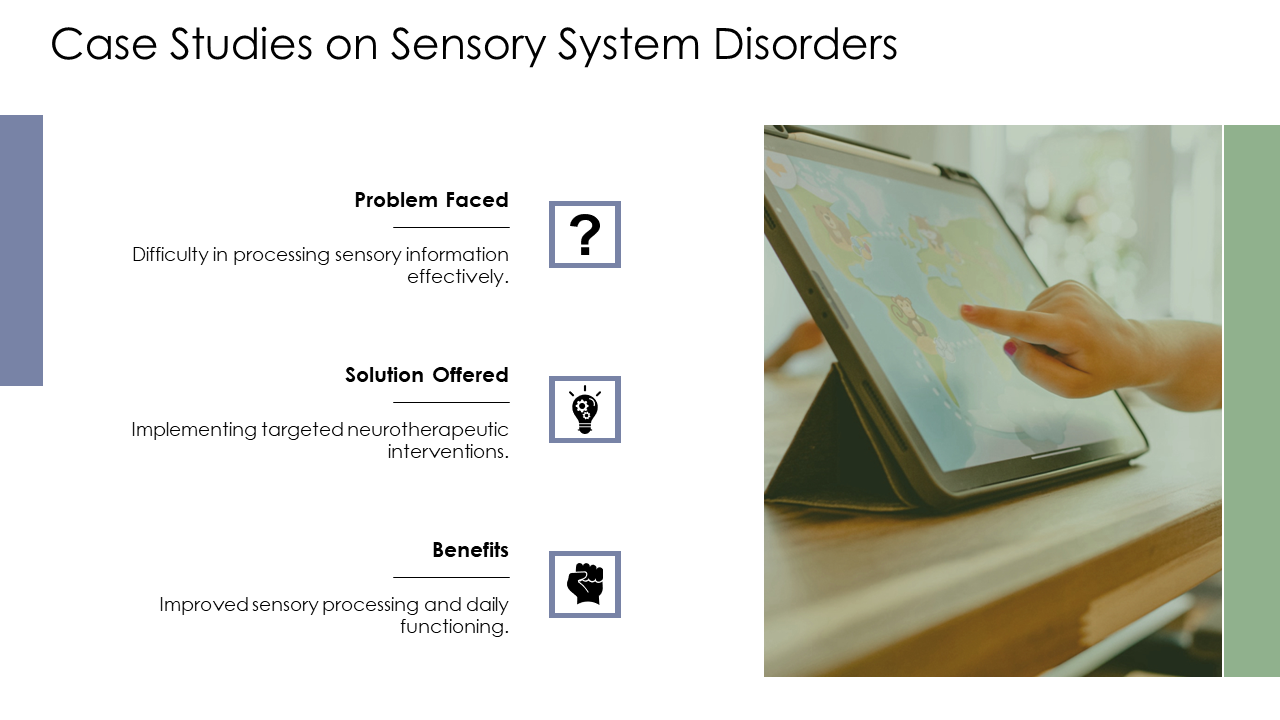
This slide depicts one of the cases offered in the sensory systems disorder series. The underlying problem is classified as impaired processing of sensory information, and interventions are offered within the neurotherapy context.
Hence, enhanced sensory processing and good quality of life stress the success of individualized therapeutic approaches.
Conclusion
Sensory Processing Disorder is a complex, yet manageable condition. It impacts the way individuals perceive and respond to stimuli in their environment. When provided early on, targeted intervention methods and a multidisciplinary approach, the person with SPD can improve sensory regulation, daily functioning, and quality of life so much more.
Awareness must be developed among caregivers, teachers, and healthcare professionals so observant eyes can provide timely support. With ongoing research and increased understanding of SPD, creating inclusive environments to embrace sensory needs is more important than ever. The first steps to empowering loved ones with SPD are through knowledge, compassion, and an earnest dedication to their individual care!
Sensory Processing Disorder FAQS
1. What are the common signs and symptoms of Sensory Processing Disorder?
Ans. A sensory processing disorder is the inability to make a proper interpretation of stimuli and respond to them. Thus, typical signs are hypersensitivity to sounds, touch, or textures, hypo-responsivity to pain or movement, and sensory-seeking behavior, like an excess of touch stimuli or an intense craving for strong stimulation. These symptoms can affect behavior, attention, and the ability to complete everyday tasks.
2. How can Sensory Processing Disorder be diagnosed and treated?
Ans. Therapists use a standardized test and the observation of sensory-related behaviours to diagnose the disorder of sensory processing. Treatments are frequently sensory integration therapy, specific sensory diet plans, and sometimes include alterations in the environment to help individuals respond better to sensory input.
3. What is the role of occupational therapy in managing Sensory Processing Disorder?
Ans. Occupational therapy helps with sensory processing disorder management to improve day-to-day functioning and adapted responses through activity-based therapy. Therapists develop program interventions in addition to helping the affected in regulating sensory input and forming coping strategies.