


Bpo Call Center Organizational Structure Support Center Business Plan BP SS




Try Before you Buy Download Free Sample Product
 Impress Your
 Audience
 100%
100% Editable
 Save Hours
 of Time


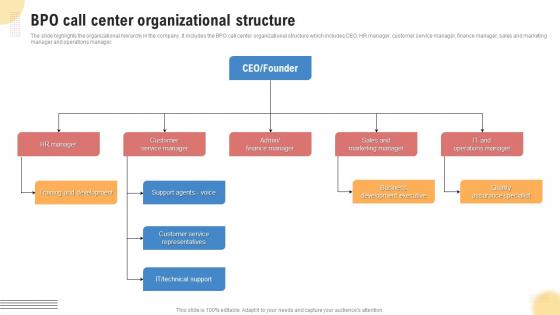
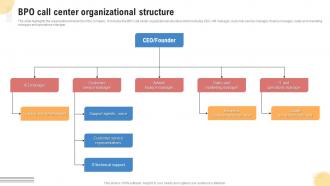
The slide highlights the organizational hierarchy in the company. It includes the BPO call center organizational structure which includes CEO, HR manager, customer service manager, finance manager, sales and marketing manager and operations manager.
People who downloaded this PowerPoint presentation also viewed the following :
Bpo Call Center Organizational Structure Support Center Business Plan BP SS with all 9 slides:
Use our Bpo Call Center Organizational Structure Support Center Business Plan BP SS to effectively help you save your valuable time. They are readymade to fit into any presentation structure.








FAQs for Bpo Call Center Organizational Structure Support Center Business
You've got agents doing the calls, obviously. Team leads manage maybe 8-12 people each - that ratio actually matters a lot. Operations managers sit above them handling multiple teams. Then you need QA people listening to calls (trust me, this part's crucial for keeping quality up), workforce management for scheduling, and IT support because something's always breaking. Oh, and training teams plus HR. It's basically a pyramid structure. The key thing is getting your agent-to-lead ratio right from the start, and don't skimp on quality assurance coverage or you'll regret it later.
Honestly, having a solid team structure really does help things run smoother. Your frontline people handle the regular stuff, team leads jump in for the tricky calls, and supervisors keep everything on track. It cuts down on all that "who do I ask?" confusion. Agents feel way more confident too when they know backup's available - those nightmare customer calls are real lol. Just don't go crazy with too many levels or you'll bog everything down. The simple setup works best: agent talks to team lead, team lead escalates to supervisor. Done. Most BPO places I've seen stick with that and it works pretty well.
Look, BPO call centers basically run on tech these days. CRM platforms handle all the customer data while automatic call distributors route everything smoothly. You've also got workforce management software for scheduling - that stuff's crucial. The newer additions like AI chatbots and predictive dialers are game-changers honestly. Real-time analytics dashboards let managers catch problems before they blow up. Cloud solutions became absolutely essential (COVID proved that). Oh, and don't forget remote work capabilities - teams need that flexibility now. Bottom line: your tech stack directly affects efficiency and customer satisfaction, so you can't cheap out on it.
So most places do this in three chunks. First is classroom stuff - product training, how the systems work, basic people skills. Takes like 2-4 weeks usually. After that you're on the floor taking real calls but with coaches hovering over you giving feedback. Then it's just ongoing coaching sessions and refresher training forever basically. Here's the thing though - companies that actually focus on the coaching part? They crush it. Way too many places dump everything into that initial onboarding period and then wonder why people struggle later. You've gotta keep the learning going continuously, not just front-load it all.
Honestly, start with the big ones - First Call Resolution shows if your team's actually fixing things or just passing problems around. Customer satisfaction scores matter too, obviously. Track how long calls take (Average Handle Time) but don't get crazy about speed if it tanks quality. Net Promoter Score is solid for the bigger picture. Oh, and abandonment rates - when people hang up waiting, that's never good. I'd say pick maybe 3 or 4 metrics that actually match what you're trying to accomplish. Otherwise you'll just drown in spreadsheets and never do anything with the data.
So it's basically like a chain reaction - agents take the calls, team leads jump in to coach them and handle the crazy customers. QA watches everything to catch what people need help with. Operations keeps things running while IT fixes whatever's broken (and trust me, something's always broken). Workforce management figures out how many people you need, and training gets everyone up to speed. Management uses all that data to tweak goals and processes. The trick is making sure everyone actually talks to each other - daily huddles and shared dashboards work well. Otherwise you'll have teams working against each other without realizing it.
So basically, when you give customers different ways to reach you - phone, email, chat, whatever - they're way happier because they can use what feels comfortable. Chat's honestly amazing for quick fixes since your team can juggle multiple conversations at once (try doing that on the phone lol). Email works for complex stuff that needs documentation. The real win is getting all that data in one place so you can actually see patterns. Just make sure your people know how to handle all the channels properly, otherwise you'll get wildly different service quality depending on how someone contacts you.
Cross-train your people so they can jump between different call types - that's huge. Mix full-time staff with part-timers and seasonal workers you can ramp up when things get crazy. I used to panic about the seasonal rushes, but honestly? They're super predictable once you start tracking patterns. Get cozy with temp agencies early on. Flexible scheduling software is a game-changer too. During peak times, throw some overtime incentives at your current team - they usually love the extra cash. Oh, and start hunting for seasonal staff like 6-8 weeks before you actually need them, not when you're already drowning.
Recognition and career growth are huge for morale. Celebrate everything publicly - hitting numbers, nailing a tough customer call, whatever. Call center work feels pretty thankless, so that stuff really matters. Build clear paths for advancement too, nobody wants to take calls forever. Train people properly instead of just dumping them on the phones (I've seen that disaster before). Your team leads need to actually support agents, not just breathe down their necks. Weekly check-ins work great for seeing how people are actually doing. Oh, and invest in real coaching - it makes a difference.
Customer feedback is literally your crystal ball for predicting changes. Long wait times keep coming up in complaints? Management's gonna hire more people or fix the schedules. People hate getting bounced between departments - honestly, who doesn't? - so they'll cross-train agents to handle way more stuff directly. Survey scores drive most training updates too. It's this whole cycle where feedback rolls in, they tweak processes, then metrics change. Best move is watching these patterns because you'll see exactly what operational shifts are coming next.
Honestly, the connectivity stuff will drive you crazy - internet goes out and your whole team's dead in the water. Quality control gets messy too when you can't just walk over and listen in. Home distractions are no joke either, between kids screaming and dogs barking during calls. Oh, and coordinating your team becomes way harder without that quick "hey can you help me with this" conversation across desks. The security thing keeps me up at night though - customer data floating around people's home networks? Yikes. Get backup internet sorted and some decent monitoring tools. Trust me on this one.
Don't make compliance an afterthought - weave it into everything you do daily. Train your agents regularly on TCPA, HIPAA, whatever regulations hit your industry. Record calls, document data handling, keep audit trails. I swear regulators are obsessed with paperwork! Do internal audits often and stay on top of rule changes. Oh, and set up a compliance calendar so you're not freaking out when new regulations drop. Sounds tedious but it'll save your butt later.
So WFM systems are what keep call centers from totally losing their minds with scheduling. They crunch your historical call data and predict when you'll get slammed, then auto-generate schedules that actually make sense. Trust me, without one you're either hemorrhaging money on too many agents or pissing off customers with crazy wait times. They also watch performance metrics in real-time and send alerts when stuff hits the fan. The trick is getting it to play nice with your existing tools - I'd honestly start by mapping out what data you're already sharing between platforms.
So basically inbound agents just react to whatever comes at them - customers call with random problems, so you need solid knowledge bases and ways to escalate fast. Outbound's the opposite though. Your people are driving everything from scripts and call lists, but honestly they get rejected constantly which sucks. Training has to be completely different because the skills don't really overlap. Inbound cares about how fast you solve things and if customers are happy. Outbound? It's all conversion rates and how many calls you actually complete. Two totally different beasts.
Dude, the whole BPO scene is getting crazy with AI right now. Chatbots are basically running first-level support, and predictive analytics actually route calls way smarter than before. RPA handles all the boring repetitive stuff nobody wants to do anyway. Cloud setup means your teams can work from literally anywhere - total lifesaver during the pandemic, honestly. Omnichannel platforms are pretty sweet too, letting agents juggle calls, chats, and social media from one screen. The sentiment analysis stuff is kind of nuts - it'll flag angry customers in real time. If you're restructuring, go cloud-first and train your people on these AI workflows. Trust me on that one.
-
Amazing slides! Unique, attractive, and easy to understand.
-
Definitely a time saver! Predesigned and easy-to-use templates just helped me put together an amazing presentation.
-
One word for SlideTeam–Versatile!
-
Thanks for all your great templates they have saved me lots of time and accelerate my presentations. Great product, keep them up!