

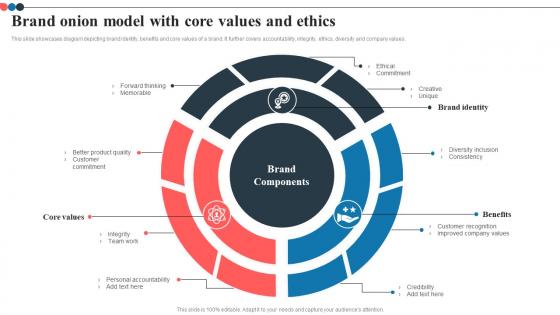
Brand Onion Model With Core Values And Ethics




Try Before you Buy Download Free Sample Product
 Impress Your
 Audience
 100%
100% Editable
 Save Hours
 of Time


This slide showcases diagram depicting brand identity, benefits and core values of a brand. It further covers accountability, integrity, ethics, diversity and company values.
People who downloaded this PowerPoint presentation also viewed the following :
Brand Onion Model With Core Values And Ethics with all 6 slides:
Use our Brand Onion Model With Core Values And Ethics to effectively help you save your valuable time. They are readymade to fit into any presentation structure.





FAQs for Brand Onion Model With Core
So the Brand Onion basically has four layers that build on each other from the inside out. Start with your brand essence - that's like your core purpose, the real heart of everything. Then you've got your values (what you actually believe in), your personality (how you come across), and finally the customer experience on the outside. I mean, whoever thought of the onion thing was pretty clever, honestly. Each layer should connect naturally to the one inside it, so your customer interactions need to feel genuine to your personality and values. Always nail down that essence first though - everything else flows from there.
So the Brand Onion Model is basically therapy for brands - you work from the inside out instead of jumping straight to flashy messaging. Start with your core values at the center, then build outward through personality and benefits. Most people skip this step and wonder why their campaigns feel empty. Honestly, it's way more effective than whatever random approach most companies use. Map out your current brand with this model and you'll instantly see where things don't connect. Everything should trace back to those core beliefs, otherwise you're just throwing spaghetti at the wall.
So your outer layer is like that first swipe on a dating app - people judge instantly based on what they see. I'm talking logos, colors, your website vibe, all that visual stuff. It grabs attention (or doesn't) before anyone even knows what you're selling. Honestly, most brands mess this up by looking nothing like what they actually stand for. Your packaging might scream "luxury" but then your product is... not. Short sentences work here. The whole point is creating recognition so people remember you in a sea of competitors. Get it wrong and you'll either attract people who'll hate your actual product or turn off the ones who'd love it.
So the emotional stuff happens in those middle Brand Onion layers - your personality and values. You're basically moving past just listing what your product does (boring) into creating actual feelings. It's kinda like dating, right? Nobody's falling for a spec sheet! Your brand personality is how people feel when they interact with you. Values go deeper - when yours match what customers actually care about, that's where real connection happens. Just gotta make sure it's authentic and you're not being fake about it across everything you do.
So your brand's essence layer is basically the emotional stuff - what people actually *feel* about your brand vs what you think they should feel. Super helpful for decisions because you get this clear picture of where you're hitting the mark and where you're totally missing it. Like if your marketing says "premium quality" but customers think "overpriced garbage" - that's a problem you can actually fix now. Short sentences work better sometimes. You can spot those weird disconnects between what you promise and what people experience, then patch things up before customers bail. It's honestly like having a roadmap for brand choices.
So the Brand Onion Model is way more organized than other frameworks. You start with your core values at the center, then work outward to visual stuff - it's super methodical. Most other approaches like Kapferer's Brand Identity Prism try to hit everything simultaneously, which honestly gets messy fast. With the onion, you can't move forward until you've nailed your purpose first. Then personality, positioning, all that builds naturally. Perfect for new brands or if you're doing a rebrand. I actually think it's the best starting point when your brand strategy feels all over the place - the layers force you to think through each piece properly.
So the Brand Onion Model is all about working from the inside out - you start with your core brand truth and build everything else around it. Can't just throw some trendy positioning on top and hope it sticks. Each layer has to actually connect to the deeper stuff, which honestly makes way more sense than how most people do branding. It's like... if your foundation is shaky, everything else falls apart. Start by asking "what do we really stand for?" then work outward to benefits and features that actually support that core. Prevents you from having a brand that's all over the place.
Look, you gotta match your messaging to where people are in the journey. Surface-level stuff first - functional benefits in your ads and product pages. Then emotional storytelling kicks in through content and social. Save the deep brand purpose stuff for later - company culture, partnerships, bigger campaigns. Most brands totally botch this by jumping straight to their "why" when nobody's even warmed up yet. It's like... you don't lead with your life story at a party, right? Map out which channels work for each layer, then build a hierarchy that pulls people deeper over time. Short punchy stuff converts better anyway.
Oh, the Brand Onion thing? It's actually perfect for rebranding. You start with your core values and work outward - way better than just throwing a new logo on everything and hoping for the best. I've seen so many companies do that and it never works. What I like about it is you're building from the inside out: core beliefs, then personality, then visual stuff. Everything stays consistent that way. Just audit each layer first, figure out what's broken, then rebuild piece by piece. Sounds tedious but it's worth it - your rebrand won't feel fake.
So the Brand Onion Model is actually pretty genius for small businesses. You build from the inside out - start with your core essence (what you really stand for), then add layers like personality and values. Way better than just throwing together a random logo, honestly. Each layer helps you stay consistent everywhere - your website, how staff talk to customers, all of it. For small businesses especially, it forces you to get crystal clear on what makes you different. I'd literally map each layer on paper first, then check everything you do against it. Takes some work upfront but totally worth it.
Honestly, most companies treat it like a checkbox exercise - just rush through it once and forget about it. They slap some generic mission statement together without really thinking about what makes them different. Then leadership gets it but nobody tells the front desk people, you know? The worst part is when your website says one thing but your customer service feels completely off-brand. Start by being brutally honest about who you actually are (not who you wish you were). Then go through every single way customers interact with you and fix the weird disconnects.
Customer feedback affects your Brand Onion differently depending on the layer. Quick changes happen with visuals and messaging - that's the easy stuff. Personality and positioning? Those shift slower but yeah, consistent patterns will move them eventually. Your core values though - honestly, those shouldn't budge unless you've really missed the mark on understanding your audience. I always think of feedback more like taking your brand's temperature than some sacred truth you must follow. Map your recent feedback to each layer first. See where the strongest signals cluster, then decide what actually needs tweaking.
For your Brand Onion Model, honestly just grab whatever you've got - Miro, Figma, even PowerPoint works fine. Draw some circles inside each other, boom. Core brand essence goes in the middle, then add your values, personality, benefits moving out. Canva's got templates if you want it looking fancy, but I've seen great ones sketched on whiteboards during meetings (sometimes those are actually better for getting everyone involved). Label each ring clearly so the flow makes sense from center outward. My advice? Sketch it messy first, figure out your content, then make it pretty later.
So the Brand Onion Model is basically your brand's cheat sheet for staying on track. Start with your core values in the middle, then work outward through personality, benefits, all that stuff. Each campaign you run should connect back to that center somehow - otherwise you're just throwing random marketing at the wall. Honestly, I've seen too many brands get distracted by shiny new trends and totally lose their voice. The outer layers help you turn those deep values into actual messages people care about. Next time you're planning something, just check it against each layer real quick.
Look at Apple, Nike, and Starbucks - they're perfect examples of the Brand Onion Model done right. Apple's whole thing is "think different" and everything flows from there. Nike? All about athletic achievement. Starbucks created that "third place" vibe between home and work. Oh, and Dove's real beauty campaign is another good one - though honestly that one's been around forever now. Each brand figured out their emotional core first, then built everything else around it. Pick one and try mapping it out yourself. Really helps you get how it works and gives you ideas for your own stuff.
-
Making a presentation has never been this easy for me. Thank you SlideTeam for offering a splendid template library.
-
If you have visited their site and failed to find the products, try reaching the customer service because it will be the case that you didn't use the search bar well.