


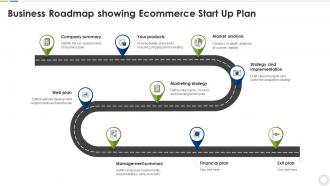
Business roadmap showing ecommerce start up plan





Try Before you Buy Download Free Sample Product
 Impress Your
 Audience
 100%
100% Editable
 Save Hours
 of Time


Our Business Roadmap Showing Ecommerce Start Up Plan are topically designed to provide an attractive backdrop to any subject. Use them to look like a presentation pro.
People who downloaded this PowerPoint presentation also viewed the following :
Business roadmap showing ecommerce start up plan with all 2 slides:
Use our Business Roadmap Showing Ecommerce Start Up Plan to effectively help you save your valuable time. They are readymade to fit into any presentation structure.
FAQs for Business roadmap showing ecommerce
Honestly, start with talking to real customers before you build anything - can't stress this enough. Map out how you'll actually make money, then sketch your MVP timeline. Figure out funding early (bootstrap vs investors is a whole thing). Your marketing plan matters way more than most people think. I'd focus hardcore on the first 6 months of details, then just rough out the bigger picture stuff. Oh and don't forget the boring operational stuff like customer service setup. Seen way too many friends skip market validation and build something nobody wants. Pick one thing, nail it, then move to the next. That's really it.
Okay so first things first - figure out who actually has the problem you're solving. Don't just guess though. Make detailed profiles of these people: what bugs them, how they shop, basic demographics stuff. Survey them directly, then dive into Facebook groups and Reddit threads where they hang out (Reddit's honestly amazing for this). Check out your competitors' reviews too - you'll see what people absolutely love or can't stand. Oh and definitely use Google Analytics to track where your audience spends time online. But here's the thing - talk to like 20-30 real people before building anything. Their input will save you from making expensive mistakes later.
Okay so competitive analysis is basically stalking your competitors legally lol. Check out what they're charging, how they market stuff, and where they position themselves. Their customer reviews are pure gold - people complaining about missing features or bad service? That's your opening right there. I usually peek at my top 5 competitors monthly because things change fast. You'll spot pricing trends you hadn't thought of and marketing angles that actually work. Don't just copy though - use it to find gaps where you can be different. It's weirdly addictive once you start!
Honestly just go with Shopify to start. It's stupid easy - they handle all the hosting and payment stuff so you don't have to worry about it. WooCommerce works too if you're already using WordPress and want to tinker with things more. BigCommerce is decent, especially since they don't hit you with those annoying transaction fees as much. I mean, you could build something custom but that's a headache unless you've got serious dev skills. My buddy tried that route and... yeah, don't. Test your idea with Shopify first, then switch later if you need something fancier.
Honestly, just start with the bare minimum - someone for ops/fulfillment, marketing, and customer service. Everyone's gonna juggle like 5 different things anyway in the beginning, so find people who can roll with the punches instead of specialists. Startup veterans are gold because they actually get how insane it can be. For stuff like web dev or design, just use freelancers until you're making real money. Oh and even though everyone's doing everything, still write down who's responsible for what. Trust me, when it gets crazy you'll forget who was supposed to handle that one thing.
Honestly, just make it stupidly easy to use. Three clicks max to find anything. Big search bar, clear categories, obvious cart buttons - you know the drill. Don't clutter everything together, white space actually helps people think. Your product photos better be huge and crisp, and definitely show those customer reviews upfront. Oh and your checkout? Two steps, maybe three if you're pushing it. Most people are scrolling on their phones anyway, so design for that first. Actually test it with real people though - they'll break your site in ways you never imagined.
Honestly, I'd start with dropshipping or just a handful of test products first. No point dumping money into inventory before you know people actually want your stuff. Alibaba's solid for suppliers but man, the quality is all over the place - definitely nail down your communication about timelines and standards upfront. Keep maybe 30-60 days worth of stock once you get going. Enough to ship fast but not so much that you're broke if things don't sell. I used basic spreadsheets forever before switching to something like inFlow. Works fine until you really scale up.
Honestly, I'd go with SEO and Facebook/Instagram ads first - they've given me the best bang for my buck. With SEO, stick to long-tail keywords you can actually rank for instead of trying to beat Amazon at "running shoes" or whatever. Social ads are great because you can get super specific with targeting and test stuff quickly. Oh, and don't sleep on email marketing once you start getting some traffic. That's been huge for me. Pick one channel first though - wherever your customers actually spend time - and nail that before adding more. Way easier than juggling everything at once.
Start with a site audit using Google Search Console - gotta see what you're working with first. Focus on the big three: technical stuff, content, and how users actually experience your site. Fast loading times and mobile optimization are non-negotiable these days. Create content around what your customers search for, not what you think sounds good. Product descriptions, blog posts, buying guides work well. Meta titles and descriptions? They actually matter way more than people think for getting clicks. Oh, and don't sleep on getting other sites to link back to you through partnerships or guest posts. It's tedious but it works.
Honestly, just go with Stripe or PayPal to start - both are solid and won't give you headaches. Stripe's API is way cleaner if you're building something custom, but PayPal's fine too. Square and Authorize.Net are decent alternatives. Fees are pretty standard across the board (around 2.9% + 30¢), so don't stress about shopping around too much right now. Main thing is checking they support your countries and payment methods. I spent way too long researching this stuff when I first started - you can always migrate later once you've got actual customers and data to work with.
Honestly, just make it stupid simple. Cut your form fields down to what you actually need - people hate filling out a million boxes. Let them checkout as guests, nobody wants to create another account. Multiple payment options are huge too - Apple Pay, PayPal, regular cards, whatever. Mobile is where you'll probably lose the most people, so test that thing constantly. I'd also throw up some security badges and show shipping costs right away (hidden fees are the worst). Progress bars help so they know they're almost done. Oh and definitely add address autocomplete - saves everyone time. Check your analytics weekly to see where people bail out.
Dude, customer service will make or break your ecommerce thing. Since people can't actually touch your products or talk to you in person, your support team IS that human connection. I've watched startups with decent products totally crash because their customer service sucked. Bad reviews spread fast. When someone's order gets messed up or they need help picking something - that's your moment. Handle it right and they'll buy again. Screw it up and... well, you know. Start with email and live chat that actually responds quickly. Train your people to solve real problems instead of just reading some boring script.
So you know how you're always wondering why your sales tanked or whatever? Data analytics basically stops the guessing game. You'll actually see which products are duds, where your traffic sucks, or if certain customers just aren't buying. The cool part is catching problems early - like if your mobile site is trash or some demographic is ghosting you. I know it sounds nerdy, but tracking stuff like conversion rates and customer costs daily actually works. It's honestly like having superpowers for your business, just way less dramatic than that sounds.
First thing - get your business structure sorted. LLC or corp for liability protection. Sales tax registration is state-specific, so that's fun to figure out. Your website needs privacy policy and terms of service (ugh, I know). Consumer protection laws matter too. Oh, and definitely research trademarks before you fall in love with a name. If you're doing dropshipping or importing stuff, those regulations are their own beast. Honestly? Talk to a business lawyer early. Yeah it costs money upfront, but they catch stuff you'd never think of.
Build everything thinking ahead - don't paint yourself into a corner later. Pick tech that can handle 10x your current volume. Automate shipping stuff early (seriously saves your sanity). Track your numbers obsessively so you actually know what's working. The whole "CEO does everything" thing only works for so long - plan out what roles you'll need to hire. Oh and budget for the scary stuff like warehouse costs and inventory that'll balloon fast. I learned this the hard way but having systems that don't crash when you get busy is everything.
-
Understandable and informative presentation.
-
Perfect template with attractive color combination.
-
Excellent design and quick turnaround.
-
Understandable and informative presentation.
-
Illustrative design with editable content. Exceptional value for money. Highly pleased with the product.