


Case Studies On Metaverse Training Ppt




Try Before you Buy Download Free Sample Product
 Impress Your
 Audience
 100%
100% Editable
 Save Hours
 of Time


This training module contains case studies to showcase how companies like Facebook, Epic Games, and Tencent have successfully transitioned with metaverse to provide their users with better services. Further, it also contains information about the working of popular metaverses such as Decentraland, Sandbox, and Roblox. The deck also has PPT slides on about us, vision, mission, goal, 30-60-90 days plan, timeline, roadmap, training completion certificate. It also contains energizer activities to engage the training audience. It also includes a client proposal and assessment form for training evaluation.
People who downloaded this PowerPoint presentation also viewed the following :
Content of this Powerpoint Presentation
Slide 4
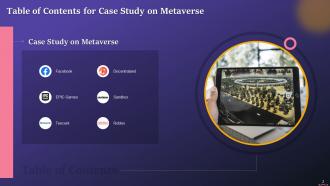
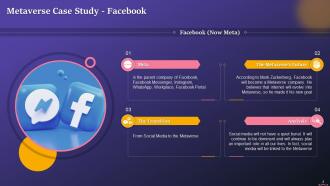
This slide illustrates the information regarding Meta formerly known as Facebook and its transition from social media to metaverse.
Slide 5
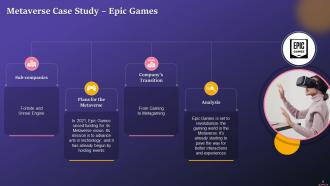
This slide illustrates the information regarding Epic Games and its transition from gaming to Metagaming. We get to know how a better gaming experience can help it enter new worlds
Slide 6
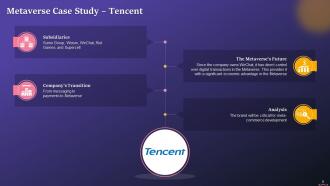
This slide illustrates the information regarding Tencent and its transition from messaging to payments to metaverse, where it enjoys a significant advantage due to its hold over transactions
Slide 8
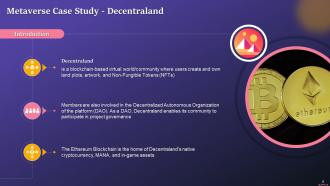
This slide illustrates a case study on Decentraland. Decentraland is ablockchain-powered virtual world/community where users can create and own land plots, artwork, and Non-Fungible Tokens (NFTs). It also mentions that the Ethereum Blockchain is the home of Decentraland's native cryptocurrency, MANA, and in-game assets.
Slide 9
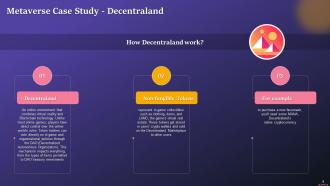
This slide explains how Decentraland works. It emphasizes that Decentraland is a virtual reality and blockchain technology-enabled online environment. Unlike most online games, players have direct control over the rules of the online world, and token holders can directly vote on in-game and organizational policies via the DAO (Decentralized Autonomous Organization). NFT represent in-game collectibles such as clothing, items, and LAND, the game's virtual real estate. These tokens get stored in users' crypto wallets and sold on the Decentraland Marketplace to other users. For example, to buy a new facemask, you'll need some MANA, Decentraland’s accepted cryptocurrency.
Slide 10
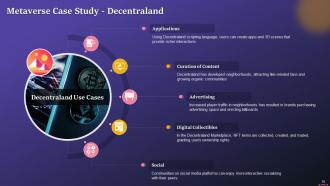
This slide showcases activities that can be performed on Decentraland metaverse which include application that allows users to create apps and 3D scenes for richer interactions. It also includes curation of content for like-minded people where they can grow organic communities. Increased player traffic in neighborhoods can result in brands purchasing advertising space. NFT items can also be collected, created and traded in the Decentraland marketplace. It also highlights that on Decentraland, communities can enjoy socializing with their peers through social media platforms.
Slide 11
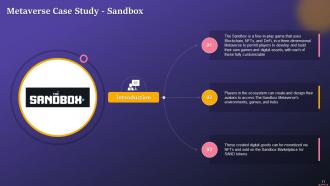
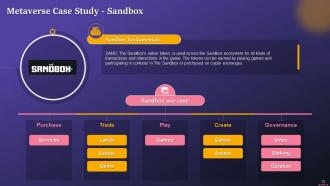
This slide illustrates a case study on Sandbox metaverse. It emphasizes that The Sandbox is a free-to-play game that uses Blockchain, NFTs, and DeFi in a three-dimensional metaverse to allow players to develop and customize their own games and digital assets. It mentions that in the ecosystem, players can create and design their avatars to access The Sandbox metaverse's various environments, games, and hubs. These created digital goods can then be monetized using NFTs and sold on the Sandbox Marketplace for SAND tokens.
Slide 12
This slide depicts information regarding SANDBOX. It emphasizes that SAND, The Sandbox's native token, is used across the Sandbox ecosystem for all kinds of transactions and interactions in the game. The tokens can be earned by playing games and participating in contests in The Sandbox or purchased on crypto exchanges.
Slide 13
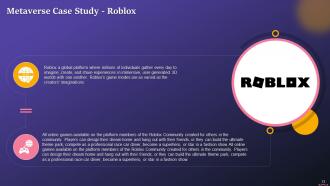
This slide presents a case study from the Roblox metaverse. It highlights Roblox as a global platform where millions of players gather every day to visualize, design and share experiences in immersive, user-generated 3D worlds. The slide also mentions that on Roblox metaverse, players can build their dream home and hang out with their friends, or they can compete as a professional race car driver, become a superhero, or star in a fashion show.
Slide 14
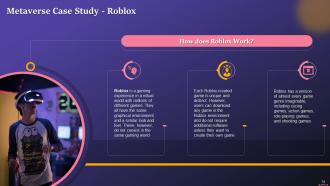
This slide mentions how Roblox metaverse works. It emphasizes that Roblox is a virtual world gaming environment with millions of different games. These share the same graphical environment; they have a similar look and feel. However, in the same gaming world, they do not coexist. The slide states that that each Roblox-created game is distinct and one-of-a-kind. Users can download any game from the Roblox environment and do not need additional software unless they want to create their own game.
Slide 26 to 41
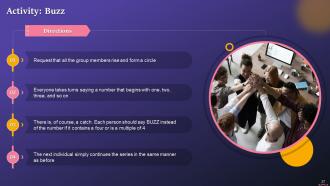
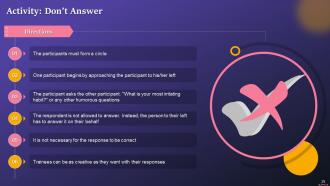
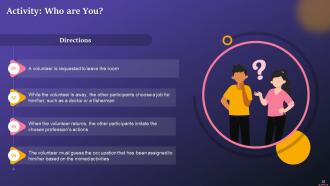
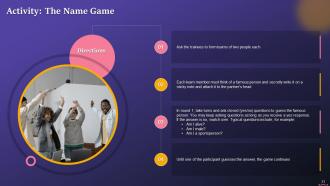
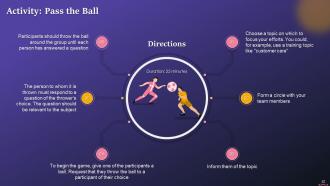
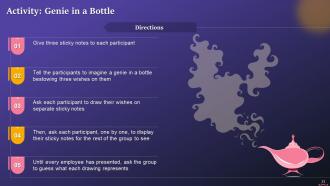
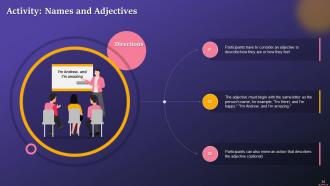
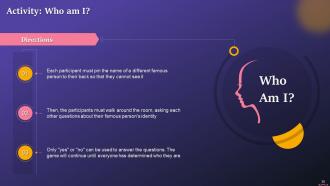
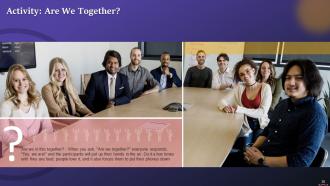
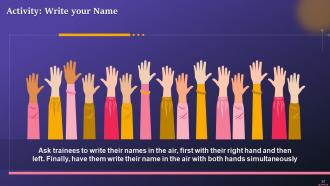
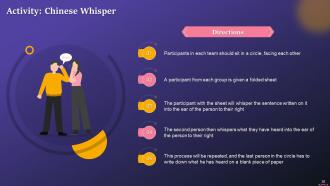
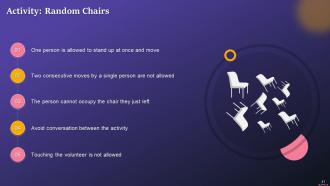
This slide depicts an energizer activity to engage the audience of the training session.
Slide 42 to 69
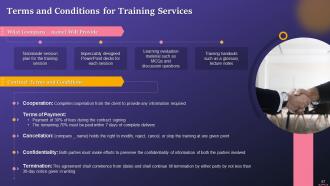
This slide highlights the cover letter for the training proposal. It includes details regarding what the company providing corporate training can accomplish for the client.
Slide 70 to 72
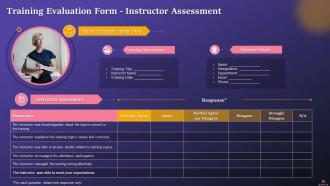
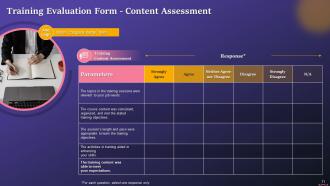
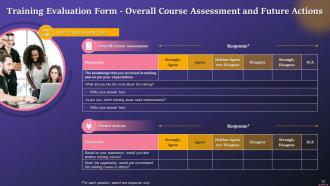
This slide highlights the training evaluation form for instructor assessment. It also includes sections to fill details of training information and attendee details.
Case Studies On Metaverse Training Ppt with all 77 slides:
Use our Case Studies On Metaverse Training Ppt to effectively help you save your valuable time. They are readymade to fit into any presentation structure.




























FAQs for Case Studies On
Metaverse training delivers enhanced engagement, cost-effective scalability, realistic skill practice, improved retention rates, and global accessibility for distributed teams. Through immersive simulations, organizations streamline complex training scenarios, reduce travel expenses, and accelerate competency development, with companies like Walmart and Boeing finding that virtual environments ultimately enhance employee performance while delivering significant operational savings.
Immersive metaverse environments enhance employee engagement through interactive simulations, gamified learning modules, collaborative virtual spaces, and hands-on practice scenarios that mirror real-world challenges. These technologies boost knowledge retention by enabling experiential learning, immediate feedback loops, and social collaboration, with companies like Walmart and Accenture finding that virtual training delivers significantly higher completion rates and improved skill application compared to traditional methods.
Healthcare, aviation, manufacturing, retail, and financial services have successfully implemented metaverse training programs, with hospitals using VR for surgical simulations, airlines training pilots in virtual cockpits, and banks creating immersive customer service scenarios. These implementations demonstrate that metaverse training significantly enhances skill retention, reduces training costs, and enables risk-free practice of complex procedures, with many organizations finding that immersive experiences accelerate competency development while delivering measurable improvements in employee performance and safety outcomes.
Organizations can measure Metaverse training effectiveness through engagement metrics, knowledge retention rates, skill application assessments, completion times, and cost-per-learner analysis compared to traditional methods. Many companies in healthcare and manufacturing find that immersive training delivers higher retention scores, faster skill acquisition, and reduced training costs, while providing detailed analytics on learner interactions and performance that traditional classroom settings cannot match.
Companies transitioning to Metaverse training face challenges including high initial technology investments, employee resistance to virtual environments, technical infrastructure requirements, content development complexities, and integration with existing learning management systems. However, organizations in healthcare, manufacturing, and retail increasingly find that overcoming these hurdles delivers enhanced engagement, cost-effective scalability, and immersive skill development that traditional methods cannot match.
Avatars in the Metaverse personalize training by allowing employees to customize their digital representation, interact naturally with colleagues across locations, and engage in role-specific simulations tailored to their learning preferences. Through immersive avatar-based experiences, organizations streamline skill development, enhance collaboration in virtual environments, and deliver more engaging training outcomes, with many companies finding that personalized avatars significantly improve employee participation and knowledge retention rates.
Gamification in Metaverse training incorporates interactive challenges, achievement systems, progress tracking, and reward mechanisms to enhance engagement and knowledge retention. Through immersive game elements, organizations like Walmart and Accenture streamline employee onboarding, accelerate skill development, and deliver measurable learning outcomes, with many finding that gamified virtual environments increase completion rates and improve long-term retention significantly.
Companies ensure accessibility in Metaverse training by implementing adaptive interfaces, providing multiple sensory input options, offering customizable avatars and environments, ensuring cross-platform compatibility, and incorporating assistive technologies for diverse abilities. These inclusive design principles enable organizations across healthcare, manufacturing, and financial services to deliver equitable learning experiences, ultimately expanding talent pools and enhancing employee engagement while meeting regulatory compliance requirements.
Essential technologies for Metaverse training include VR/AR headsets, cloud computing infrastructure, haptic feedback systems, artificial intelligence engines, and blockchain authentication platforms. These technologies work together by delivering immersive simulations, enabling real-time collaboration, and providing personalized learning pathways, with many organizations in healthcare, manufacturing, and aviation finding enhanced skill retention and reduced training costs.
Data analytics in the Metaverse enhances training through real-time performance tracking, behavioral pattern analysis, engagement measurement, and personalized learning path optimization. These insights enable organizations to identify skill gaps, adjust content difficulty dynamically, and deliver customized experiences, with healthcare simulations and corporate onboarding programs finding significantly improved learning outcomes and retention rates.
Best practices for designing 3D virtual training modules include creating intuitive navigation systems, incorporating interactive simulations, ensuring scalable user interfaces, providing multi-sensory feedback mechanisms, and implementing progressive skill-building pathways. These approaches enhance learning retention by offering immersive hands-on experiences, real-time performance analytics, and collaborative learning opportunities, with many organizations finding that well-designed virtual modules significantly reduce training costs while improving knowledge transfer and employee engagement across diverse learning styles.
Organizations maintain relevant Metaverse training by establishing continuous content review cycles, partnering with technology vendors for updates, monitoring industry trends, and gathering regular learner feedback. Through agile content development frameworks and collaborative relationships with Metaverse platforms, companies like Microsoft and Accenture continuously refresh their virtual training modules, ensuring employees receive current skills training while maximizing their technology investments in an increasingly dynamic digital landscape.
Companies should address data privacy protection, inclusive accessibility across diverse populations, psychological safety during immersive experiences, and transparent consent processes for virtual interactions. These considerations become particularly critical in healthcare simulations, financial services training, and educational environments, where organizations must balance innovative learning opportunities with employee wellbeing, ultimately delivering ethical training frameworks that enhance trust and competitive advantage.
Metaverse collaboration tools enhance teamwork through shared virtual workspaces, real-time communication platforms, interactive problem-solving environments, and peer mentoring systems that simulate actual workplace dynamics. These immersive technologies enable trainees to collaborate on complex projects, share knowledge seamlessly, and learn from diverse perspectives, with organizations in healthcare, engineering, and finance finding that virtual team exercises significantly improve communication skills and collective problem-solving capabilities.
Future trends in Metaverse training include AI-powered personalized learning paths, haptic feedback integration, cross-platform interoperability, blockchain-based credential verification, and advanced analytics for performance tracking. Companies should prepare for increasingly immersive experiences that streamline employee development, reduce training costs, and enhance knowledge retention, with many organizations finding that early adoption delivers significant competitive advantages in talent development.
-
SlideTeam, Please don’t stop sharing discount coupons! I love your occasional discounts and tend to buy your products around that corner.
-
I discovered this website through a google search, the services matched my needs perfectly and the pricing was very reasonable. I was thrilled with the product and the customer service. I will definitely use their slides again for my presentations and recommend them to other colleagues.