


Coal power plant how it works




Try Before you Buy Download Free Sample Product
 Impress Your
 Audience
 100%
100% Editable
 Save Hours
 of Time


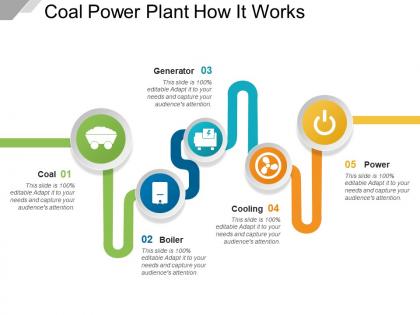
Employ Coal Power Plant How It Works PPT template for presenting the energy generation process. Represent the various stages involved in this process including boiling of coal and water, passing pressurized steam through a turbine, condensing with this thermal power plant graphic. This coal energy PowerPoint infographic will assist you to present the various apparatus such as boiler, condenser, generator, etc. which are required to facilitate the energy generation process. Highlight the functions of various components such as condenser, boiler, economiser, etc. with this fossil fuel energy theme. You can take advantage of this power generation slideshow and emphasize the electromagnetic principle which is the basis of the transformer’s functioning. This energy flow process diagram is fully customizable, so you can replace the text with your own relevant content. Thus, download this thermal power station visual to explain the process of energy generation to employees of your industry in a modern yet interesting manner.
People who downloaded this PowerPoint presentation also viewed the following :
Coal power plant how it works with all 5 slides:
Our Coal Power Plant How It Works can carry a heavy burden. You will find they have great capacity.




FAQs for Coal power plant
So you've got your boiler burning coal to make steam, then that steam hits the turbine and spins it for mechanical energy. Generator takes that and turns it into electricity. Pretty straightforward so far. The condenser cools everything back to water so you can reuse it. Don't sleep on the coal handling and ash disposal though - ash management is honestly way trickier than it looks. Your cooling system matters a ton too, whether that's towers or pulling from a river or whatever. When stuff breaks down, I'd check these main systems first since that's usually where the headaches start.
So coal combustion is like the starting point for the whole electricity thing. You burn coal in the furnace, which heats up water in these boiler tubes to make high-pressure steam. The steam spins a massive turbine - basically a really expensive pinwheel lol. That rotation drives the generator and boom, you've got electricity. Wild that we're still using steam power like we're back in the 1800s, right? You gotta keep the temperature and pressure just right though. Oh and if you're having generation problems, check your combustion efficiency first - that's where it all begins.
Look, if you're trying to squeeze more efficiency out of your coal plant, supercritical boilers are where it's at - they run hotter and at higher pressure, which can bump your efficiency up 5-10%. That's honestly your best bet for the biggest gains. You could also look into combined heat and power systems to catch waste heat, plus better combustion controls. Oh, and air preheaters help too. Yeah, the upfront costs are pretty brutal, but you'll make it back in fuel savings. My buddy at the plant in Ohio went supercritical first and said it was worth every penny.
So coal plants have to jump through a ton of hoops to meet EPA rules. They use scrubbers for sulfur dioxide, catalytic reduction systems for nitrogen oxides, and baghouses for particulate stuff. The monitoring's crazy intense - everything gets tracked in real-time and sent straight to regulators. Some plants try switching to lower-sulfur coal but that's getting expensive. Honestly, the penalties are brutal if you mess up. You need backup systems for your backup systems because violations mean huge fines or they'll just shut you down.
Dude, coal quality makes a huge difference for your plant. Better BTU content means burning way less fuel for the same power - that's just basic math. Sulfur's the real pain though, because high sulfur coal destroys your scrubbers and creates SO2 nightmares with regulators. You'll also deal with ash constantly gunking up heat exchangers, plus moisture screws with combustion efficiency. Honestly, cheap coal usually bites you later with higher maintenance costs. Your procurement guys should know this already, but balancing specs vs price is tricky. Sometimes paying more upfront saves you tons of headaches.
So basically supercritical plants run at crazy high pressure and temps - above 221 bar and 374°C, which is water's critical point. Subcritical stays below that. The big win? Efficiency jumps from like 33-37% up to 38-45%. Better thermodynamics means you're burning way less coal for the same power. Yeah the equipment's pricier upfront, but honestly the fuel savings usually pay for themselves. I'd always look at long-term operating costs over just the initial sticker shock - learned that the hard way on other projects. Short version: supercritical's worth it if you can swing the capital.
So CCS works by grabbing CO2 from your flue gas after burning coal, then compressing it for underground storage. You can retrofit existing plants with post-combustion systems. Fair warning though - it's pricey and eats up energy. The CO2 gets piped to old oil fields or saline aquifers. Some plants actually use it for enhanced oil recovery, which is kinda smart since it helps with costs. Transportation's usually the killer expense, so check how close you are to decent storage sites first. That'll make or break whether it's worth doing.
Honestly, coal plants are getting crushed by costs right now. You've got fuel expenses that never stop - constantly buying and hauling coal around while solar and wind basically run for free once they're up. Maintenance keeps getting pricier too, and don't even get me started on all the environmental regulations they have to meet. Renewable costs have dropped like crazy over the past decade though. I'd definitely look at the full lifecycle costs when you're weighing your options. Oh, and factor in regulatory risks - that stuff changes fast and it's not getting any cheaper.
Ugh, coal plants are brutal for the neighborhoods around them. Air quality goes to hell - people end up with way more asthma and breathing problems. The water gets nasty too from all that ash they dump, heavy metals and everything. Mining tears up habitats like crazy. Honestly, the noise alone would drive me insane if I lived nearby. Plus there's constant dust everywhere. If you're looking at anything near one of these plants, budget for health monitoring and dealing with pissed off communities. Those costs aren't going away.
Look, coal plants don't mess around with safety. You've got your standard lockout/tagout for maintenance, confined space rules, PPE everywhere. Air quality monitoring runs 24/7 because coal dust will wreck you. Emergency shutdowns can isolate whole sections instantly. Hot work permits are mandatory near anything combustible - learned that one the hard way at my last site. They make you do safety drills constantly and get two people to verify critical stuff. Training refreshers seem annoying but they actually catch problems before they blow up. The protocols exist because people died figuring this out.
Yeah, so the energy crisis is actually keeping coal plants alive longer than expected. Countries are delaying shutdowns and even firing up old facilities when gas prices go crazy or renewables can't handle demand. Pretty ironic considering all those climate promises, right? But I think this is just temporary - the same crisis is pushing huge investments into storage and grid tech that'll eventually make coal obsolete anyway. For your planning stuff, expect coal retirement schedules to be all over the place for the next 3-5 years instead of that steady decline we thought we'd see.
Honestly, it's mostly about money and tech challenges. Retrofitting old coal plants costs hundreds of millions per facility - that's insane money. The engineering gets messy too since these places weren't built for modern emissions stuff. What really sucks is regulatory uncertainty makes planning impossible. You can't budget when compliance costs keep changing. Workforce retraining is another massive headache. I'd start small - efficiency upgrades first, maybe some pilot partnerships. Don't try overhauling everything at once, that's just asking for trouble.
Yeah so coal prices are brutal - they'll eat up most of your variable costs since fuel is like 60-70% of what you're spending. Prices spike and suddenly you're either making way less money or pricing yourself out when you bid into the market. Super annoying to deal with, honestly. Long-term contracts can help smooth things out, but then you're stuck if prices tank later (learned that one the hard way). Building solid relationships with different suppliers helps though. Oh and watching futures markets - timing those purchases right can save your ass. It's basically a constant juggling act.
So these systems are like the plant's brain, right? They're constantly tweaking fuel rates, boiler temps, all that stuff to keep things running smooth. What's cool is they track combustion ratios and steam pressure in real-time, making adjustments way quicker than we could. Your heat rates improve, emissions drop, and you avoid those nasty surprise shutdowns since problems get caught early. I swear the technology is getting scary good at this stuff. You should probably look at your current control setup first - see where those feedback loops can get tightened up.
Dude, first thing - get on those EPA email lists and join whatever industry group covers your stuff. The regulatory world moves crazy fast right now. Do compliance audits regularly so you're not scrambling later. Budget for the expensive stuff like emissions controls or carbon capture before you actually need it. Also, and this might sound weird, but make friends with your local regulators now while things are chill. They remember who calls just to check in vs who only calls when they're in trouble. Most critical thing though? Keep your capital planning flexible because new rules will absolutely blindside you at some point.
-
Graphics are very appealing to eyes.
-
Colors used are bright and distinctive.