


1114 process of nuclear power generation plant ppt slide




Try Before you Buy Download Free Sample Product
 Impress Your
 Audience
 100%
100% Editable
 Save Hours
 of Time


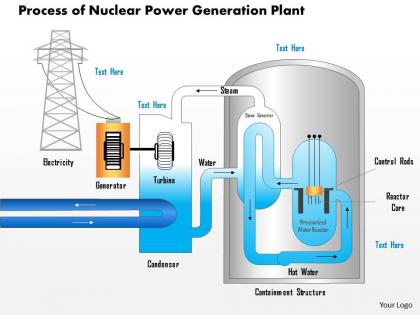
Insert process of nuclear power generation plan PPT slide to demonstrate the information related to nuclear energy to your viewers. This PowerPoint background helps you to showcase the entire system in the professional manner which consist of nuclear reactor, stream turbine, generator, cooling system, safety valves, feed water pump, emergency power supply etc. The designing experts has crafted with artistic presentation infographic after complete research and analysis of the subject. Nuclear stations are used mainly because of the cost effective purpose. The fuel cost of processes for a nuclear station is very less than the fuel cost for process of coal and gas plants. If you run a nuclear station at less than full capacity even then there is no cost saving. Our PowerPoint visual provides you an option to convey the information about the nuclear power generation plan functionality to the people and make them realize its importance. The PPT image is modifiable and you may modify certain elements according to the industry requirement. Download and then include it in your presentation. Feel free and easy with our 1114 Process Of Nuclear Power Generation Plant Ppt Slide. They create a cheerful atmosphere.
People who downloaded this PowerPoint presentation also viewed the following :
1114 process of nuclear power generation plant ppt slide with all 6 slides:
Give them belief to forge ahead with our 1114 Process Of Nuclear Power Generation Plant Ppt Slide. They help you drive them forward.


FAQs for 1114 process of nuclear power generation
So basically they shoot neutrons at uranium-235 atoms which makes them split apart. When they split, they release tons of energy plus even more neutrons that go hit other atoms - that's your chain reaction right there. Power plants use these control rod things (they're like brakes honestly) to keep everything from going nuts. The heat from all this splitting boils water into steam, steam turns turbines, boom you've got electricity. It's actually the same setup as coal plants which is kinda wild when you think about it. Main thing is keeping that reaction steady so you don't lose power or, you know, melt down.
So basically, reactors use three main things to keep the nuclear reaction under control. Control rods made of boron or whatever slide in and out to slow things down or speed them up - think of it like a gas pedal. Coolant flow rate matters too since it affects how fast neutrons move when they smash into uranium atoms. The fuel itself is arranged with specific spacing and enrichment levels, which is honestly pretty clever engineering. If things get sketchy, operators can jam those control rods in fast. Multiple backup systems so nothing goes haywire.
Most reactors you'll see are either PWRs or BWRs - they're like 90% of what's out there. PWRs keep the water pressurized so it won't boil in the core, then use that hot water to make steam separately. BWRs just let it boil right in the reactor. Way simpler if you ask me. Canada has these CANDU heavy water ones, and there's some fast breeder reactors too, but honestly those are pretty rare. I'd just focus on PWRs for your project since they're everywhere and you'll find way more info on them.
So nuclear plants basically have tons of backup systems - like if one cooling system fails, there's two more ready to go. The containment buildings can handle crazy amounts of pressure too. Modern reactors will automatically shut down if sensors detect anything weird, which is pretty cool actually. Newer designs don't even need electricity or people to stay safe - they just work on physics. Honestly you'd need like 3-4 major things to break at once for anything serious to happen, and that's basically impossible. Fun fact: statistically nuclear kills way fewer people per kilowatt than coal or even solar when you factor in manufacturing accidents.
So here's the deal with nuclear waste - it sits in cooling pools first, then gets moved to these dry storage containers. But honestly, the tricky part is that high-level stuff stays dangerous for literally thousands of years. Most countries don't have permanent storage figured out yet, so plants just keep piling it up on-site way longer than anyone planned. Finding good burial sites is tough, nobody wants it in their backyard, and the costs are insane. If you're looking at nuclear investments, build those storage expenses into your math upfront because they're definitely not optional.
Dude, cooling systems make or break nuclear efficiency. Here's the deal - your condenser temp directly controls how much electricity you squeeze out of reactor heat. Basic thermodynamics but with nuclear stakes, ya know? About 2/3 of that reactor heat doesn't become electricity anyway, so your cooling system has to dump it somewhere. If temps run hot, you're basically wasting energy. Honestly, most people overlook this part. When you're checking plant performance, cooling water temps should be your first stop. Get those dialed in and everything else follows.
Honestly, regulations are everything when it comes to nuclear facilities. They dictate site selection, safety standards, waste disposal - the whole shebang. You're talking years of approval processes and environmental reviews before construction even starts. The NRC doesn't mess around, which makes sense given what we're dealing with. Different countries handle this totally differently though - France pushed their nuclear program through fast while others basically banned new plants. Your timeline and budget will depend heavily on wherever you're trying to build. My advice? Figure out your local regulatory landscape first, because that'll determine if your project is even feasible.
Honestly, nuclear is way better for climate stuff - basically zero emissions while coal and gas pump out tons of CO2. The waste thing sounds scary but it's actually not that much volume-wise, just needs proper storage. Fossil fuels are worse when you think about all the air pollution and mining damage. I know accidents freak people out (totally get it), but statistically fossil fuels have killed way more people through pollution. Oh and the mining for uranium vs coal - that's a whole other mess. But yeah, if you're looking at pure environmental impact, nuclear's lack of carbon emissions usually wins out over the waste concerns.
So these new reactors basically shut themselves down automatically - no people needed, just physics doing its thing with gravity and heat flow. Digital systems catch problems super early now, which is huge. Gen IV ones are actually pretty sweet, they burn hotter so they're way more efficient. Plus they can literally eat old nuclear waste as fuel, which honestly blows my mind. The modular thing means you get these smaller standardized pieces that don't suck to build or fix. But yeah, if you're seriously considering this for your place, definitely prioritize the passive safety stuff first - that's where the real risk reduction happens.
So basically you're taking natural uranium (which is only like 0.7% of the good stuff) and bumping it up to 3-5% for power plants. The U-235 is what actually splits apart and keeps the chain reaction going - U-238 just sits there soaking up neutrons like a sponge. Think concentrating alcohol but way more annoying and expensive lol. Most reactors won't even work properly without this step. Oh and enrichment costs are brutal - usually one of the biggest chunks of your fuel budget after buying the uranium itself. Makes sense why nuclear power isn't exactly cheap to get started.
Dude, public opinion literally controls nuclear policy. People get scared? Projects get axed and regulations tighten up fast. Look at what happened after Fukushima - tons of solid projects died just from bad PR and community pushback. Politicians won't go near nuclear if voters hate it, even when the science checks out. Super frustrating if you're an engineer, honestly. The reality is that public trust affects everything: funding, permits, how long approvals take. My advice? Build community outreach into your project from the start, not later when you're already screwed.
So there's actually a bunch of cool nuclear tech beyond the old-school reactors. Small modular reactors are probably your best bet to look into - they're way safer and you can plop them in more places. Molten salt ones are fascinating because they run on thorium instead of uranium, which is wild. Fast breeders can literally eat nuclear waste, and high-temp gas reactors are super efficient. Fusion's the holy grail but honestly still feels like it's perpetually "20 years away." For your project though, I'd stick with SMRs since they're actually close to being real.
Earthquakes are a huge no-go for nuclear plants - they'll wreck the safety systems fast. Most get built in stable areas for obvious reasons. You need tons of water for cooling too, so coastal spots or big rivers work well. Plains beat mountains for construction, trust me on that one. Fukushima really showed how bad things get when tsunamis hit. I'd always check geological surveys first before picking a site. It's way easier than dealing with problems later. The whole location thing is trickier than people think honestly.
Dude, radiation doesn't care about borders - when things go bad, everyone's screwed. The IAEA helps countries share safety practices and does inspections, which is honestly pretty smart since nuclear tech is so expensive and complicated. Countries end up pooling their knowledge because nobody wants another Chernobyl situation. Fukushima taught us all something too. If you're getting into this field, definitely keep up with international incident reports and standards. That shared knowledge from other people's mistakes? It might save your ass someday. The whole industry basically learned the hard way that we're all in this together.
So SMRs are pretty much the opposite of those massive nuclear plants we're used to. They're smaller, way cheaper, and you can actually build them in factories then ship them out. Perfect for places that don't need gigawatts of power or can't handle huge construction projects. The safety stuff is better too - they've got these passive cooling systems that work without electricity. Honestly, traditional nuclear has been way too expensive for most places, so this might actually make sense economically. If your area needs clean power that's always on, SMRs could work where regular nuclear never would've.
-
Informative presentations that are easily editable.
-
Great product with highly impressive and engaging designs.