

Color Palette With Five Shade Azure Radiance Cerulean Cyan Aqua Cyan Aqua Cyan Aqua




Try Before you Buy Download Free Sample Product
 Impress Your
 Audience
 100%
100% Editable
 Save Hours
 of Time


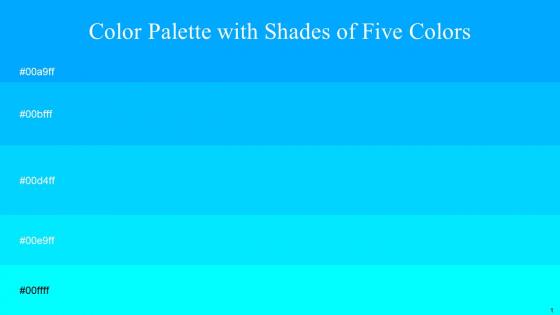
Heres a visually-pleasing color palette with Five Color Shades With Hex Code 00a9ff, 00bfff, 00d4ff, 00e9ff, 00ffff. These colors are intuitively picked to ignite the spark of brilliance in your designs and creativity.
People who downloaded this PowerPoint presentation also viewed the following :
Color Palette With Five Shade Azure Radiance Cerulean Cyan Aqua Cyan Aqua Cyan Aqua with all 14 slides:
Use our Color Palette With Five Shade Azure Radiance Cerulean Cyan Aqua Cyan Aqua Cyan Aqua to effectively help you save your valuable time. They are readymade to fit into any presentation structure.











FAQs for Color Palette With Five Shade Azure Radiance Cerulean Cyan Aqua Cyan
Dude, Azure Radiance is honestly pretty solid for edge-to-cloud stuff. The real-time data processing is fast as hell, and it handles workload distribution between edge devices and cloud seamlessly. What's cool is the AI acceleration that's baked right in - auto-scales based on where your users actually are geographically. Their hybrid setup lets you keep sensitive data local but still tap into cloud computing power when you need it. I'd probably start with their free tier honestly, just to mess around and see how it plays with what you've got running already.
Dude, Azure Radiance is seriously worth checking out. Those specialized GPU clusters will cut your training times down to like nothing - I'm talking datasets that used to crash your machine now run smooth. Works with PyTorch and TensorFlow right out the box, so no code rewrites needed. Auto-scaling is clutch too since you're not stuck paying for idle time. Honestly the free tier alone might handle whatever you're working on right now. I was skeptical at first but it's saved me so many headaches. Way better than sitting around waiting for models to finish training.
So Azure Radiance basically speeds up your web app with smart caching and edge computing stuff. Your content gets spread across these global nodes, which means faster loading no matter where people are. The cool part is how it uses AI to actually scale based on real traffic instead of just making educated guesses. Users will notice way better load times and you'll see improved bandwidth usage. Honestly, I'd probably start with their analytics dashboard first - helps you figure out what's actually slowing things down. Then just flip on the auto-optimization and let it do its thing.
Azure Radiance encrypts everything - your data while it's moving around and when it's just sitting there. They've got multi-factor authentication and role-based controls so random people can't access your stuff. Their security team is honestly kind of intense about monitoring everything 24/7 and doing pen tests constantly, which I guess is annoying for them but great for us. You'll get automated reports for SOC 2 and ISO 27001 compliance too. Just don't forget to actually set up your permissions correctly though - that part's still on you.
Azure Radiance is pretty solid for auto-scaling - it adjusts your infrastructure based on real-time demand without you babysitting it. Traffic spikes? No problem, it'll spin resources up and down automatically. The best part is you don't have to rebuild your whole setup since it works with existing Azure services. Just configure your scaling policies once and you're good to go. Honestly, I'd test it on your most unpredictable workloads first rather than going all-in immediately. Way less stressful that way. Plus you'll get a feel for how it behaves before rolling it out everywhere.
Dude, Azure Radiance is actually pretty solid for DevOps stuff. Basically gives you one place to monitor everything and handles your deployment pipelines across your whole setup. You can track code changes, run automated tests, and push updates from dev to prod without the usual headaches. The real-time visibility is clutch - you'll spot problems way before users do. Rollback features are smooth too. Oh, and the dashboards actually get your dev and ops people working together instead of hating each other lol. Just grab one of their basic templates to start.
So Azure Radiance lets you manage AWS, Google Cloud, and Azure from one dashboard - which honestly is a lifesaver since companies always end up with stuff everywhere. You can move apps between clouds pretty easily without huge rewrites. The billing gets consolidated too, which your finance team will love. Best part? You're not stuck in Microsoft's world even though it's their service. Teams can still deploy wherever makes sense while you keep control from the center. Oh, and definitely start with their migration tool - it'll show you which workloads are actually worth moving around.
Honestly, rightsizing your compute instances is where you'll see the biggest wins - we're talking 30-70% savings if you add reserved instances for steady workloads. Auto-scaling is a game changer since you're only paying for what you actually need. Don't sleep on storage optimization either! Clean up those old snapshots and set lifecycle policies to push cold data to cheaper storage tiers. Set up cost alerts ASAP because trust me, those bills can get scary fast. Oh, and run the cost advisor monthly - it catches stuff you'd never think to look for.
So Azure Radiance works really well with Microsoft stuff - you can hook it straight into Power BI for your dashboards, connect with Azure DevOps for deployments, and it sends notifications through Teams. The Office 365 side is actually pretty solid too. SharePoint syncs automatically, your Outlook calendar connects, and you can export to Excel without any hassle. Oh and there's Dynamics 365 connectors if you're stuck using that (sorry lol). Honestly though? I'd start with Power BI first since that's where you'll get the biggest bang for your buck on reporting.
Yeah, Azure Radiance handles real-time analytics really well. It can pull data from tons of sources at once and you'll get insights in seconds - honestly the speed is crazy impressive. They use in-memory processing and run things in parallel so there's basically no lag with streaming data. Your dashboards update automatically as new stuff comes in, plus you can set up alerts when things go weird or hit certain thresholds. Oh, and definitely try their quickstart templates first before diving into custom pipelines. Way easier to figure out how everything works that way.
Start with the official docs - they're way better organized than usual for Microsoft stuff. The portal has interactive tutorials that actually help, and Microsoft Learn has a whole path for beginners. YouTube walkthroughs are decent but some are kinda old. Honestly, the community forums are where I'd spend time since people post real examples of what they're building. Oh, and definitely do the quickstart first to get something working - there's nothing worse than reading theory without seeing it in action. Then jump into the deeper tutorials once you've got the basics down.
So Azure Radiance does backups every 15 minutes automatically - pretty nice since you don't have to remember anything. Your data gets copied to at least three different regions, which is honestly overkill but whatever, better safe than sorry. If something breaks, you can restore from any point in the last 30 days. Takes about 2 hours for most stuff. Way better than the old days when we had to manually backup everything like cavemen. Just double-check your retention settings in the console match whatever compliance rules you've got.
So Azure Radiance is actually pretty solid for green hosting - they run everything on renewable energy and somehow made their infrastructure carbon-negative, which honestly blew my mind when I first heard it. Your unused compute automatically scales down to save power, and they offset data transfer emissions too. There's this real-time dashboard that shows your carbon footprint while you're working (kinda cool to watch). Oh, and definitely turn on those auto-optimization settings in your project - cuts footprint by like 40% with zero performance hit. Worth checking out if you care about that stuff.
Start by grabbing your API keys from the developer console - you'll need those first. The REST APIs are actually pretty straightforward for building custom stuff. Honestly, their docs don't suck like some other Azure services I've dealt with. Begin with basic GET requests to see how the data's structured. Then move on to POST/PUT once you get the hang of it. Oh, and definitely test everything in their sandbox first - learned that the hard way on another project. The webhook setup is solid too if you need real-time updates.
Yeah, Azure Radiance is so new that public case studies barely exist yet. Makes sense though - companies using confidential computing aren't exactly shouting about their sensitive workloads. I've seen some healthcare and finance companies quietly testing it out, but details are scarce. Microsoft's partner showcase might have something, or honestly? Just hit up their Azure team directly. They're usually pretty good about connecting you with reference customers who don't mind sharing war stories. Worth a shot at least.
-
SlideTeam makes creating presentations easy. Unlimited products, premium quality designs and affordable.
-
I discovered this website through a google search, the services matched my needs perfectly and the pricing was very reasonable. I was thrilled with the product and the customer service. I will definitely use their slides again for my presentations and recommend them to other colleagues.