


Commercial Real Estate Investor Funding Elevator Pitch Deck Ppt Template





Try Before you Buy Download Free Sample Product
 Impress Your
 Audience
 100%
100% Editable
 Save Hours
 of Time


Investors see hundreds of pitch decks every year, so its essential to have a sequence of slides with a strong narrative and visually pleasing design to stand out from the crowd. Here is an efficiently designed Commercial Real Estate Investor Funding Elevator Pitch Deck. It highlights critical insights into the real estate market and is best suited for real estate entrepreneurs to convey their product vision and convince investors to offer their money. The presenter can use our presentation to illustrate critical insights about the real estate services market through slides such as global market outlook, industry insights, and market opportunity. Slides such as our methodology and business model will help the presenter address the potential investors about the companys process, starting from property identification and ending with refinancing. Here the presenter can also highlight essential information about the property selection process, acquisition portfolio, key members, and milestones through slides, namely market selection process, track record of success, existing property portfolio, the team, and timeline. Finally, the company can tell its investors how much funding they need and what they plan to do with it through an investment ask slide. Book a free demo now.
People who downloaded this PowerPoint presentation also viewed the following :
Content of this Powerpoint Presentation
Slide 1: This slide introduces Commercial Real Estate Investor Funding Elevator Pitch Deck. State your company name and begin.
Slide 2: This slide presents Table of Contents for Real Estate Pitch Deck.
Slide 3: This slide displays Global Market Outlook of Real Estate Services.
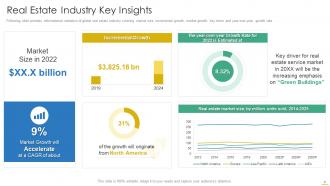
Slide 4: This slide represents statistics of global real estate industry covering market size, incremental growth, market growth, etc.
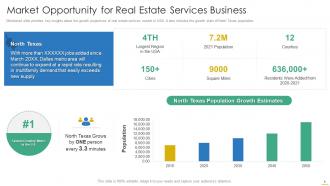
Slide 5: This slide showcases Market Opportunity for Real Estate Pitch Deck.
Slide 6: This slide shows Problem and Solution for Real Estate Pitch Deck.
Slide 7: This slide presents address audience about the technology or magic behind the product.
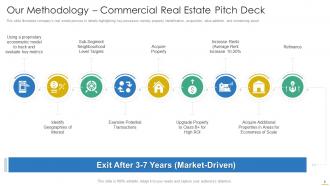
Slide 8: This slide illustrates company’s real estate process in details highlighting key processes.
Slide 9: This slide showcases Business Model Canvas of Real Estate Listing Website.
Slide 10: Purpose of this slide is to convince the potential investors to invest in the company by highlighting company’s proven strategy.
Slide 11: Purpose of this slide is to tell investors how the company is different from its competitors.
Slide 12: This slide represents company’s process of selecting a suitable market based on various factors.
Slide 13: Purpose of this slide is to grab the attention of investors by addressing company’s track record of success.
Slide 14: This slide showcases Existing Property Portfolio for Real Estate Pitch Deck.
Slide 15: This slide shows key members that contributes towards company’s success.
Slide 16: This slide presents milestones achieved timeline of the company covering details of alpha and beta version launching.
Slide 17: This slide displays investors about the success behind real estate services business by providing a case study.
Slide 18: This slide represents investors on how much money you are you seeking and where you will deploy it.
Slide 19: This slide contains all the icons used in this presentation.
Slide 20: This slide is titled as Additional Slides for moving forward.
Slide 21: This slide provides 30 60 90 Days Plan with text boxes.
Slide 22: This is Our Goal slide. State your firm's goals here.
Slide 23: This is Our Mission slide with related imagery and text.
Slide 24: This slide presents Bar chart with two products comparison.
Slide 25: This slide shows Post It Notes. Post your important notes here.
Slide 26: This is About Us slide to show company specifications etc.
Slide 27: This is a Financial slide. Show your finance related stuff here.
Slide 28: This is a Timeline slide. Show data related to time intervals here.
Slide 29: This slide depicts Venn diagram with text boxes.
Slide 30: This is a Thank You slide with address, contact numbers and email address.
Commercial Real Estate Investor Funding Elevator Pitch Deck Ppt Template with all 35 slides:
Use our Commercial Real Estate Investor Funding Elevator Pitch Deck Ppt Template to effectively help you save your valuable time. They are readymade to fit into any presentation structure.
-

Commercial Real Estate Investor Funding Elevator Pitch Deck
-
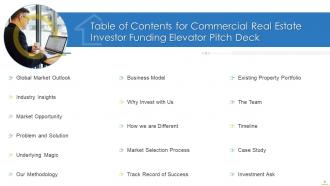
Table of Contents for Commercial Real Estate Investor Funding Elevator Pitch Deck
-

Global Market Outlook of Real Estate Services
-
Real Estate Industry Key Insights
-
Market Opportunity for Real Estate Services Business
-

Problem Statement and Solution Offered by Real Estate Business
-

Underlying Magic Commercial Real Estate Pitch Deck
-
Our Methodology Commercial Real Estate Pitch Deck
-
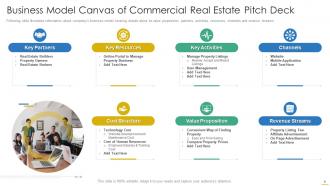
Business Model Canvas of Commercial Real Estate Pitch Deck
-
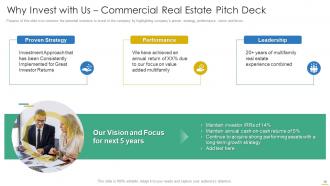
Why Invest with Us Commercial Real Estate Pitch Deck
-
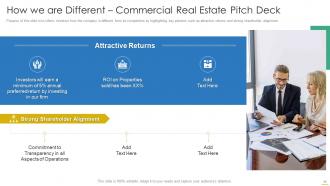
How we are Different Commercial Real Estate Pitch Deck
-
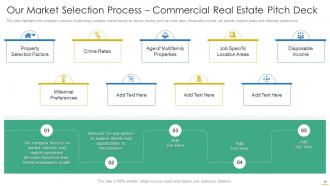
Our Market Selection Process Commercial Real Estate Pitch Deck
-
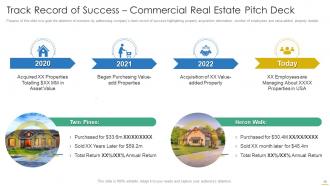
Track Record of Success Commercial Real Estate Pitch Deck
-
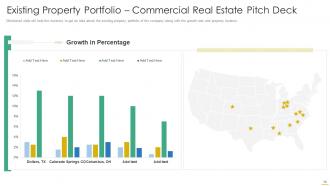
Existing Property Portfolio Commercial Real Estate Pitch Deck
-

The Team Commercial Real Estate Pitch Deck
-
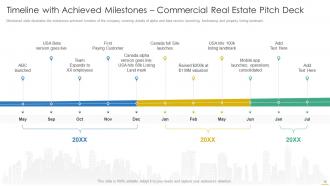
Timeline with Achieved Milestones Commercial Real Estate Pitch Deck
-

Case Study Commercial Real Estate Pitch Deck
-
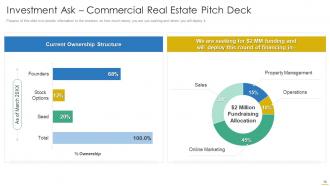
Investment Ask Commercial Real Estate Pitch Deck
-

Icons Slide for Commercial Real Estate Investor Funding Elevator Pitch Deck
-

Additional Slides
-

30 60 90 Days Plan
-

Our Goal
-

Our Mission
-

Bar Chart
-

Post it Notes
-

About Us
-

Financial
-
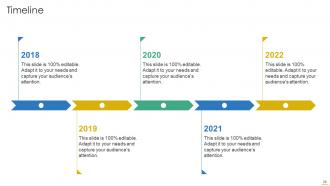
Timeline
-

Venn
-

Thank You
-

-

-

-

-

FAQs for Commercial Real Estate Investor Funding Elevator Pitch
Location's everything - seriously, this determines if you'll make money or lose your shirt. Check out what's happening in the neighborhood, businesses moving in, how people get around. Financials are next: what's the actual rental income, how often units sit empty, what you're spending on upkeep. Building condition matters too since a bad roof can wreck your whole budget. Cap rates help you compare different properties, but honestly if the location sucks the math won't save you. Oh and definitely look at the lease situations - long-term tenants are way better than month-to-month chaos. Make yourself a checklist so you don't forget this stuff when you're walking through places.
Look, property values are basically tied to whatever's happening with the economy. Interest rates go up? Your property's worth less because loans cost more. Makes sense, right? Employment's huge too - more jobs means people need office space and actually shop at retail locations. I always tell people to watch the Fed because they basically control everything. Consumer spending hits your retail properties hard, while business growth affects industrial stuff. Honestly, tracking these patterns isn't just smart - it's how you'll know when to buy or sell before everyone else catches on. The whole thing's connected.
Honestly, it really comes down to your deal size and how much experience you have. Bank loans are your cheapest option if you've got solid financials and can put down 20-30%. SBA loans work well for owner-occupied stuff with less money down. Private lenders cost more but they move fast - super helpful when you need to close quick or banks won't touch your deal. Seller financing is underrated IMO, especially if they want steady cash flow. Oh, and definitely get pre-qualified with a few commercial lenders first so you're not wasting time looking at properties you can't actually afford.
Honestly, location is everything in commercial real estate. Look for areas with growing populations, solid job markets, and good infrastructure - that's where you'll see real returns. Prime spots cost more upfront but they appreciate way faster. Secondary markets might give you better cash flow initially, just don't expect crazy growth. I've watched too many people chase "bargain" properties in dying areas and regret it later. My advice? Find up-and-coming neighborhoods with actual reasons to grow. Skip the super expensive areas but also avoid obvious disasters.
Look, good tenants are everything in this business. Your cash flow depends on it. I want tenants with solid credit, established businesses, real track records - they actually pay on time and stick around. Banks love this too, so you'll get way better loan terms. Had one sketchy tenant years ago... never again. Strong tenants can literally boost your property value just by being there, which is pretty cool when you think about it. Don't skip the financial background checks. Their business fundamentals matter more than you'd think.
Definitely spread your investments around - different property types and locations. Office, retail, industrial, you know the drill. Get those inspections done properly and actually read through the financials instead of skimming them. I learned this the hard way, but most people totally phone it in during due diligence and kick themselves later. Local market trends matter way more than you'd think. If you're just starting out, find someone experienced to partner with. Oh, and keep serious cash reserves - like 6 months of expenses minimum. Trust me, vacancy periods and surprise repairs will happen when you least expect them.
So there's three big tax things to know about. First, you get to depreciate the property over 27.5-39 years which cuts your annual taxes. Sweet deal. But when you sell, capital gains tax hits your profits - and here's the kicker, that depreciation comes back to haunt you at regular income rates. Total pain. 1031 exchanges though? Game changer. You can basically swap properties and dodge taxes for now. Honestly just find a CPA who actually gets real estate because this gets messy quick and you don't want to screw it up.
Dude, zoning laws will make or break your deal. You buy retail space thinking you'll flip it to offices? Good luck - might not even be possible without a variance, and those are a total crapshoot. Height restrictions can screw you too, plus parking requirements that come out of nowhere. Learned this the hard way once - always check the zoning map first thing, not after you're already attached to a property. Call the planning department early. They'll save you from expensive mistakes. Trust me, it's way easier than trying to fix zoning issues after closing.
Focus on cap rate, cash-on-cash return, and NOI first - those are your bread and butter. Cap rate shows what the property yields without financing factored in. Cash-on-cash is your actual return on what you put down. NOI is profit after expenses but before you pay the mortgage, which gives you a clean picture. Oh, and definitely track occupancy rates and rent growth trends too. I learned that one the hard way when I got too focused on just the numbers side. These five metrics will cover most of what you need to compare deals properly.
Mixed-use developments are absolutely crushing it right now - tenants want flexibility more than anything. Industrial is still solid, especially those last-mile delivery spots since everyone's shopping online constantly. ESG properties are getting crazy valuations which honestly blew my mind at first. Healthcare real estate is booming with all the demographic shifts happening. Oh, and experiential retail is huge too. My advice? Don't touch single-purpose buildings anymore. You'll want properties that can pivot to different uses because that adaptability is what's separating winners from losers in this market.
Dude, don't cheap out on property management - I've seen too many people learn this the hard way. Good managers keep tenants from leaving, which obviously keeps money coming in. They'll catch maintenance stuff early before it turns into a $10K nightmare. And honestly? Most people are terrible at screening tenants (myself included when I started). Experienced managers also know when they can bump rents during renewals because they actually understand what's happening in your area. Yeah, it costs money upfront, but trust me on this one.
Dude, market research is like your safety net against blowing money on bad deals. Look into vacancy rates, rent trends, who's moving in/out of the area. Check zoning changes too - that stuff matters more than people think. I got burned early on by skipping this step, trust me. Good data helps you find deals others overlook and avoid markets that are already swamped. Oh, and timing your moves becomes way easier. Pull demographic reports and comparable sales before you even tour places. Sounds boring but it's saved my ass multiple times.
Tech's totally changing commercial real estate right now. Property management got way easier with all these new apps and systems. Buildings have sensors that track energy use - saves tons of money. AI helps screen tenants too, which is honestly pretty helpful. VR tours are everywhere now and they're surprisingly good. Blockchain's making deals faster, plus you can buy fractional ownership in properties you'd never afford before. Smart buildings basically run themselves these days. I'd definitely look for properties that already have this stuff since tenants expect it. Traditional buildings are gonna struggle to keep up.
REITs are pretty sweet for getting started - you can trade them like stocks and get instant exposure to fancy commercial properties without dealing with tenant drama. The downside? Market swings that make zero sense sometimes (like when a REIT tanks because of some random Fed announcement). Direct ownership gives you total control over everything - picking tenants, doing upgrades, tax write-offs. But then you're the one getting calls about broken toilets and your money's stuck in one property. Honestly, if you want something passive to start with, REITs are way easier.
So each property type gets hit differently when the economy tanks. Retail always goes down first - people stop spending, stores close, shopping centers turn into ghost towns. Office buildings usually follow since companies start cutting back on space. But industrial? That stuff holds up way better because warehouses and distribution centers are still needed regardless. I mean, Amazon's not exactly slowing down, right? Industrial's been crushing it lately with all the online shopping growth. I'd spread your money across different types if possible, but honestly if you want to play it safe, stick with industrial properties that have solid long-term tenants locked in.
-
Great work on designing the presentation. I just loved it!
-
Satisfied with the way SlideTeam resolved my query regarding the right business PPTs that I was having difficulty finding. I found the perfect match with their assistance.