


Common types of cyber crime ppt powerpoint presentation professional example file




Try Before you Buy Download Free Sample Product
 Impress Your
 Audience
 100%
100% Editable
 Save Hours
 of Time


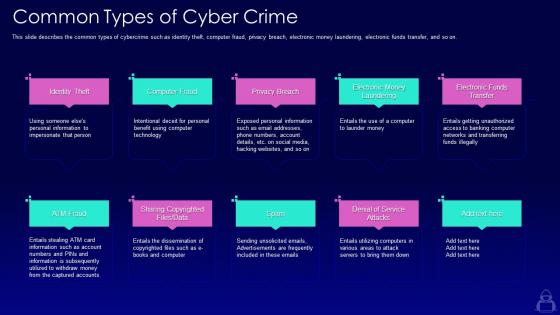
This slide describes the common types of cybercrime such as identity theft, computer fraud, privacy breach, electronic money laundering, electronic funds transfer, and so on.
People who downloaded this PowerPoint presentation also viewed the following :
Common types of cyber crime ppt powerpoint presentation professional example file with all 6 slides:
Use our Common Types Of Cyber Crime Ppt Powerpoint Presentation Professional Example File to effectively help you save your valuable time. They are readymade to fit into any presentation structure.





FAQs for Common types of cyber crime ppt powerpoint presentation
Honestly, most companies deal with the same three things over and over - phishing emails, ransomware, and identity theft. That's like 80% of all cyber attacks right there. Phishing's still number one because it works so damn well, and these scammers are getting scary good at making fake emails look real. Then you've got financial fraud through bogus websites, plus social engineering where they just straight up manipulate people on the phone. Oh, and ransomware can totally wreck your day if it hits. But here's the thing - basic security training for your team plus keeping everything updated prevents most of this stuff. Sounds simple but it actually works.
Dude, working from home basically opened up every house as a target for hackers. Your home network definitely isn't as secure as office systems. Phishing emails have gotten insane - they're making fake Teams meeting invites that look completely legit. Ransomware attacks are through the roof too since most people don't have proper backups at home. I learned this the hard way when my neighbor got hit last month. Use a VPN, update your router firmware (yeah I know, boring but necessary), and don't click random links. Trust me on this one.
Ugh, social engineering is literally how most cyber criminals get started - they just manipulate people instead of actually hacking systems. Like they'll pretend to be IT support or create some fake emergency to trick you into giving up passwords or clicking sketchy links. Your employees are honestly the biggest vulnerability because even amazing security can't stop someone from willingly sharing their login info. I learned this the hard way at my last job actually. Train your team to double-check requests through different channels before doing anything suspicious. These scammers are getting ridiculously good at this stuff.
Yeah, cybercrime laws are all over the place depending where you look. The US goes hard on federal stuff - Computer Fraud and Abuse Act and all that. Europe's got those EU directives that are pretty thorough actually. Singapore will throw the book at you, but tons of countries are still working with laws from like 2005 that don't even mention half the stuff hackers do now. China does their own thing obviously, way more about control than anything else. Cross-border cases? Good luck with that mess. You'll want to figure out which treaties actually apply because enforcement gets weird fast when multiple countries are involved.
Honestly, start with training your people to spot phishing emails - that's where like 90% of attacks begin. Set up multi-factor authentication everywhere and ditch those terrible passwords (I'm looking at you, "password123"). Keep your software updated, backup everything regularly, and get decent antivirus. Oh, and change your router's default password too - can't believe how many people skip that. Monthly training sessions work way better than those boring one-off presentations nobody remembers. Most breaches are just human error anyway.
Dude, first thing - check your credit reports every few months and set up those fraud alerts. I'm honestly paranoid about this stuff now. Strong passwords for everything, obviously, and turn on two-factor authentication. Never share personal info over the phone unless you initiated the call. Shred anything with your SSN or account numbers before throwing it out. Public WiFi is sketchy for banking - just don't. Oh, and actually read through your bank statements each month. Sounds boring but you'll catch weird charges fast. Trust me, catching it early saves you massive headaches later.
Yeah so dark web markets basically turned cybercrime into Amazon - anyone can buy hacking tools now without knowing jack about coding. Stolen passwords, ransomware kits, you name it. It's actually pretty scary how professional these operations look. The barrier to entry dropped through the floor. Random criminals just shop for whatever they need and boom, they're running attacks. For your security stuff, just assume every threat is out there and available. Layer your defenses thick because you're not just dealing with elite hackers anymore - it's everyone.
Dude, cybercrime is basically wrecking national security left and right. Hackers go after power grids, water systems, all that critical stuff - and when they get in, whole regions can go dark. It's wild how much damage one attack can do. Foreign countries love this approach too since it's way cheaper than actual war but just as effective at causing chaos. Oh, and they're constantly trying to grab classified government data while they're at it. Your company really needs solid cybersecurity training because honestly? This isn't some future problem - attacks are happening every single day now.
Dude, AI and machine learning are seriously changing the game right now. Cybercriminals are getting way smarter with phishing attacks and deepfakes - plus they've got these automated tools that actually adapt as they hack you. Wild stuff. IoT devices are another nightmare since most have garbage security built in. Oh, and quantum computing's gonna eventually break our encryption methods, which is... fun. Honestly feels like we're all just playing catch-up at this point. Best thing you can do is stay on top of these trends and make sure your security team isn't caught off guard when this stuff hits.
Look, ditch those boring annual PowerPoint sessions - nobody remembers them anyway. Break security training into small, regular chunks that don't suck. When someone reports a sketchy email, celebrate it instead of making them feel stupid for asking. Your leadership has to actually walk the walk, not just talk about security importance. People copy what they see their bosses doing. Set up simple ways for staff to report weird stuff and maybe throw in some rewards for good behavior. The whole "IT's problem" mentality? Kill it. Everyone needs to own this or you're screwed.
Yeah, so basically criminals love crypto because it's way harder to track than regular bank transfers. Bitcoin's huge for ransomware - hackers lock up your files then demand payment that way. Dark web markets use it too for selling stolen credit cards and stuff. Don't get me wrong, crypto isn't evil by itself. Tons of people use it legitimately. But that anonymity factor? Perfect for sketchy activities. Funny thing is, blockchain actually keeps records of everything forever. Cops are getting pretty good at following those digital breadcrumbs now. If you run into anything suspicious, definitely save screenshots and call authorities.
So there's actually decent cooperation happening behind the scenes. Interpol and Europol help cops share intel and coordinate investigations across borders. They've got 24/7 contact networks too - like if you're tracking some hacker in Romania at 3am, there's actually someone you can reach to preserve evidence before it vanishes. The Budapest Convention is the legal framework that makes extradition and mutual assistance possible between countries. Honestly, if your company gets hit, report it to local authorities right away. They can tap into these international networks way faster than most people realize.
Dude, cybercrime stuff is no joke. Prison time can be years depending on what happened, plus massive fines - we're talking hundreds of thousands sometimes. You'll also owe restitution to whoever got hurt. The worst part? That record follows you everywhere. Good luck landing certain jobs after that mess. If you hit critical infrastructure or caused major financial damage, penalties get way worse. Honestly, the whole system comes down pretty hard on this stuff. Get a lawyer who knows cyber law right now - don't mess around with this.
So ethical hackers are basically the good guys doing bad guy stuff - but legally. They'll break into your systems (with permission obviously) to find weak spots before actual criminals do. It's like hiring someone to test if your doors are actually locked, which sounds weird but makes sense. Most will run penetration tests and give you reports on what's broken - outdated software, terrible passwords, whatever. You definitely want certified pros though, not some random guy. Even small businesses should get a basic security audit done. Better to know now than find out the hard way later.
So criminals are totally using AI now to make phishing emails way more convincing and create those creepy deepfakes. They can automate attacks too, which is honestly terrifying. But cybersecurity teams aren't just sitting around - they're fighting back with their own AI tools. These systems can catch weird network activity and sometimes even predict attacks before they hit. It's like this constant tech arms race. The side with better AI usually comes out ahead, so companies really need to keep their security tools updated. Pretty wild how fast this stuff is evolving.
-
Colors used are bright and distinctive.
-
Excellent Designs.