


Complete Guide For Talent Acquisition Powerpoint Presentation Slides
Introducing our Complete Guide for Talent Acquisition PowerPoint presentation an invaluable resource for organizations striving to optimize their talent acquisition strategies. This meticulously designed template provides a detailed overview of talent sourcing best practices, key trends, and statistical insights. The Executive Recruitment PPT encompasses a variety of offline and online strategies, including employee referrals, job fairs, social media recruitment, and website sourcing. It emphasizes the pivotal role of Applicant Tracking Systems ATS and guides team structure, skill improvement, and budget allocation. This 100 percentage editable and customizable template allows for tailored content to align with specific talent acquisition needs. Whether youre an HR manager or a talent sourcing professional, our insightfully crafted module is designed to enhance your ability to source and secure the best candidates. Download now to elevate your talent acquisition efforts and drive organizational success.
Introducing our Complete Guide for Talent Acquisition PowerPoint presentation an invaluable resource for organizations stri..









































-

- Google Slides is a new FREE Presentation software from Google.
- All our content is 100% compatible with Google Slides.
- Just download our designs, and upload them to Google Slides and they will work automatically.
- Amaze your audience with SlideTeam and Google Slides.
-

Want Changes to This PPT Slide? Check out our Presentation Design Services
-

- WideScreen Aspect ratio is becoming a very popular format. When you download this product, the downloaded ZIP will contain this product in both standard and widescreen format.
-

- Some older products that we have may only be in standard format, but they can easily be converted to widescreen.
- To do this, please open the SlideTeam product in Powerpoint, and go to
- Design ( On the top bar) -> Page Setup -> and select "On-screen Show (16:9)” in the drop down for "Slides Sized for".
- The slide or theme will change to widescreen, and all graphics will adjust automatically. You can similarly convert our content to any other desired screen aspect ratio.
Compatible With Google Slides

Get This In WideScreen
You must be logged in to download this presentation.


Do you want to remove this product from your favourites?
PowerPoint presentation slides
Deliver this complete deck to your team members and other collaborators. Encompassed with stylized slides presenting various concepts, this Complete Guide For Talent Acquisition Powerpoint Presentation Slides is the best tool you can utilize. Personalize its content and graphics to make it unique and thought-provoking. All the ninety three slides are editable and modifiable, so feel free to adjust them to your business setting. The font, color, and other components also come in an editable format making this PPT design the best choice for your next presentation. So, download now.

People who downloaded this PowerPoint presentation also viewed the following :
Content of this Powerpoint Presentation
Slide 1: This slide introduces Complete Guide for Talent Acquisition. State Your Company Name and begin.
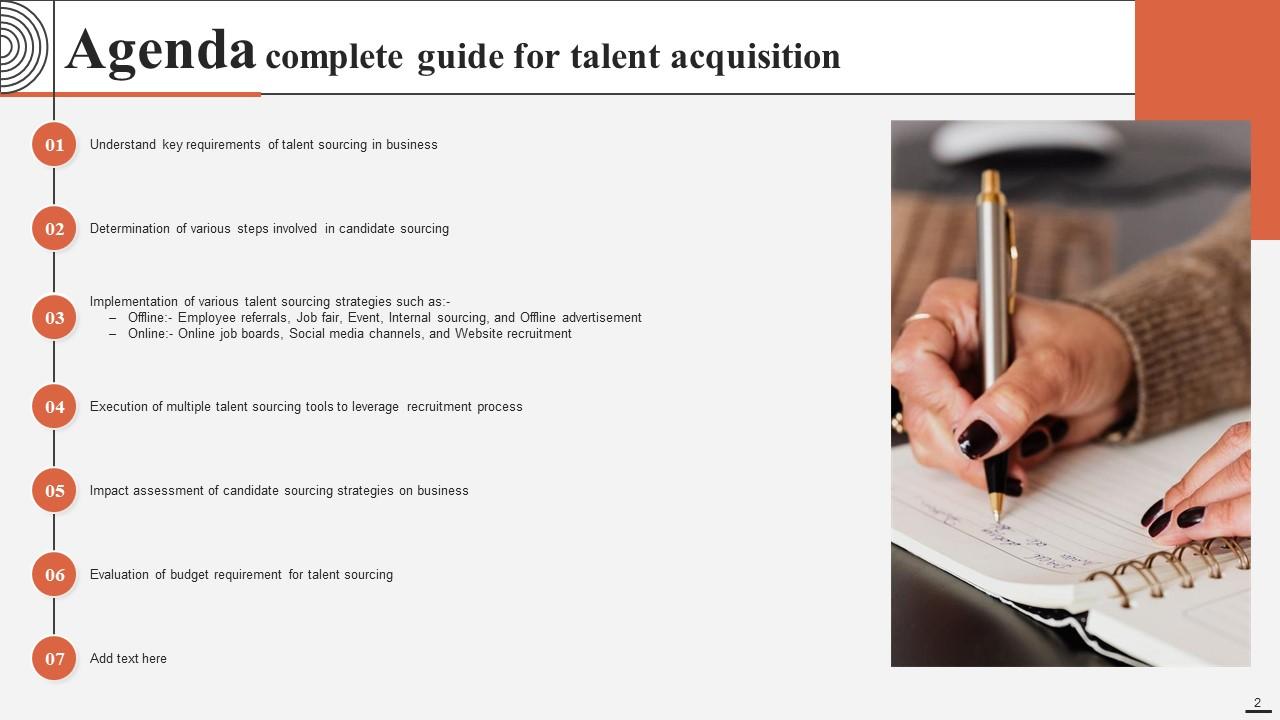
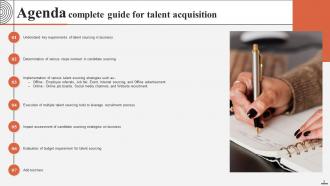
Slide 2: This is an Agenda slide. State your agendas here.
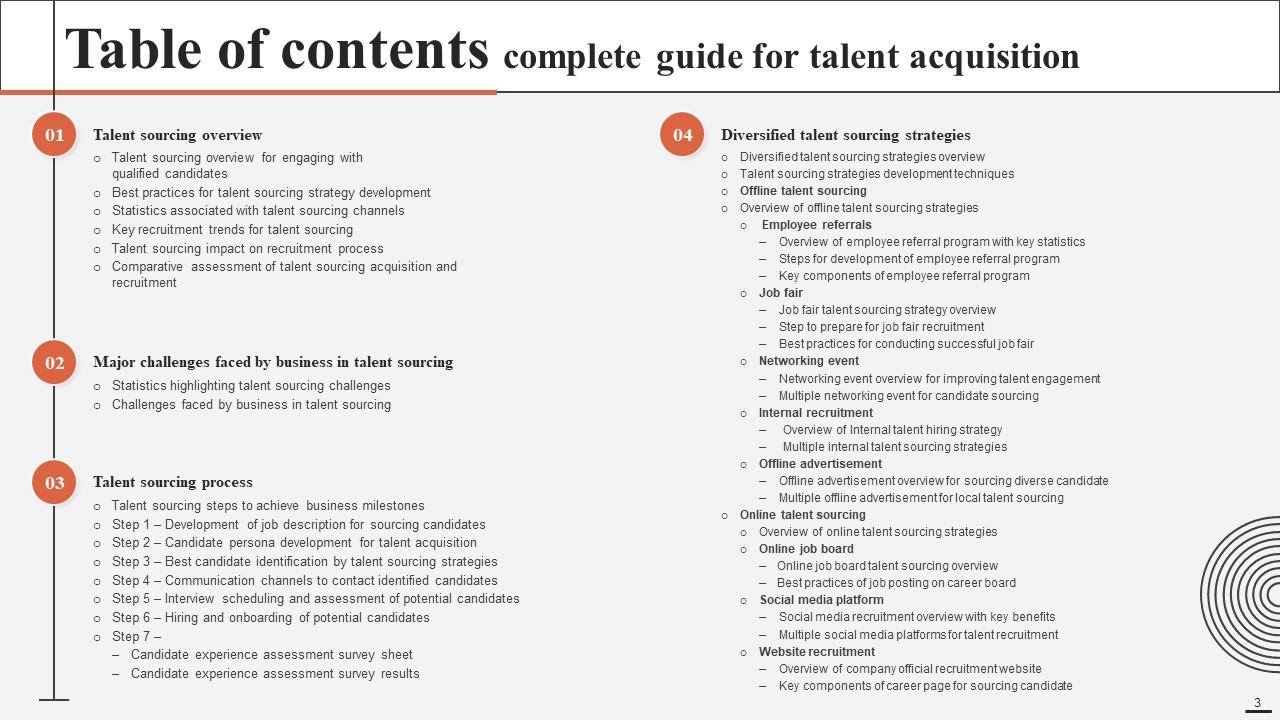
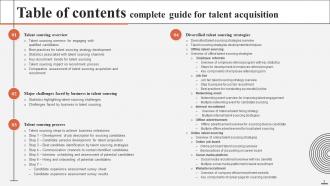
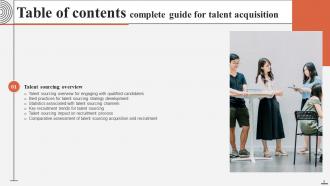
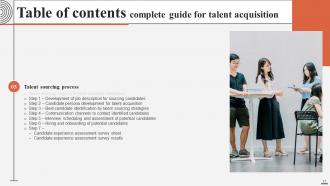
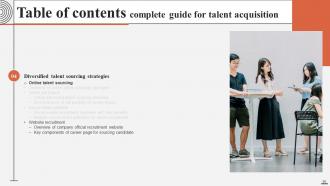
Slide 3: This slide shows Table of Content for the presentation.
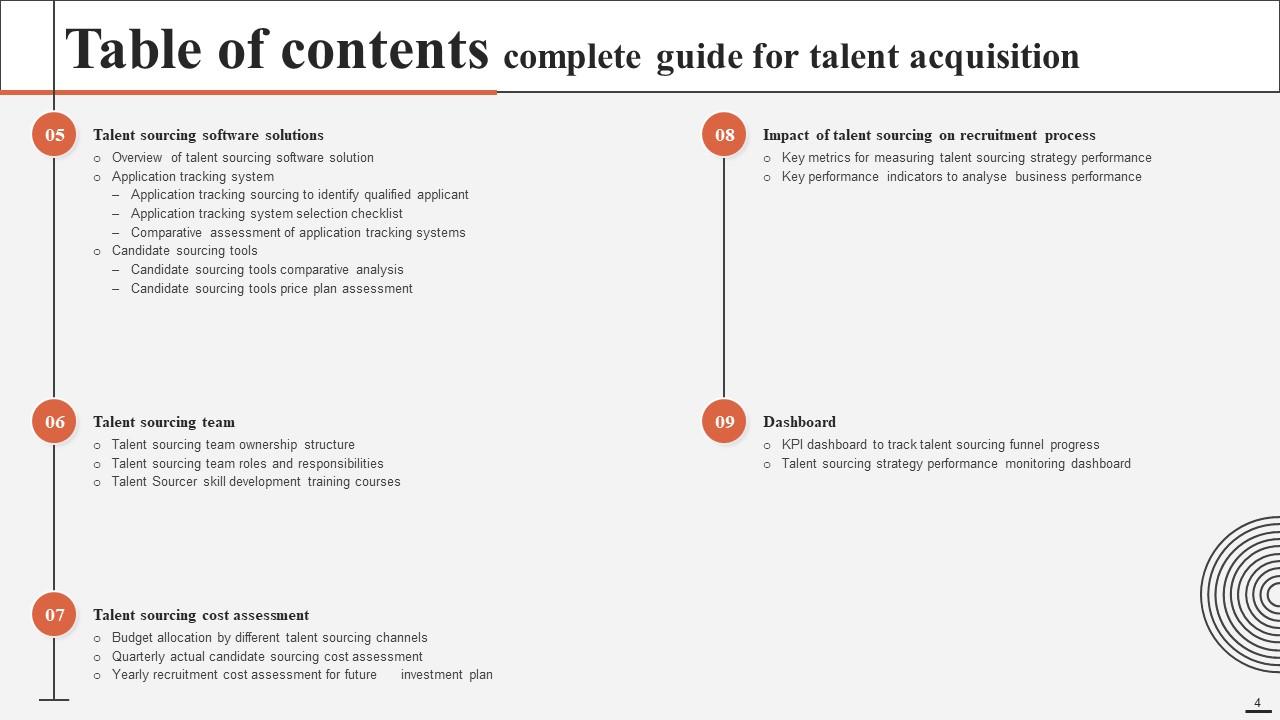
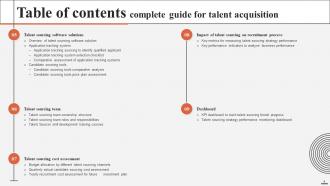
Slide 4: This is another slide continuing Table of Content for the presentation.
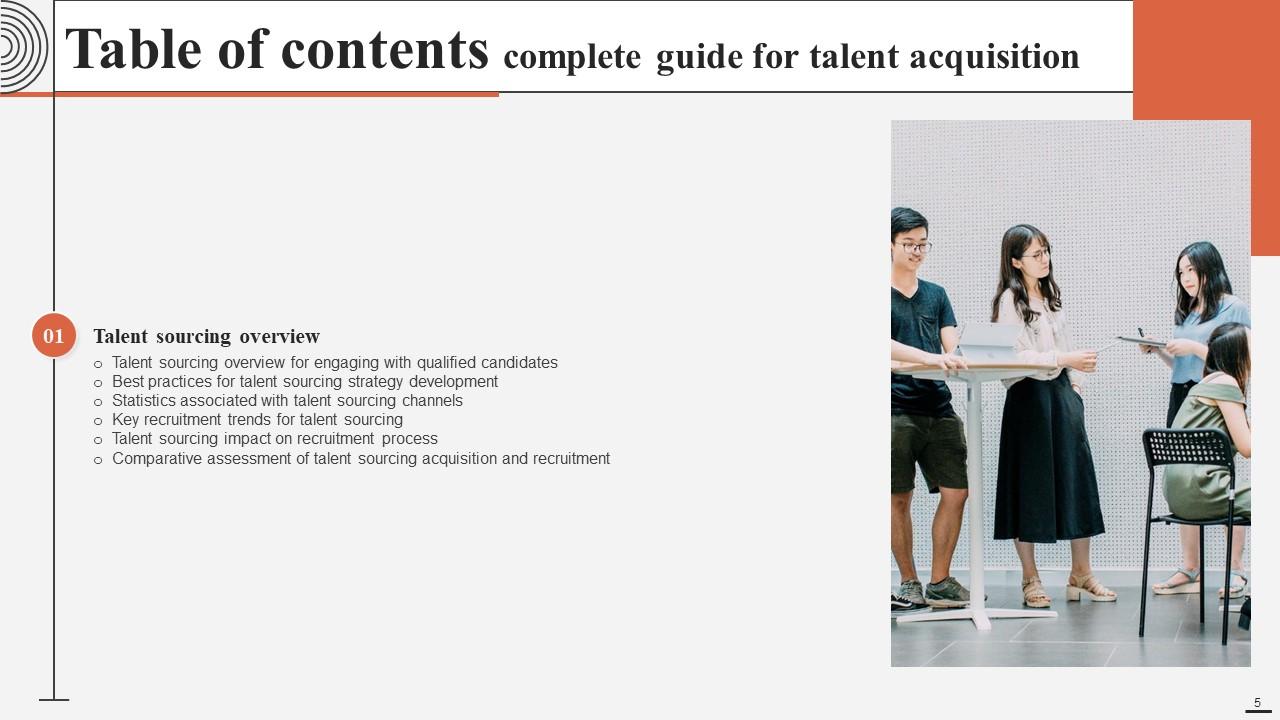
Slide 5: This slide shows title for topics that are to be covered next in the template.
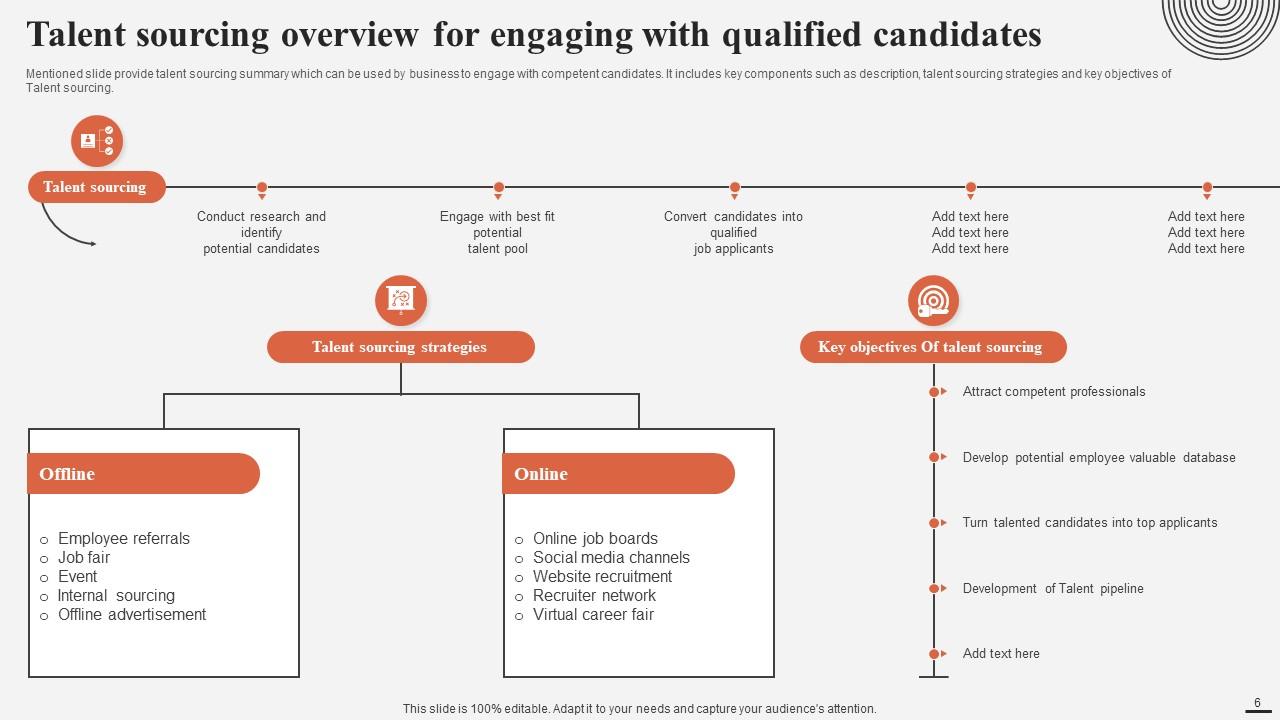
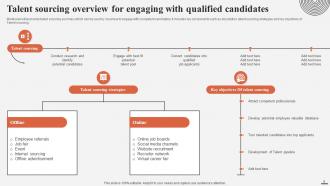
Slide 6: This slide presents Talent sourcing overview for engaging with qualified candidates.
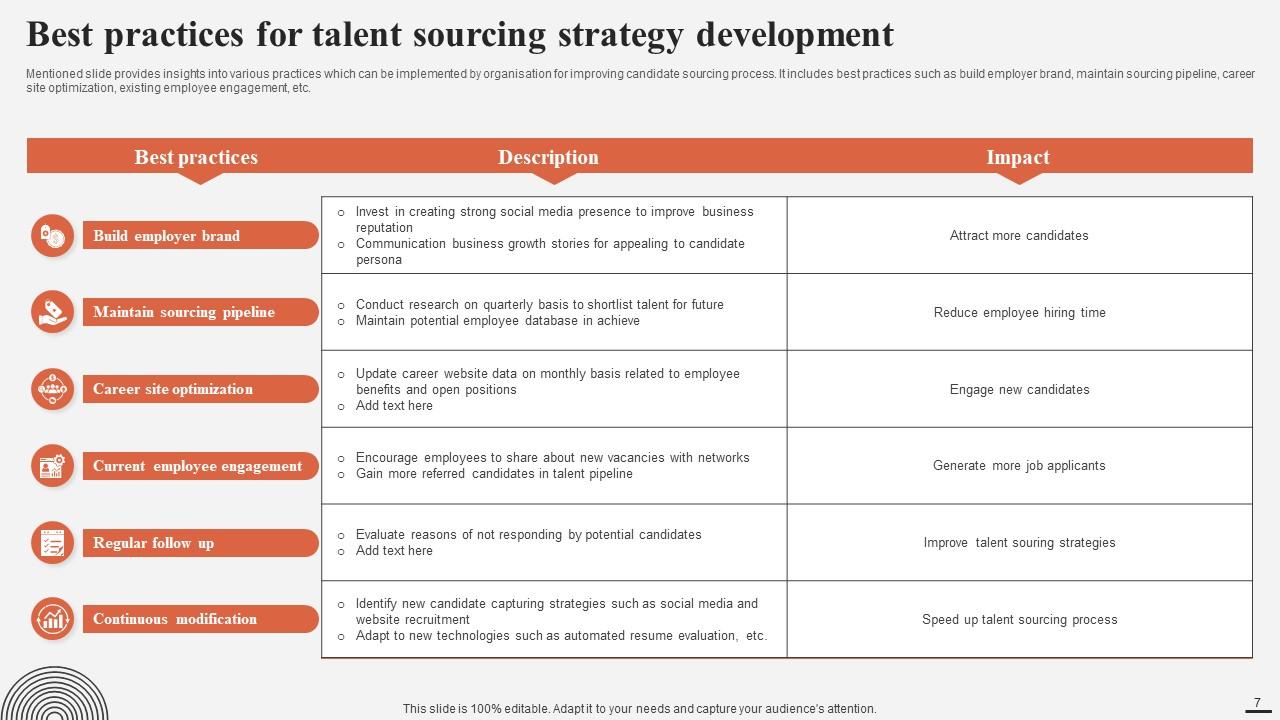
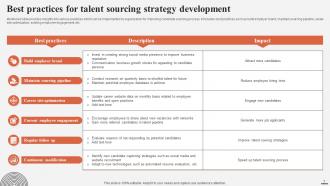
Slide 7: This slide displays Best practices for talent sourcing strategy development.
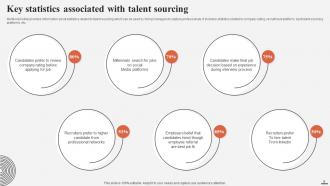
Slide 8: This slide displays Key statistics associated with talent sourcing.
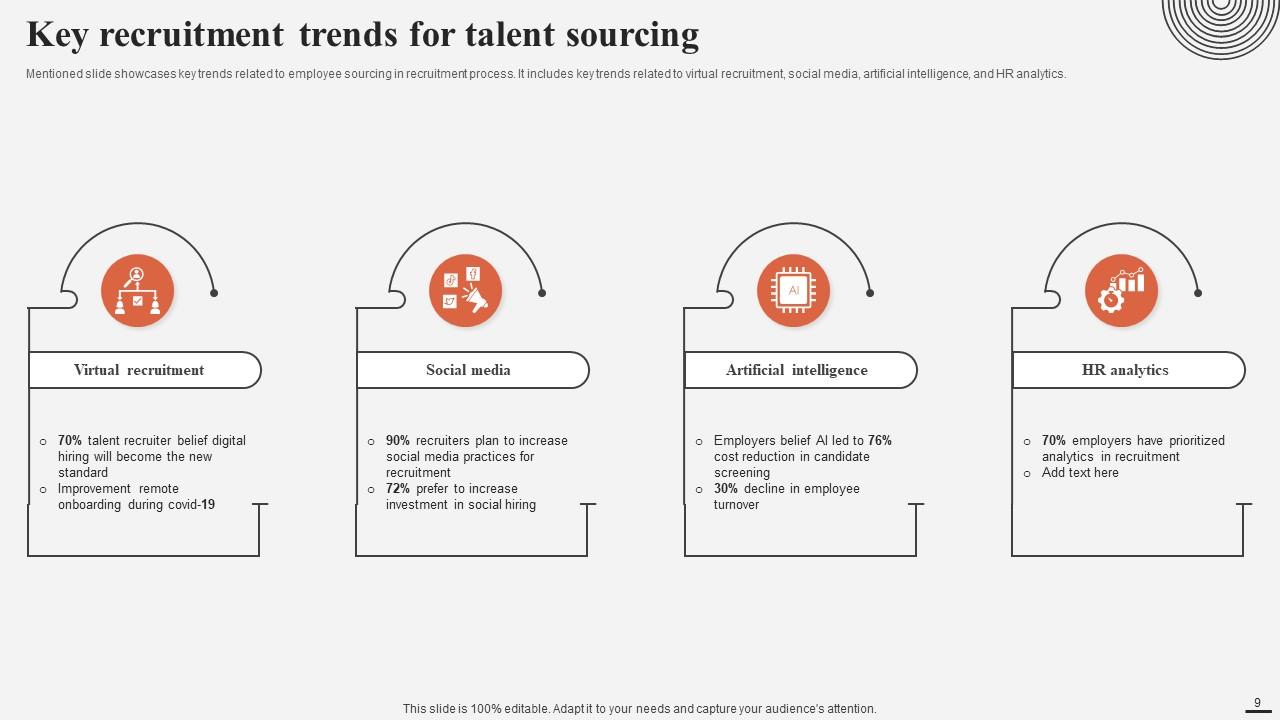
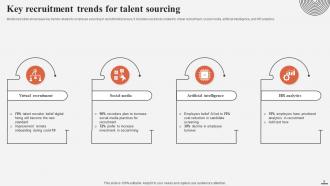
Slide 9: This slide showcases Key recruitment trends for talent sourcing.
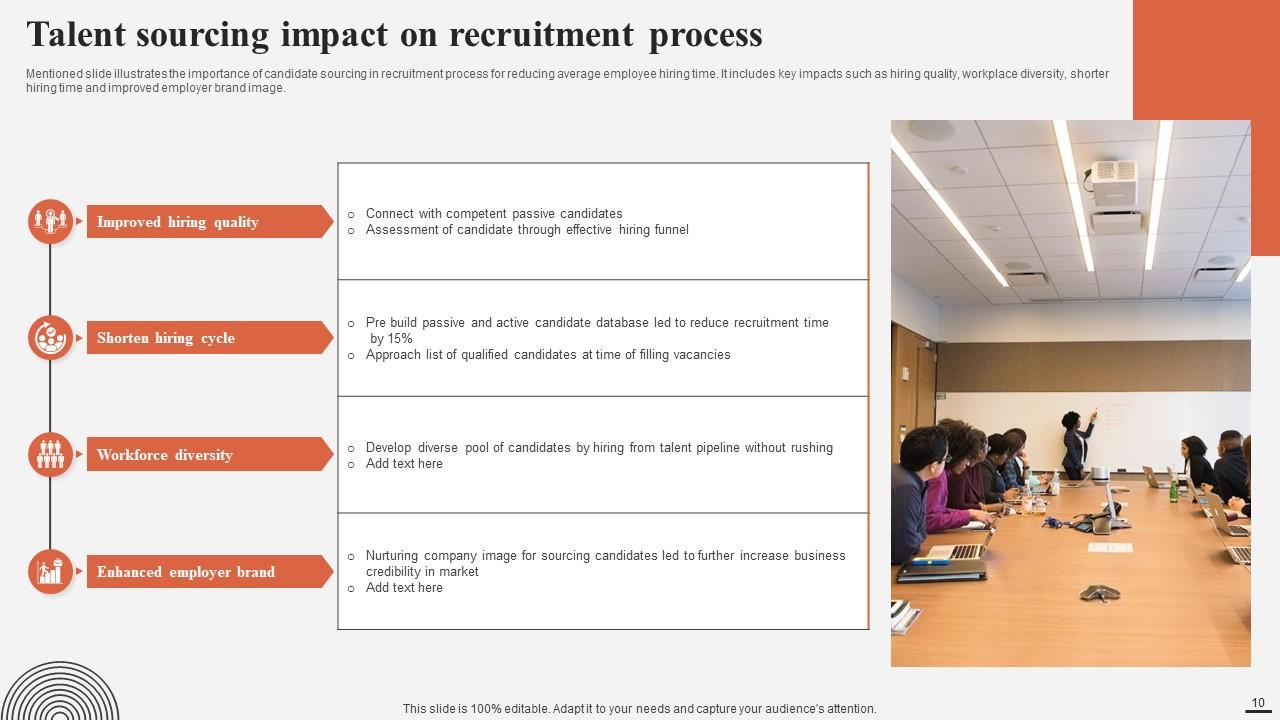
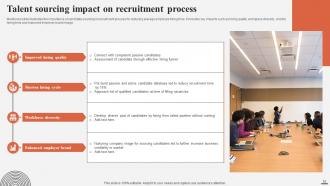
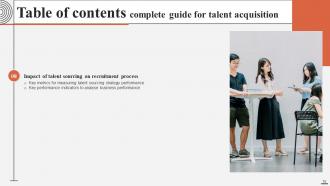
Slide 10: This slide displays Talent sourcing impact on recruitment process.
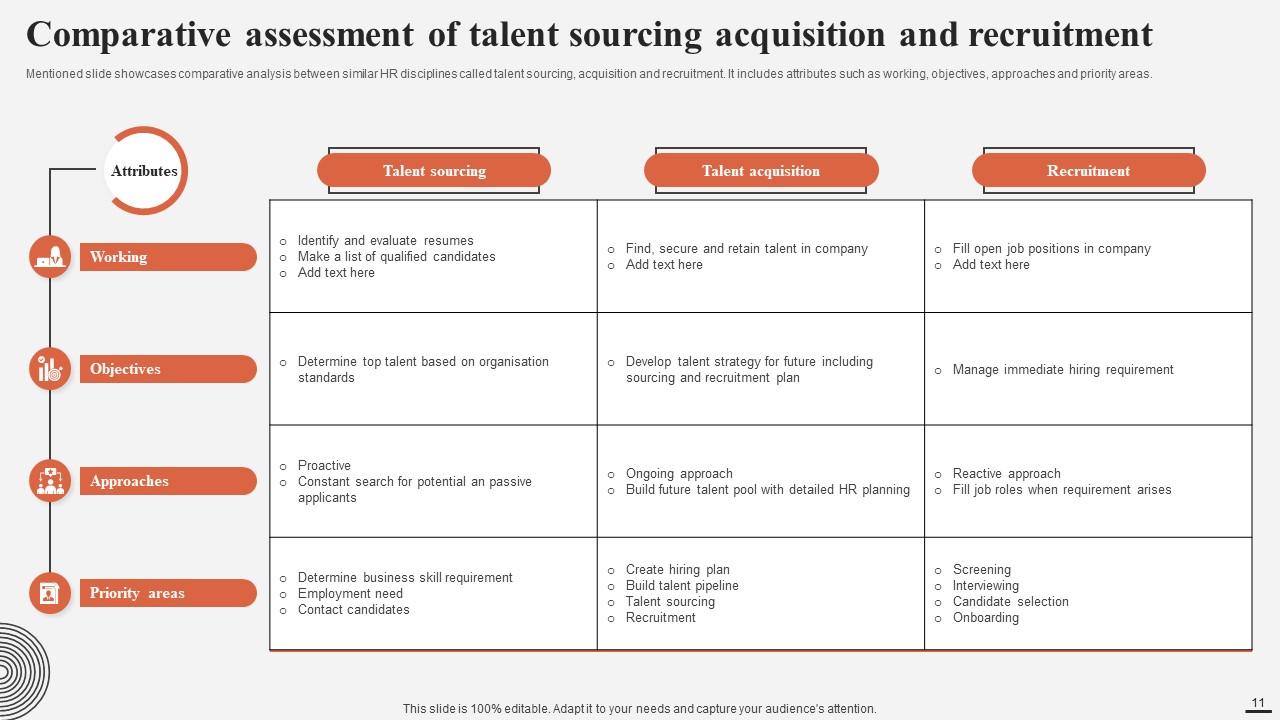
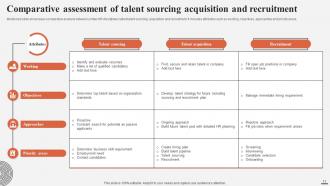
Slide 11: This slide displays Comparative assessment of talent sourcing acquisition and recruitment.
Slide 12: This slide shows title for topics that are to be covered next in the template.
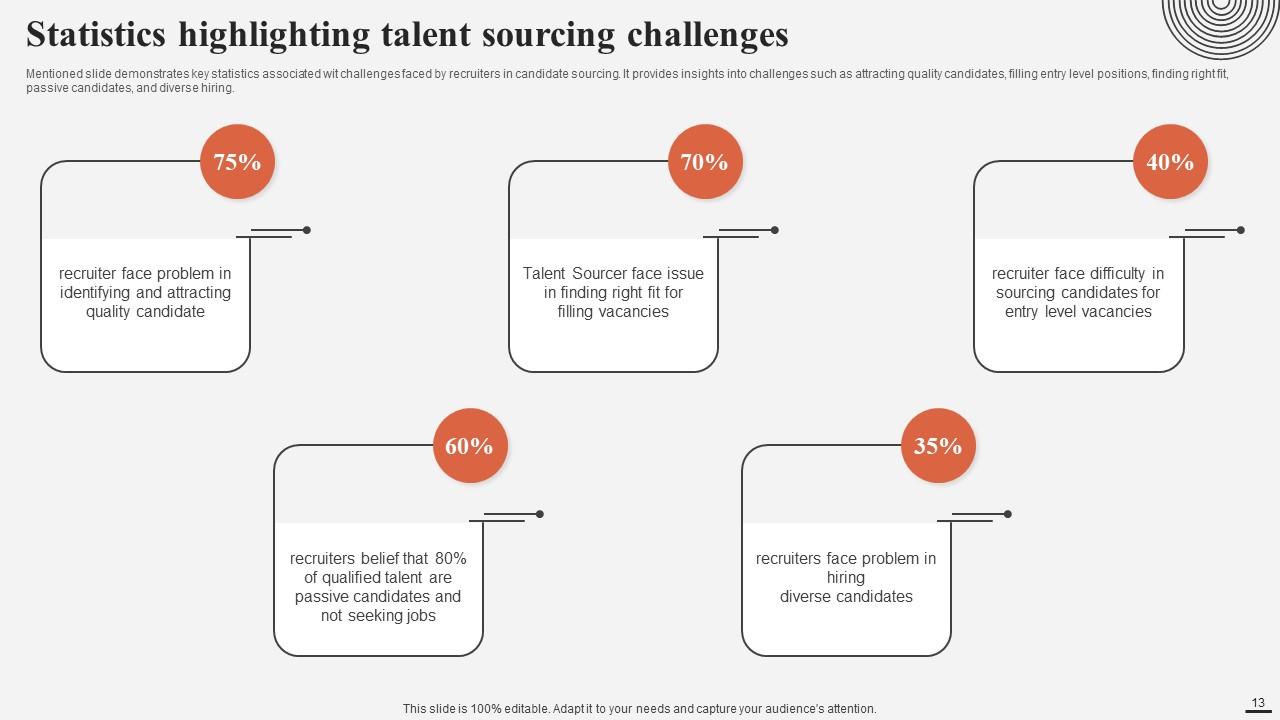
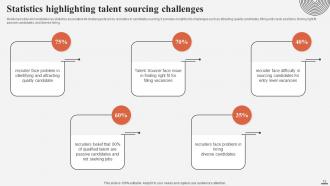
Slide 13: This slide describes Statistics highlighting talent sourcing challenges.
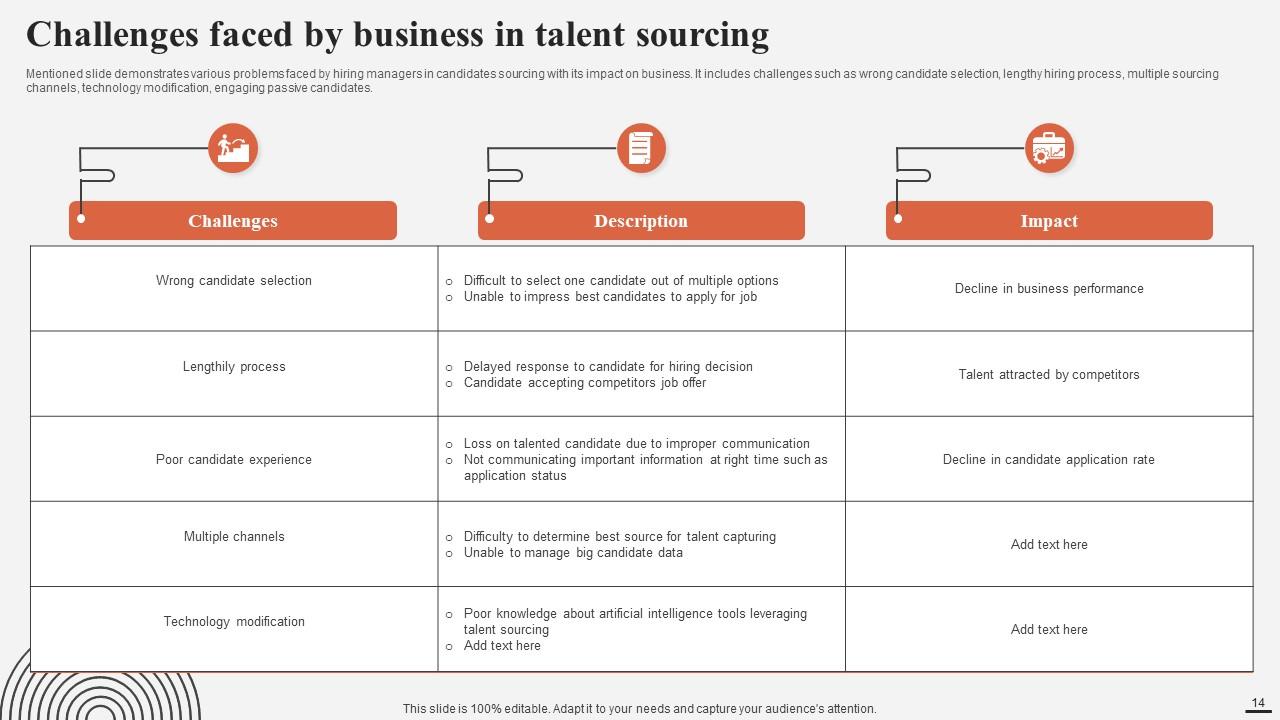
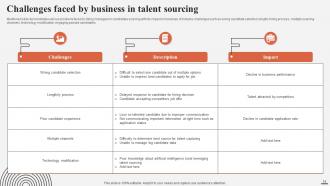
Slide 14: This slide describes Challenges faced by business in talent sourcing.
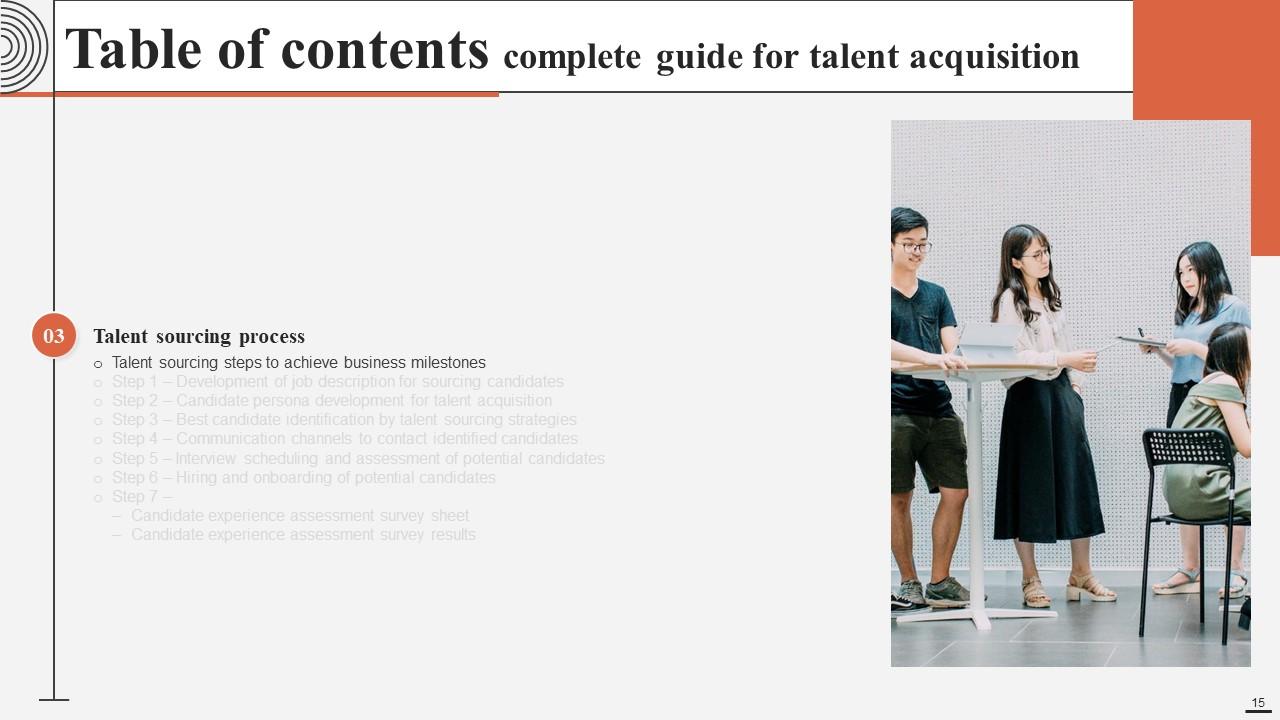
Slide 15: This slide shows title for topics that are to be covered next in the template.
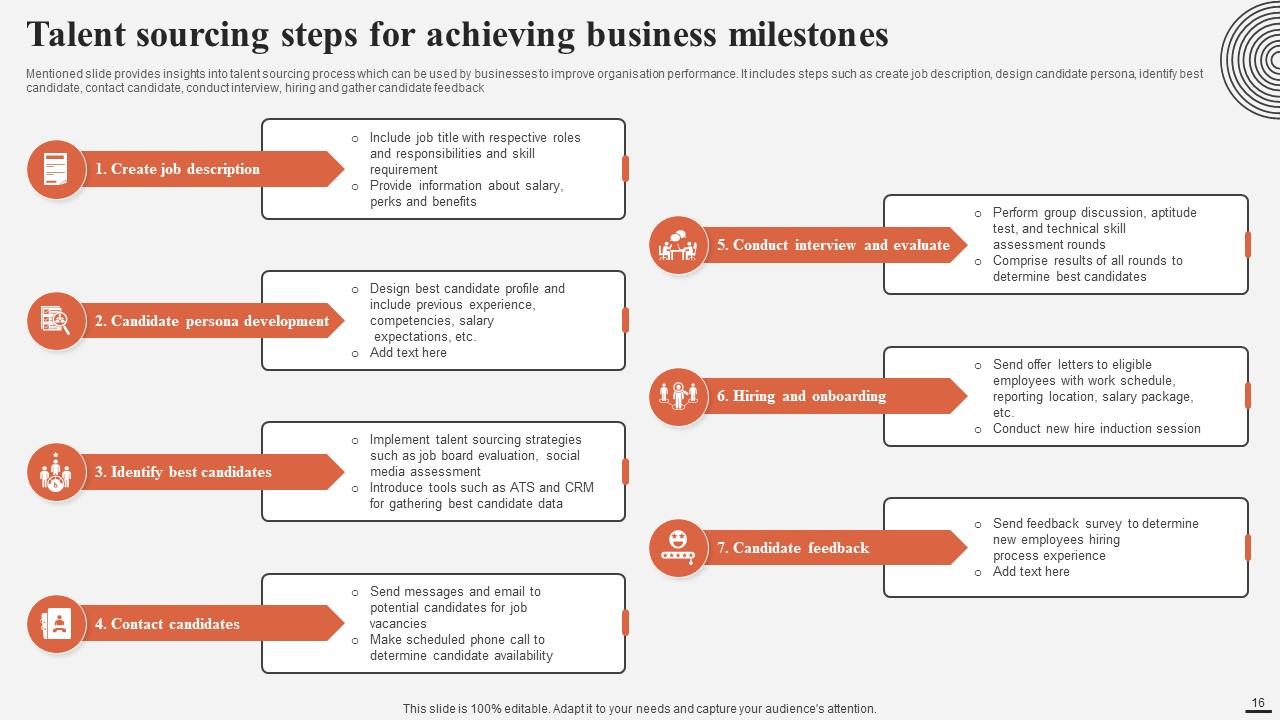
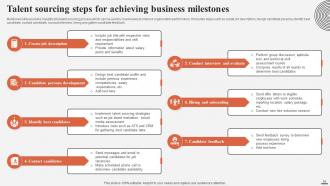
Slide 16: This slide presents Talent sourcing steps for achieving business milestones.
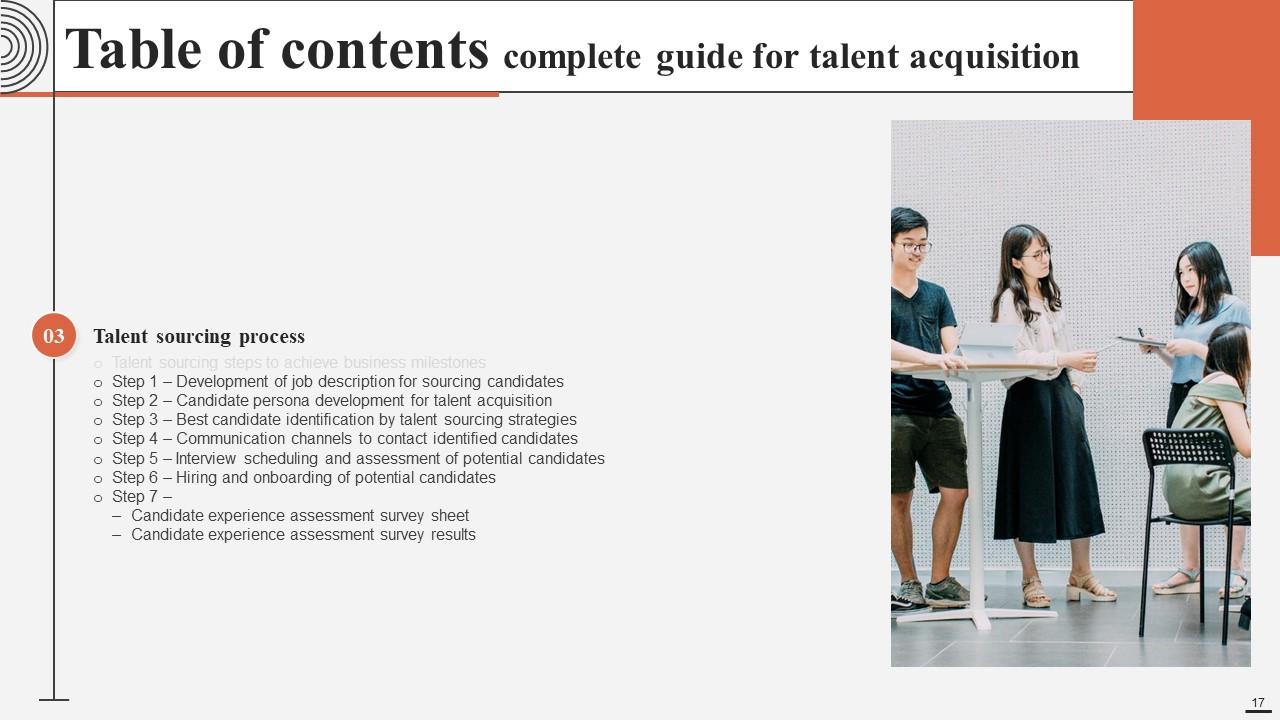
Slide 17: This slide shows title for topics that are to be covered next in the template.
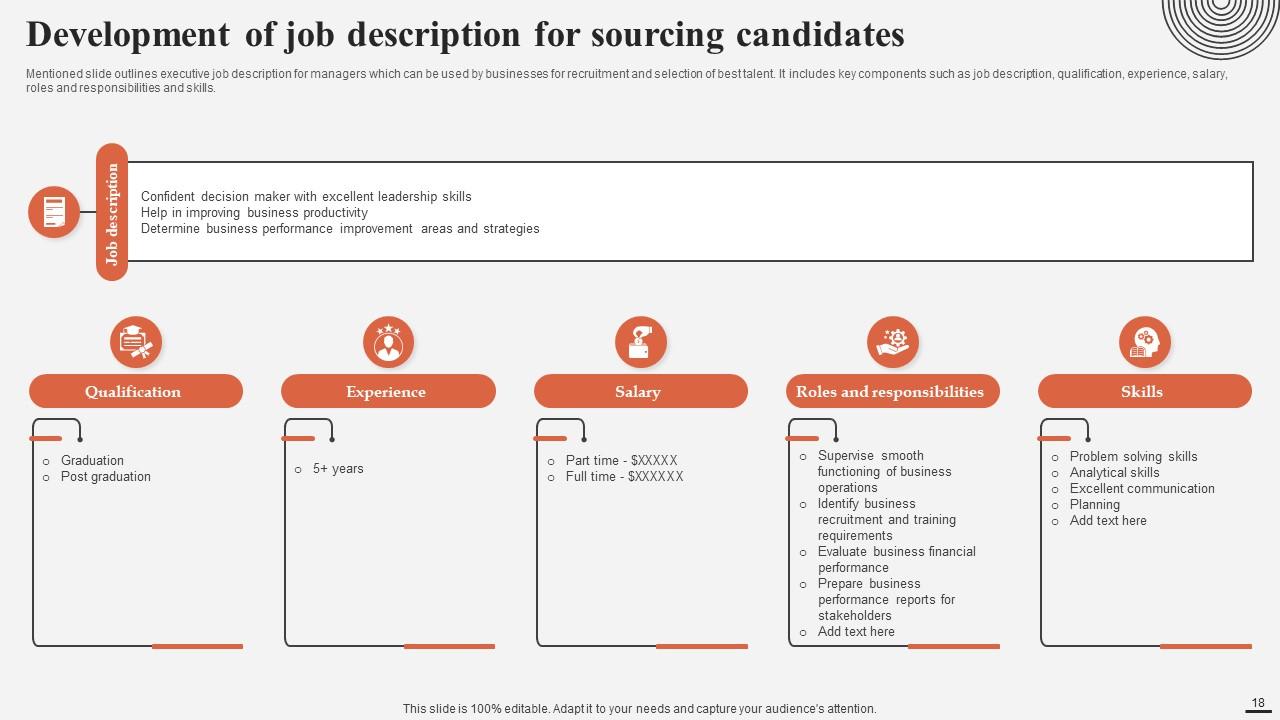
Slide 18: This slide presents Development of job description for sourcing candidates.
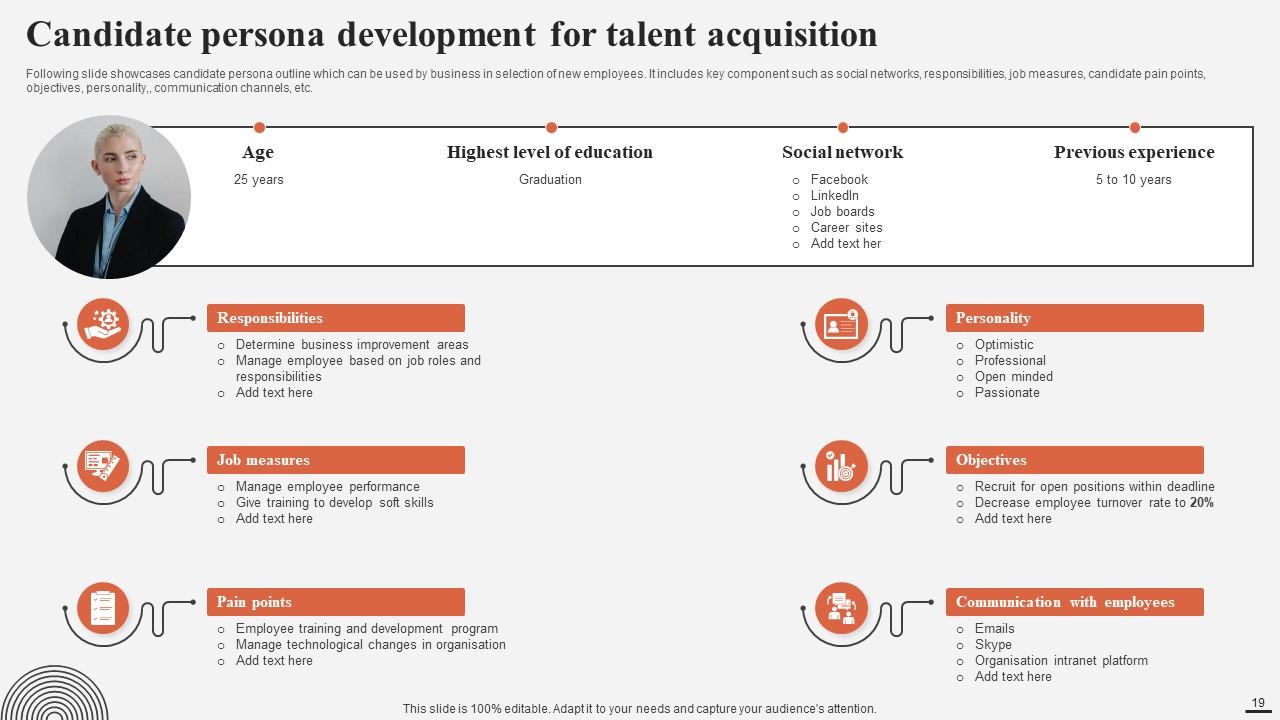
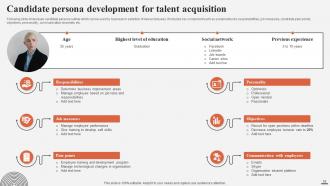
Slide 19: This slide presents Candidate persona development for talent acquisition.
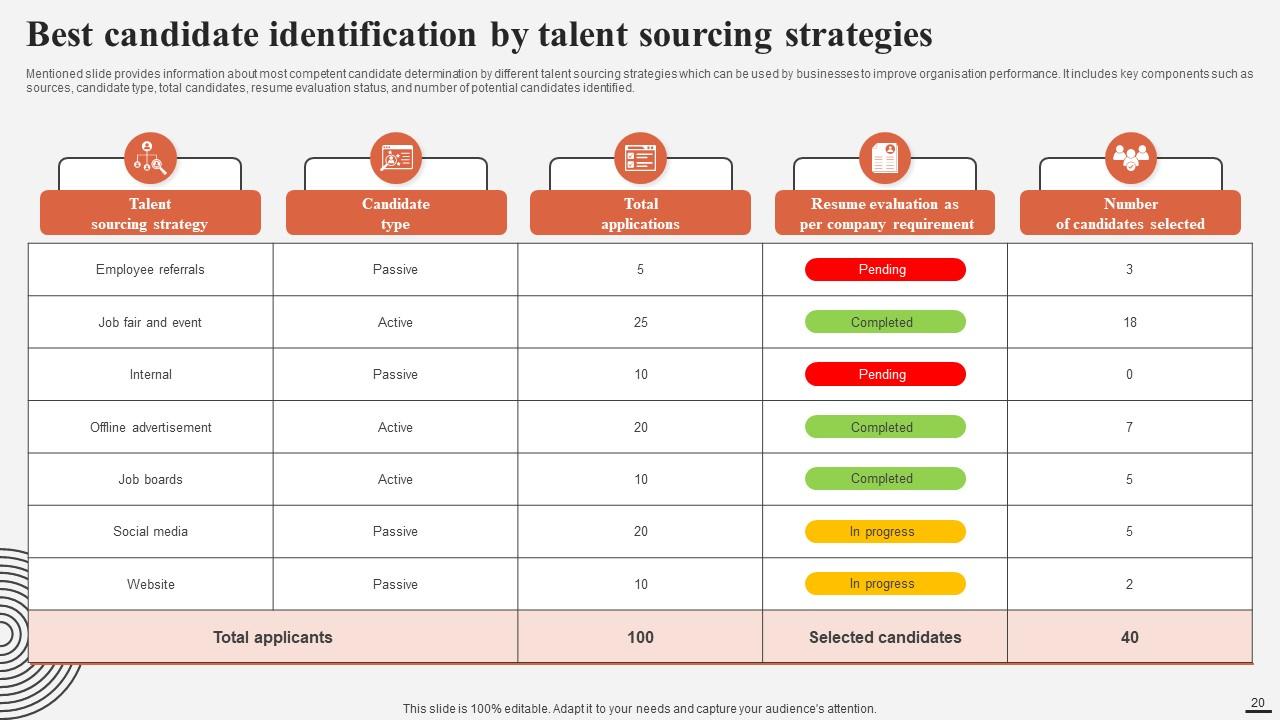
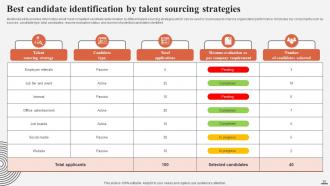
Slide 20: This slide presents Best candidate identification by talent sourcing strategies.
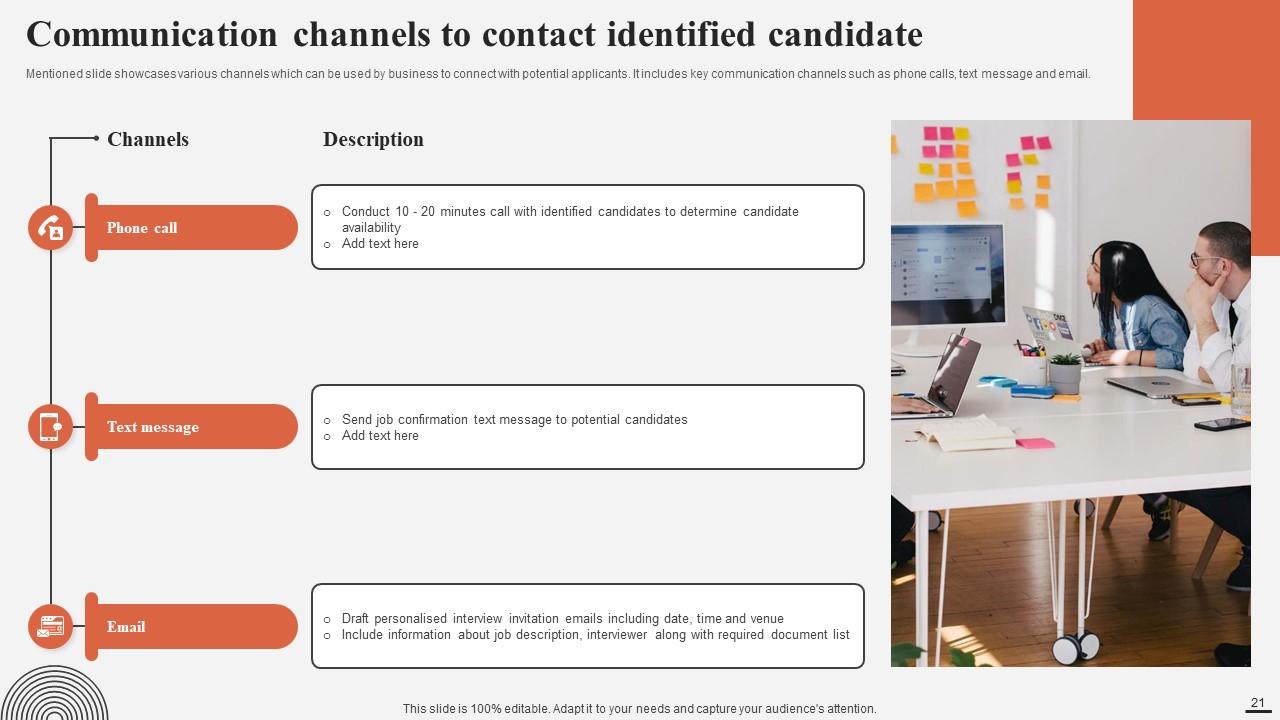
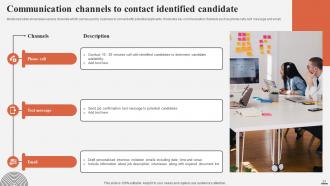
Slide 21: This slide presents Communication channels to contact identified candidate.
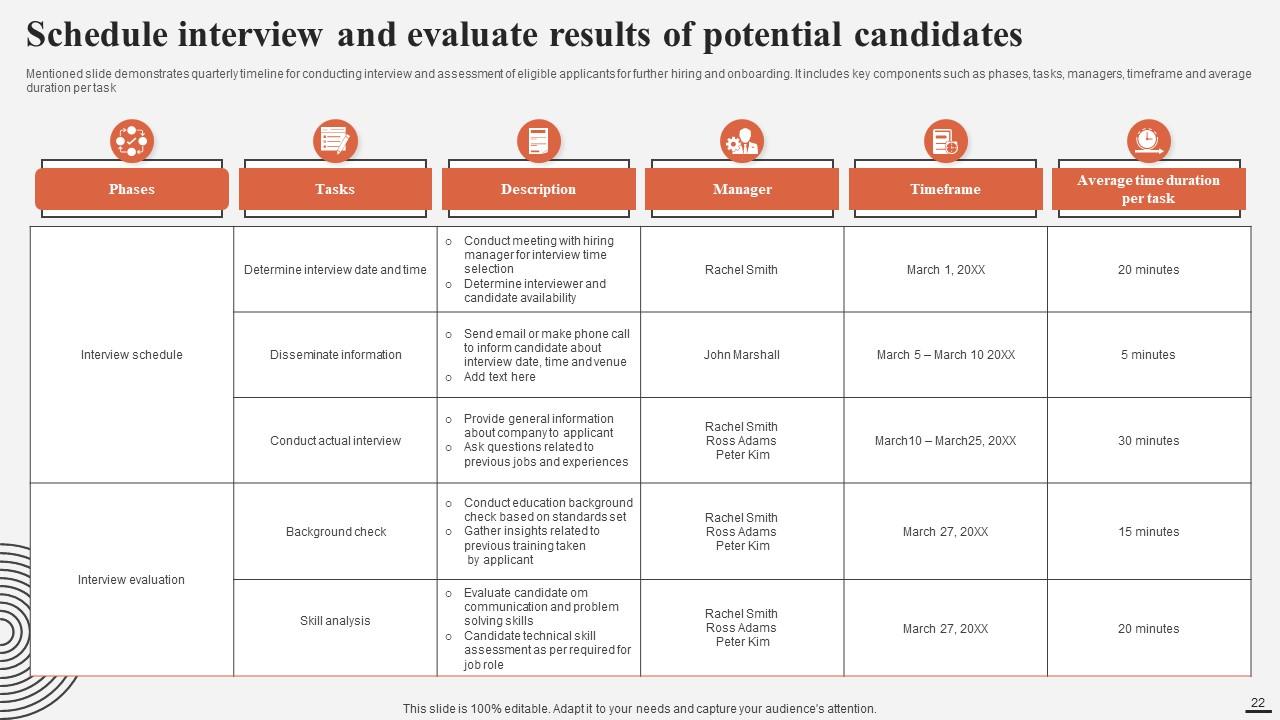
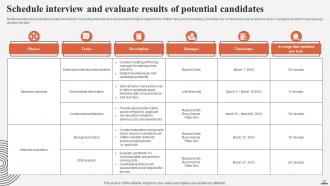
Slide 22: This slide displays Schedule interview and evaluate results of potential candidates.
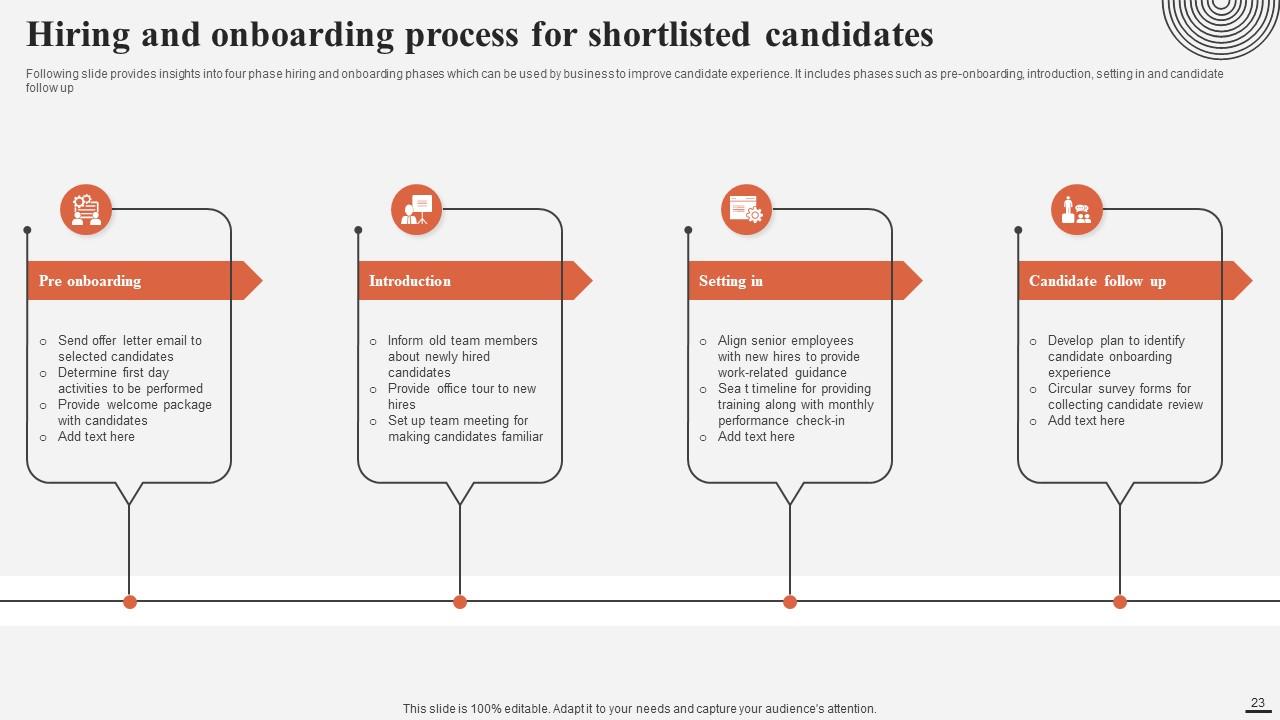
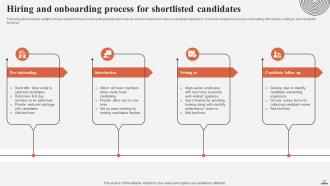
Slide 23: This slide displays Hiring and onboarding process for shortlisted candidates.
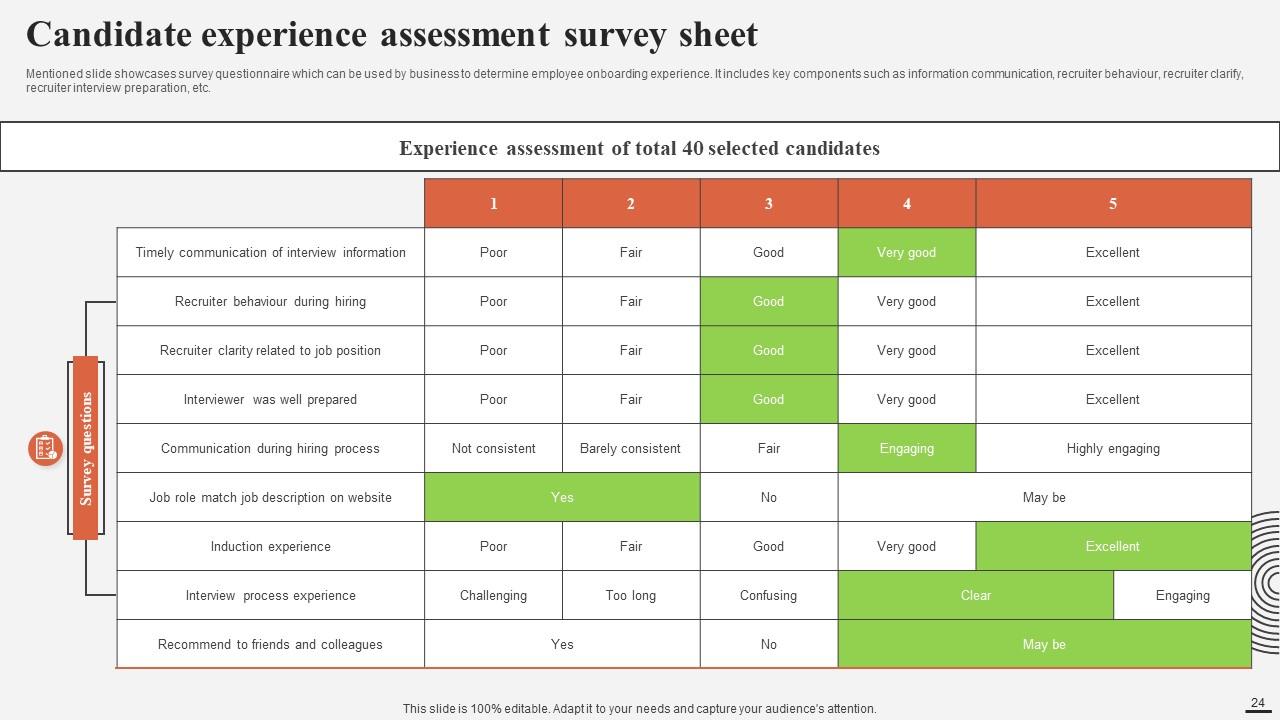
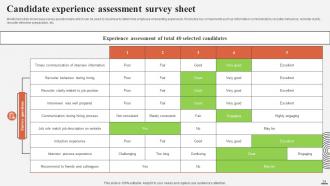
Slide 24: This slide displays Candidate experience assessment survey sheet.
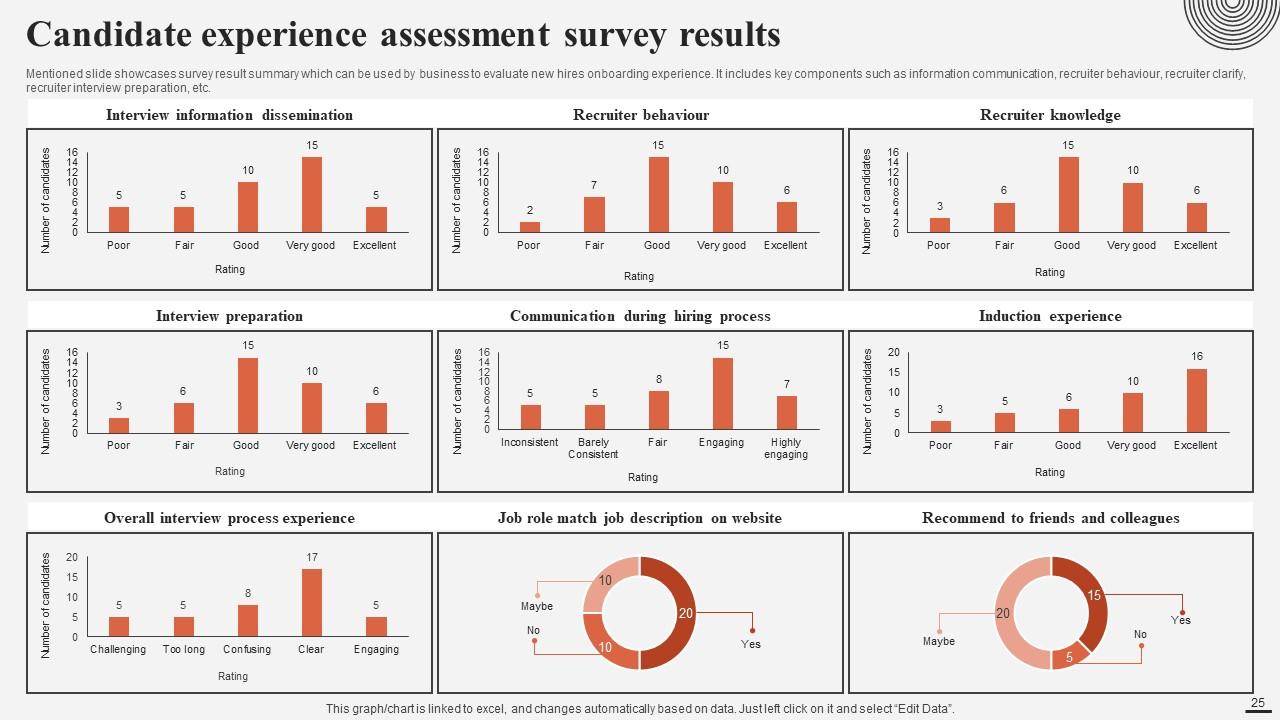
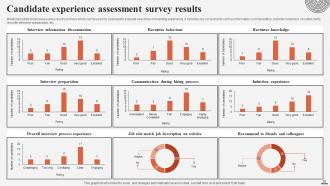
Slide 25: This slide displays Candidate experience assessment survey results.
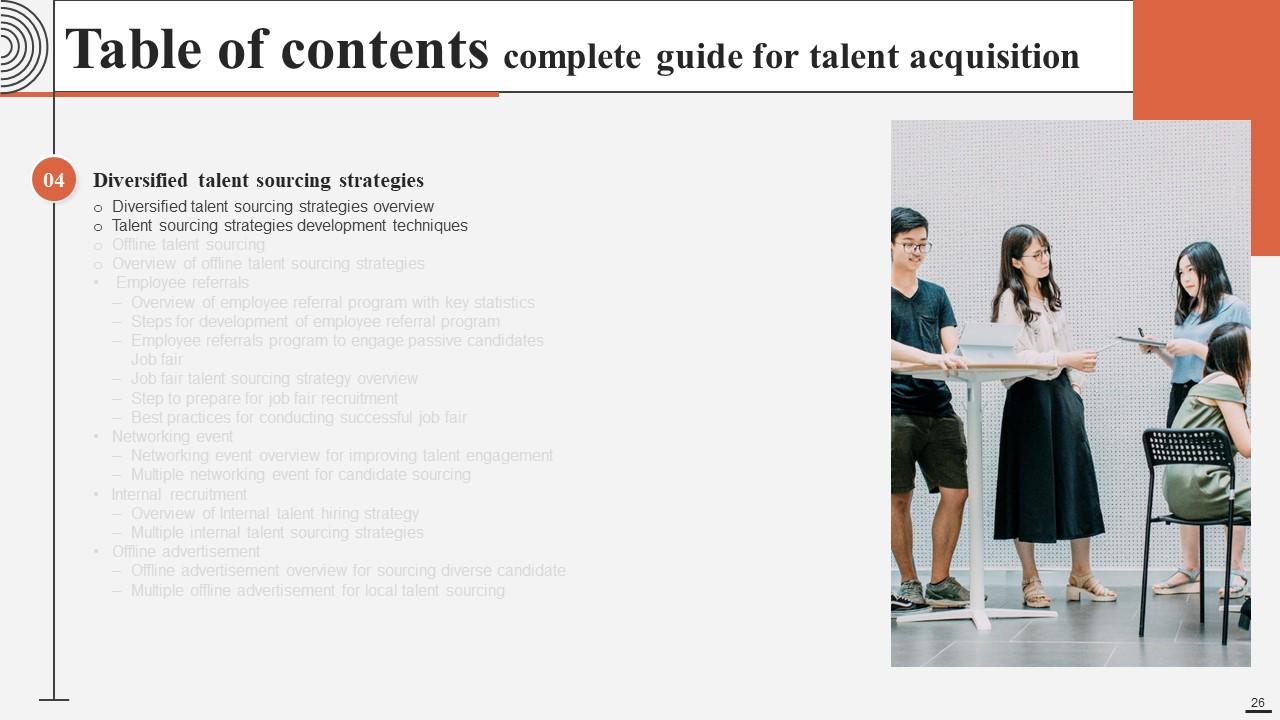
Slide 26: This slide shows title for topics that are to be covered next in the template.
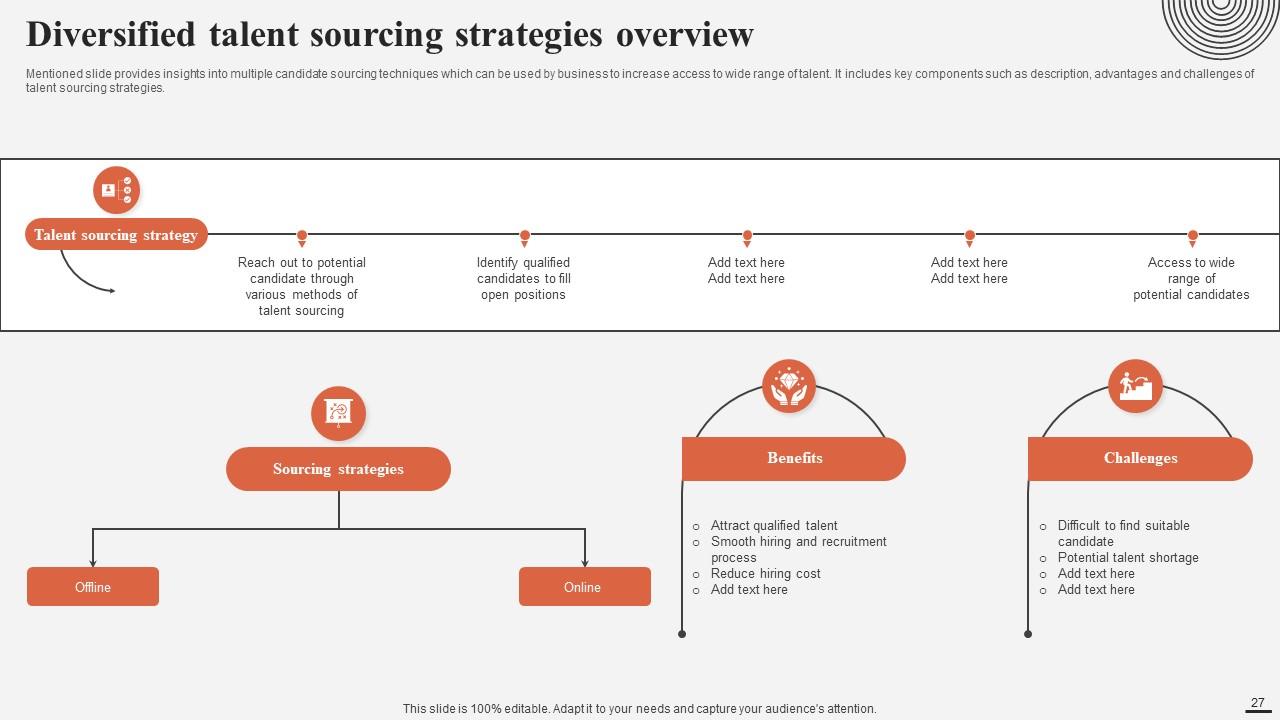
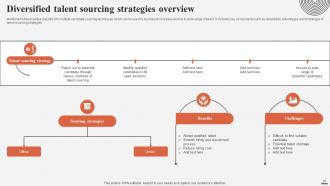
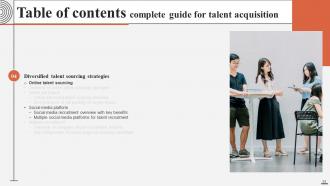
Slide 27: This slide describes Diversified talent sourcing strategies overview.
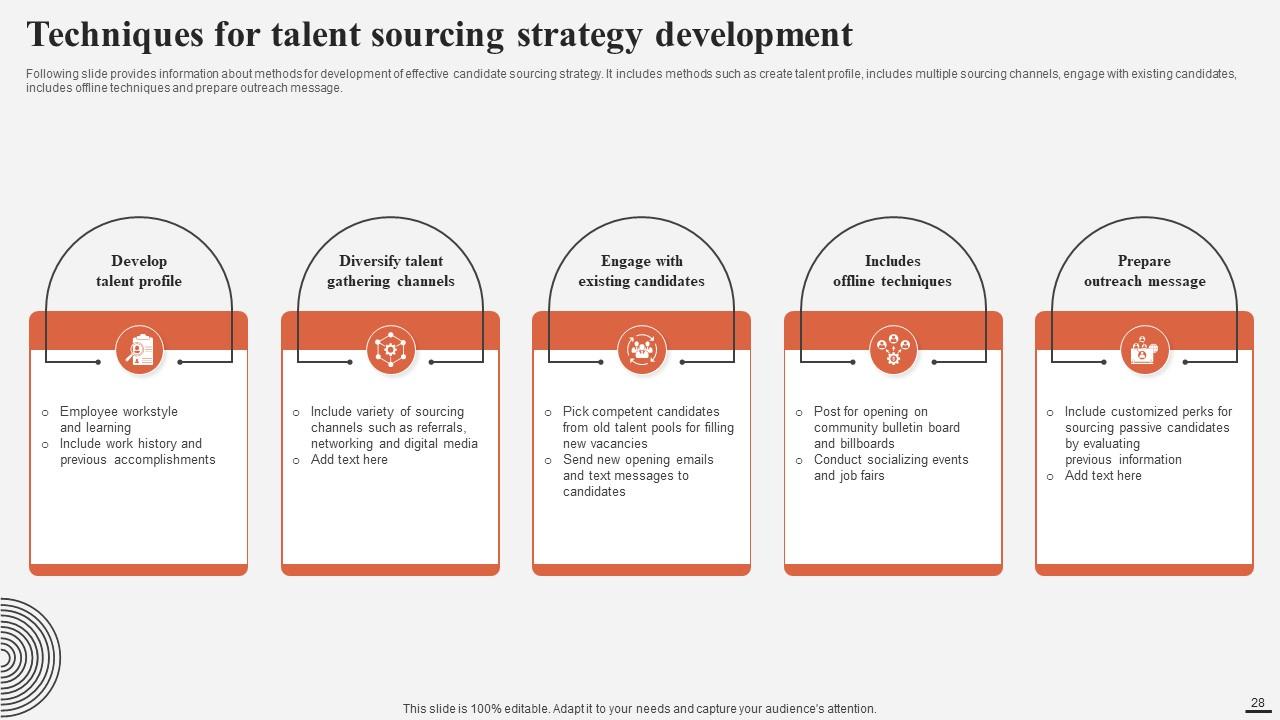
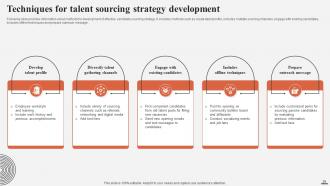
Slide 28: This slide describes Techniques for talent sourcing strategy development.
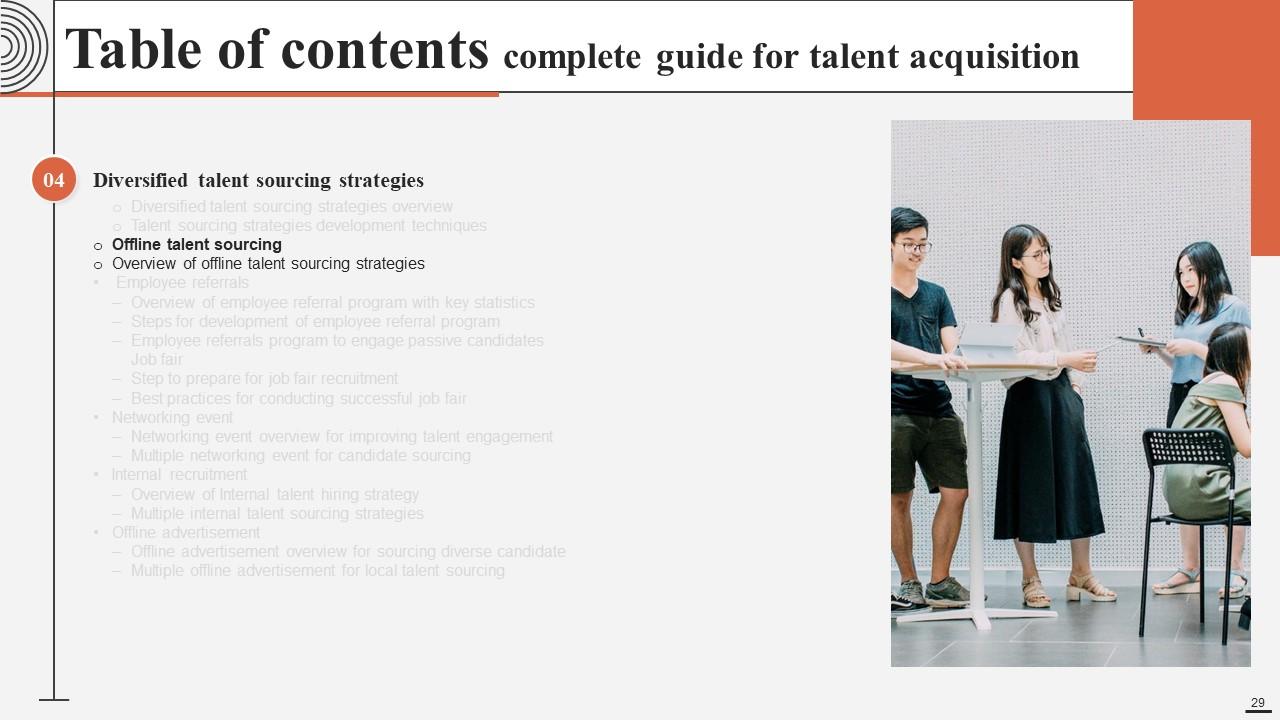
Slide 29: This slide describes Comprehensive guide for talent sourcing.
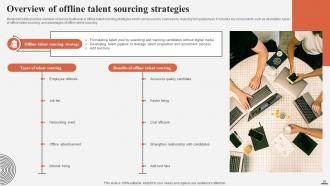
Slide 30: This slide describes Overview of offline talent sourcing strategies.
Slide 31: This slide shows title for topics that are to be covered next in the template.
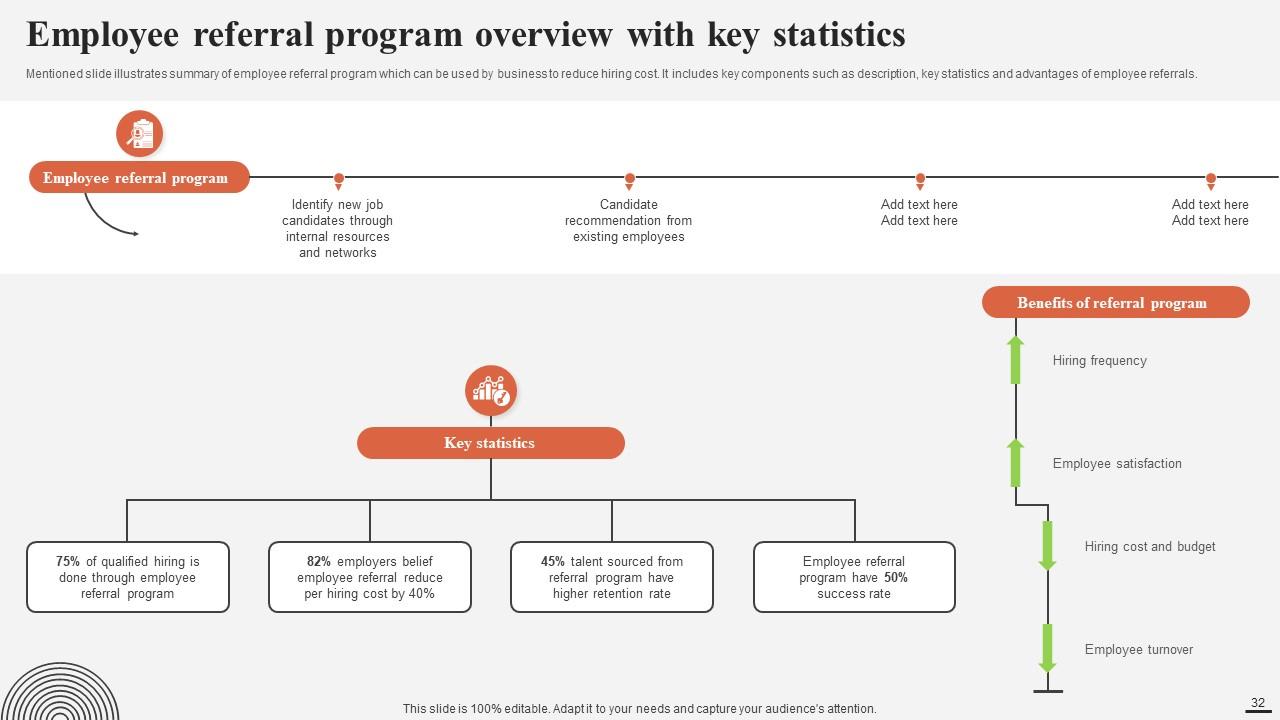
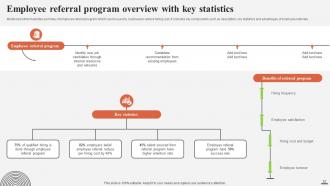
Slide 32: This slide contains Employee referral program overview with key statistics.
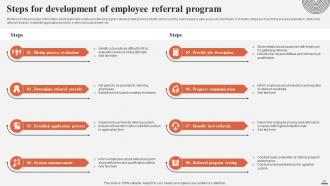
Slide 33: This slide contains Steps for development of employee referral program.
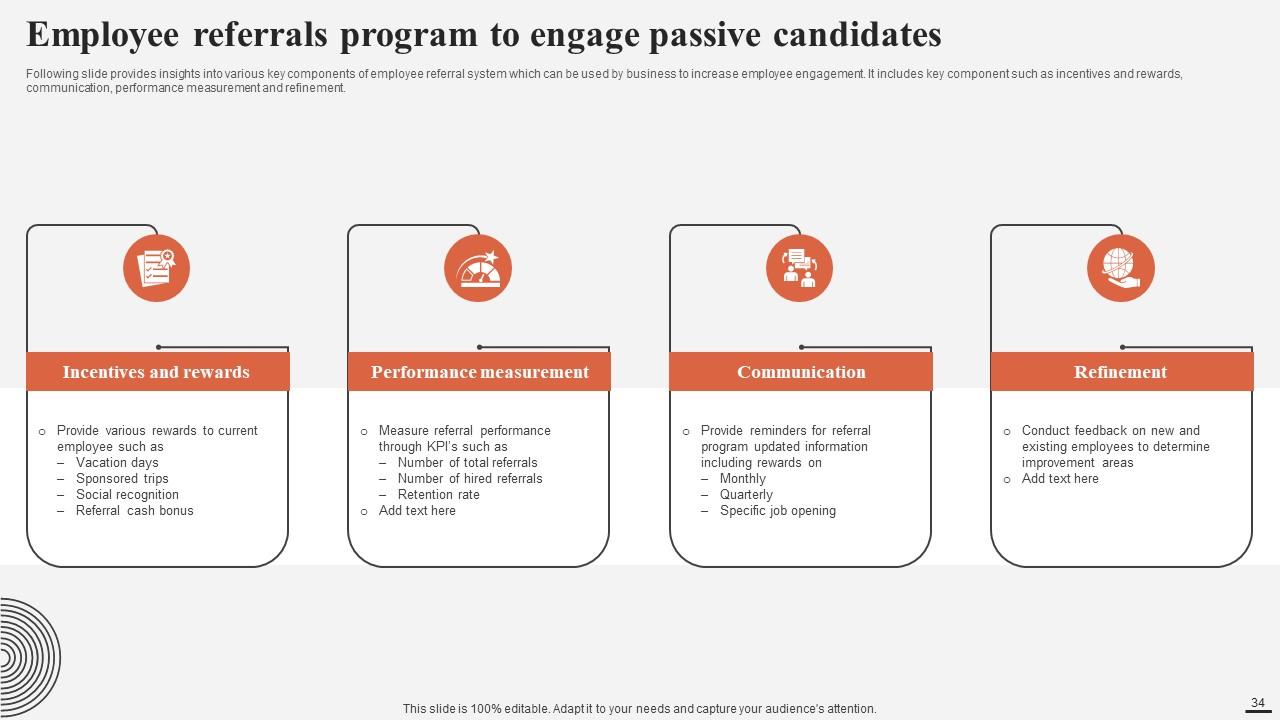
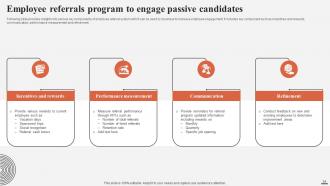
Slide 34: This slide contains Employee referrals program to engage passive candidates.
Slide 35: This slide shows title for topics that are to be covered next in the template.
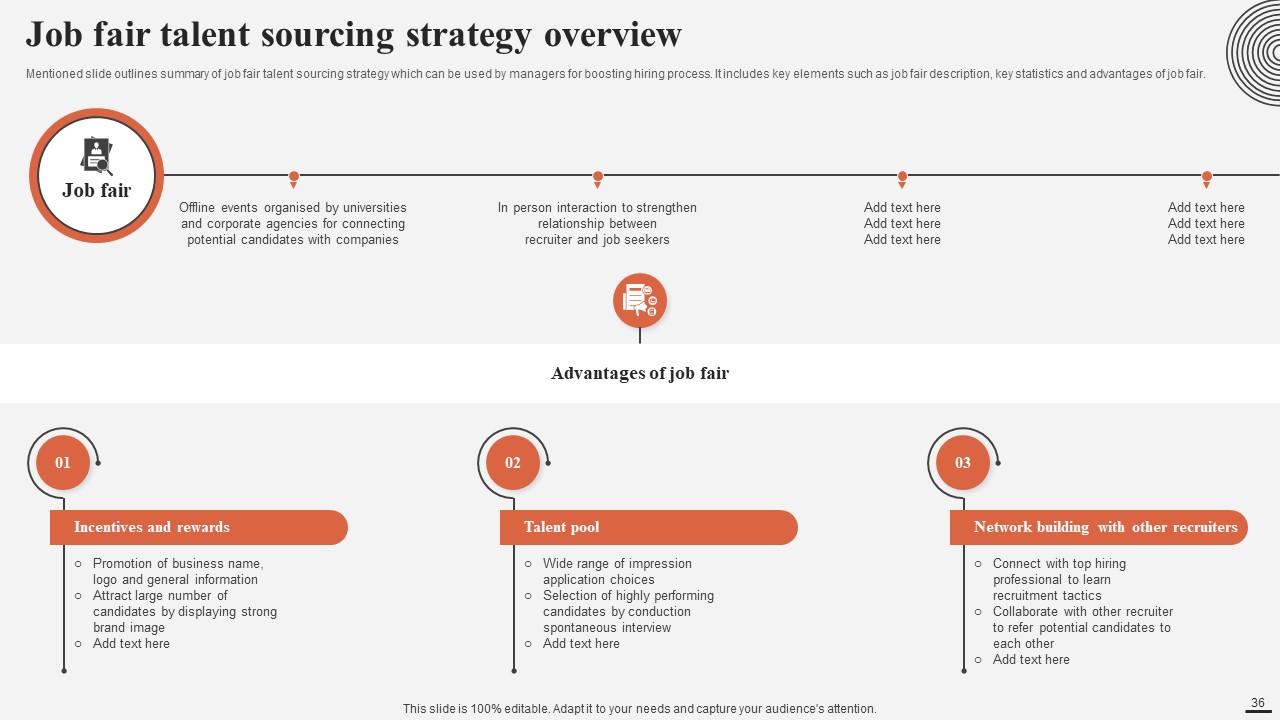
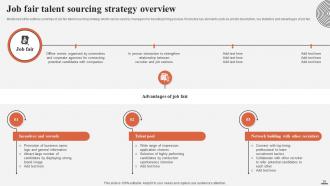
Slide 36: This slide displays Job fair talent sourcing strategy overview.
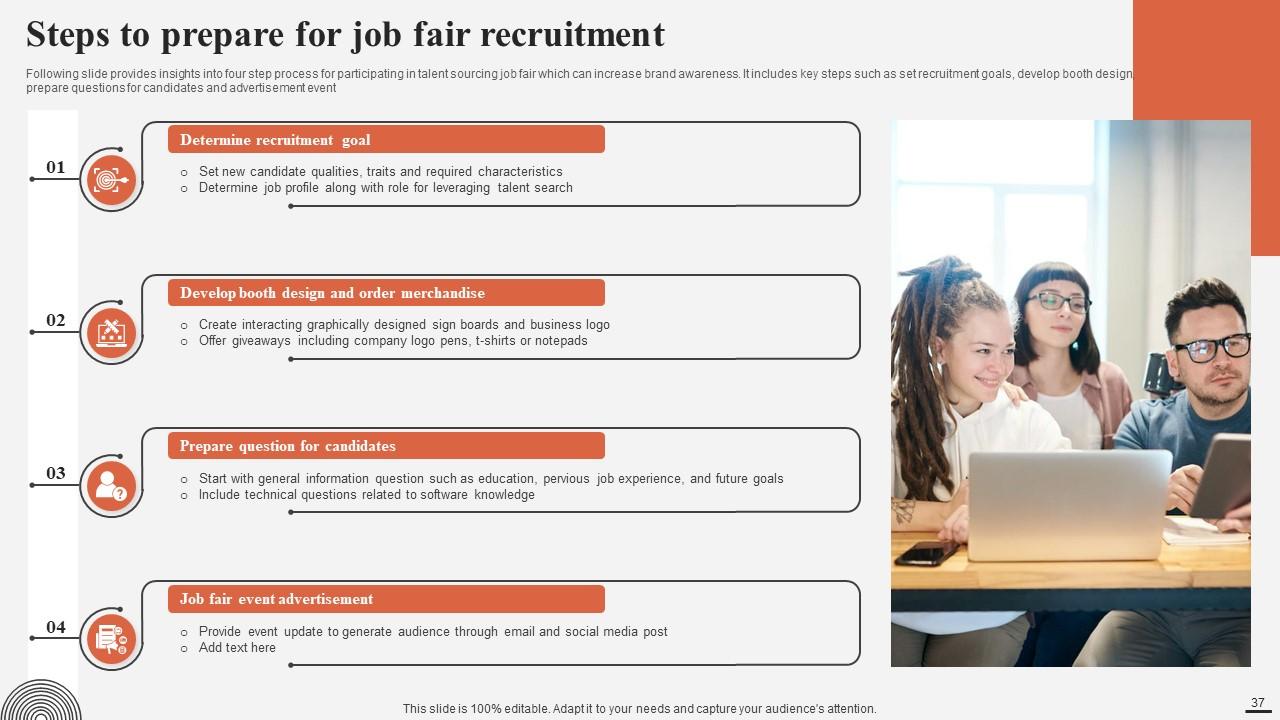
Slide 37: This slide displays Steps to prepare for job fair recruitment.
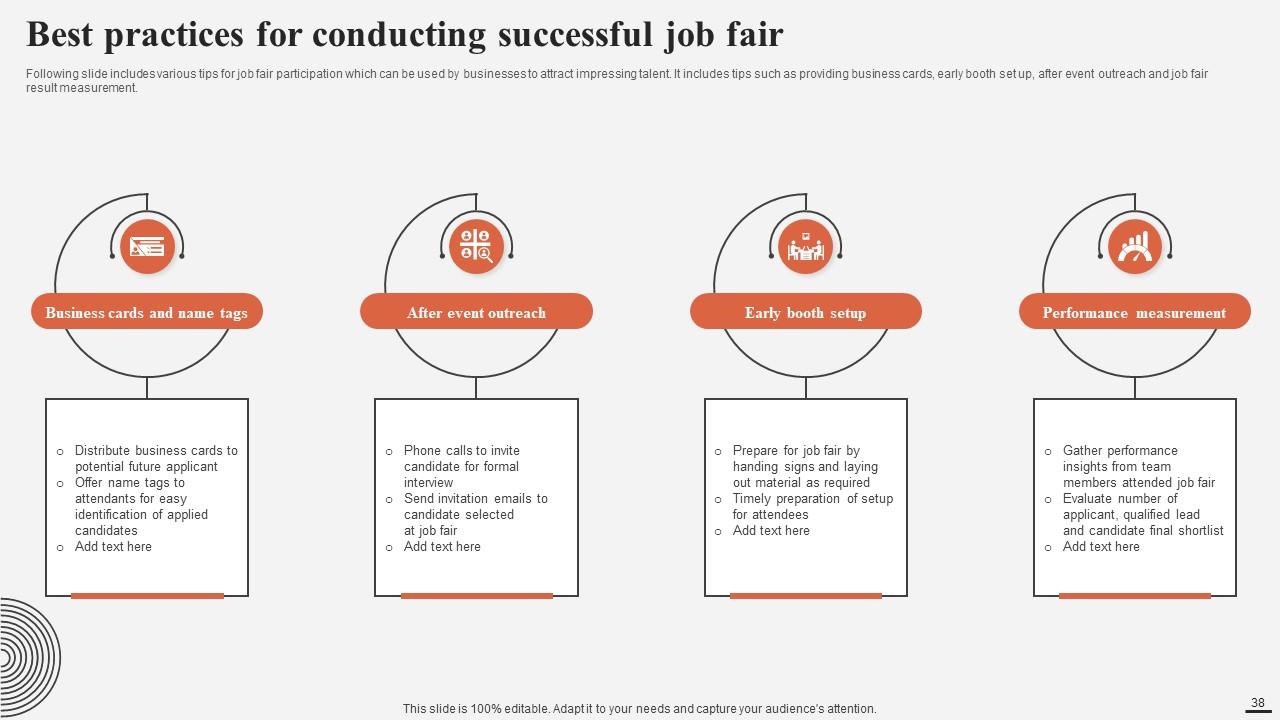
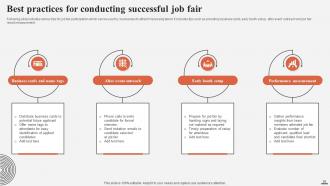
Slide 38: This slide displays Best practices for conducting successful job fair.
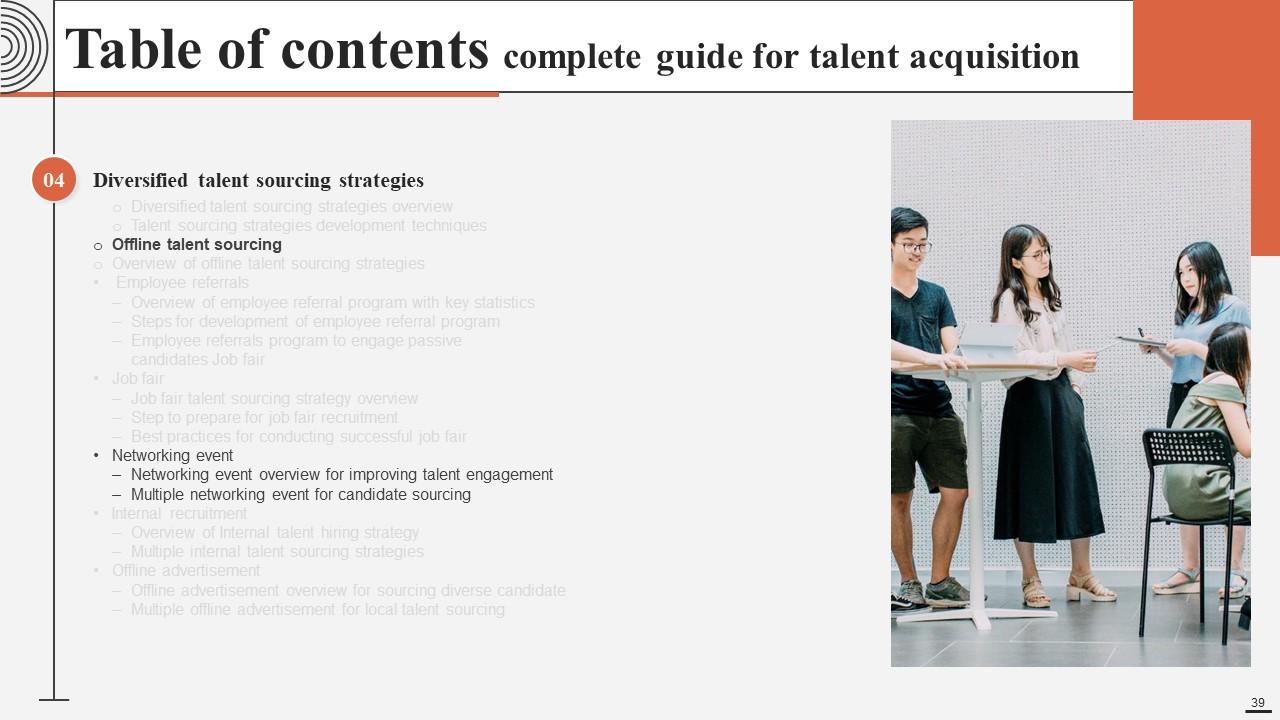
Slide 39: This slide shows title for topics that are to be covered next in the template.
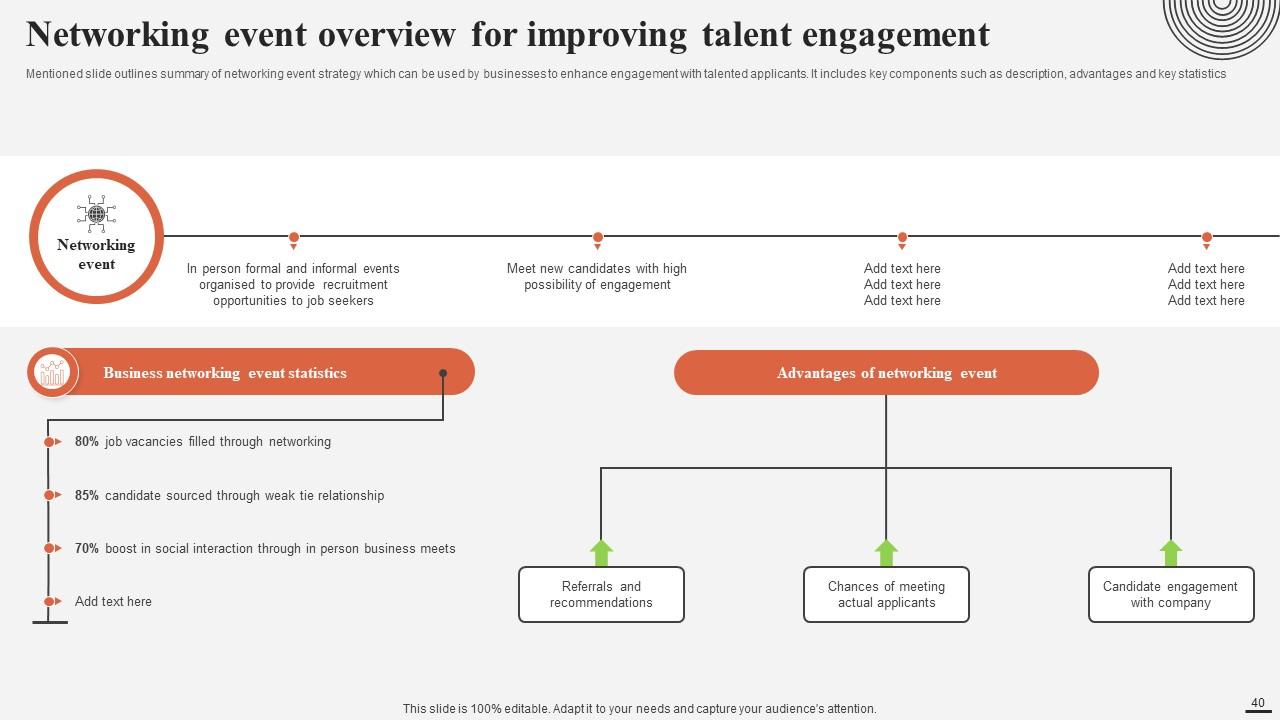
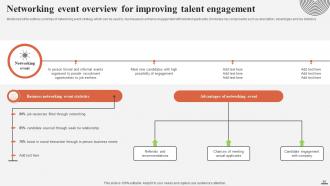
Slide 40: This slide displays Networking event overview for improving talent engagement.
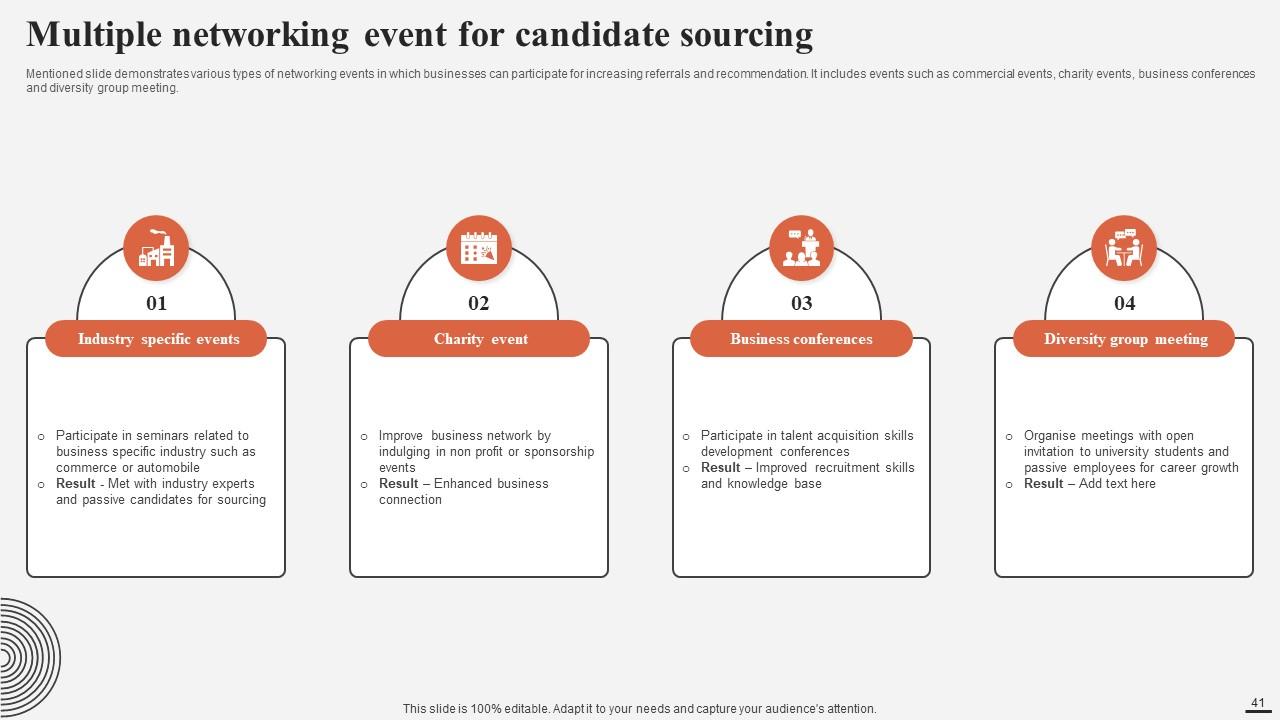
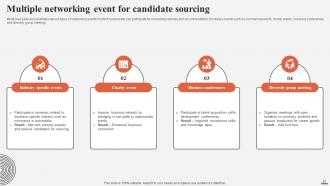
Slide 41: This slide displays Multiple networking event for candidate sourcing.
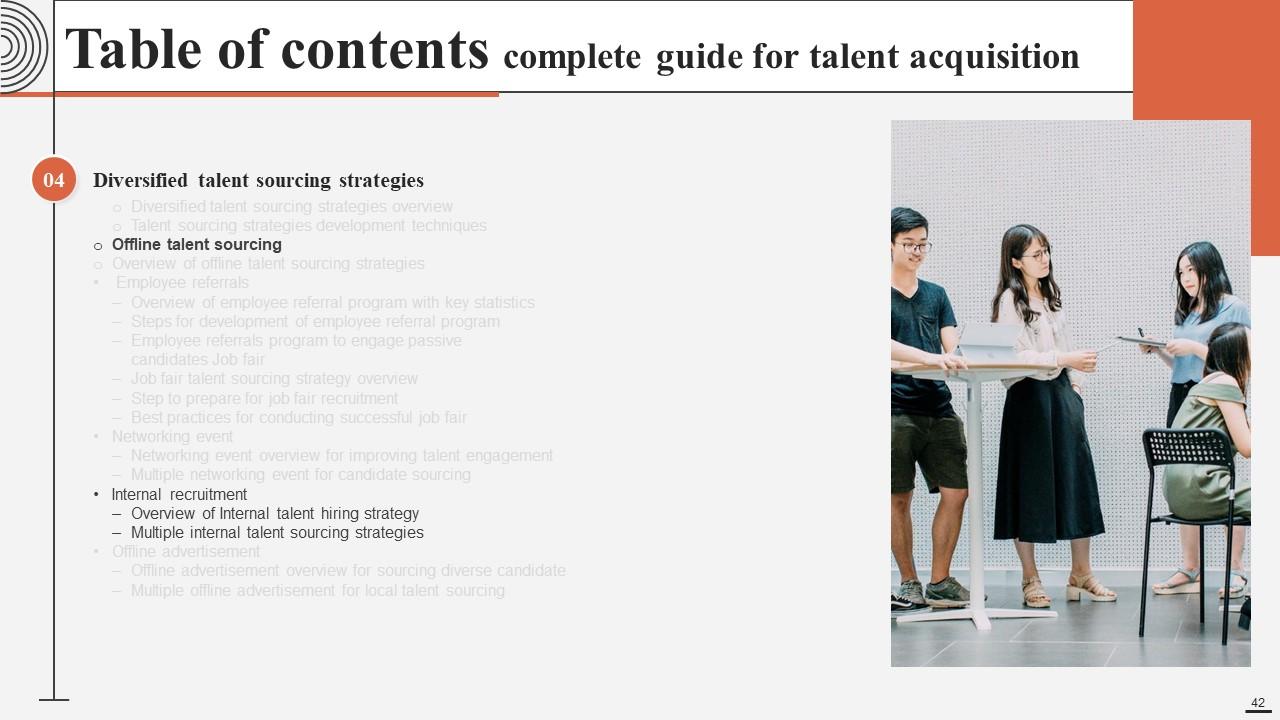
Slide 42: This slide shows title for topics that are to be covered next in the template.
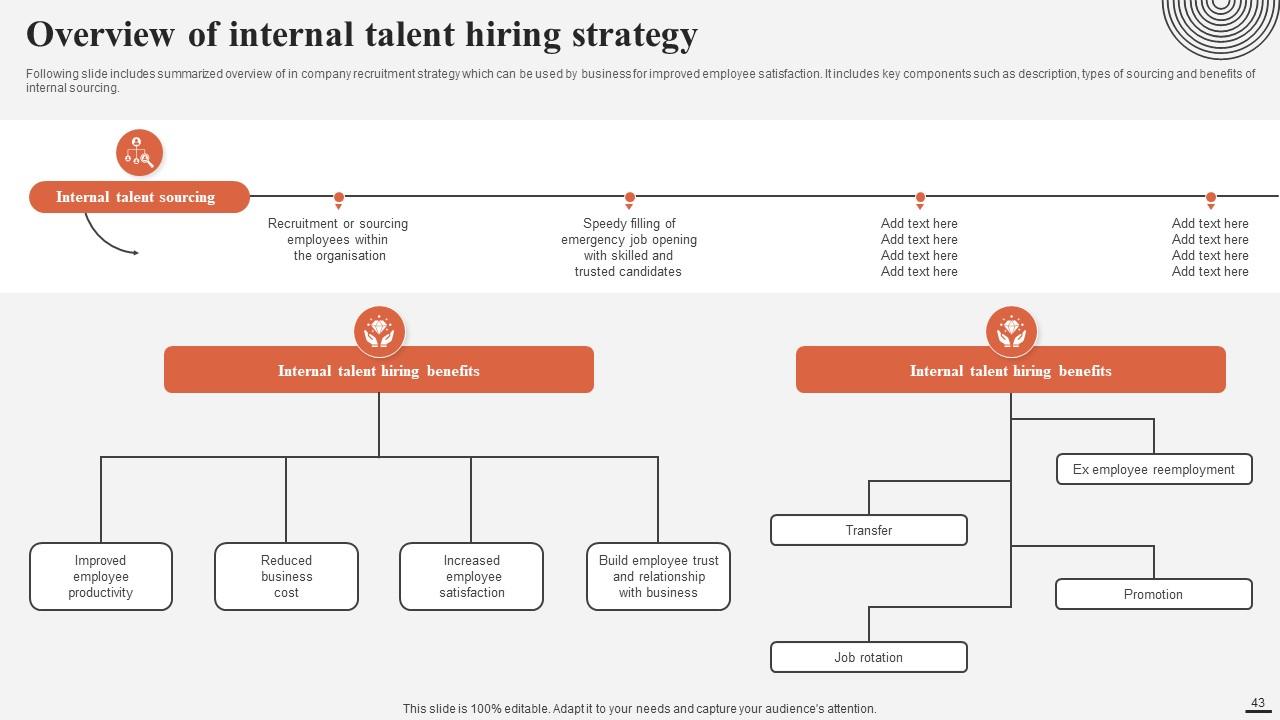
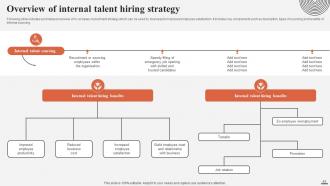
Slide 43: This slide describes Overview of internal talent hiring strategy.
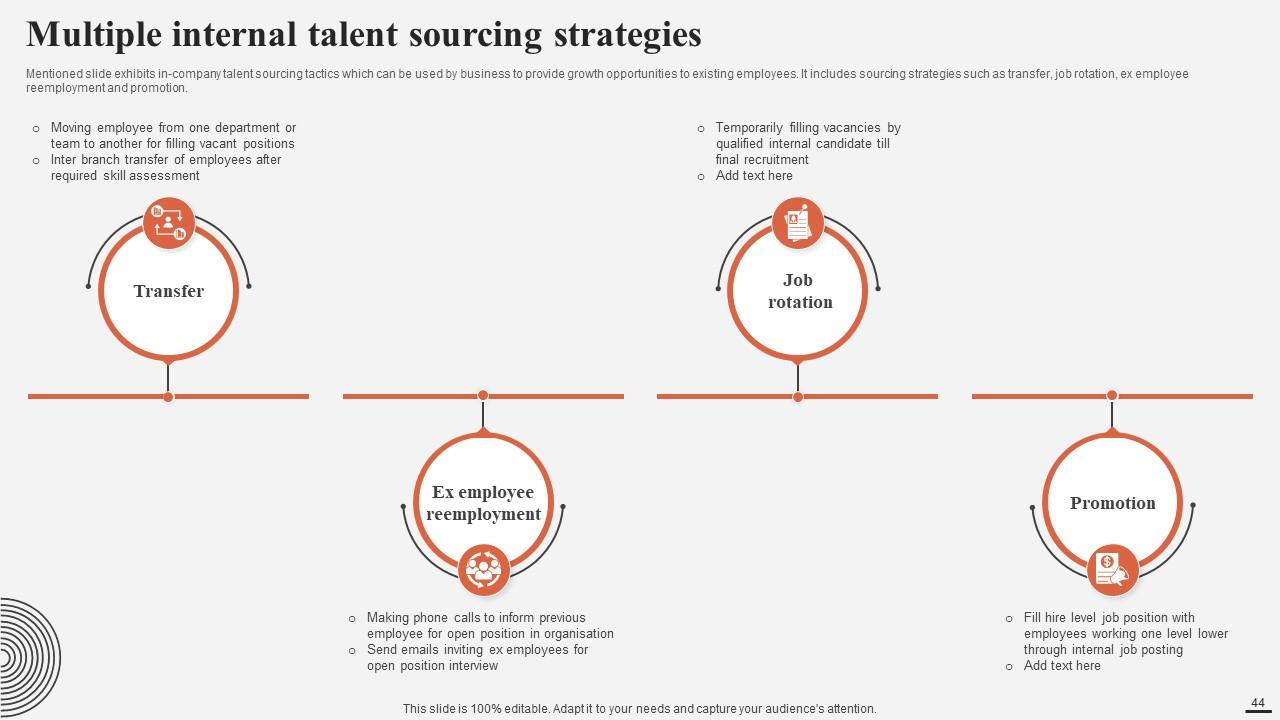
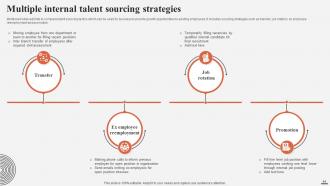
Slide 44: This slide describes Multiple internal talent sourcing strategies.
Slide 45: This slide shows title for topics that are to be covered next in the template.
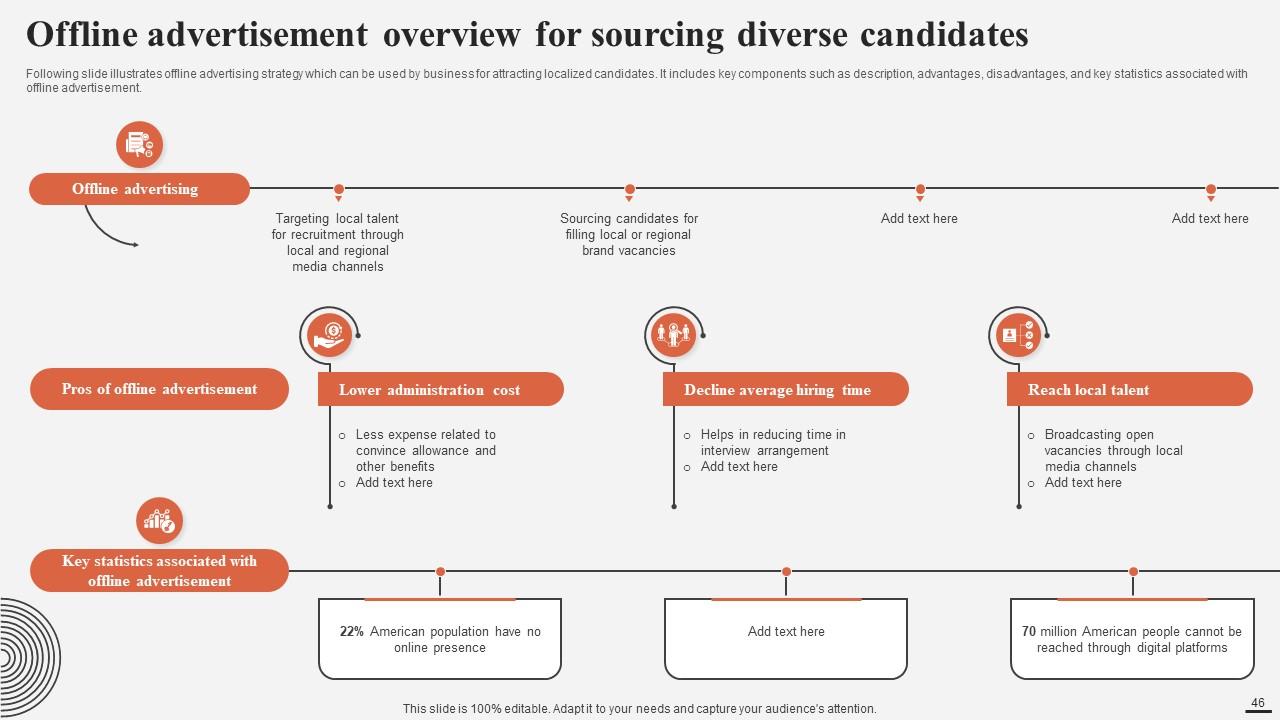
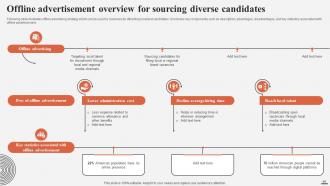
Slide 46: This slide describes Offline advertisement overview for sourcing diverse candidates.
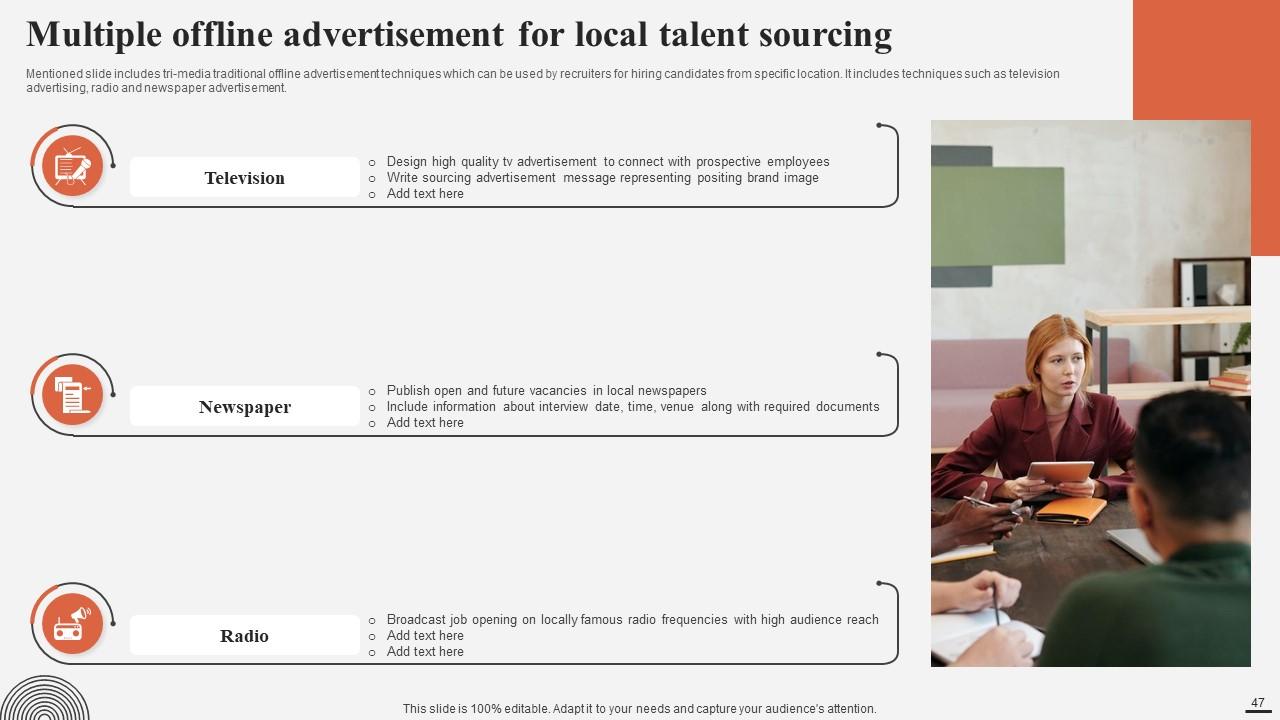
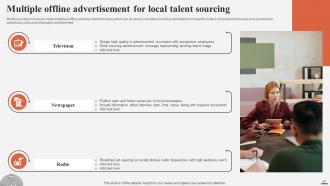
Slide 47: This slide describes Multiple offline advertisement for local talent sourcing.
Slide 48: This slide shows title for topics that are to be covered next in the template.
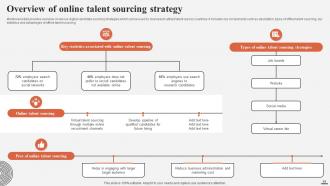
Slide 49: This slide describes Overview of online talent sourcing strategy.
Slide 50: This slide shows title for topics that are to be covered next in the template.
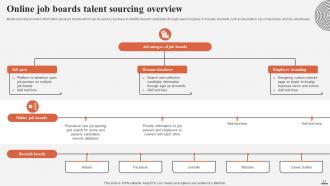
Slide 51: This slide describes Online job boards talent sourcing overview.
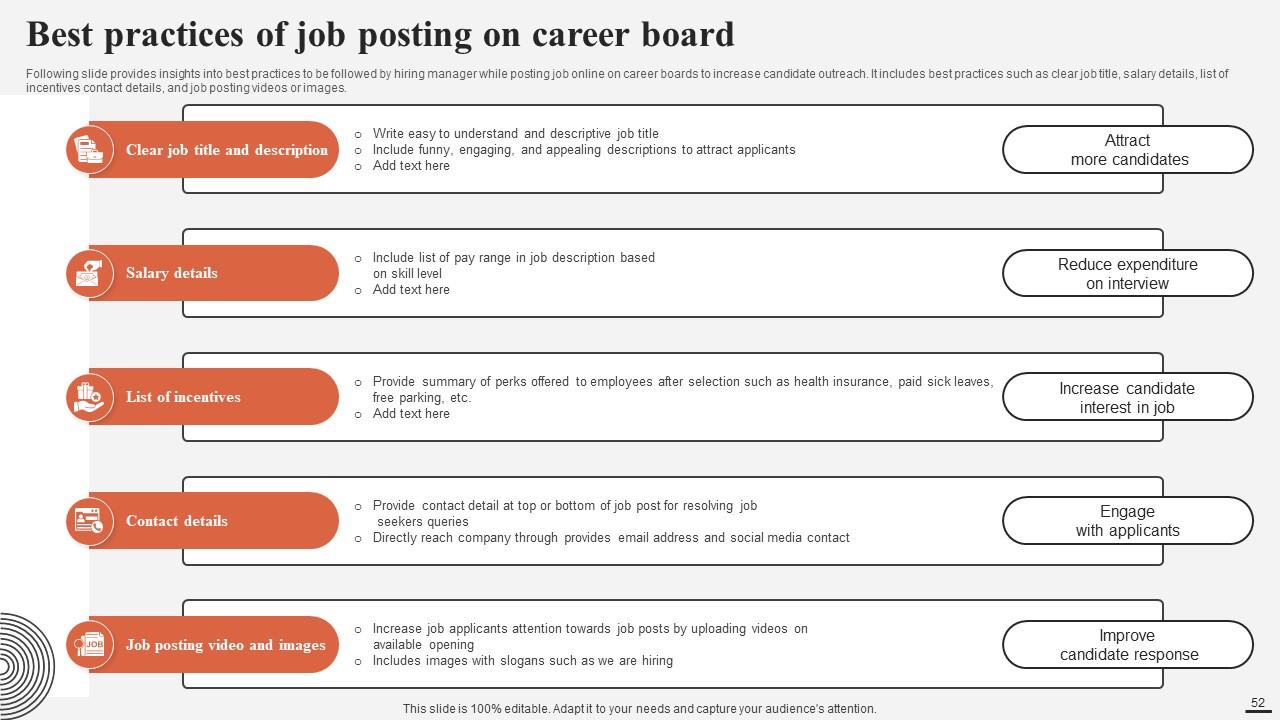
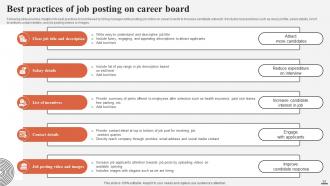
Slide 52: This slide describes Best practices of job posting on career board.
Slide 53: This slide shows title for topics that are to be covered next in the template.
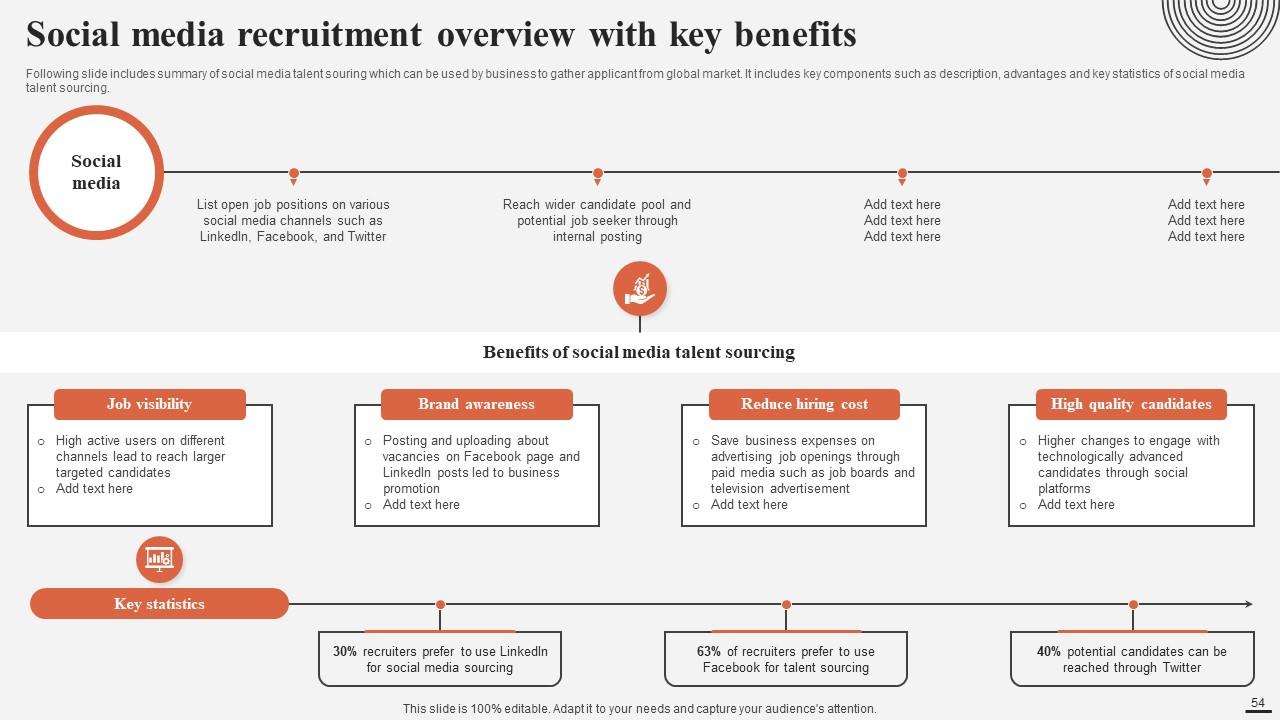
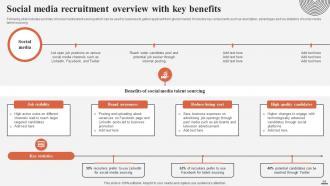
Slide 54: This slide presents Social media recruitment overview with key benefits.
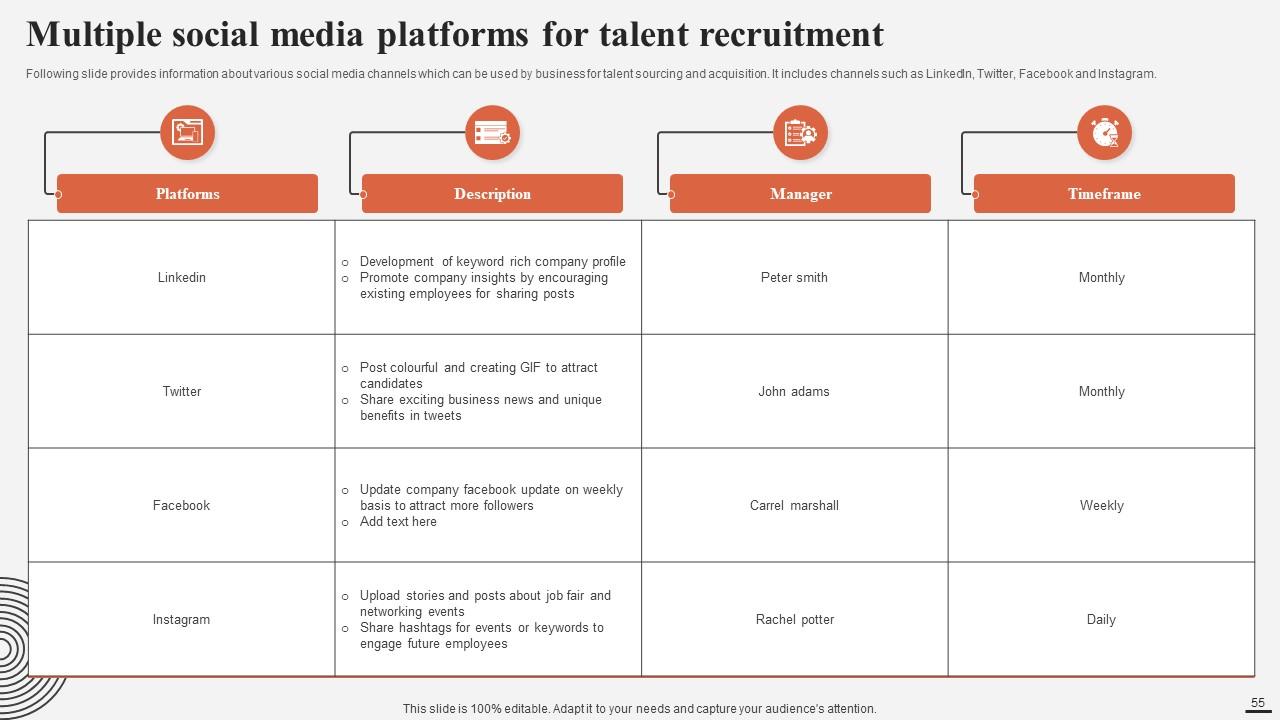
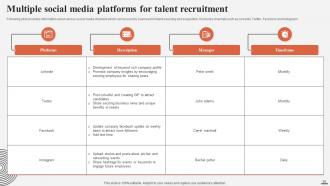
Slide 55: This slide presents Multiple social media platforms for talent recruitment.
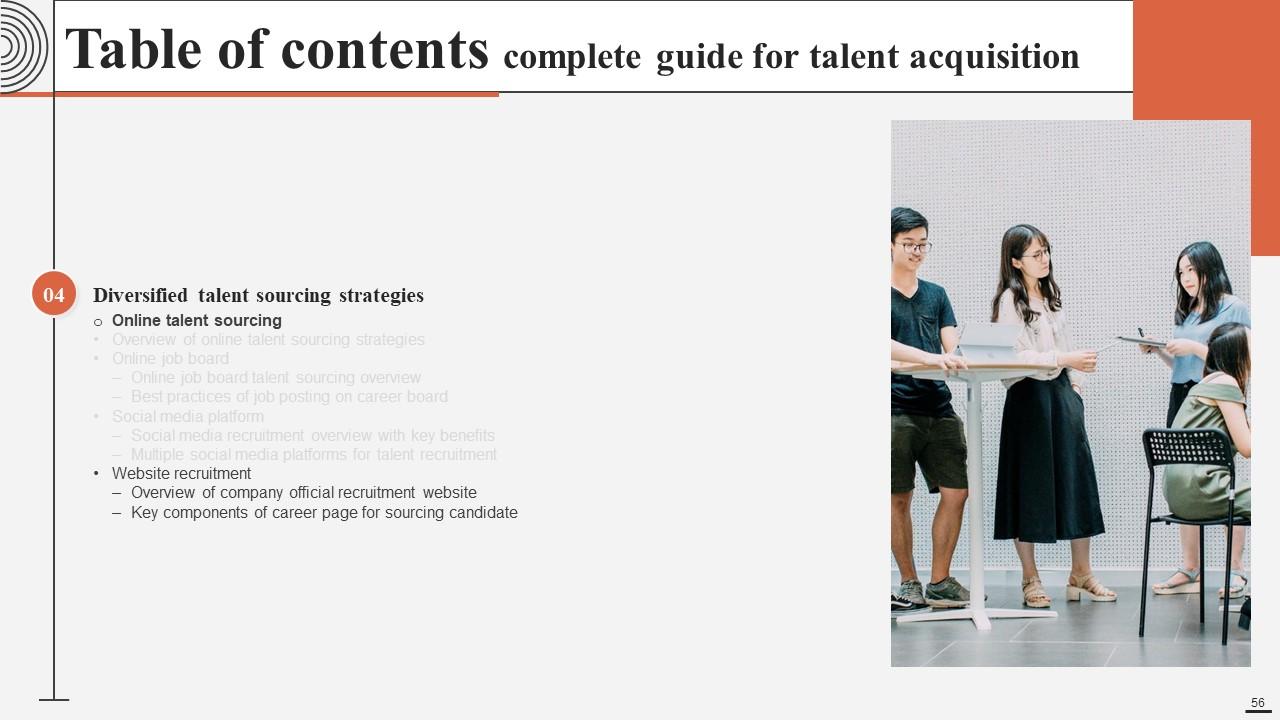
Slide 56: This slide shows title for topics that are to be covered next in the template.
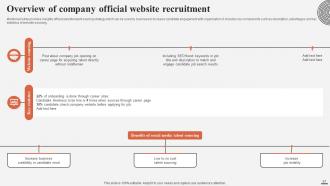
Slide 57: This slide displays Overview of company official website recruitment.
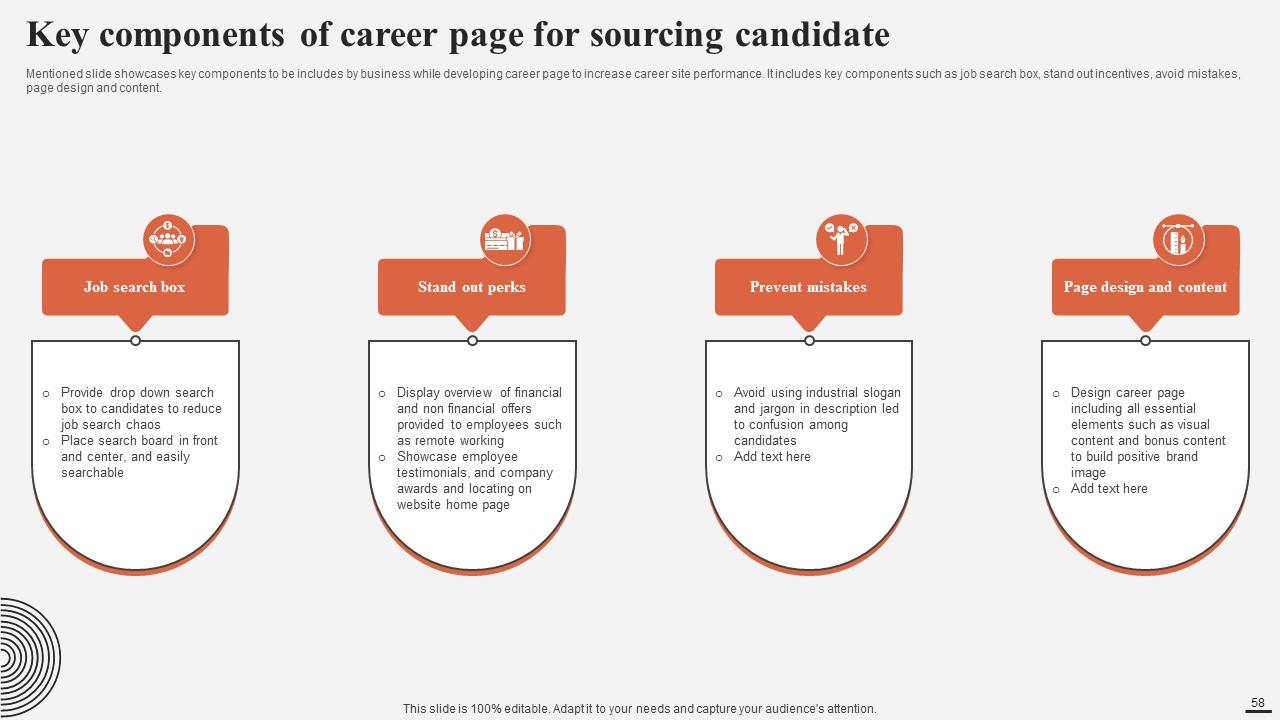
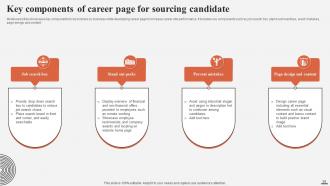
Slide 58: This slide displays Key components of career page for sourcing candidate.
Slide 59: This slide shows title for topics that are to be covered next in the template.
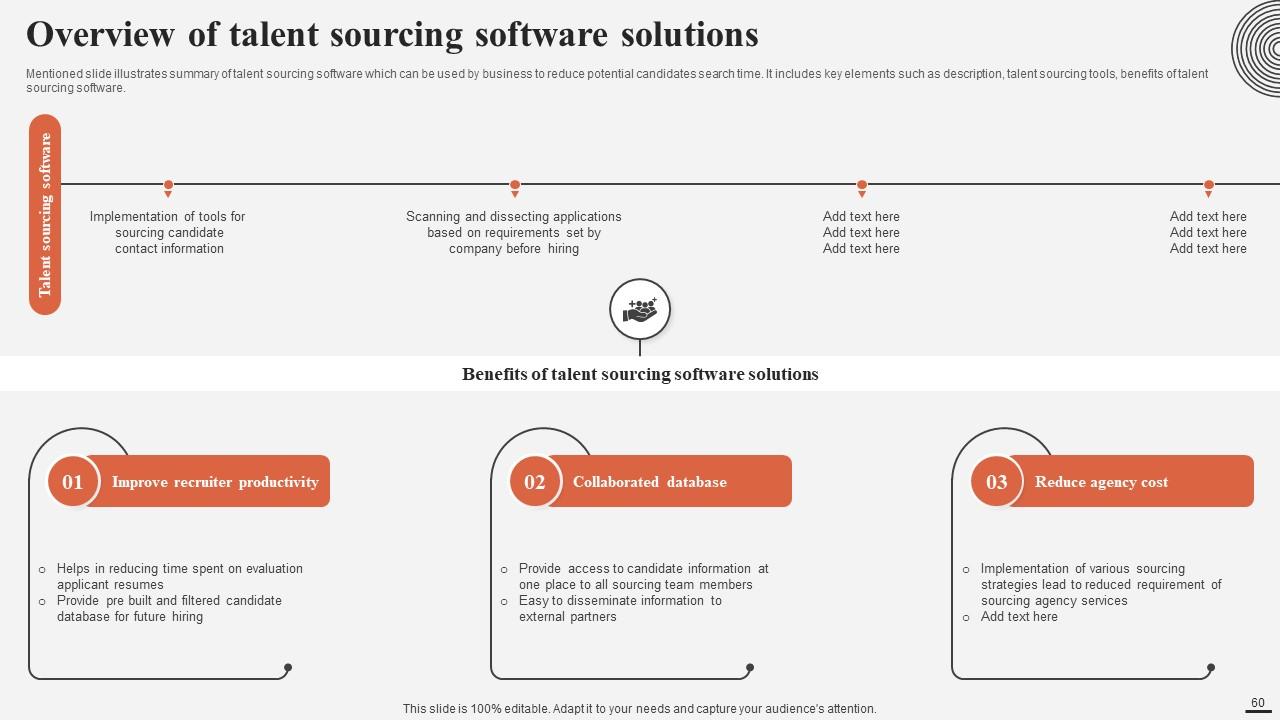
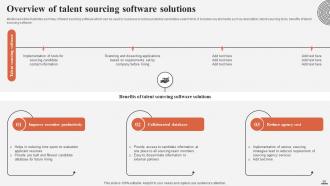
Slide 60: This slide presents Overview of talent sourcing software solutions.
Slide 61: This slide shows title for topics that are to be covered next in the template.
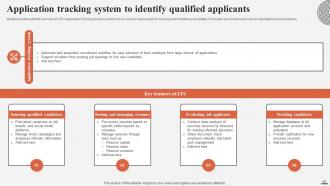
Slide 62: This slide presents Application tracking system to identify qualified applicants.
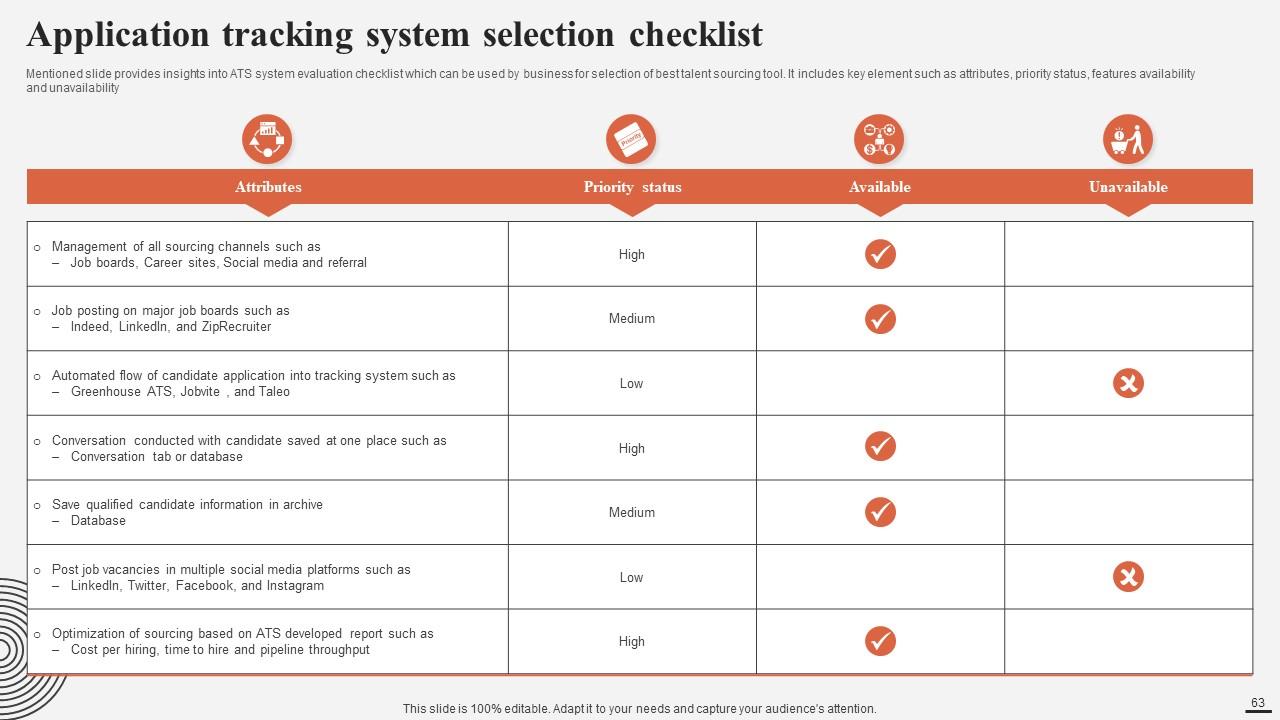
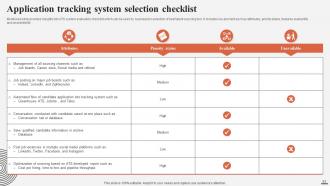
Slide 63: This slide presents Application tracking system selection checklist.
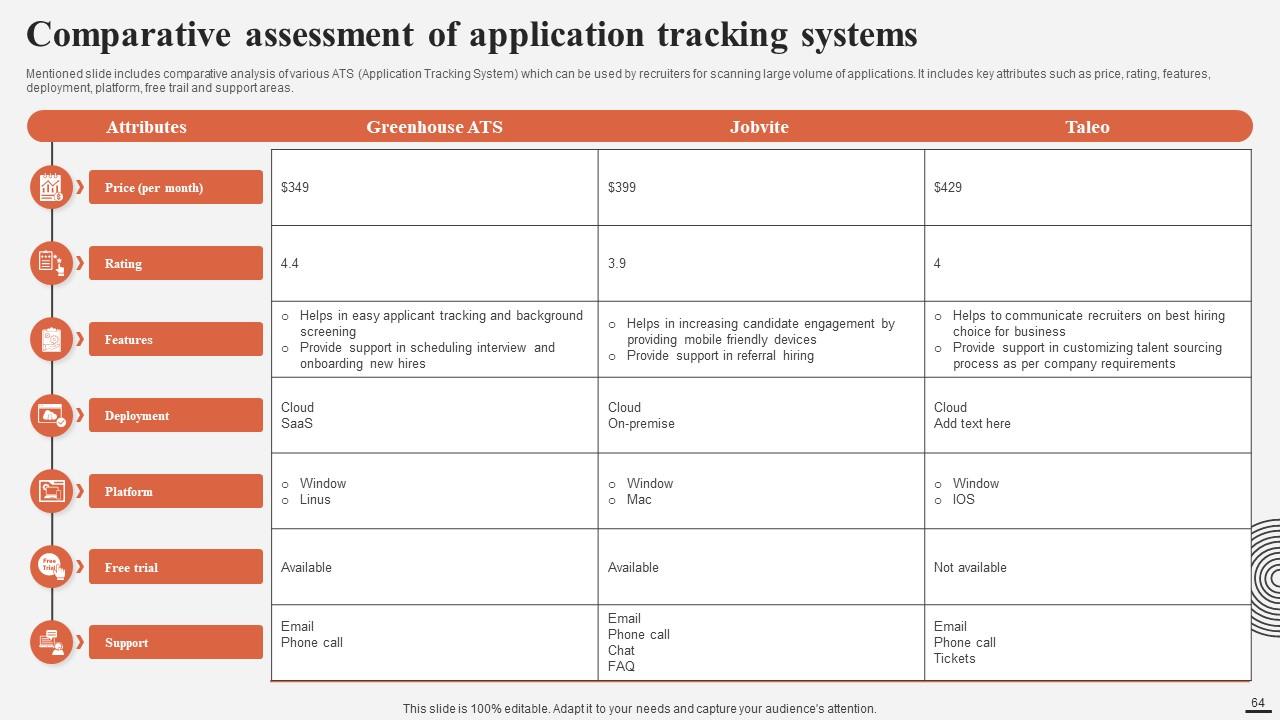
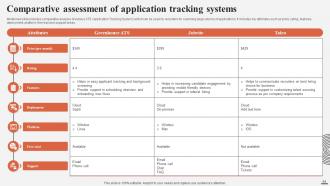
Slide 64: This slide presents Comparative assessment of application tracking systems.
Slide 65: This slide shows title for topics that are to be covered next in the template.
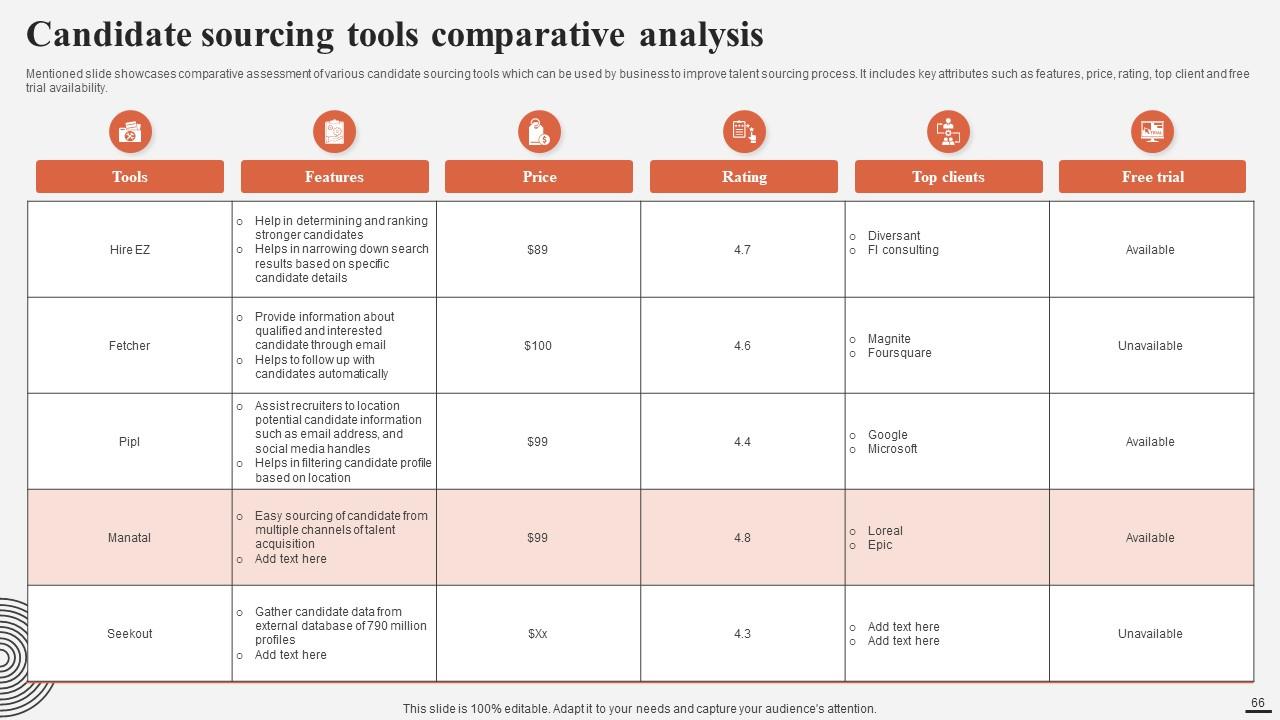
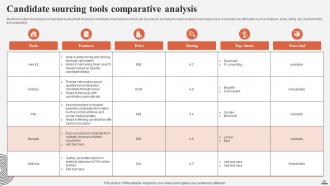
Slide 66: This slide presents Candidate sourcing tools comparative analysis.
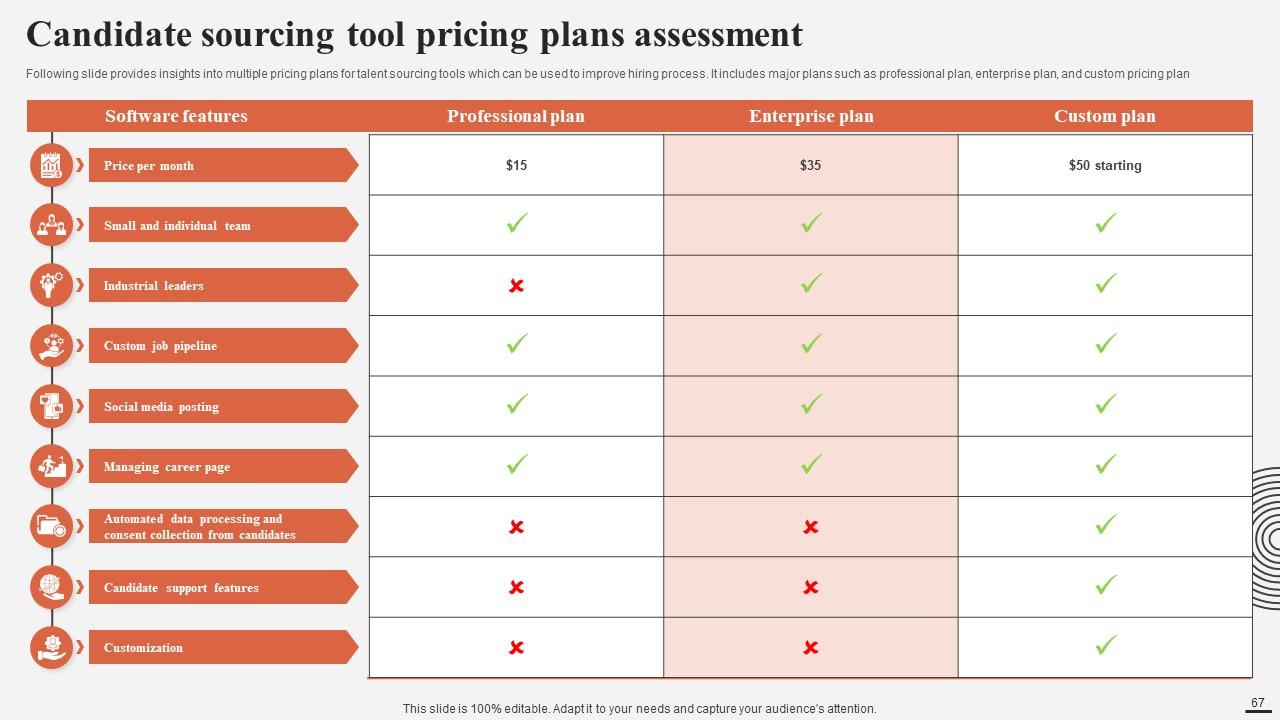
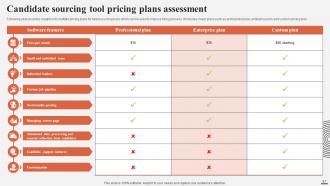
Slide 67: This slide presents Candidate sourcing tool pricing plans assessment.
Slide 68: This slide shows title for topics that are to be covered next in the template.
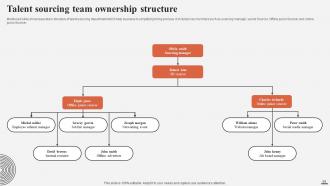
Slide 69: This slide presents Talent sourcing team ownership structure.
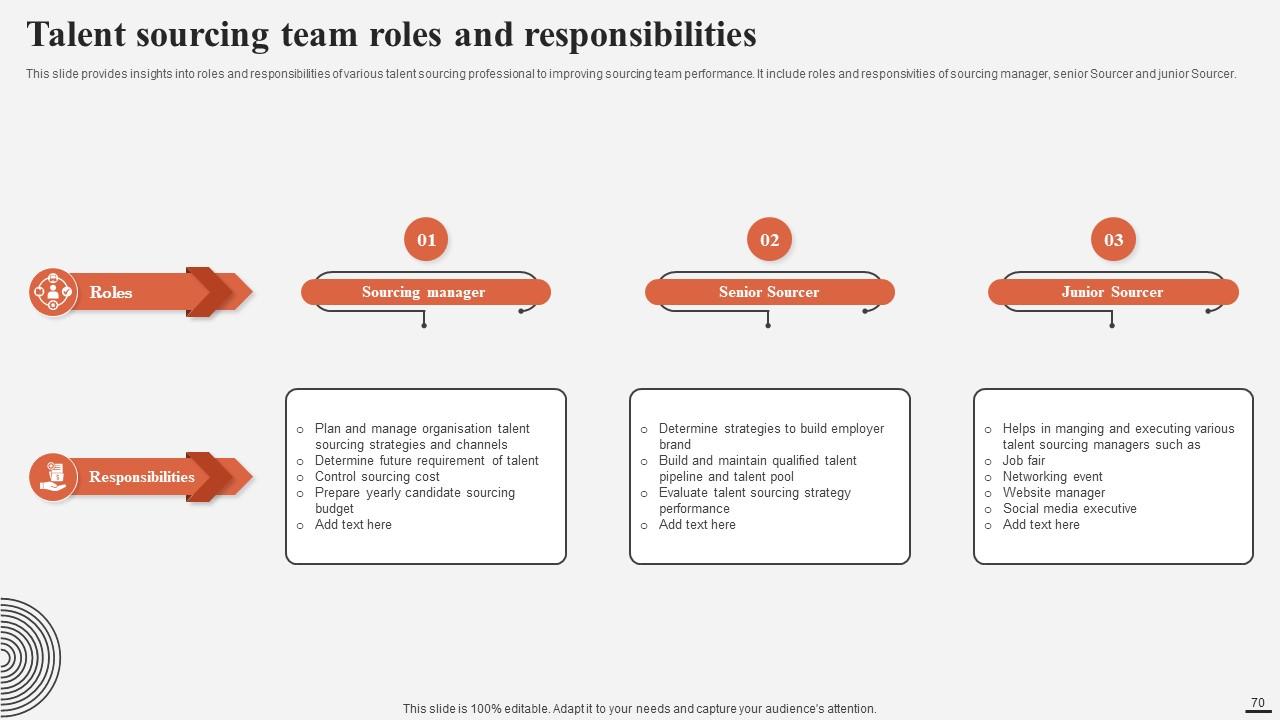
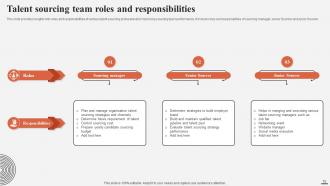
Slide 70: This slide presents Talent sourcing team roles and responsibilities.
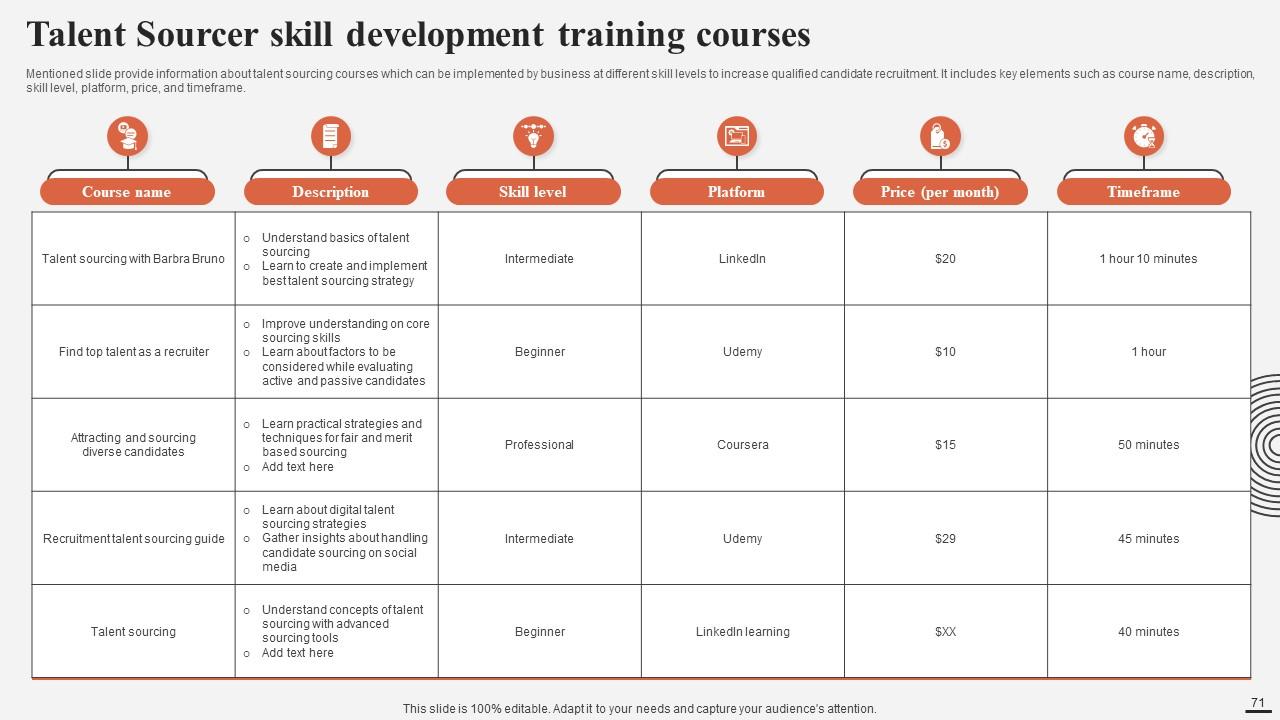
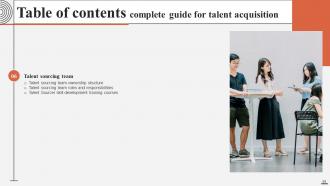
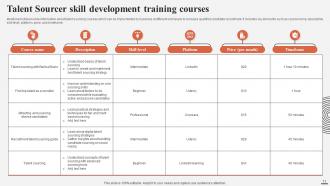
Slide 71: This slide presents Talent Sourcer skill development training courses.
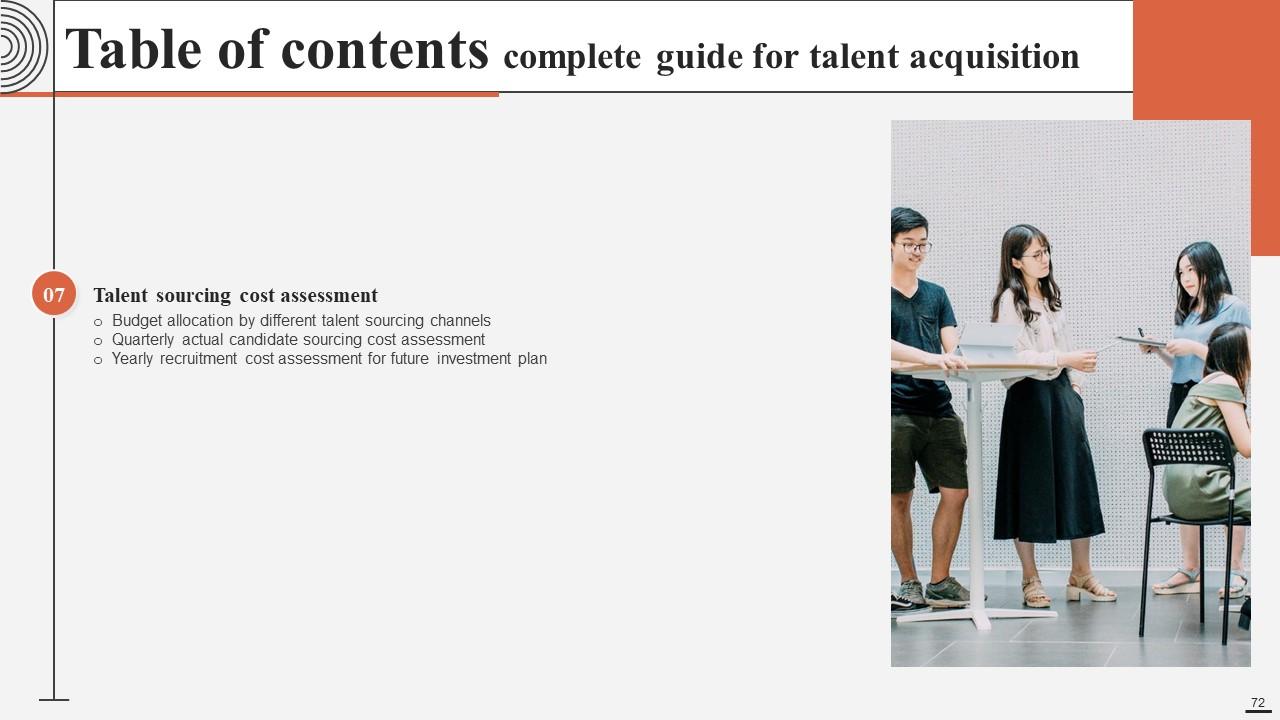
Slide 72: This slide shows title for topics that are to be covered next in the template.
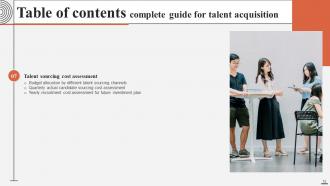
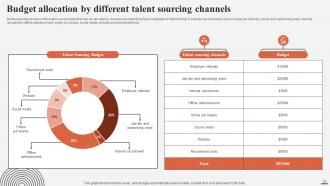
Slide 73: This slide displays Budget allocation by different talent sourcing channels.
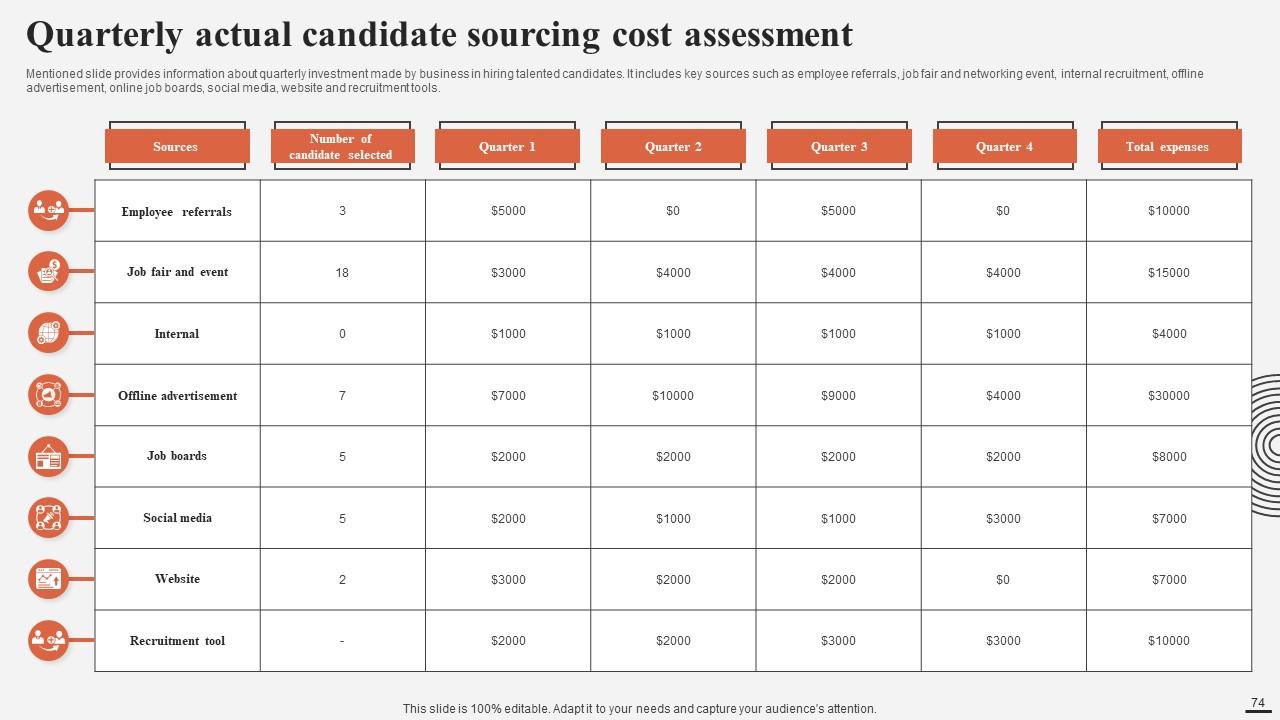
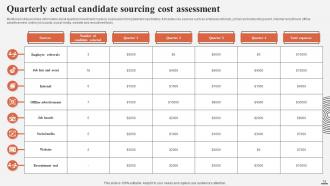
Slide 74: This slide displays Quarterly actual candidate sourcing cost assessment.
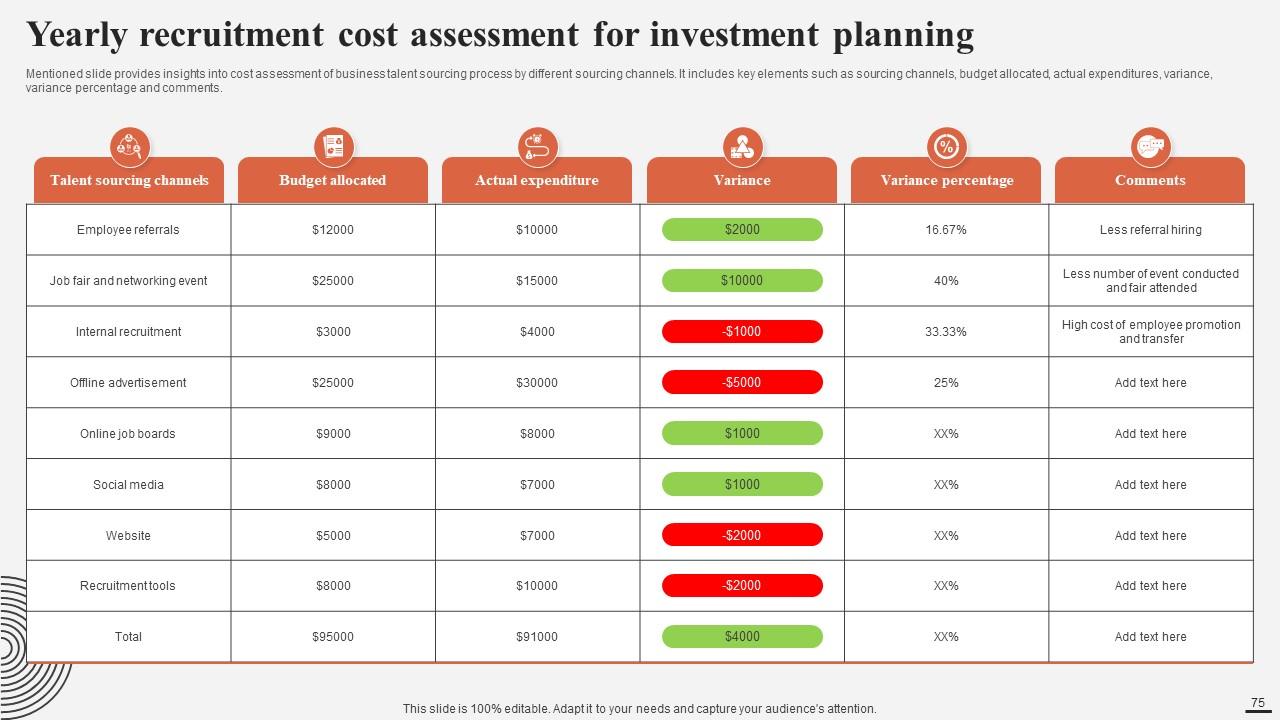
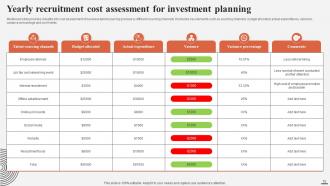
Slide 75: This slide displays Yearly recruitment cost assessment for investment planning.
Slide 76: This slide shows title for topics that are to be covered next in the template.
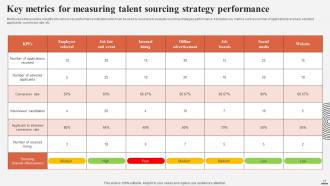
Slide 77: This slide describes Key metrics for measuring talent sourcing strategy performance.
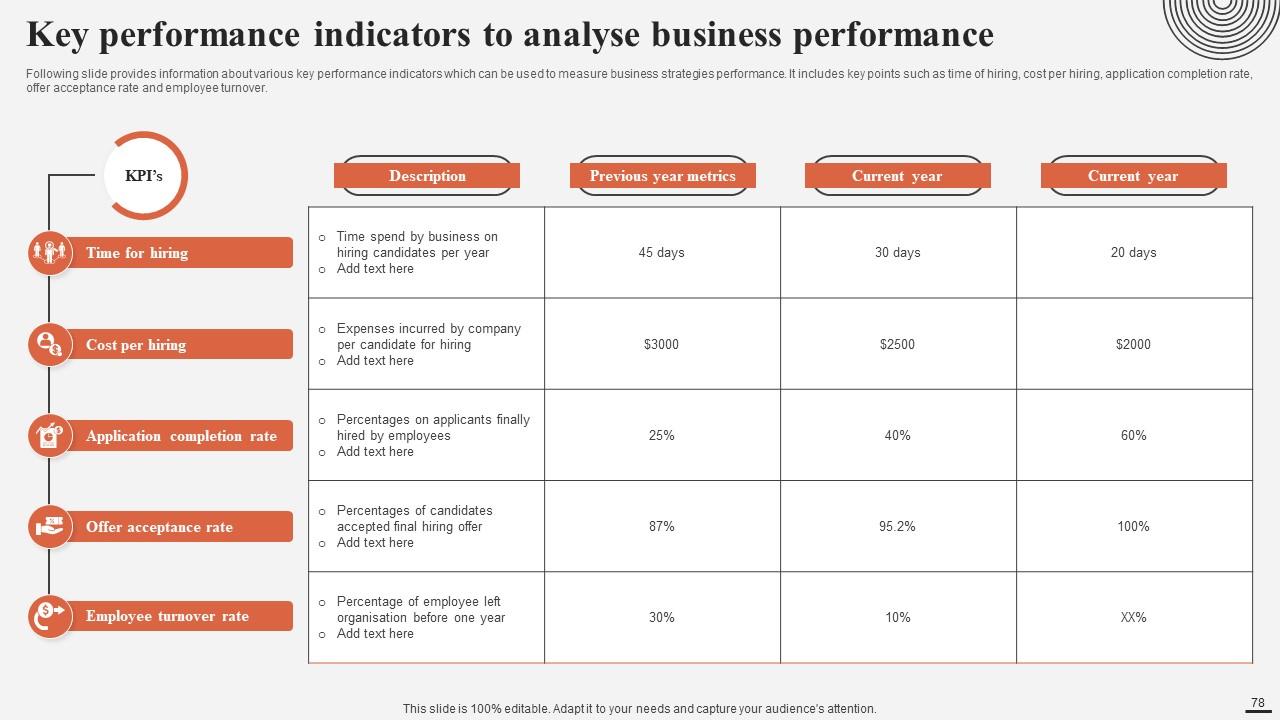
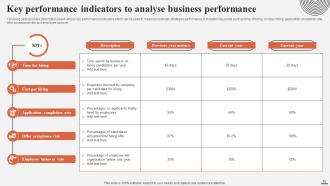
Slide 78: This slide describes Key performance indicators to analyse business performance.
Slide 79: This slide shows title for topics that are to be covered next in the template.
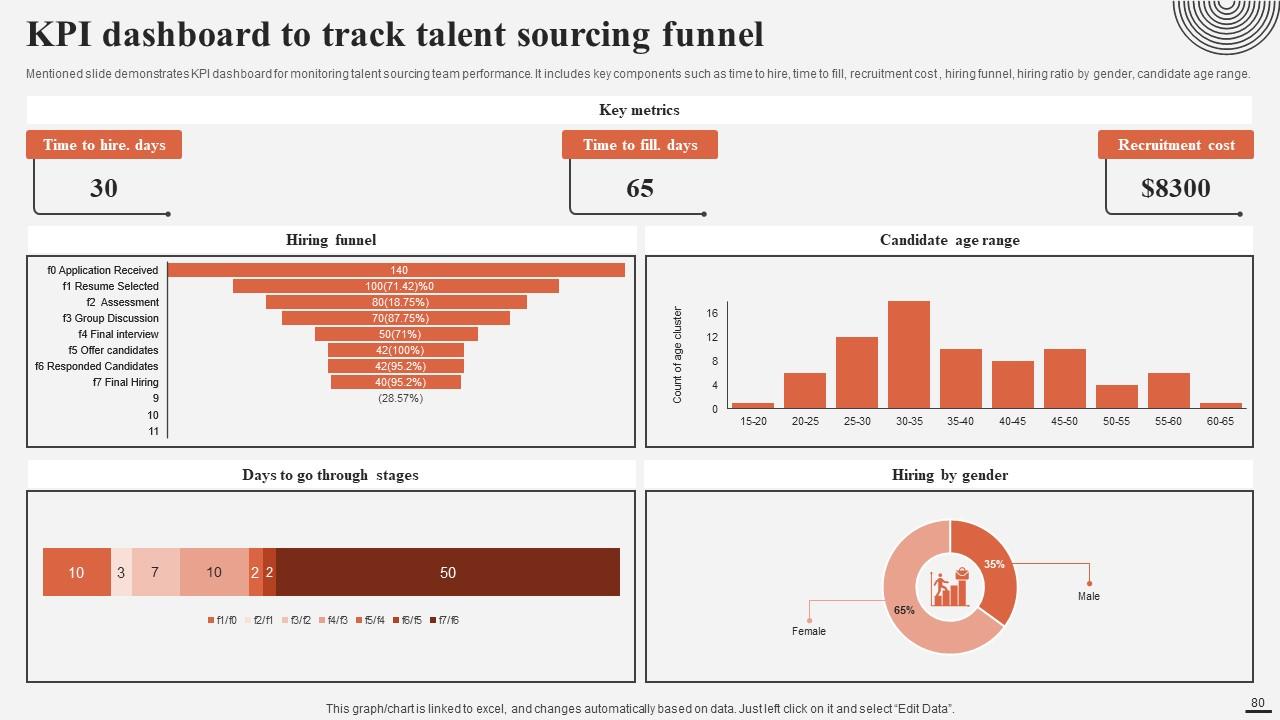
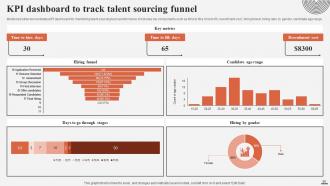
Slide 80: This slide provides KPI dashboard to track talent sourcing funnel.
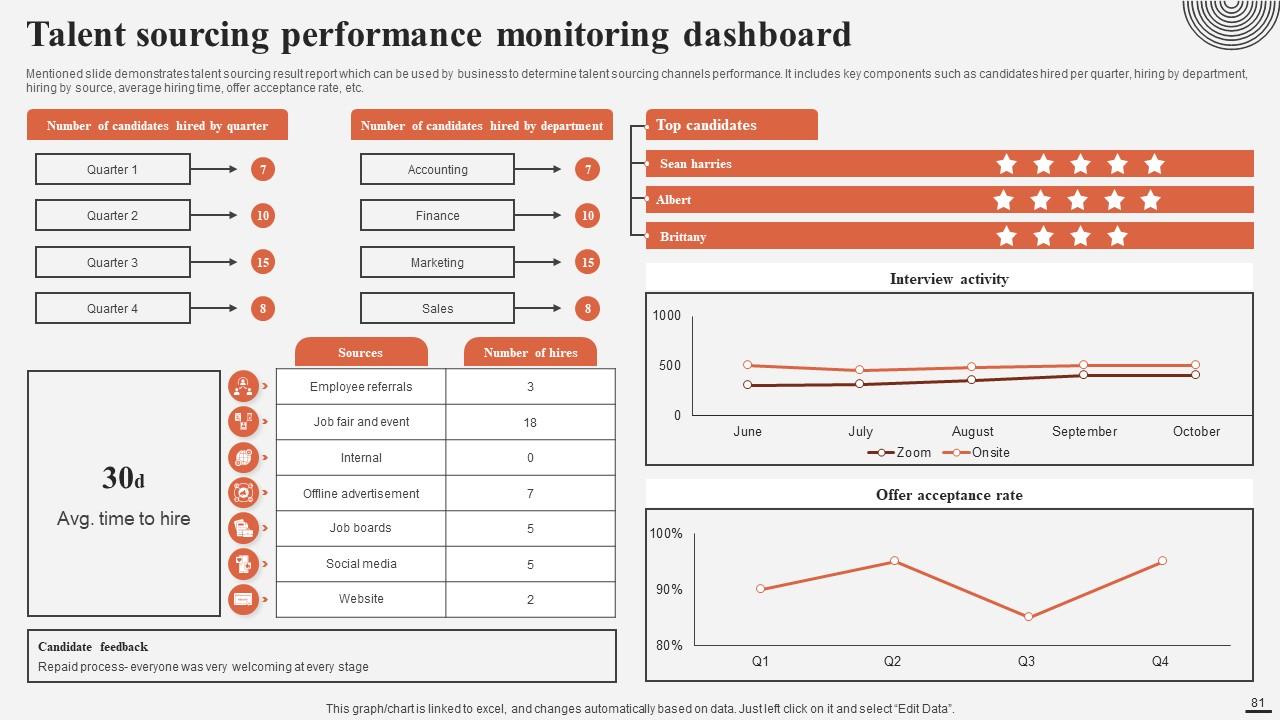
Slide 81: This slide provides Talent sourcing performance monitoring dashboard.
Slide 82: This slide shows all the icons included in the presentation.
Slide 83: This slide is titled as Additional Slides for moving forward.
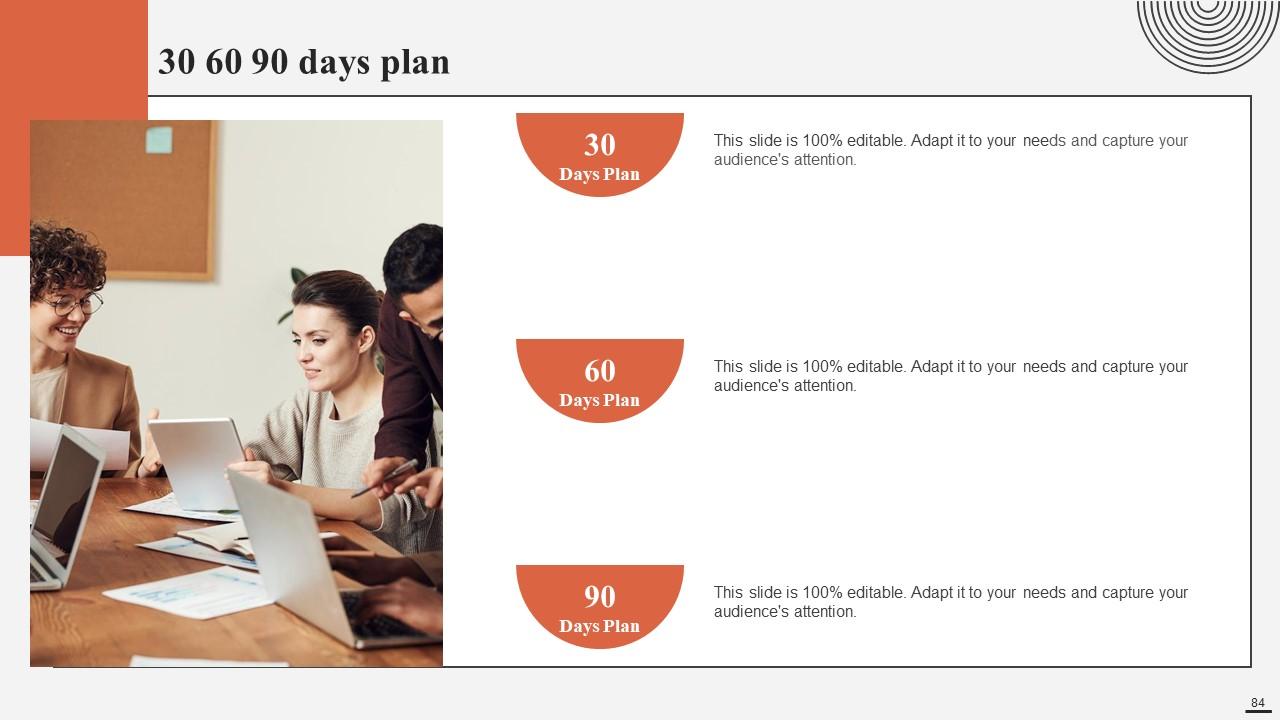
Slide 84: This slide provides 30 60 90 Days Plan with text boxes.
Slide 85: This slide contains Puzzle with related icons and text.
Slide 86: This slide shows Post It Notes. Post your important notes here.
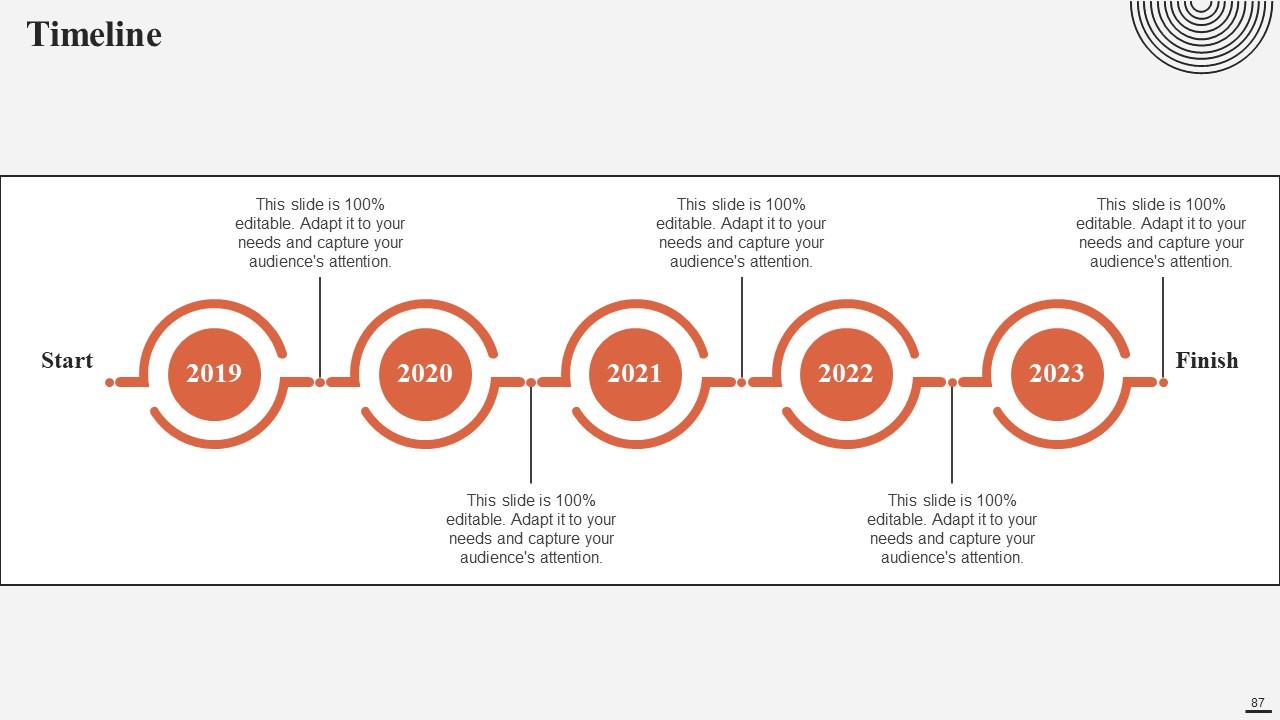
Slide 87: This is a Timeline slide. Show data related to time intervals here.
Slide 88: This is an Idea Generation slide to state a new idea or highlight information, specifications etc.
Slide 89: This slide depicts Venn diagram with text boxes.
Slide 90: This is Our Team slide with names and designation.
Slide 91: This is Our Goal slide. State your firm's goals here.
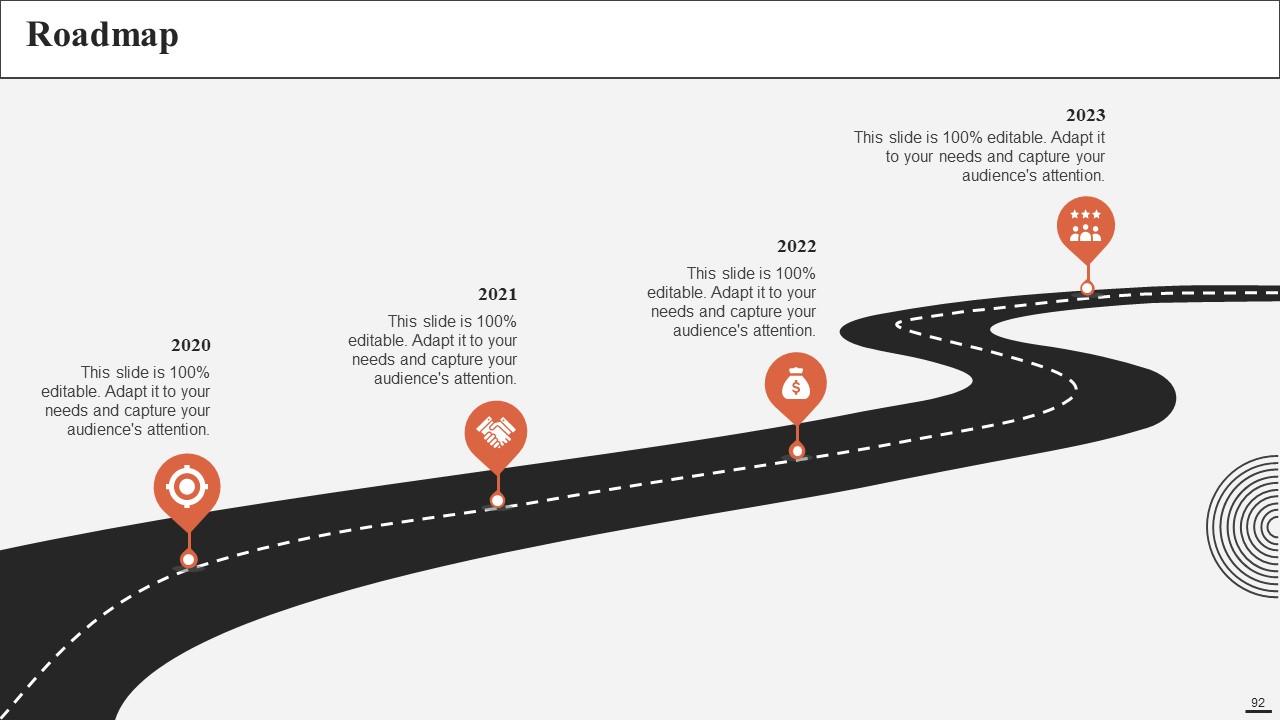
Slide 92: This slide presents Roadmap with additional textboxes.
Slide 93: This is a Thank You slide with address, contact numbers and email address.
Complete Guide For Talent Acquisition Powerpoint Presentation Slides with all 102 slides:
Use our Complete Guide For Talent Acquisition Powerpoint Presentation Slides to effectively help you save your valuable time. They are readymade to fit into any presentation structure.
-
I looked at their huge selection of themes and designs. They appeared to be ideal for my profession. I'm sure I'll grab a few of them.
-
Their templates are super easy to edit and use even for the one like me who is not familiar with PowerPoint. Great customer support.
