


Talent Management Roadmap Powerpoint Presentation Slides




Try Before you Buy Download Free Sample Product
 Impress Your
 Audience
 100%
100% Editable
 Save Hours
 of Time


Retain the best employees using these Talent Management Roadmap PowerPoint Presentation Slides. Take the assistance of these employee recruitment PPT templates to reveal the roadmap for successfully onboarding employees. Showcase the components of HR strategy like business process mapping, development of HR architecture, organizational design, and HR transactions using these human talent PowerPoint slides. Take advantage of these HRD PowerPoint visuals to depict cloud strategy, digital strategy, business requirements, conducting vendor demos, implementation strategy, etc. Utilize this HRD PowerPoint deck to reveal the competency set required for various designations like knowledge, skills, experience, and personal traits. Unveil the importance of talent management like employee motivation, coverage of important employee roles, retaining top talent, improving business performance and higher client satisfaction. Download these amazing human resource management PPT infographics and attract the most deserving employees to your organization.
People who downloaded this PowerPoint presentation also viewed the following :
Content of this Powerpoint Presentation
Slide 1: This slide introduces the Talent Management Roadmap. Add Your Company Name to begin.
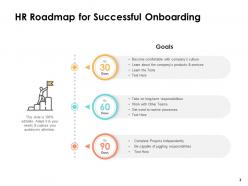
Slide 2: This slide shows the HR Roadmap for Successful Onboarding.
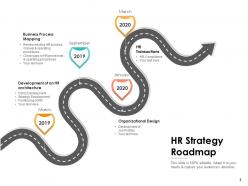
Slide 3: This slide showcases the HR Strategy Roadmap. Organizational Design Development of an HR architecture Business Process Mapping
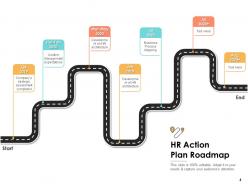
Slide 4: This slide showcases the HR Action Plan Roadmap.
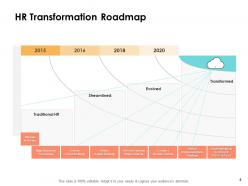
Slide 5: This slide ELUCIDATES the HR Transformation Roadmap.
Slide 6: This TEMPLATE shows the Talent Management Roadmap Icons Slide.
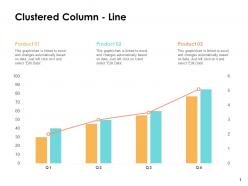
Slide 7: This slide contains an editable Clustered Column Line chart depicting the market share of products for various quarters of a financial year.
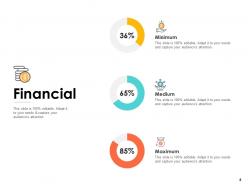
Slide 8: This slide depicts the Financial information.
Slide 9: This is a Thank You slide consisting of Address, contact number and email address.
Talent Management Roadmap Powerpoint Presentation Slides with all 9 slides:
Add all the color you desire with our Talent Management Roadmap Powerpoint Presentation Slides. You won't have to exaggerate.

FAQs for Talent Management Roadmap
Organizations effectively identify high-potential talent through performance analytics, 360-degree feedback assessments, leadership competency evaluations, and strategic project assignments that reveal capabilities. Through personalized development programs, mentoring initiatives, and cross-functional rotations, companies nurture these individuals while providing accelerated learning opportunities, ultimately building robust leadership pipelines and maintaining competitive advantage in talent retention.
Diversity and inclusion enhance talent management by expanding talent pools, improving decision-making through varied perspectives, increasing innovation, and strengthening employer branding. These strategic initiatives enable organizations to attract top candidates from broader demographics, reduce turnover costs, and enhance team performance, with many companies finding that inclusive cultures deliver measurable competitive advantages and improved business outcomes.
Creating effective leadership talent pipelines involves identifying high-potential employees early, providing targeted development opportunities, implementing mentorship programs, creating stretch assignments, and establishing clear succession planning frameworks. Organizations enhance these pipelines through cross-functional rotations, leadership academies, and executive coaching, with many companies finding that structured development paths combined with regular performance assessments ultimately deliver stronger internal leadership capabilities and reduced external recruitment costs.
Technology enhances talent management through AI-powered recruitment platforms, automated performance tracking systems, predictive analytics for retention, and integrated learning management systems. These tools streamline hiring by identifying top candidates faster, enable real-time performance monitoring, and deliver personalized development paths, with many organizations finding significantly improved employee engagement and reduced turnover rates.
Companies should evaluate talent management programs using metrics like employee retention rates, time-to-fill positions, internal promotion rates, employee engagement scores, and performance improvement indicators. These measurements enable organizations to assess recruitment efficiency, development effectiveness, and workforce satisfaction, with many finding that tracking these metrics simultaneously delivers better strategic workforce planning, reduced hiring costs, and enhanced competitive advantage.
Employee feedback directly influences talent management strategies by identifying skill gaps, revealing engagement drivers, highlighting retention risks, and uncovering development opportunities across teams. Through regular surveys, performance discussions, and exit interviews, organizations can refine their recruitment criteria, enhance training programs, and adjust compensation structures, ultimately creating more targeted talent strategies that improve employee satisfaction and reduce turnover costs.
Organizations ensure alignment by integrating talent management strategies with business objectives through strategic workforce planning, competency mapping, performance metrics tied to organizational goals, and leadership development programs. Many companies streamline this alignment by establishing clear succession plans, implementing skills-based hiring practices, and creating development pathways that support growth targets, ultimately delivering enhanced organizational capability and competitive advantage.
Managing remote or hybrid workforces presents challenges including maintaining team cohesion, ensuring effective communication across time zones, monitoring performance without micromanaging, and preserving company culture. These obstacles require strategic approaches like digital collaboration platforms, structured check-ins, and virtual engagement initiatives, with many organizations finding that flexible policies and clear expectations ultimately enhance employee satisfaction while maintaining productivity.
Ongoing training and development integrate into talent management through personalized learning paths, mentorship programs, cross-functional projects, skill assessments, and performance-linked development plans. These approaches enhance employee capabilities while identifying high-potential talent, with many organizations finding that continuous development improves retention rates, accelerates internal promotions, and ultimately delivers stronger succession planning and competitive advantage.
Talent retention methods include competitive compensation packages, flexible work arrangements, professional development opportunities, mentorship programs, and recognition systems. Through strategic career pathing and skill enhancement initiatives, organizations in sectors like technology, finance, and healthcare can significantly reduce turnover while enhancing employee engagement, ultimately delivering stronger team stability and competitive advantage.
Small organizations can scale talent management through streamlined processes, digital platforms, and outsourced HR functions, while large organizations require sophisticated systems, specialized teams, and structured frameworks. Small companies often leverage automated recruiting tools and performance management software to maximize efficiency, whereas enterprises implement comprehensive talent analytics, succession planning, and cross-departmental coordination, ultimately delivering competitive advantage regardless of organizational size.
Strategies to enhance employee engagement include flexible work arrangements, professional development programs, regular feedback mechanisms, recognition systems, and competitive compensation packages. These approaches streamline retention by fostering career growth, improving work-life balance, and creating meaningful connections, with many organizations finding that engaged employees deliver higher productivity, reduced turnover costs, and stronger customer experiences.
Exit interviews inform talent management by revealing retention challenges, identifying skill gaps, uncovering management issues, and highlighting workplace culture problems that drive departures. These insights enable organizations to refine recruitment strategies, enhance employee development programs, and improve retention initiatives, with many companies finding that systematic exit feedback reduces future turnover and strengthens overall talent acquisition efforts.
Mentorship and coaching programs serve as critical talent development tools that enhance employee skills, accelerate career progression, and improve retention rates within organizations. These programs create structured knowledge transfer between experienced professionals and emerging talent, while fostering leadership capabilities, boosting engagement, and building stronger succession pipelines, ultimately delivering competitive advantage through enhanced human capital development.
Organizations leverage analytics to predict talent trends by analyzing workforce data, employee performance metrics, market conditions, historical hiring patterns, and skills gap assessments. Through predictive modeling and machine learning algorithms, companies can forecast future staffing requirements, identify emerging skill demands, and anticipate turnover risks, ultimately enabling proactive recruitment strategies and strategic workforce planning in an increasingly competitive talent landscape.
No Reviews