

Employee Training Roadmap Powerpoint Presentation Slides





Try Before you Buy Download Free Sample Product
 Impress Your
 Audience
 100%
100% Editable
 Save Hours
 of Time


Our Employee Training Roadmap Powerpoint Presentation Slides are topically designed to provide an attractive backdrop to any subject. Use them to look like a presentation pro.
People who downloaded this PowerPoint presentation also viewed the following :
Content of this Powerpoint Presentation
Slide 1: This slide introduces Employee Training Roadmap. State Your Company Name and begin.
Slide 2: This is Agenda slide. State your agendas here.
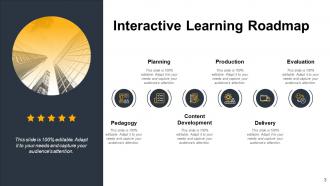
Slide 3: This slide shows Interactive Learning Roadmap describing- Pedagogy, Planning, Production, Content Development, Delivery, Evaluation.
Slide 4: This slide presents Company Learning Roadmap describing- A comprehensive onboarding program, A personalized skills development plan, A challenging, yet customizable, professional development plan, Monitoring and feedback, External development opportunities.
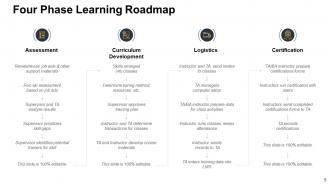
Slide 5: This slide displays Four Phase Learning Roadmap.
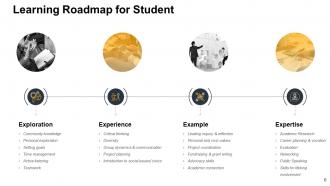
Slide 6: This slide represents Learning Roadmap for Student describing- Experience, Exploration, Expertise, Example.
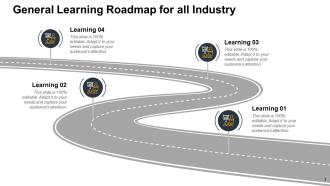
Slide 7: This slide showcases General Learning Roadmap for all Industry.
Slide 8: This slide displays Employee Training Roadmap Icons.
Slide 9: This slide is titled as Additional Slides for moving forward.
Slide 10: This is Our Mission slide with related imagery and text.
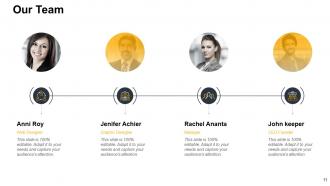
Slide 11: This is Our Team slide with names and designation.
Slide 12: This is About Us slide to show company specifications etc.
Slide 13: This is Our Target slide. State your targets here.
Slide 14: This is a Puzzle slide with text boxes to show information.
Slide 15: This is a Venn slide with text boxes.
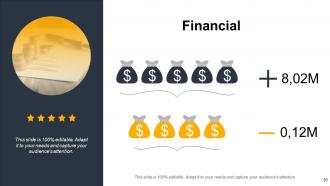
Slide 16: This is a Financial slide. Show your finance related stuff here.
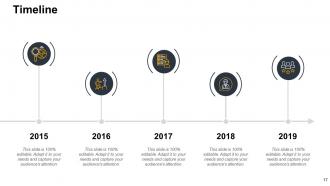
Slide 17: This is a Timeline slide to show information related with time period.
Slide 18: This is an Idea Generate slide to state a new idea or highlight information, specifications etc.
Slide 19: This is a Thanks You slide with address, contact numbers and email address.
Employee Training Roadmap Powerpoint Presentation Slides with all 19 slides:
Use our Employee Training Roadmap Powerpoint Presentation Slides to effectively help you save your valuable time. They are readymade to fit into any presentation structure.







FAQs for Employee Training Roadmap
Honestly, start by figuring out what "good" looks like for each role, then build backwards from there. You'll want clear objectives that actually tie to business stuff - not just random training for the sake of it. Mix up your formats too: workshops, online modules, hands-on practice. That keeps people engaged way better than just one approach. Set up regular check-ins and milestones so folks can see they're making progress. The timeline thing is crucial - people need structure. But here's what really matters: make sure it connects to career growth, not just current job duties. Otherwise you're gonna get major eye rolls and zero buy-in.
Performance reviews are honestly your best starting point - managers usually know exactly where people are struggling. I'd also just ask employees directly what they want to learn. Sounds obvious but people forget to do this! Look at your business goals too and figure out what skills you'll actually need. Industry benchmarks help - maybe your competitors are crushing you in certain areas. Skills assessments work, plus just watching what trips people up day-to-day. Don't rely on one method though. Combining a few sources gives you the real picture of where training will make a difference.
Honestly, tech is a game-changer for employee training. Your LMS platforms help create structured learning paths, while AI tools recommend courses that actually match what people need. Analytics show you skill gaps you didn't even know existed - super helpful for planning. Real-time tracking means you can see what's working instead of just guessing (which let's be real, we all do sometimes). Mobile apps are clutch for remote teams since people can learn wherever. I'd start by looking at your current setup and figuring out where you're blind to employee development. That's usually where the biggest wins are hiding.
Look at test scores and completion rates first - that's the easy stuff. But honestly? Those post-training surveys are gold if people actually tell you the truth about whether it sucked or not. Don't just check right after either - wait like 3-6 months to see if they're really using it. Business metrics matter too: fewer screw-ups, happier customers, whatever makes sense for your situation. I'd probably set up some basic dashboard with maybe 4 key things to watch. Oh and definitely check if people are actually doing things differently on the job - that's where the real magic happens.
Honestly, make it super relevant to what they actually do every day - otherwise you've lost them before you even start. I've sat through way too many boring sessions where people just zone out completely! Try mixing things up with hands-on stuff, group work, maybe some real examples from your own company. People love having options too, like choosing their time slots or topics they're into. Get your managers to actually show up and participate - that makes a huge difference. Oh and definitely follow up later to see if anyone's using what they learned. Shows you care about results, not just ticking boxes.
Oh man, I learned this the hard way! Used to just make boring slide decks and wonder why people looked dead inside. Turns out some folks need visuals - charts, diagrams, all that stuff. Others are better with audio like podcasts or just talking it through. Then you've got the hands-on people who need to actually DO things to learn. Mix everything together in each training - videos, group discussions, written stuff, interactive bits. Honestly sounds like overkill but it works. Nobody gets left behind and people actually stay awake!
Honestly, don't wait until the end to ask for feedback - build it right into the process. I do quick 15-minute check-ins weekly, catches problems before they get messy. Anonymous surveys are your best friend here, people won't sugarcoat things like they do face-to-face. Mix it up too - pulse surveys, suggestion boxes, casual hallway chats. Oh and this part's crucial: actually DO something with what they tell you, then circle back so they know you listened. I've seen managers ask for input then completely ghost people on follow-up. That's how you kill feedback forever.
Honestly, you've gotta make this a regular thing - like quarterly check-ins minimum. Set up Google alerts for your industry stuff and grab some trade publications. Your frontline people are gold here though, they'll spot outdated content way before anyone else does. I swear they're better than any consultant. Partner up with industry groups or vendors too - they usually know what's coming down the pipeline. The trick is building updates into your normal routine instead of doing some massive yearly refresh (which nobody has time for anyway). Maybe start by auditing just one program this month?
Honestly, you'll want to look at both the obvious stuff and the harder-to-measure things. Revenue per employee, productivity bumps, fewer mistakes - that's the easy data. But don't sleep on retention rates and engagement scores either. Those matter just as much, even if your boss doesn't always see it that way. Here's what I'd do: pick your baseline before training starts, then check back in like 3-6 months later. Don't try tracking everything though - grab maybe 3 or 4 things that actually matter for your goals. Some ROI you just can't put a perfect dollar sign on, and that's fine.
Honestly, getting different departments involved makes such a huge difference for training plans. Each team knows what skills they're actually missing - way better than HR just guessing from their office. Sales will tell you they need negotiation skills while engineering wants technical workshops. You can split costs too, which is nice. Like if marketing runs a presentation training, why not let other teams join? It stops departments from working in their own little bubbles, which honestly drives me crazy at most companies. Just have each department pick their top 3 skill needs first, then see where they overlap for group sessions.
Ugh, budget issues are the worst - plus getting leadership to actually care and finding time for people to do training without burning out. Honestly, measuring if anything works is such a pain. Start with tiny pilot programs first so you can show some real numbers. Make training happen during work hours, not after (people already hate their commutes enough). Connect everything to stuff leadership actually cares about - like keeping good employees around or boosting performance metrics. Once you've got some wins to show off, scaling up becomes way easier. Oh, and track concrete stuff, not just "engagement scores" or whatever.
Don't treat onboarding like this separate thing that just stops after two weeks. Map out what people need to know at 30, 60, 90 days first. Then build your other training on top of that foundation. Connect those initial modules directly to your intermediate and advanced stuff - honestly, so many companies mess this part up. New hires should see their whole growth path from day one, not just survive orientation and then wonder what's next. You'll avoid repeating content later too. Just create clear handoff points between the onboarding phase and ongoing development.
Oh man, soft skills training is absolutely critical for employee development. Communication, emotional intelligence, conflict resolution - all that stuff matters way more than people think. I've seen so many technically brilliant people just plateau because they can't work well with others or give decent feedback. Once you move into management? It's basically all soft skills at that point. Don't do those random one-off workshops though - they're pretty useless. You need to weave this training into your development programs consistently from day one. Trust me on this one.
Honestly, start by figuring out what each team actually needs - sales people learn totally different than engineers, you know? Your sales crew probably wants role-playing stuff and competition, while tech folks just want to dive into hands-on labs. I'd survey everyone first about their biggest knowledge gaps and how they like learning. Remote workers usually prefer doing things at their own pace, but office people might be more into group sessions. Skills assessments upfront will save you from guessing wrong. Trust me, there's nothing worse than building training that nobody uses because it doesn't fit how they work.
Dude, check out what these big companies are doing - you can totally copy them. Google has this "Googler to Googler" thing where employees just teach each other. Saves tons of money. Amazon actually pays 95% of tuition costs even if people bail afterward (kinda crazy but smart). Microsoft maps their training directly to promotions, so everyone knows what skills they need. Oh, and Salesforce turned learning into games with Trailhead - honestly pretty genius. My advice? Don't try everything at once. Pick one approach that vibes with your company culture and test it out small first.
-
The Designed Graphic are very professional and classic.
-
Really like the color and design of the presentation.
-
Excellent Designs.