


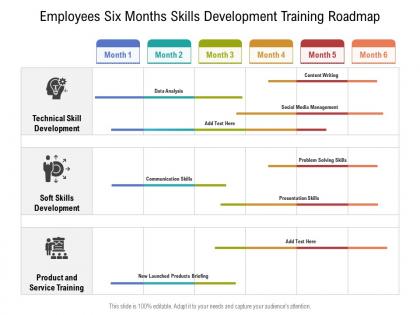
Employees six months skills development training roadmap




Try Before you Buy Download Free Sample Product
 Impress Your
 Audience
 100%
100% Editable
 Save Hours
 of Time


A well thought out action plan makes execution easier and increases the possibility of success significantly. Ensure hitting all the milestones within the deadlines by introducing our fully customizable Employees Six Months Skills Development Training Roadmap. Streamline the work related information, budget, timeframe, key deliverable, landmarks, and major steps involved, all in one place to give an organized overview of the project by utilizing our PowerPoint theme. Minimize time lag and increase work efficiency by providing insight into the process with our comprehensively researched roadmap PowerPoint layout. Color coding helps in highlighting the process and grabs the attention of the audience. Download our handy Employees Six Months Skills Development Training Roadmap to identify the possible problem areas in a much shorter time and propose solutions. Have a productive brainstorming session with your workforce by utilizing our action plan visualization tool.
People who downloaded this PowerPoint presentation also viewed the following :
Employees six months skills development training roadmap with all 2 slides:
Use our Employees Six Months Skills Development Training Roadmap to effectively help you save your valuable time. They are readymade to fit into any presentation structure.
FAQs for Employees six months skills
Honestly, start with figuring out what skills people actually need vs what they have now. Map out clear goals and deadlines - but make them realistic or you'll just stress everyone out. Mix up how people learn too: some hands-on stuff, mentoring, maybe formal training sessions. I'd throw in regular check-ins so you can see what's working and what isn't. Oh, and definitely build in flexibility because everyone learns differently. Some people pick things up fast, others need more time. The whole thing falls apart if you don't adjust along the way.
Start with a skills gap analysis - basically see where your people are vs where they need to be. I'd survey the team directly about what they think they're missing. Managers can spot performance gaps too. Your performance reviews probably have tons of useful info hiding in there. Also think about next year's business goals and work backwards from there. What skills do people actually need to hit those numbers? Oh, and don't sleep on industry trends - that stuff matters more than you'd think. Gather data from all these angles, then just prioritize by what'll make the biggest difference fastest.
Honestly, tech has totally changed how we do training - and it's kinda amazing. You can push out the same content to hundreds of people while actually tracking who's getting it. LMS systems let you build custom learning paths, mobile apps work great for those quick lessons during your commute (I do this all the time), and VR/AR training is wild - you get real practice without any of the danger. The analytics side is where it gets really useful though. You'll see exactly where people are stuck and can fix it fast. Since everyone's remote now anyway, digital training isn't just nice to have anymore. I'd start by looking at what you're already using and find one thing you can automate.
Figure out what your business actually needs first - don't just copy what other companies are doing. If you're going digital, focus on tech skills and getting people comfortable with change. I've watched so many places waste money on random leadership workshops that nobody applies afterward. Get your department heads involved - they know what skills would actually make a difference. Build training around real priorities like keeping customers happy or running things more efficiently. Oh, and track whether it's working by looking at business results, not just who finished the courses.
Track completion rates and test scores first - that's your baseline stuff. But honestly, the real gold is connecting training to actual job performance changes. Takes more work though. Also measure productivity gains, employee satisfaction, and retention rates since those hit your budget directly. One thing I learned the hard way - set up your measurement system BEFORE you launch anything. Otherwise you're just guessing if it worked. Oh, and grab baseline data early so you can actually prove ROI to the higher-ups later.
Stop doing those death-by-PowerPoint sessions nobody pays attention to. Get people involved with breakout groups, role-playing real scenarios, maybe some hands-on simulations. Gamification actually works great - leaderboards and badges sound cheesy but people get weirdly competitive about it. Mix things up with videos and peer learning too. Oh, and survey your team first about how they like to learn. The whole point is making it feel less like sitting in a classroom and more like... I don't know, actually solving problems together? Short answer: participation beats presentation every time.
For complex stuff, instructor-led training is clutch because people can actually ask questions. But honestly? E-learning modules are where it's at - people can rewind when they zone out (which happens way more than anyone admits). Video tutorials work great too, plus those short microlearning bits that don't eat up everyone's day. Hands-on workshops are solid. Mentoring programs rock if you've got the right people. Really depends on what you're teaching and who you're teaching it to. I'd just ask your team how they actually like to learn first.
Honestly, at least once a year but it really depends on what you're training people on. Tech stuff? That needs updating every few months because everything changes so damn fast. Soft skills can chill for 2-3 years if the content's good. Now compliance training - that's a whole different animal. You've gotta update that whenever regulations shift, which could be anytime. My advice? Don't do one giant overhaul. Set up a rolling review schedule throughout the year. Figure out what's most time-sensitive first and hit those areas more often.
Honestly? Give them a buddy who's not their boss - someone who knows which bathroom has the good toilet paper, you know? I'd do a 30-60-90 day plan covering basics, culture, systems. Don't just dump info on them though. Mix it up with hands-on stuff, shadowing, maybe some docs. Check in tons those first weeks because people hate admitting they're lost. Clear milestones help so you both know if it's working. The whole thing should feel interactive, not like drinking from a fire hose.
Match up new people with your best team members from day one - but honestly, only pick the ones who actually like helping others or it'll be awkward. Give mentors a 90-day checklist so they know what to cover. The mentee needs to show up with questions though, can't be one-sided. I'd tie their progress to your regular training stuff and do weekly check-ins. What really works is when mentors explain the why behind procedures, not just the what. Makes everything click faster than formal training alone.
Ugh, where do I even start? Budget's always the first roadblock - leadership loves talking about employee development until they see the price tag. Then there's the whole "when are we supposed to do this" problem since everyone's already swamped. People hate training that feels pointless too, so if it doesn't connect to their actual job problems, good luck getting engagement. Oh, and proving it actually worked? Nearly impossible sometimes. Content gets outdated fast, especially in tech. Honestly though, don't try to boil the ocean - pick one small thing that's genuinely bugging your team and start there.
Just ask them directly - surveys work great, but so do focus groups if you want deeper conversations. The trick is actually doing something with what they tell you (crazy idea, I know). Set up quarterly check-ins asking what skills they're missing. Maybe add a suggestion box where people can drop training ideas whenever. Short surveys hit different than formal reviews - less intimidating. Start simple: "What do you want to learn next quarter?" Then show them how their feedback shaped the actual programs you build. Otherwise people stop responding and you're back to guessing what they need.
Dude, cross-training is a lifesaver! No more panic when someone calls in sick and they're literally the only person who knows how to run that one system. Your team becomes way more flexible, plus people actually stay interested in their jobs instead of dying of boredom doing the same tasks every day. Honestly, I think most people quit because they get stuck in a rut. It's also great for coverage during vacations and helps everyone understand what their coworkers actually do all day. Just start simple - have two people in similar roles shadow each other for a couple hours weekly.
Honestly, block out specific training times first or people will just keep pushing it off. Mix up video calls with self-paced stuff so it doesn't get boring. The real secret sauce? Have managers do quick check-ins after each session - sounds obvious but most companies skip this step completely. Interactive content works way better than just talking at people for an hour. Oh, and definitely get those calendar invites sent out for the whole first month right away. People need to see it's actually happening, not just some vague "we'll do training soon" thing.
ATD has solid research reports if you're into the formal stuff. LinkedIn Learning and Coursera both have training design courses too. Honestly though? The L&D Reddit community is where I spend way too much time - people share real experiences there. HR blogs and podcasts are clutch for staying current. You could also just reach out to L&D teams at similar companies. Most folks actually love talking shop about what's working. Oh, and case studies from your industry will show you what others tried. Pick whatever matches your biggest headache right now and start there.
No Reviews