


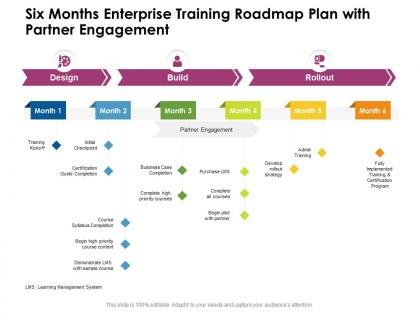
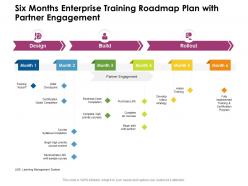
Six months enterprise training roadmap plan with partner engagement




Try Before you Buy Download Free Sample Product
 Impress Your
 Audience
 100%
100% Editable
 Save Hours
 of Time


Utilize our pre build Six Months Enterprise Training Roadmap Plan With Partner Engagement to present your plan of action in the most effective way. Reduce the paperwork and showcase how different activities are linked to each other by incorporating this attention grabbing PowerPoint theme. This completely editable roadmap PPT layout is suitable to fit all your needs and to have a structured outline of the entire process flow using color coding. Provide guidelines to your teammates about the progression process by employing our PPT theme. Team members can easily be designated into teams by accessing the work milestones to be accomplished within the timeframe. You can easily modify the PowerPoint slide according to real time situations. Download our stunning Six Months Enterprise Training Roadmap Plan With Partner Engagement, and you are good to go to prove your expertise in strategic planning.
People who downloaded this PowerPoint presentation also viewed the following :
Six months enterprise training roadmap plan with partner engagement with all 2 slides:
Use our Six Months Enterprise Training Roadmap Plan With Partner Engagement to effectively help you save your valuable time. They are readymade to fit into any presentation structure.
FAQs for Six months enterprise training roadmap plan
Honestly, you need to nail down five things. Start with clear learning goals that actually connect to what your business needs - don't just wing it. Do a skills gap analysis so you know where people are now vs where they should be. For content, mix things up with different delivery methods (death by PowerPoint is real). Set actual deadlines and milestones you can track. Oh, and build in ways to get feedback and measure if it's working. I'd map your current situation against where you want to be first - gives you the clearest roadmap of what you're dealing with.
Start with a skills gap analysis - compare where your team is now vs where they need to be. Surveys and manager interviews work well for this. Performance reviews usually show patterns too. Honestly, customer feedback is gold since they'll call out service issues way before you spot them internally. Also check what's coming up business-wise - new markets, tech rollouts, whatever. That stuff creates specific training needs you can't ignore. The trick is getting input from different sources instead of just winging it. Oh, and don't sleep on exit interviews if you've had turnover lately.
Honestly, tech has completely changed how companies do training now. Instead of boring classroom stuff, you've got AI platforms that actually personalize what people learn. Mobile learning means your team can study whenever - during lunch, commuting, whatever works. The analytics side is huge too because you can finally see who's struggling and where the gaps are. VR training is getting crazy good, especially if you need hands-on practice. I'd probably start small though - just pick one new platform to test this quarter after you figure out what you're already using.
Most companies look at completion rates and test scores first - pretty basic stuff. But the good ones dig deeper into actual business results like better performance reviews or people sticking around longer after training. ROI calculations are where it gets messy though, honestly half the time they're just guessing at the numbers. I'd focus on engagement too - you can tell when someone's just clicking through versus actually learning something. Pick maybe 3 metrics that actually matter for what you're trying to accomplish. Don't go overboard measuring everything or you'll drown in data.
Don't separate soft skills into their own weird little corner - weave them right into your technical tracks. Match them to specific roles: communication for senior devs, leadership stuff for team leads. I've watched so many companies just dump all the "people skills" into boring workshops that everyone ignores. Way better to embed them where they actually make sense. Like pairing negotiation with sales training, or conflict resolution with project management. Makes them feel crucial for moving up instead of just fluff nobody cares about.
Honestly, mix things up based on how people actually learn best. Some folks need to see stuff - throw in videos or infographics. Others have to physically do it to get it (that's totally me). Run workshops alongside reading materials, maybe add some case studies or simulations. Survey your team first about what works for them. Then build like 2-3 different ways to cover the same content. Self-paced modules work great for some people, while others thrive in group settings. Don't force everyone through identical training - that's just setting people up to zone out or struggle.
Make the content actually matter to what they're dealing with day-to-day - generic training sessions are basically torture. Mix things up with breakouts, real company case studies, hands-on stuff. People zone out when you just lecture at them for hours. Let them vote on topics or pick their own learning paths sometimes. Active participation beats passive listening every time. Oh, and definitely do quick surveys after each session - you'll be surprised what actually sticks vs. what you think is working. The whole point is keeping them engaged instead of checking their phones under the table.
Honestly, start with whatever your company's actually trying to achieve this year - revenue goals, expanding into new markets, that kind of thing. Map your training directly to those priorities instead of just doing random stuff because it sounds good. Say leadership wants better customer retention. Focus your roadmap on customer service skills, not boring compliance training everyone ignores anyway. The whole point is connecting what people learn to real business results. Track how training actually impacts your metrics, and don't be afraid to pivot when priorities change. Most places shift focus like every six months, so you'll need to stay flexible.
If you've got budget, check out Cornerstone OnDemand, TalentLMS, or Docebo - they're solid enterprise options. But honestly? Don't overthink it. Notion and Airtable work great for most teams, and I've seen people do amazing things with just Google Sheets. The fancy tools don't matter if nobody actually uses them consistently. Before buying anything new, look at what you're already paying for. Maybe something you have can handle basic roadmap stuff. Start simple and upgrade later if needed.
Honestly? Every 6-8 weeks works best from what I've seen. Quarterly is the bare minimum but things change so damn fast now - new tech, regulations, whatever. Do a quick monthly check to see if anything major shifted, then go deeper quarterly to actually see what's working. The monthly thing takes like 20 minutes but saves you from scrambling later. Oh and put it on your calendar now or you'll totally forget when stuff gets crazy. I learned that the hard way lol. Most companies say they'll review regularly then... don't.
Honestly, the hardest part is dealing with all the department heads who think their stuff should be priority
No Reviews