


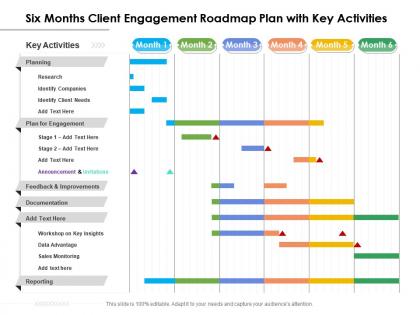
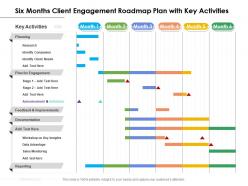
Six months client engagement roadmap plan with key activities




Try Before you Buy Download Free Sample Product
 Impress Your
 Audience
 100%
100% Editable
 Save Hours
 of Time


Visualize your work plan and communicate your ideas impactfully with our pre designed Six Months Client Engagement Roadmap Plan With Key Activities. Showcase the detailed overview of the project, the key deliverables, and the milestones to be achieved with the help of our fully customizable PowerPoint layout. You can easily emphasize on the project goals and discuss all the activities involved in an easy to comprehend manner by utilizing our professionally designed PPT theme. This roadmap PowerPoint layout is a perfect strategic planning tool that can help in keeping the project on track. With our attractive PowerPoint theme, you can articulate the workflow, track the work progress, and have a clear vision of the goal to be achieved. Download this versatile Six Months Client Engagement Roadmap Plan With Key Activities and save your hours of work.
People who downloaded this PowerPoint presentation also viewed the following :
Six months client engagement roadmap plan with key activities with all 2 slides:
Use our Six Months Client Engagement Roadmap Plan With Key Activities to effectively help you save your valuable time. They are readymade to fit into any presentation structure.
FAQs for Six months client engagement roadmap plan
So there are four main stages: discovery, mapping, activation, and optimization. First, you dig into interviews and data to understand where your client is now versus where they want to be. Then map out the ideal touchpoints and spot the gaps. Activation is when you actually build out those experiences - that's the fun part. After that, keep tweaking based on what the data tells you. Oh, and seriously - don't skip discovery like most people do. I've seen so many roadmaps crash because they didn't bother getting real client insights first. That foundation work makes or breaks everything.
Track your usual stuff - engagement rates, response times, retention numbers. But the real gold is in how clients actually behave with you. Are they bringing you new projects or just answering when you call them? That tells you everything. I'd set up monthly check-ins and send out quick surveys (nothing fancy). Dashboard helps too, though I always forget to update mine. Compare your numbers to industry standards because feeling good about terrible results is... well, terrible. Direct feedback beats guessing every time.
Honestly, just pick a decent CRM and stick with it - HubSpot, Salesforce, or Pipedrive all work great. HubSpot's free version is surprisingly good if you're starting out. You can track emails, calls, meetings, the whole pipeline thing. Calendly is a lifesaver for scheduling too, saves you from that annoying email tennis. Maybe add Slack for team stuff but honestly that's secondary. The biggest mistake people make? Setting up like three different systems and then none of them have complete info. Better to have one system that's actually updated than a bunch of half-empty databases nobody trusts.
Start with mapping out client personas - maybe 3-4 buckets max. C-suite folks want quarterly reviews and high-level strategy stuff, while your daily users need regular check-ins and hands-on help. Figure out communication preferences too (some people literally refuse phone calls, which still baffles me). Email vs Slack vs in-person makes a huge difference. Content depth matters - tech people want all the details, but executives just want the summary. I'd audit your current clients first and sort them into these groups, then build specific outreach sequences for each type. Way more effective than the spray-and-pray approach.
Honestly, feedback is like your GPS - shows you what's actually hitting vs what you think should work. I'd grab it from every client touchpoint and tweak your messaging and timing based on what you're hearing. Too many teams (mine included, whoops) build these things in isolation then get confused when clients don't bite. The trick is asking clients about their actual experience, then doing something with their answers. Pick 2-3 spots in your roadmap where you can collect feedback consistently. Short surveys work great. Then adjust based on what they tell you.
Honestly, start by figuring out where you're already talking to clients - email, calls, social media, whatever. Then make sure your messaging doesn't sound completely different across each one. Nothing's worse than having to explain your situation three times because nobody talks to each other, you know? I'd check what you're doing now and see where things feel disconnected. Focus on where your clients actually hang out instead of trying to be everywhere. Pick maybe 3 channels max and get those working together smoothly first. Way better than doing 10 things poorly - learned that one the hard way.
Honestly, the biggest mistake is going way too broad or ambitious from day one. People cram every single touchpoint in there and then wonder why nothing gets executed properly. Here's what kills me though - so many folks build these gorgeous roadmaps without even checking with their client first about what actually matters to them. Like... why?? Also don't forget to build in those check-in points where you can pivot if needed. Oh, and starting small is clutch. Way better to nail a few things than half-ass everything on some massive wish list.
Track your clients' email opens, website clicks, and how often they actually engage with you - that's where the real insights are. Don't get sucked into vanity metrics that look pretty but tell you nothing useful. Build dashboards that flag when someone's going quiet so you can jump on it early. Then actually DO something with the data: adjust when you reach out, send stuff they care about, call them before they ghost you. Honestly, most people overthink this - just pick one or two metrics that matter and expand from there.
Honestly, it comes down to staying in touch consistently and actually following through on your word. Check in regularly - like, not just when you want something from them. Really listen when they mention shifting priorities or new headaches they're dealing with. I've watched so many good partnerships fall apart because people get lazy after landing the initial deal. Spot problems early before they blow up, and don't dodge those awkward conversations. Maybe set up quarterly reviews or whatever works to stay plugged into their big-picture stuff, not just the day-to-day project weeds.
Honestly? I'd do a full review every quarter, but peek at it monthly for quick fixes. Don't be a slave to the schedule though - if clients are acting weird or your priorities get flipped upside down, jump on it immediately. The quarterly thing gives you space to see what's actually moving the needle vs. what you thought would work. Monthly check-ins are clutch for smaller stuff. Like maybe that email campaign totally bombed or you stumbled onto some new touchpoint that's performing crazy well. Put those quarterly reviews in your calendar right now or they'll never happen. Trust me on that one.
Track your NPS and CSAT scores first - those are your bread and butter metrics. Retention rates and contract renewals tell you if people actually stick around. But honestly, the qualitative stuff is where you get the real gold. Do exit interviews, regular check-ins, see how engaged clients are in meetings. Response times matter too. I'd throw together a simple dashboard to watch this monthly (nothing fancy, just something that works). Expansion revenue from existing clients is huge - shows they're not just happy, they're buying more. Catch problems early this way.
Dude, start with automating your welcome emails - that's the easiest win. Then maybe add a chatbot for basic questions so you're not answering "what are your hours" a million times. Your CRM can actually trigger follow-ups based on what clients do, which is pretty cool. Email sequences for onboarding are clutch too. Oh, and get scheduling software! The back-and-forth email dance to book one meeting is honestly the worst. You can segment clients and send targeted stuff automatically once you get the hang of it. The time you'll save is insane.
Honestly, start with active listening workshops - most teams completely blow this off but it's where everything begins. Then hit emotional intelligence and communication skills. Your reps need consultative selling techniques too, plus training on discovery questions that actually dig into client pain points instead of just throwing out random pitches. Oh, and some basic psychology stuff around rapport building is clutch. I know it sounds like a lot, but active listening is your quick win. They can literally use it tomorrow on calls and see results right away.
Okay so first thing - you gotta actually know your clients beyond just their company name. I'm talking communication style, what projects they've done before, industry pain points, hell even when they like to meet or how they take their coffee. Sounds basic but people skip this constantly then act surprised when everything feels robotic. Your CRM should track all this stuff. Set reminders to bring up old conversations, use examples from their world specifically, and match however they communicate. Short version: audit what client info you have now and figure out what's missing.
Dude, engaged clients are literally everything for your business. They stay longer, spend way more, and actually refer people to you. I've watched companies bump their retention up 30-40% just by getting better at this stuff. Higher lifetime value, less churn - the numbers don't lie. Your engaged clients? They're the ones who'll expand contracts and try whatever new thing you're selling. Oh and definitely start measuring this if you haven't - response rates, how many show up to meetings, whether they're actually using your features. Trust me on this one.
No Reviews