


Talent acquisition process powerpoint slide designs




Try Before you Buy Download Free Sample Product
 Impress Your
 Audience
 100%
100% Editable
 Save Hours
 of Time


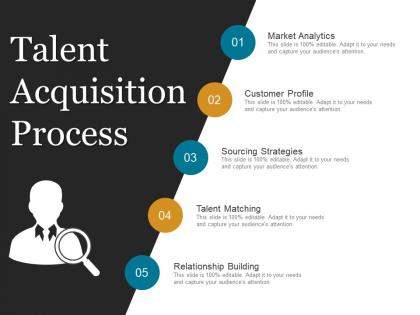
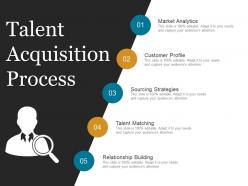
Get this Talent Acquisition Process PowerPoint Slide Designs template to run your business successfully. When you want to make anyone understand the in-depth detail regarding the talent acquisition topic, then the talent acquisition process presentation template act as an informative tool for you. Our professionally designed talent acquisition PowerPoint slide is an ideal slide for recruiters, human resource executives, company owners, managers, and many more. The talent acquisition PPT template demonstrates the entire concept with professional graphics along with well-researched data. Explain the roles and responsibilities required for carrying out any task using this talent acquisition slide. The talent acquisition skills template for PowerPoint illustrates the basic concept of how talent needs to be acquired. Download the PPT layout now and illustrate the process of acquisition in no time.
People who downloaded this PowerPoint presentation also viewed the following :
Talent acquisition process powerpoint slide designs with all 5 slides:
Bring fluctuation conditions to an end with our Talent Acquisition Process Powerpoint Slide Designs. It helps fight instability.
FAQs for Talent acquisition process
So here's the deal - start with figuring out exactly what role you need (most people rush this and regret it). Then go hunting for candidates through job boards, referrals, LinkedIn, whatever works. Screening and interviews come next - this is where you separate the good from the meh. Once you pick someone and they accept, onboarding is huge. Seriously, I've seen companies nail the hire but totally blow the first week and lose people. Oh, and spend extra time on that initial job analysis part. Trust me, it prevents you from getting a bunch of random applications that waste everyone's time.
Look, your employer brand can totally make or break recruiting. Candidates always stalk your company online before applying - it's just what they do now. Strong brand? You're golden. People show up already wanting to work there, which honestly makes everything way easier. Weak brand though, and you're basically pushing a boulder uphill while competitors cruise past you. The trick is matching what you say in job posts with what actually happens once someone's hired. I'd start by googling your own company and seeing what pops up first.
Honestly, just pick one tool that fixes your biggest headache first - don't try to overhaul everything. ATS systems automatically screen resumes so you're not drowning in applications. Chatbots handle those repetitive initial questions (game changer). Video screening saves you from the endless phone tag nightmare for first rounds. AI spots patterns in candidate pools you'd totally miss otherwise. The analytics part is pretty cool too - shows exactly where people bail or your process drags. I swear by starting small though, way less overwhelming.
Honestly, data analytics will show you what's *actually* working in your hiring process - not just what you assume is working. Track which job boards give you solid candidates and where your interview process gets stuck. You can even figure out who's likely to accept offers or stick around long-term. I'm kind of a data nerd so maybe I'm biased, but the insights are incredible. It'll also reveal spending patterns and unconscious bias you didn't know existed. My advice? Start simple - just track time-to-hire for a month and watch the patterns emerge.
Honestly, you gotta mix it up with sourcing - can't just rely on one thing. Your ATS and employee referrals are solid gold for finding people who actually fit. LinkedIn's obvious but use those boolean searches smart, don't just spam everyone. Niche job boards for your industry work way better than people think. GitHub's clutch if you're hiring tech folks. Oh, and university partnerships are perfect for entry roles - sometimes I forget how good those connections can be. Just track what's actually bringing you quality people so you're not wasting time on dead-end channels.
Dude, candidate experience is huge for hiring success. Poor treatment doesn't just lose that person - they'll trash you online and tell everyone. When people feel respected during your process, they actually accept offers and refer their friends. Clear communication matters, keep timelines reasonable, and yeah even give feedback to people you reject. I know it's extra work but honestly? It's just being decent. Plus those candidates might become customers someday. Your future hires will appreciate the effort.
Track these five things: time-to-fill, quality of hire, cost-per-hire, offer acceptance rate, and candidate experience scores. Time-to-fill shows if your process is efficient or dragging on forever. Quality of hire tells you whether people actually perform well and don't bail after three months. Cost-per-hire matters for budgeting, but don't get obsessed with going cheap - I've seen companies hire duds just to save money. Your offer acceptance rate is huge too. If people keep turning you down, that's a red flag. These metrics will show you what's broken in your hiring process.
Start by posting jobs in different places and using language that doesn't accidentally exclude people. Seriously, some job descriptions sound like they're written for robots. Train your hiring managers on unconscious bias - that stuff is everywhere, even when we think we're being fair. Mix up your interview panels if you can, and ask everyone the same core questions. Oh, and definitely track where candidates drop off in your process. Numbers don't lie. The whole thing works way better when you build it into your system instead of just crossing your fingers and hoping diversity magically happens.
Oh man, the market's rough right now. Specialized roles? Good luck finding anyone. Salary expectations just keep going up and up. And don't even get me started on candidates who ghost you after three rounds of interviews - like, seriously? Remote work killed geography too, so now you're competing with companies from everywhere. People are super picky about culture stuff now, which I get but makes everything harder. Speed up your interview process though, that actually helps. And work on your employer brand - but make it real, not some fake corporate BS. Nobody's buying that anymore.
Yeah so LinkedIn's the obvious one for posting jobs and finding people actively looking. But honestly, Instagram and TikTok are where you'll find younger candidates - they want to see real workplace vibes, not corporate BS. Twitter works well for jumping into industry chats and making your team look smart. The trick is keeping it genuine. Have your current people post about work naturally first. Then you can build on that with job posts and culture stuff. Oh, and don't make everything look too perfect - people can smell fake from a mile away.
Dude, remote work totally blew up the hiring game. Your talent pool is literally worldwide now - no more being stuck with whoever lives nearby. Finding specialized skills? So much easier. But here's the flip side: every company globally is fighting for the same people, so you better have solid pay and perks. Video interviews are obviously the norm now, which is... fine, I guess, but figuring out if someone's a culture fit through a screen is tricky. Oh, and definitely update your job posts to highlight remote benefits and communication skills. Competition is fierce out there.
Honestly, just get everything straight from day one - who's doing what, how you'll give feedback, realistic timelines. I can't tell you how many times I've watched this stuff implode because people think someone else is handling follow-ups. Both of you need to agree on what you're actually looking for in candidates before anyone starts reaching out. Quick check-ins after each interview round work way better than waiting till the end. Oh, and seriously - sometimes just call instead of going back and forth over email forever. Set up some shared doc where you can both dump notes and see where each person stands.
Test your tech beforehand - seriously, nothing's worse than scrambling with a broken mic mid-interview. Good lighting matters too, and find somewhere quiet with a decent background. Always send the meeting link plus a backup phone number because technology loves to fail at the worst possible times. I'd structure questions the same as in-person but maybe add extra small talk since remote feels weird initially. Screen sharing works great for walking through role details. Oh, and give candidates your contact info upfront in case their connection dies - shows you're prepared and they won't panic if something goes wrong.
Yeah, so basically each industry has its own weird hiring quirks you gotta work with. Tech people want coding tests and remote work options. Healthcare is all about those certifications and making sure everything's compliant - super strict stuff. Finance? They love their formal processes and will background check you to death, honestly it's kind of intense. Creative fields are totally different though - they care way more about your portfolio and whether you'll vibe with the team than some boring interview. I'd say start by chatting with hiring managers from different sectors to figure out what actually bugs them about current processes, then tweak your approach from there.
Honestly, your company values are like your secret weapon for hiring right now. Everyone's chasing the same talent, but candidates don't just want a paycheck anymore. They're looking for places that actually match what they believe in - could be innovation, decent work-life balance, making a real difference, whatever clicks for them. Put those values right up front in your job posts and during interviews. Way easier than trying to sell someone on your culture after they're already skeptical. Just don't fake it though - people can smell BS from miles away.
-
Much better than the original! Thanks for the quick turnaround.
-
Awesome use of colors and designs in product templates.