


Recruitment process presentation graphics





Try Before you Buy Download Free Sample Product
 Impress Your
 Audience
 100%
100% Editable
 Save Hours
 of Time


Instigate folks to jog with our Recruitment Process Presentation Graphics. Get them indulging in healthy exercise.
People who downloaded this PowerPoint presentation also viewed the following :
Content of this Powerpoint Presentation
Description:
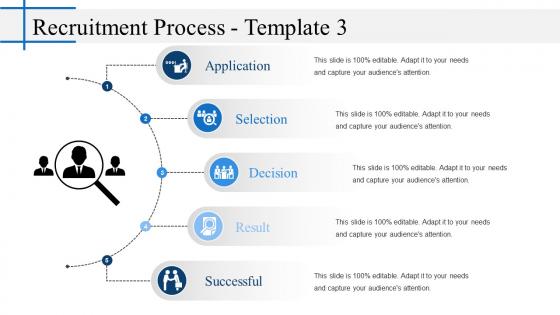
This image displays a PowerPoint slide titled "Recruitment Process," outlining the sequential stages involved in recruiting new employees. The template has a light blue and white color scheme, with five main text elements accompanied by corresponding icons. Each stage is numbered and connected by a dotted line which indicates the flow from one step to the next.
1. The first stage is "Application," represented by an icon of a person in front of a laptop, implying submission of applications by candidates.
2. The second stage is "Selection," depicted with three figures and a magnifying glass, suggesting the screening and shortlisting of candidates.
3. "Decision" is the third stage, shown with icons of three individuals, likely indicating the decision-making process involving multiple stakeholders.
4. The fourth stage, "Result," features a loudspeaker icon, representing communication of the outcome, whether an offer or rejection.
5. The last stage is "Successful," symbolized by two figures with a check mark, which denotes the successful hiring and onboarding of a candidate.
Use Cases:
This slide template can serve various industries due to the universal nature of recruitment processes. Here are seven industries where the template could be effectively utilized:
1. Human Resources:
Use: To train HR professionals on recruitment workflow
Presenter: HR Manager
Audience: New HR team members
2. Tech Startups:
Use: To explain the hiring process during company onboarding
Presenter: CEO or Talent Acquisition Lead
Audience: New employees and investors
3. Education:
Use: To instruct students on HR management practices
Presenter: University Lecturer
Audience: Business or HR management students
4. Healthcare:
Use: For briefing on the hiring process of medical staff
Presenter: Healthcare Administrator
Audience: HR department staff
5. Retail:
Use: For outlining store-level employee recruitment strategy
Presenter: Retail Operations Manager
Audience: Store Managers
6. Manufacturing:
Use: To describe the recruitment cycle for factory workers
Presenter: Plant HR Coordinator
Audience: Supervisors and Department Heads
7. Hospitality:
Use: For detailing the selection process of hotel staff
Presenter: Hotel HR Director
Audience: Recruitment team and department managers
Recruitment process presentation graphics with all 5 slides:
Display dexterity at the helm with our Recruitment Process Presentation Graphics. Ensure accurate changes in course.
FAQs for Recruitment
Honestly, I'd hit three main things: can they actually do the work, will they fit in with your team, and do they seem like they'll grow? Skills are obviously important - check their technical stuff and experience. But here's the thing, motivated people can learn most skills anyway. What you can't really teach is whether someone will click with your company culture. I always look for curiosity and how they bounce back from feedback. Also pay attention to what questions they ask you - good candidates usually have thoughtful ones about the role itself. That combo will weed out most of the duds pretty quickly.
Ditch the "we're like a family" garbage - literally every company says that. Get real employee quotes instead. Film short clips of your team talking about what it's actually like working there. Show photos from genuine events, not staged corporate nonsense. Have current employees co-present parts of your pitch. Be honest about workspace vibes and real perks that matter. Here's the thing though - don't hide challenges either. Candidates smell BS from miles away. You'll want them picturing themselves there, so authenticity beats polish every time. Show, don't just tell.
Your company's reputation as a workplace is everything when you're trying to hire good people. Candidates will stalk your Glassdoor reviews, check out your social media, and see what current employees actually say about you. Nobody wants to work somewhere that sucks, you know? It's honestly like dating - you want people genuinely excited to join your team, not just desperate for any job. The best talent has options, so they'll pick companies with solid reputations. Show off your culture authentically and highlight what actually makes your workplace great. Don't fake it though, people see right through that stuff.
Honestly, tech can be a game-changer for recruiting if you don't go overboard. Start with an ATS to filter resumes automatically - saves so much time. Chatbots handle basic candidate questions while you focus on actual interviews. Video platforms kill the back-and-forth scheduling mess (seriously, why did we deal with that for so long?). AI sourcing pulls candidates from LinkedIn and job boards you'd never think to check. The analytics part is clutch too. You'll actually see which job sites work best for different roles. Pick one tool first though - whatever's your biggest headache right now.
Honestly, I'd start with the big three: time-to-hire, cost-per-hire, and quality of hire. The first two are pretty straightforward - how long it takes and what you're spending. Quality's where it gets interesting though. Look at performance reviews after 90 days, retention rates, how happy managers are with new hires. Oh, and don't sleep on candidate experience scores because people definitely talk. Once you've got those dialed in, you can mess around with fancier stuff like which job boards actually work and conversion rates through your pipeline.
First thing - audit your job descriptions and ditch any weird coded language or random requirements that shut people out. Post on different job boards too, not just the same old ones everyone uses. Mix up your interview panels with people from different backgrounds. Oh, and standardize your interview questions so bias doesn't creep in as much. Be upfront about salary ranges from the start - candidates appreciate that honesty. Offer flexible interview formats if you can. But here's the real thing: you've gotta actually follow through on inclusive decisions, not just go through the motions for appearances.
Dude, flip it around - start with what THEY get out of it, not what you need from them. Talk about growth opportunities and actual impact first. Then list the day-to-day stuff. Most job posts are basically just boring grocery lists anyway. Be real about what you actually need vs. what would be cool to have. Skip the corporate BS language - nobody talks like that in real life. Throw in salary ranges if you can swing it. Oh, and actually describe your culture honestly. People want to know if they'll hate coming to work every day. Read your draft out loud before posting it. If it sounds like a robot wrote it, candidates will bounce immediately.
Dude, analytics totally changed how I hire people. Instead of just going with my gut, I can actually see which job sites give me decent candidates and where people get stuck in the process. Time-to-hire, retention rates - all that stuff becomes way clearer. The bias thing is huge too since you're looking at real numbers instead of just "vibes." Honestly took me forever to realize successful hires follow patterns you can spot. Start with tracking one thing consistently - maybe don't go crazy trying to measure everything at once like I did.
Honestly, blind resume screening is probably the biggest win - just strip out names and other identifying stuff before you look at them. Standardized interview questions help too, so you're not asking random things based on gut feel. I'd also try getting different people on your interview panels if you can swing it. Skills tests work way better than just chatting sometimes, depending on the role obviously. The main thing is being consistent with everyone - same process, same questions, same scoring. Maybe start with just the standardized questions since that's easiest to implement? Once that feels normal you can add the other stuff.
Honestly, candidate experience is make-or-break for recruiting. Poor treatment? Those people will trash you on Glassdoor faster than you can blink. But here's the thing - even candidates you reject can become your biggest advocates if you treat them well. Clear communication and quick feedback go a long way. They'll refer friends, maybe reapply down the road. I've seen companies completely tank their reputation because they ghosted people or dragged out the process forever. Walk through your hiring process like you're the candidate - where does it suck? Fix those spots first.
Dude, going remote opens up your hiring to literally anyone with wifi - it's wild how much that changes things. You'll be doing video interviews obviously, but pay way more attention to how people communicate and if they can actually work without someone breathing down their neck. Honestly the competition gets pretty brutal since every company is now hunting for the same remote workers. Show off your culture through virtual stuff (team calls, whatever), and make your onboarding smooth as hell. Nobody wants to deal with clunky digital paperwork when they're already nervous about starting somewhere new.
Honestly, social media beats job boards every time for finding the right people. LinkedIn's obvious for most roles, but Twitter's where all the good developers hang out, and creatives are all over Instagram. First figure out where your dream candidates actually spend time online - then show up there with real content about your culture, not just boring job posts. Employee spotlights work great too. I'd focus way more on being genuine than constantly spamming links. Oh and hashtags still matter more than people think they do.
Dude, referral programs are seriously worth it. Your employees basically do the screening for you - they're not gonna recommend someone who sucks, right? The people who get hired this way usually stick around longer too, which is huge. Way cheaper than dealing with recruiters constantly. Plus these candidates already get what your company's about since they heard it from someone on the inside. Honestly, even a basic bonus system works - like $500 or whatever. People start thinking "oh wait, my college roommate would be perfect for this." Faster hiring process too since there's already some trust built in.
Honestly, just tailor your pitch to what each group actually gives a damn about. Tech people want the juicy stuff - your engineering culture, development processes, interesting problems they'll tackle. Sales folks? They're literally just thinking about money most of the time, so hit them with commission structures and territory potential. Leadership roles are different - they care more about strategic vision and where the company's headed. Do some homework on each department first. Ask hiring managers what candidates usually wonder about, then structure your whole presentation around those specific interests. Way more effective than some generic one-size-fits-all approach.
Honestly, most people just rush it because they're desperate to fill the spot. Bad idea. Write out what you actually need first - vague job posts attract random applicants. I see managers fall for the "culture fit" thing all the time, then realize the person can't do basic tasks. Structured interviews beat gut feelings every time. Oh, and actually call those references! Half the disasters could've been avoided there. My old boss used to say hiring slow saves you from firing fast, which sounds cheesy but it's true. Consistent questions help too.
-
Perfect template with attractive color combination.
-
Great quality product.