

Talent Acquisition Process Framework Powerpoint Presentation Slides HB V




Try Before you Buy Download Free Sample Product
 Impress Your
 Audience
 100%
100% Editable
 Save Hours
 of Time


Talent acquisition is essential for finding and hiring the right people in an organization. Check out our professionally designed Talent Acquisition Process Framework template. It provides information about the Internal hiring process policy. The complete deck incorporates the Internal hiring guidelines and showcases the Internal recruitment process. Further, the HR Talent Acquisition Manual elucidates the organizations Recruitment action plan along with the Eligibility criteria to be considered for the open position. The module exhibits the Internal hiring decision-making process and the organizations internal job posting strategies. Lastly, it discusses the Organizations Screening criteria with the Interview questions guidelines for the recruitment process. Download this 100 percent editable HR Talent Acquisition guide and get access to our highly researched and skillfully designed product.
People who downloaded this PowerPoint presentation also viewed the following :
Content of this Powerpoint Presentation
Slide 1: This slide introduces Talent Acquisition Process Framework. Commence by stating Your Company Name.
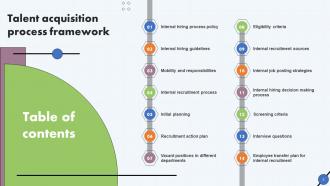
Slide 2: This slide showcases the Table of contents.
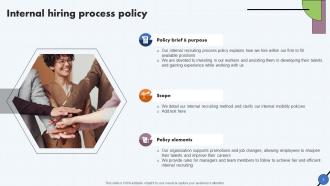
Slide 3: This slide provides information about the Internal hiring process policy.
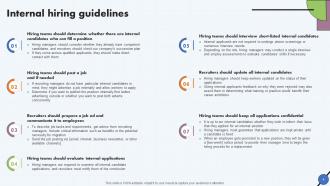
Slide 4: This slide indicates the Internal hiring guidelines.
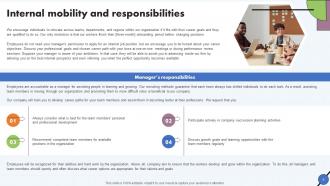
Slide 5: This slide exhibits information about the Internal mobility and responsibilities.
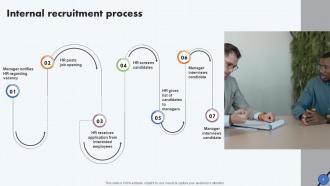
Slide 6: This slide illustrates the Internal recruitment process.
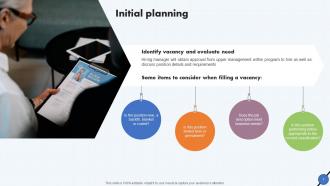
Slide 7: This slide outlines the Topics of Initial planning.
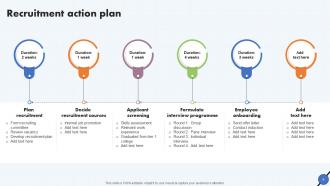
Slide 8: This slide elucidates the organization's Recruitment action plan.
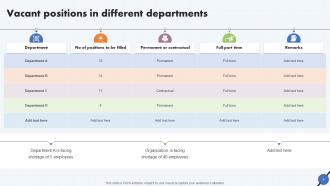
Slide 9: This slide highlights information regarding the Vacant positions in different departments.
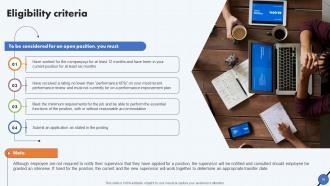
Slide 10: This slide defines the Eligibility criteria to be considered for the open position.
Slide 11: This slide indicates information about the Quick Handbook for Internal Mobility.
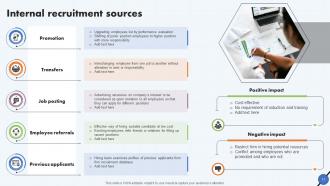
Slide 12: This slide incorporates the Internal job posting strategies of the Company.
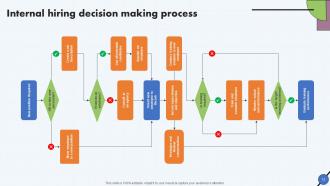
Slide 13: This slide illustrates the Internal hiring decision making process.
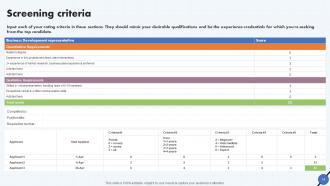
Slide 14: This slide presents the Organization's Screening criteria.
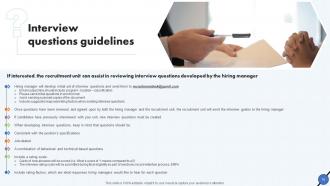
Slide 15: This slide showcases the Interview questions guidelines for the recruitment process.
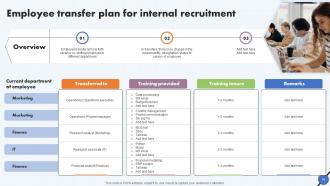
Slide 16: This slide mentions about the Employee transfer plan for internal recruitment.
Slide 17: This slide lists the Contact Details of the Company.
Slide 18: This is the Icon slide slide containing all the Icons used in the plan.
Slide 19: The purpose of this slide is to elucidate Additional information.
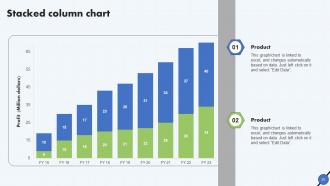
Slide 20: This is the Stacked column chart with related imagery.
Slide 21: This is Our team slide. State the information related to your team members here.
Slide 22: This is Our goal slide for depicting the Organization's long-term goals.
Slide 23: This is the Puzzle slide with related imagery.
Slide 24: This is the Thank you slide for acknowledgement.
Talent Acquisition Process Framework Powerpoint Presentation Slides HB V with all 29 slides:
Use our Talent Acquisition Process Framework Powerpoint Presentation Slides HB V to effectively help you save your valuable time. They are readymade to fit into any presentation structure.








FAQs for Talent Acquisition Process Framework Powerpoint Presentation
Okay so basically you've got six main steps: planning, sourcing, screening, interviews, picking someone, then onboarding. First figure out what roles you actually need and what skills are missing. Cast a wide net - job boards, referrals, LinkedIn, wherever talented people lurk online these days. Screen resumes and do quick phone calls to weed people out. Then comes the fun part: structured interviews covering both behavioral stuff and technical skills. Make your choice and onboard them right so they don't jump ship after two weeks. Honestly, most companies rush through the planning phase but it's just as crucial as everything else.
Honestly, employer brand is like the difference between people wanting to date you vs just swiping right on everyone. Strong brand pulls in candidates who actually get your vibe, so you're not wasting time on random applications that go nowhere. You get to be pickier too since quality people are genuinely excited about working there. The cool part? Even rejected candidates become mini-ambassadors if they had a good experience. Job posts, interviews, the whole process - just keep it real and show what your culture's actually like. Way better than trying to sound perfect and attracting the wrong people.
Honestly, tech runs everything in recruiting these days. AI screens resumes, ATS systems track your whole pipeline, and those chatbots answer questions round the clock. Video interviews blew up after COVID (no surprise there). Predictive analytics can tell you who'll actually stick around too. The automation cuts out so much busywork - I'm talking hours saved daily. But here's the thing: you still need that personal connection with candidates. Can't automate genuine relationships, you know? I'd start by looking at what you're doing manually right now. Bet there's way more you can automate than you think.
Honestly, just focus on the basics first. Time-to-fill shows how long you're leaving roles empty. Quality of hire is huge - check how new hires perform after 6 months. Cost-per-hire matters but don't obsess over it if you're getting solid people. Candidate experience scores tell you if your process sucks (which candidates will definitely let you know about). Track which recruiting channels actually work vs the ones that just waste time. Oh, and retention rates - there's no point hiring fast if everyone quits. Pick maybe 3 metrics max. Seriously, don't try measuring everything at once or you'll go crazy.
Ugh, where do I even start? Finding decent candidates is rough right now. Then you're competing with everyone else throwing money around, plus your own company's slow-as-molasses approval process that scares away the good ones. Ghosting is probably the worst part though - people just disappear halfway through like they never existed. Half the time hiring managers can't even tell you what they actually want, which makes screening impossible. And somehow you're supposed to move fast but also find someone who fits the culture perfectly? Honestly, just get crystal clear requirements upfront. Saves so much drama.
Start with job posts that don't have weird coded language - you know, stuff like "rockstar" or "culture fit" that screams bias. Cast a wider net too. Partner with HBCUs, diverse professional groups, community orgs. Don't just stick to LinkedIn. Structure interviews the same way for everyone so you're not accidentally playing favorites. Mixed interview panels help a lot - different perspectives catch blind spots. And honestly? Track where people drop out of your pipeline. If you're losing diverse candidates at the phone screen stage, there's your red flag right there.
So you'll want to focus on time-to-fill and cost-per-hire first - those are pretty standard. Quality of hire matters way more though (check 90-day retention and performance ratings). Don't sleep on candidate experience scores either. Source of hire is huge since you need to know what channels actually deliver results. Oh, and track your offer acceptance rate - if that's tanking, something's broken in your process. Hiring manager satisfaction tells you if they're happy with who you're sending them. I'd nail down these basics before getting fancy with diversity metrics and all that other stuff.
So basically, predictive analytics looks at your past great hires and figures out what made them successful. Then it spots those same patterns in new candidates. Way better than just going with your gut, honestly. It'll catch promising people you might've missed and also warn you when someone's resume looks too good to be true. The cool part? You can see which traits actually predict who'll stick around and perform well at YOUR company specifically. I'd start with whatever role you hire most often - that way you'll have enough data to see if it's actually working.
Dude, stop writing job posts like legal documents - they're painfully boring. Focus on the actual day-to-day work and what problems they'll solve. That's what gets people excited, not some endless requirements list. Keep must-haves to 3-5 skills max. Separate the nice-to-haves. Be specific about growth opportunities and what winning looks like in their first 90 days. Include salary ranges if you can - people appreciate the transparency. Oh, and end with your company mission that actually means something beyond just "we want to make money." Most job descriptions read like they were written by robots anyway.
Honestly, just don't ghost people - that's like the
-
I’ve been your client for a few years now. Couldn’t be more than happy after using your templates. Thank you!
-
SlideTeam has helped me take my presentation to the next level. Everyone at the office is impressed! I’ll be using their designs for a long-long time.