


Hiring Agency Candidate Selection Workflow




Try Before you Buy Download Free Sample Product
 Impress Your
 Audience
 100%
100% Editable
 Save Hours
 of Time


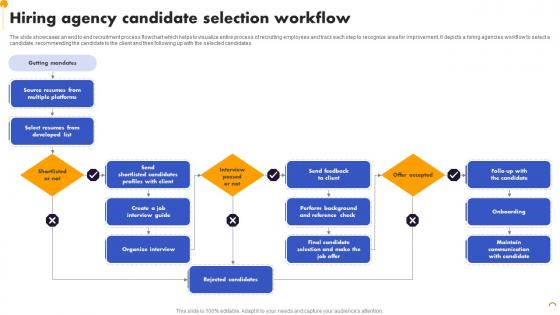
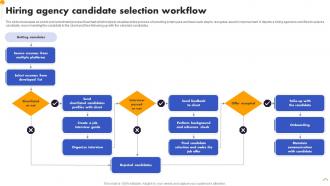
The slide showcases an end to end recruitment process flowchart which helps to visualize entire process of recruiting employees and track each step to recognize area for improvement. It depicts a hiring agencies workflow to select a candidate, recommending the candidate to the client and then following up with the selected candidates.
People who downloaded this PowerPoint presentation also viewed the following :
Hiring Agency Candidate Selection Workflow with all 6 slides:
Use our Hiring Agency Candidate Selection Workflow to effectively help you save your valuable time. They are readymade to fit into any presentation structure.





FAQs for Hiring Agency
Okay so basically you've got job posting, then screening applications, initial interviews, skills tests, final rounds, reference checks, and finally the offer. Here's what I'd do - set your criteria upfront for each step because trust me, you'll thank yourself later when you're buried in resumes. Phone or video calls usually come first to weed people out. Then promising candidates meet the hiring manager and team for deeper conversations. Skills assessments can happen anywhere in the middle depending on what you need. Oh, and write down why you picked or passed on people at each stage - makes comparing way easier and keeps you honest about unconscious bias stuff.
Honestly, start with whatever's driving you crazy right now - that's your biggest win. ATS systems are clutch for filtering resumes by keywords so you're not drowning in applications. Auto-scheduling interviews saves tons of back-and-forth emails too. Video screening tools let people record responses whenever, which is way better than trying to coordinate live calls with everyone. Some AI tools can even do initial screenings and rank candidates for you. The trick is finding stuff that actually cuts down your workload instead of just adding more apps to juggle. I'd probably tackle one problem area first rather than overhauling everything at once.
Honestly, job descriptions are like your first screening tool - they weed out the randos if you do them right. Be super specific about what the person will actually be doing day-to-day, not just some generic fluff. I learned this the hard way when I posted something vague once and got buried under applications from people who clearly didn't read it. You want candidates to self-select out if they're not a fit. Include the real skills you need, be upfront about your company vibe, and don't sugarcoat the tough parts. Way better than dealing with mismatched people in interviews later.
Start with blind resume reviews - seriously, you'll be shocked how much names and fancy schools sway decisions. Standardize everything: same interview questions, consistent scoring rubrics, multiple people evaluating independently. I learned this the hard way, but "culture fit" is often just bias in disguise. Focus on actual job skills instead. Track your hiring data by demographics too - patterns jump out fast. The whole unconscious bias thing is real and super tricky to catch. Oh, and definitely remove identifying info during initial screening. It's not foolproof but makes a huge difference.
Time-to-hire and quality of hire scores are your bread and butter metrics. Track where candidates drop off in each stage too - that data's gold. Hiring manager satisfaction matters more than people think, plus offer acceptance rates tell you if something's broken at the end. Honestly, cost-per-hire is overrated unless you're super careful about what costs you actually include. Stage conversion rates will show you exactly where things go sideways. If you can swing it, grab diversity numbers and candidate feedback scores. Start with maybe 3 that actually matter to your situation and expand later. No point drowning in data you won't use.
Honestly, the trick is building review stages right into your process instead of trying to wrangle everyone at once - total nightmare otherwise. Have hiring managers look at technical stuff first, then let team leads jump in for culture fit. Works way better than free-for-all feedback sessions. Simple scoring rubrics help tons, or even just yes/no recommendations. Map out who needs to weigh in and exactly when they're most useful. That way you won't get conflicting opinions that just confuse everything. I've seen this approach save so much headache compared to the usual chaos most companies deal with.
Honestly, the biggest mistake is rushing things because you're excited about a candidate. Reference checks matter - seriously, don't skip them. I learned that one the hard way. Try not to hire carbon copies of yourself or your team either. Yeah, "culture fit" sounds nice, but diverse thinking beats groupthink every time. Focus on actual skills instead of just vibes. Set your evaluation criteria before you start interviewing, then stick to it. Oh and definitely get other people involved in the decision. Your blind spots could tank what seems like a perfect hire.
Dude, just don't ghost people - it's that simple. Send quick updates like "still reviewing, hang tight" every week or two. Candidates put effort into your interviews, so show some respect back. I learned this the hard way when we lost amazing people because they assumed we weren't interested. Set up automatic reminders for yourself at each stage. Even rejections should include feedback so they can do better elsewhere. Honestly, this stuff makes such a huge difference for your company's reputation. People talk, and you want them saying good things about how you treat candidates.
Honestly, behavioral interviews work best - ask about past situations that show if their values match yours. But don't just have them talk to their future boss! Get them chatting with different team members over coffee or lunch (or virtual hangouts if remote). I always think those casual conversations reveal way more than formal interviews anyway. Try asking what kind of work environment actually energizes them vs. what makes them miserable. Oh, and situational questions help too - like how they'd handle specific scenarios your team faces. Just keep it feeling like a conversation, not an interrogation.
Oh man, remote hiring is tricky! You definitely need more touchpoints since you can't just bump into people by the coffee machine. I always do a casual 15-minute video chat before the real interview - helps break the ice and you get a better feel for their vibe. Also learned this one the hard way: always pad your timelines because coordinating remotely takes forever. Reference checks become way more crucial too. Honestly, giving them a mini project or some kind of async work together is clutch. Just be upfront about how long everything's gonna take!
Honestly, social media is a game changer for finding people who aren't even looking for jobs yet. LinkedIn's the obvious one, but I've had crazy good luck on GitHub for developers and Twitter for industry experts. Creative roles? Instagram all the way. You can actually see their work and how they interact with people - way better than just reading a resume. The trick is matching the right platform to what you're hiring for. Oh, and don't be that recruiter who sends the same generic message to everyone. People can smell that from a mile away and it's super annoying.
So basically, you can use predictive analytics to get way better at picking candidates. Take your past hiring data - who worked out vs who didn't - and let algorithms find patterns you'd miss completely. It'll analyze resume stuff, test scores, interview answers, whatever. The tricky part is you need decent historical data first about your good and bad hires. Then it builds models to score new people based on what actually worked before. Honestly beats going with your gut every time. Way more accurate than the old-school approach most companies still use.
Look, candidate engagement is huge - it literally makes or break whether you'll land good people. When candidates feel like they matter during your hiring process, they'll actually accept your offers instead of ghosting you for competitors. Bad communication? You're looking at people dropping out and trashing you on Glassdoor (seriously, those reviews stick around forever). Just send quick updates when timelines change. Give them clear next steps. A simple "hey, still reviewing apps" text beats radio silence every time. I've seen companies lose amazing hires just because they couldn't be bothered to follow up properly.
Honestly, you've gotta bake this stuff into your whole process from day one. Post jobs on different boards and ditch the cringey "ninja developer" language—nobody needs that energy. Mix up your interview panels so it's not just five dudes in hoodies asking questions. Keep interviews structured though, otherwise you're just winging it and comparing random stuff. Track where people drop off in your funnel. That's where the real insights are. Oh, and set actual goals with numbers, not just vague "let's do better" promises you'll forget about next quarter.
Dude, employer branding is everything when it comes to getting good people to actually apply. Like, top candidates won't even look at your jobs if your company seems boring or toxic online. Good branding can boost applications by 50%+ because people start coming to you instead. Think of it this way - would you swipe right on someone with zero personality? Same concept. You'll attract better candidates who actually fit your vibe, plus recruiting becomes way cheaper since you're not desperately hunting for people. Oh, and definitely get your real culture on social media - not the fake corporate stuff.
-
I have just started downloading templates for my presentations and I must say this is a great design. It helped accelerate my presentation design process and made it more visually appealing.
-
Great quality product.