


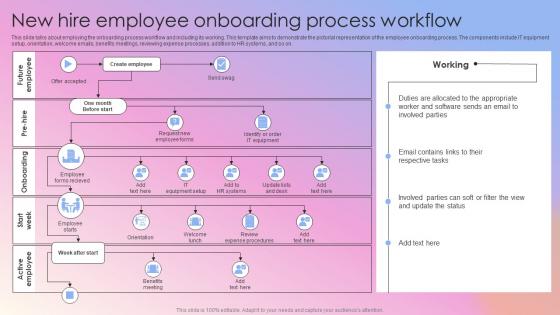
New Hire Employee Onboarding Process Workflow




Try Before you Buy Download Free Sample Product
 Impress Your
 Audience
 100%
100% Editable
 Save Hours
 of Time


This slide talks about employing the onboarding process workflow and including its working. This template aims to demonstrate the pictorial representation of the employee onboarding process. The components include IT equipment setup, orientation, welcome emails, benefits meetings, reviewing expense processes, addition to HR systems, and so on.
People who downloaded this PowerPoint presentation also viewed the following :
New Hire Employee Onboarding Process Workflow with all 6 slides:
Use our New Hire Employee Onboarding Process Workflow to effectively help you save your valuable time. They are readymade to fit into any presentation structure.





FAQs for New Hire Employee
Okay so basically you need five things. First - get the boring stuff done fast: paperwork, computer setup, showing them where the bathroom is lol. Role training comes next, plus introducing them to people they'll actually work with. Company culture is massive here - like, explain how stuff really gets done, not just what's in the handbook. Definitely give them a buddy or mentor too. Oh and spread this whole thing across 90 days! Don't torture them with information overload in week one.
Honestly, start with an HRIS system - it'll handle all that boring paperwork stuff before people even show up. Digital checklists are a lifesaver for tracking where everyone's at in the process. I've seen companies use video platforms for intros and training modules, which is pretty smart since people can go at their own speed. Oh, and automated email sequences are clutch for sending the right info at the right time. Slack or Teams helps new people connect with their team early too. Here's the thing though - don't go crazy with tools. Pick 2-3 max and focus on whatever's eating up most of your time first.
Honestly, culture during onboarding is huge - it's what makes new people actually want to stay. Skip it and you'll wonder why everyone bounces after a few months (learned that the hard way at my last place). You've got to show them the real deal from day one. What are your values? How do teams actually talk to each other? Don't just tell them - do team lunches, pair them with mentors, explain the weird quirks about how you operate. It's the difference between someone feeling like they belong versus just collecting a paycheck until something better comes along.
Honestly, remote onboarding is way trickier than people think. You've got to be super intentional since there's no random water cooler chats. Ship their equipment early - nothing worse than sitting around waiting for laptops on day one. Set up virtual coffee dates with teammates and do everything over video at first, even stupid quick questions. I'd create a buddy system too. Let them lurk in team meetings before jumping in. Oh, and schedule weekly check-ins for like a month instead of hoping they'll reach out when stuck. Trust me, they won't.
Honestly, start simple with like 3-4 metrics or you'll drive yourself crazy. Time-to-productivity is huge - basically how long before new people actually know what they're doing. Retention at 90 days and one year tells you if people are bailing early. New hire satisfaction scores are obvious but necessary. Here's one most people miss though - ask the managers how prepared their new team members feel. That feedback is gold. Also track if people are actually finishing your training modules (shocking how many don't). You can always add more metrics later once you've got the basics down.
Set up feedback checkpoints after week 1, month 1, and the 3-month mark. Quick 15-minute chats work better than long surveys, honestly. Ask what confused them most and what they wish they'd learned earlier - that's where the good stuff is. But here's the thing: you can't just collect feedback and forget about it. Review everything quarterly with your team and actually make changes. Maybe everyone keeps asking about the same unclear process, or day one is information overload. I've seen companies ignore this stuff for years. Use their frustrations as your fix-it list.
Honestly, don't dump everything on them day one - I've watched new hires mentally check out by noon when managers do this. Spread the training over a few weeks instead. Oh, and definitely don't skip the culture/intro stuff even if it seems cheesy. You'll want someone designated as their go-to person for random questions. That way they won't feel weird about bugging different people constantly. Regular check-ins during month one help catch problems early too. Nothing worse than finding out someone's been struggling for weeks because they felt too awkward to speak up.
Dude, seriously - get your onboarding sorted. Companies with solid plans see 25-50% better retention, which is huge. New people need structure, not that "wing it and ask around" mess that scares everyone off. Map out their first 30-60-90 days with actual goals and regular check-ins. When someone knows what they're supposed to be doing (and feels like you've got their back), they don't panic and quit in month two. I've seen too many good people bail because nobody bothered to make them feel welcome or useful from the start.
Honestly, day one is everything. Get them a buddy or mentor right away - someone who actually wants to help, not just whoever's available. Don't dump them into training video hell for a week straight. Mix in real work early so they feel useful. I'd do quick check-ins those first few weeks, like 15-minute coffee chats to catch problems before they snowball. Oh, and introduce them around to other teams too, not just their immediate desk neighbors. You can't just throw someone in and hope they figure it out. Being deliberate about it makes all the difference.
Dude, mentorship programs are seriously clutch for new hires. Having someone you can grab coffee with and ask those "stupid" questions makes everything way less scary. New people get the real inside scoop - like which meetings actually matter and how things really work around here. It builds their confidence fast and they don't feel so lost those first few weeks. Plus they'll start making connections way quicker than if they were just figuring it out solo. Just make sure you actually match people well - don't just throw random pairs together and hope it works out.
Start with the basics - job description, org chart, contact list in a welcome packet. Pair them with someone who actually knows what they're doing for all those inevitable "wait, what?" questions. Get their system access sorted beforehand because waiting around for IT is the worst. Show them around the office, explain parking, coffee situation - honestly the coffee thing matters more than you'd think. Oh, and make sure they have training materials ready to go. The whole point is letting them focus on learning instead of wandering around lost their first week.
Honestly, onboarding is where you can nail the inclusion thing right from the start. Make sure your training materials actually show diverse role models - not just stock photos of random people. Have new hires meet folks from different backgrounds across teams during their first week. The stories and examples you use matter way more than people think. Most companies blow this and just drone on about HR policies. Build in mentorship connections that cross different demographics. Talk about psychological safety early so people know inclusion isn't just corporate speak here. Oh, and definitely audit your current materials for representation gaps first.
Definitely do a quick onboarding for them too! I mean, yeah they're temporary but trust me - it's way better than dealing with confused people all week. Just make it shorter and hit the important stuff: what their job actually is, basic rules, safety things, who to bug when they're lost. Oh and obviously the practical stuff like passwords and bathroom locations lol. Maybe pair them with someone friendly for questions? Create like a mini version of your normal checklist. Honestly, even spending a few hours upfront saves you from constantly explaining things later. Way less stressful for everyone.
Honestly, just having leadership actually show up that first week makes all the difference. Get your CEO to do a quick coffee chat or welcome video - people remember that stuff. I'd have them share the company story and explain why you guys do what you do, you know? Maybe pair new hires with a senior leader as a mentor too. When executives are visibly invested from day one, it shows growth actually matters there. Even something simple like joining the orientation lunch works wonders. Sure, everyone's swamped with meetings, but those personal touches are what stick with people long-term.
Look, ongoing training basically saves your new hires from drowning after week one. Nobody actually remembers all that stuff from orientation - way too overwhelming. Space out the real training over months instead. Hit them with job skills, company processes, all that cultural stuff gradually. Check in at 30, 60, 90 days and see how they're doing. Honestly, it also shows people you actually care about developing them, not just filling a seat. Then adjust based on how they're performing in real life, not just what the manual says.
-
Easily Understandable slides.
-
It saves your time and decrease your efforts in half.