


New Hire Onboarding Process Mapping




Try Before you Buy Download Free Sample Product
 Impress Your
 Audience
 100%
100% Editable
 Save Hours
 of Time


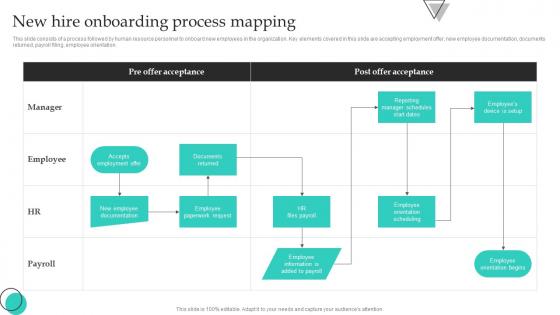
This slide consists of a process followed by human resource personnel to onboard new employees in the organization. Key elements covered in this slide are accepting employment offer, new employee documentation, documents returned, payroll filing, employee orientation.
People who downloaded this PowerPoint presentation also viewed the following :
New Hire Onboarding Process Mapping with all 6 slides:
Use our New Hire Onboarding Process Mapping to effectively help you save your valuable time. They are readymade to fit into any presentation structure.





FAQs for New Hire
Honestly, start with the basics - get their tech working and introduce them to the team right away. Clear expectations are huge too. The paperwork stuff like benefits and compliance training always takes forever, so budget time for that. I'd definitely assign them a buddy for all those weird random questions that pop up. Give them a solid first-week plan with actual goals, not just "shadow everyone." Oh, and don't skip the regular check-ins during their first few months - you'll catch problems way earlier that way. Nothing worse than finding out someone's been struggling for weeks!
Templates are honestly a game-changer for onboarding. No more managers forgetting crucial stuff or going off on random tangents about office quirks. You get all the must-know info covered - values, processes, basic expectations - but people can still add their own spin. When policies change, you just update the template once instead of hunting down everyone individually. I'd start with core topics that every new hire needs, then let each department tweak from there. Way less chaotic than winging it every time.
Your onboarding basically shows new people what it's *actually* like to work there, not just the polished version from interviews. I've watched good hires quit after their first week because the real culture was nothing like they expected. Don't just focus on the perks and cool stuff - show them how your team genuinely communicates and handles problems day-to-day. You're teaching processes, sure, but you're also proving whether they'll want to stick around. Be honest about your culture from the start. Otherwise you'll keep losing people who could've been great long-term fits.
Honestly, tech makes remote onboarding way less painful. Start with the basics - digital welcome packets and electronic paperwork save tons of time. Video calls for introductions are huge (seriously, faces make all the difference). Learning management systems handle training consistently, which is clutch. Slack or Teams help newbies actually feel part of the team instead of floating in space. Oh, and automate IT delivery if you can - nothing worse than starting a job without proper equipment. I'd map your current process first, then figure out what manual stuff you can digitize. Makes the whole thing smoother for everyone.
Honestly, I'd start simple with just 2-3 things so you don't go crazy with data. Time-to-productivity is huge - like how long before new people actually hit their targets? Also track retention at 90 days and one year, plus manager satisfaction scores about how ready new hires seem. Employee engagement surveys for newbies are pretty clutch too. They'll tell you if people feel prepared or just totally lost. Oh, and completion rates for your onboarding modules - if half your people aren't finishing, that's obviously a problem. Build from there once you've got some baseline numbers to work with.
Dude, visual aids are a game changer - they can bump up retention by like 65% because our brains just eat up images way faster than text. You're basically hitting different learning styles when you mix visuals with talking it through. Flowcharts for processes work great, screenshots for software stuff, or simple diagrams showing who's who on the team. Honestly anything's better than death by PowerPoint bullet points (we've all been there). New hires actually remember how to do things when they can see it happen. Next time, swap out half those text-heavy slides for infographics or step-by-step screenshots. Trust me on this one.
Ugh, don't do the info dump thing on day one - I've watched new hires glaze over when companies throw every single policy at them immediately. Also that whole "here's your desk, figure it out" vibe is terrible. You need someone to actually show them around and answer dumb questions. Spread the training out over a few weeks instead of cramming it all in. Oh, and check in with them! Not like weird hovering, but regular quick chats. Nobody wants to feel lost for their first month, you know?
Dude, new hire feedback is seriously pure gold for fixing your onboarding mess. Just ask them straight up what confused the hell out of them during those first few months - surveys work, but honestly casual coffee chats reveal way more. They'll spot all the obvious gaps you're blind to since you've been drinking the company Kool-Aid forever. What you think makes perfect sense probably doesn't to fresh eyes. The stuff they found redundant or confusing? That's exactly what needs tweaking. I'd set up regular check-ins where you actually listen to what didn't work, then fix it instead of just nodding along.
Skip the long orientation thing - hit them with safety stuff and key job basics right away, first couple days max. Make checklists they can actually use when you're not around to help. Pair them with someone who's been there forever (not the eager volunteer who doesn't know much either, lol). Keep training sessions super short - like 30 minutes tops because attention spans are shot anyway. Some stuff they'll just have to figure out as they go, honestly. Check in after a week and again at a month to make sure they're not drowning.
Try mixing up your onboarding formats to hit different learning styles. Some people are super visual - they'll love infographics and videos. Others need to hear stuff, so discussions work better for them. Don't forget hands-on learners who want interactive demos or role-playing (honestly, those sessions can get pretty entertaining). Group activities are clutch too since bouncing ideas around just clicks for certain people. Reading/writing folks will want handouts they can actually take notes on. I'd combine 2-3 approaches each session. Oh, and survey people on day one about what works for them - saves you guessing later.
Dude, good onboarding can bump your retention up 82% - it's literally one of your biggest wins as a manager. New people who feel supported from day one? They don't jump ship in those scary first months. Bad onboarding is just burning cash since replacing someone costs like 50-200% of what you pay them annually. You want a solid plan covering role stuff, team intros, quick early victories. Honestly, even a basic 90-day checklist beats just throwing people in and hoping for the best - which I've definitely seen happen way too often.
Honestly, just pair your new people with someone experienced right from the start. Don't just grab whoever's free though - actually think about matching skills or similar roles. The mentor becomes their lifeline for all those "wait, is this how things work here?" questions that definitely come up. Weekly check-ins for the first month work well, then maybe every other week after. Oh, and train your mentors a bit - being great at the job doesn't mean they'll automatically know how to teach someone else. I've seen this setup save so much confusion and awkwardness during those first few weeks.
Language barriers are gonna be your biggest headache, plus people communicate SO differently across cultures. Some folks get straight to the point, others want to chat and build rapport first. Tech skills vary wildly too - don't assume everyone's comfortable with your usual platforms. Oh, and learning styles are all over the place. Religious stuff to think about as well. Honestly, forget the cookie-cutter approach. Survey people beforehand about what they need. I'd probably ask about communication preferences, tech comfort level, that kind of thing. Way easier than scrambling to fix things later when someone's struggling.
Start by checking your current onboarding for barriers - like, does everything work with screen readers? Offer materials in different formats too. Don't assume new people know your company's weird inside jokes or industry terms (honestly, we all do this without realizing). Buddy systems work great, especially pairing folks with someone from a different team. Create actual safe spaces for questions - not just saying "ask anything!" but meaning it. Oh, and get feedback on the process itself. Most companies just wing inclusion and hope for the best, but you've got to be deliberate about it or people end up feeling totally lost their first few weeks.
Honestly, what happens after week one is make-or-break time. Sure, orientation covers the basics, but months 2-6 are where they actually learn to do the job well. Can't tell you how many places just abandon people after that first week - it's brutal. Set up regular check-ins and let them shadow different team members. Role-specific training helps too, obviously. They need time to figure out all the unwritten rules and company quirks. A 30-60-90 day plan keeps you on track so you don't accidentally forget about them when things get busy.
-
The information is visually stunning and easy to understand, making it perfect for any business person. So I would highly recommend you purchase this PPT design now!
-
A perfect platform for all your presentation needs. Unlimited products at an affordable price.