New Employee Onboarding Program Framework
Try Before you Buy Download Free Sample Product
Audience
Editable
of Time
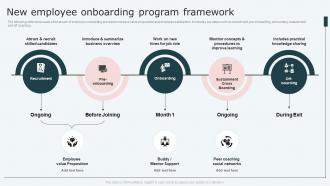
The following slide showcases a framework of employee onboarding process to increase value proposition and employee satisfaction. It includes key steps such as recruitment, pre onboarding, onboarding, sustainment and off boarding.
People who downloaded this PowerPoint presentation also viewed the following :
New Employee Onboarding Program Framework with all 6 slides:
Use our New Employee Onboarding Program Framework to effectively help you save your valuable time. They are readymade to fit into any presentation structure.
FAQs for New Employee
Okay so basically you want to get their equipment and paperwork sorted before they even start - nobody wants to spend day one filling out forms. First day should be introductions, culture stuff, and getting their desk setup right. Tech issues are literally the worst way to kill someone's first-day energy! Map out training specific to their role, then do check-ins at 30, 60, and 90 days. The whole point is making them feel ready and welcome without drowning them in information. Oh, and start planning this at least two weeks out - you'll thank yourself later.
Templates are seriously a game-changer for onboarding. Create standard modules for stuff like company overview, role training, team intros - you know, all the basics everyone needs. Different managers can swap in their own content but keep the same structure and branding. Makes everything way more consistent than the random PowerPoints people usually throw together. Interactive ones with videos work great too. I'd start with whatever topics you're constantly repeating and turn those into templates first. Just make sure they're flexible enough that departments can actually customize them without breaking the whole thing.
Ugh, so many places just dump everything on new people day one - it's brutal. Poor communication between teams is another nightmare, plus managers who assume you already know stuff you obviously don't. IT access issues drag on forever too, which is so frustrating. But honestly? The social stuff might be the worst part. People feel completely lost when they don't know anyone or get the office vibe. My advice: give them a buddy system, spread out the info over time, and actually check in during that first month instead of just abandoning them.
Yeah so every industry does it totally differently based on what matters most to them. Tech companies rush to get you set up with all their tools and throw you into those sprint meetings right away. Healthcare? They're obsessed with compliance training and making sure you won't accidentally hurt anyone. Finance takes forever with all their security clearances and regulatory stuff - seriously, I had a friend wait like 6 weeks just for background checks. Manufacturing spends tons of time on safety training since you're actually working with dangerous equipment. It's really about figuring out what knowledge someone absolutely needs to not screw up in your specific job, then building everything around that.
Your company culture is honestly everything when it comes to onboarding. If you're all about collaboration and being open, your new hire process should feel that way too - lots of team intros and real conversations. More formal places? Yeah, they'll have tons of structure and paperwork (not always a bad thing though). The biggest mistake I see is when companies create this polished onboarding that doesn't match actual day-to-day life. Take a hard look at yours - would a new person walking in tomorrow actually recognize the workplace you're showing them during week one?
Tech can totally transform your onboarding process. Start with digitizing paperwork - nobody wants to fill out forms by hand anymore. Interactive training modules work great too, and virtual office tours are actually pretty impressive now (way better than those awkward in-person walks around). Apps help connect new people with mentors automatically. You'll want everything in one place though, otherwise people get lost in a million different emails and links. Automated reminders are clutch for keeping track of deadlines. My advice? Pick just one thing to tackle first - don't go crazy trying to fix everything at once.
Honestly, the big ones are time-to-productivity and retention rates - especially in those first 90 days when people usually bail. Check your onboarding survey scores too. Oh, and don't forget manager feedback since they're dealing with the new hires daily. Track completion rates for your milestones and see how long it takes people to actually feel part of the team (that's huge). The real test though? Whether they're using what you taught them in actual work situations. I'd set up check-ins at 30, 60, and 90 days to stay consistent with data collection.
Honestly, new hire feedback is gold for fixing your onboarding mess. I'd do quick surveys or just grab coffee with them after their first month or two. They'll remember exactly where they got stuck way better than you will - like which forms made zero sense or when they had no clue who to ask for help. Take what they say and actually fix those weird gaps or confusing parts. Oh, and make it routine after each group goes through so you're not just doing this once and forgetting about it. Trust me, they want to help make it better for the next person.
Dude, mentorship during onboarding is a game-changer. New hires are basically drowning in info those first weeks - they need someone real to grab coffee with and ask the stupid questions. Your mentor gives you the actual scoop on how stuff works, not just the polished handbook version. They'll help you figure out office dynamics and introduce you to the right people. Honestly, it just makes you feel way less lost during an already weird transition. Oh, and train your mentors properly - being nice doesn't automatically make someone good at guiding newbies through the chaos.
Honestly, gamification works pretty well for this stuff. Progress bars are clutch - people love seeing that completion percentage go up. Throw in some badges when they finish modules or hit deadlines. I've seen companies do leaderboards with new hire groups, which sounds kinda cheesy but apparently works? You could also try those quest-style challenges where they unlock new info as they go. Just don't go overboard at first - maybe start with basic progress tracking and a few badges. See what actually gets people excited instead of making them roll their eyes.
Honestly, less is more with onboarding presentations. Focus on the basics - what their role actually involves, key processes they'll need, and who to bug when they're stuck. I've sat through some brutal 4-hour marathons that just left everyone glazed over. Break things up with Q&A sessions or quick discussions. Visuals beat walls of text every time. Start broad, then get into the weedy stuff. But here's the thing - save room for actual talking. New people learn way more from chatting with teammates than sitting through slide after slide. They need to feel like they can jump in and ask questions, you know?
Honestly, remote onboarding is way trickier than people think. Ship their equipment like a week early - nothing's worse than day one tech issues. You'll need to schedule actual video calls for intros since people won't just bump into each other. Create digital versions of everything: virtual tours, recorded welcomes, online docs. The social piece is the hardest part though. Set up coffee chats and virtual lunches with their team. Oh, and definitely assign someone as their daily check-in buddy for the first week. Basically front-load all the stuff that would happen naturally in person.
Dude, good onboarding is a game changer - we're talking 82% better retention and 70% productivity boost. Most companies totally half-ass this part though, which is wild to me. Those first few weeks? That's when you get people actually excited about their job and understanding what the hell they're supposed to do. You're basically setting them up with clear expectations and the right tools from the start. Way fewer confused employees wandering around six months later going "wait, what's my role again?" Less turnover, people who actually care about their work. Track your 90-day retention - you'll see the difference pretty fast.
Honestly, you can't just slap diversity stuff onto your existing onboarding and call it good. Start by auditing what you've got now - I bet there's some cringy assumptions hiding in there. Your welcome materials should actually show different types of people, not just stock photo diversity. Train whoever's doing the buddy system on bias stuff too. Oh, and connect new people with employee groups right away, don't wait weeks. The language thing is huge - like, are you assuming everyone went to college or has the same family setup? Short sentences work. Longer ones help you explain the trickier concepts that need more context.
Okay so first thing - send out surveys before people even start. Find out what they're worried about, how they like to learn, that kind of stuff. Then build different training tracks based on their actual role and experience. Like, don't make a senior developer sit through basic coding tutorials, you know? Match them with mentors from their team, not just random people. Use their name everywhere and reference their specific goals. Honestly the whole point is just... don't treat everyone exactly the same? Pick one thing to customize first - maybe just the training path - then add more personal touches as you go.
-
I faced no difficulty while searching for the slide I wanted. Honestly, the website’s interface is easy to use and can be navigated easily!
-
What an exhaustive collection of templates you guys have there in slideteam. Impressive!!!