


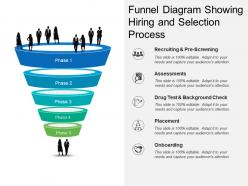
Funnel diagram showing hiring and selection process





Try Before you Buy Download Free Sample Product
 Impress Your
 Audience
 100%
100% Editable
 Save Hours
 of Time


Handle intense emotions with our Funnel Diagram Showing Hiring And Selection Process. Ensure folks don't indulge in foolish activity by helping them choose the correct path. This business template is very popular and advisable when you wish to illustrate processes like the recruitment process, staffing process, hiring and selection process, human resources management, recruitment strategies, etc. This funnel icon PPT is a five-stage process with ring like structures placed vertically one over the other and the stages are recruitment and pre-screening, assessment, rug test & background check, placement, and onboarding. This PowerPoint presentation is perfect for creation of a perfect strategic planning analysis related to various topics linked with the hiring and selection process of employees. It very important that you hire and select the best-suited person for a particular position and the use of this slideshow helps you select the best of employees, which will benefit your company.
People who downloaded this PowerPoint presentation also viewed the following :
Funnel diagram showing hiring and selection process with all 5 slides:
Our Funnel Diagram Showing Hiring And Selection Process assure you of a huge back up. It is a fail safe device.
FAQs for Funnel diagram showing hiring
So basically you've got sourcing candidates, then screening resumes, phone/video calls, final interviews, reference checks, and making the offer. Onboarding too, though that feels like a whole different beast honestly. Track your numbers at each step - if everyone's applying but nobody's getting through screening, your job post probably sucks. Being consistent with timing is huge. Seriously, candidates will ghost you if they're sitting around for weeks wondering what's happening. I've seen companies lose amazing people just because they took forever to get back to them. Keep things moving and you'll be fine.
So analytics basically shows you where people are bailing out of your hiring process. Track stuff like how long it takes to hire someone, what percentage make it through each stage, and which job boards actually work (spoiler: most don't). You'll notice weird patterns too - maybe your phone screens are too intense or some job posts just hit different. It even helps figure out which interview questions matter and cuts down on unconscious bias. Honestly, just pick 3 metrics to start with. Don't go crazy trying to measure everything right away.
So employer branding is huge for attracting candidates before they're even looking. Your reputation basically acts as a magnet - good culture, growth ops, meaningful work all draw people in. It's like how you judge a restaurant by its vibe before checking the menu, you know? Social media and sites like Glassdoor are where people form first impressions. I'd focus on showing your actual workplace culture there, not some polished corporate BS. Quality candidates will naturally gravitate toward companies that seem genuine. Oh and don't forget - people talk, so word-of-mouth from current employees matters way more than fancy recruiting campaigns.
Ugh, I wish someone had told me this earlier. Put knockout questions right in your application - stuff like salary range, location requirements, key qualifications. Seriously saves you hours. I once reviewed 200 apps for a role needing security clearance and maybe 10 people actually had it. What a waste. Your job description needs to be crystal clear about deal-breakers too, so people eliminate themselves. Then let your ATS rank whoever's left. Way better than drowning in unqualified resumes. Trust me on this one.
Honestly, the worst thing you can do is make your hiring process super long and complicated - people will just bail. I've seen companies with like 6 rounds of interviews and wonder why they can't fill roles lol. Keep early stages simple with maybe 2-3 reviewers max, otherwise it gets messy and slow. Also figure out what you're actually looking for at each step beforehand. You don't want to end up making random gut decisions or letting bias take over. Oh and definitely walk through your own process as a candidate would - you'll catch issues you never noticed.
So basically all the boring stuff gets automated - ATS filters through resumes, chatbots ask the basic screening questions, video platforms let people record answers whenever. Skills tests run themselves too. The scheduling software is honestly a lifesaver because nobody wants to play email tag about meeting times. AI can rank candidates but honestly it's pretty hit or miss depending on what you're looking for. Just make sure whatever tools you pick actually work together. I've seen people end up with like 5 different systems that don't talk to each other and it's a mess.
Track your conversion rates first - application to phone screen, then phone screen to interview, all the way to offer. Time-to-fill matters a ton since dragging things out kills your chances with good people. Source effectiveness is key too (which job boards actually work vs just drain your budget). Cost-per-hire and candidate experience scores are obvious ones. Honestly, offer acceptance rate might be the most painful metric - there's nothing worse than losing someone at the very end. Oh, and quality of hire is tricky to measure but you'll thank yourself later for tracking it. Start there and you'll spot the leaks fast.
Honestly, candidate experience makes or breaks your hiring numbers. Poor communication alone kills 40% of qualified candidates - I've watched it happen. When people get ghosted or deal with messy application processes, they bail early. Then they tell everyone how terrible you are, which is brutal in tight-knit industries. Your company's reputation gets trashed, making future recruiting way harder and pricier. Even people you reject should walk away thinking "that was handled well" - those are the ones who'll actually refer good people to you later. Keep timelines clear, send regular updates, don't make interviews a nightmare.
Look, start by figuring out what skills actually matter for the job, then build your stages around testing those. Technical roles? Throw in coding tests or portfolio reviews early. Sales people need role-playing scenarios - trust me on this one. Leadership positions are where things get complicated though... you'll probably end up with panel interviews, case studies, the whole nine yards. Timeline expectations matter too. So does who needs to approve what. Senior roles just naturally become more complex processes. But honestly, don't overcomplicate things for roles that don't need it.
Honestly, just don't ghost people - it's the worst. Send quick updates even when nothing's happening, like "still reviewing, you'll hear from us Friday." Each time you reach out, make it worth their time. Share some behind-the-scenes stuff about the company culture or maybe introduce them to someone they'd work with. Being upfront about delays beats leaving them hanging every single time. Tell them your timeline from the start and actually follow through. People respect honesty way more than silence, trust me. Oh and giving them a realistic preview of what the job's actually like? That saves everyone headaches later.
So basically, don't just slap diversity efforts at the end - build it into everything. Post on different job boards, use inclusive language in your descriptions. Blind resume reviews are clutch, plus structured interviews help cut down bias (I was skeptical but it actually works). Mix up your interview panels too. Oh and definitely track demographics at each stage - you'll see exactly where people are dropping off. The whole thing falls apart if you treat it like some checkbox exercise instead of baking it in from the start. Makes such a difference when you're intentional about it.
Dude, AI can totally transform your hiring game. Resume screening becomes lightning fast - the software filters candidates way better than doing it manually. Chatbots answer basic questions around the clock, which candidates actually love. No more email tennis trying to schedule interviews either, that stuff drives me crazy. Here's the cool part: it cuts down on unconscious bias since the AI just looks at skills and experience. Candidates get quicker responses too. Honestly, start with just automating resume screening or scheduling. You'll see the difference immediately and can build from there.
Remote funnels definitely drag on longer - more video calls, bigger interview panels, the whole nine yards. You can't just vibe-check someone over coffee, so technical assessments get way more intense. I swear it's like detective work sometimes! Communication skills become huge since there's no hallway small talk to fill gaps. Plus you're hunting for people who won't need their hand held every five minutes. Oh, and self-motivation is make-or-break. Try doing a virtual "shadow day" where they hang out during actual meetings - sounds weird but it works better than you'd think.
Make sure you're asking the same questions to everyone and have a scoring system - otherwise you'll be comparing apples to oranges. Get multiple people involved but honestly, someone needs to make the final call or you'll debate forever (learned that the hard way). Don't skip reference checks even if you're super excited about someone. Culture fit matters more than you think - you can train skills but good luck changing someone's personality later. Oh, and set deadlines for decisions. Candidates appreciate knowing where they stand.
Honestly, just stay in touch with everyone - candidates AND your interview team. Quick surveys after interviews work great, especially with people you rejected (they're brutally honest). Monthly check-ins with interviewers help too. Track the usual stuff like time-to-hire, but the real insights come from actually talking to people. I learned this the hard way - numbers only tell half the story. Set up something simple to collect feedback regularly, then review it every quarter and actually change things. Otherwise you're just collecting data for no reason, which is pointless.
-
Great designs, Easily Editable.
-
Unique and attractive product design.