


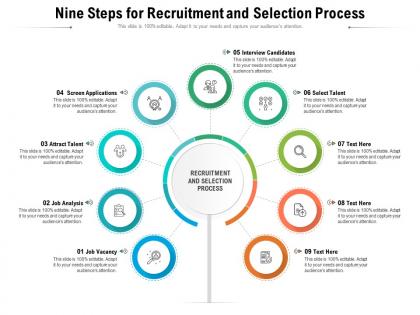
Nine steps for recruitment and selection process




Try Before you Buy Download Free Sample Product
 Impress Your
 Audience
 100%
100% Editable
 Save Hours
 of Time


Our Nine Steps For Recruitment And Selection Process are topically designed to provide an attractive backdrop to any subject. Use them to look like a presentation pro.
People who downloaded this PowerPoint presentation also viewed the following :
Nine steps for recruitment and selection process with all 2 slides:
Use our Nine Steps For Recruitment And Selection Process to effectively help you save your valuable time. They are readymade to fit into any presentation structure.

FAQs for Nine steps for recruitment
Look for skills first - can they actually do the work? But honestly, that's just the baseline now. Cultural fit matters way more than most people realize. Will they click with your team's vibe? Growth potential is huge too. I'd rather hire someone curious who asks smart questions over the "perfect" resume any day. When candidates give you specific examples about past problems they've solved, that's gold. Shows they can think through stuff instead of just reciting bullet points. Oh, and quick learners usually adapt better long-term anyway.
Honestly, tech can be a game-changer for hiring if you don't go overboard. Get an ATS to handle those initial screenings automatically - saves so much time. Chatbots work great for answering basic candidate questions instantly. Video interviews speed things up too, and AI actually writes decent job descriptions now (crazy, right?). But here's what really matters: make sure everything works on mobile and keep people in the loop. Nothing pisses off candidates more than hearing nothing for weeks. Oh, and don't try every new tool - pick maybe 2-3 that play nice together.
Dude, employer branding is huge for getting good people to actually want to work for you. Candidates are gonna stalk your company online anyway - Glassdoor, social media, the whole thing. If your reputation sucks, good luck getting anyone decent to apply. But when you nail it? Top talent comes to you instead of the other way around. Way easier. They already know what they're getting into too, so less awkward surprises during interviews. Just be real about your culture though - don't try to make it sound like Google if you're not. People can smell BS from a mile away, trust me.
Honestly, you've gotta weave diversity through your whole hiring process from day one. Post jobs on diverse boards and partner with orgs that actually reach underrepresented folks. Structure those interviews too - mix up your panels and use standardized questions so bias doesn't creep in. I swear, half the "culture fit" rejections I see are just people hiring their clones. Strip your job descriptions down to must-haves only (those nice-to-haves kill good candidates). Oh, and track everything! You need data to see where you're actually losing diverse talent in the pipeline.
Honestly, LinkedIn outreach works best but you've gotta personalize those messages - nobody responds to copy-paste garbage anymore. Takes forever, I know. Employee referrals are gold though since your team already knows talented people in similar roles. Here's what I learned the hard way: start building relationships way before you need to hire anyone. Don't just pitch roles right away - actually be helpful first. Ask your current employees who they'd recommend, even when you're not actively recruiting. Quality beats quantity every time.
So recruitment analytics is just taking all your hiring data and turning it into stuff you can actually use. Like, you'll see which job boards bring in decent candidates versus total duds. Time-to-hire metrics are wild - seriously, we had no clue our approval process was taking forever until the data slapped us in the face. You can spot where good hires come from, find process bottlenecks that scare people off, and even catch bias patterns you didn't know existed. Oh, and it helps predict which candidates might actually work out. Start small though - maybe 3-4 metrics max, then build from there.
Okay so you need three main things in there: what the role actually is, day-to-day responsibilities, and requirements that make sense. Seriously, don't just copy old job posts - I've seen companies ask for "digital natives" when half their team is over 50 lol. Think about what they'll really be doing every day and what skills actually matter. Throw in some stuff about company culture and where they could grow too. People want to know what they're getting into. Being upfront about expectations from the start saves everyone time and attracts people who'll actually stick around.
Dude, job fairs are seriously worth it. You actually get to talk to people instead of just scrolling through resumes online. Shows off what your company's really like too - way better than those generic job posts everyone ignores. I swear some of our coolest hires happened from just chatting at random industry events, not even formal interviews. Oh, and don't be that person who collects a stack of business cards then never calls anyone back. Follow up within a week or you're basically wasting your time.
Start with blind resume screening - just strip out names and schools initially. Mix up your interview panels too, don't use the same people every time. I'd definitely recommend structured questions and scoring rubrics, makes a huge difference. Skills tests work better than just chatting anyway, honestly. Your hiring team probably needs bias training (most do). Oh, and track everything - you'll spot weird patterns you didn't notice before. Don't try to fix it all at once though, that's overwhelming. Pick like two things and nail those first. The whole point is being deliberate about it instead of crossing your fingers and hoping for the best.
Honestly, remote interviews are totally different beasts. Communication and self-motivation become huge - like, way more important than usual. Test their tech setup early because trust me, hiring someone who struggles with basic video calls is a nightmare. In-office roles? Focus more on how they vibe with people and cultural stuff since they'll be stuck with your team all day. Ask remote folks about handling distractions and time zones. Office people - dig into their interpersonal game. Oh, and always check their home setup and internet situation upfront. Saves headaches later.
Honestly, culture fit matters way more than people think when hiring. Sure, skills are important, but I've watched so many "perfect" candidates flame out because they just didn't vibe with the team. During interviews, pay attention to how they respond to questions about work style and teamwork - those little behavioral hints tell you everything. You want someone who'll actually gel with your existing crew, not just check boxes on a resume. It's kinda like dating tbh - sometimes the chemistry just isn't there, and that's okay. Balance both technical ability and cultural alignment, and you'll save yourself tons of drama later.
Behavioral questions are your best bet here - stuff like "tell me about a time you dealt with a difficult coworker" or when they had to adapt fast to changes. Listen for HOW they handled it, not just what went down. Anyone can spin a story, you know? I always watch their communication style during the whole interview too. That's honestly where you pick up the most about how they'll actually work with people. Oh, and don't forget to ask follow-ups! Dig into their thinking process a bit. Sometimes the real insight comes when you push them to explain their decision-making.
So basically an ATS will handle all your resume sorting and candidate tracking automatically. Saves you so much time filtering out people who aren't qualified. You can search by keywords and skills too, which is super helpful when you're drowning in applications. The compliance stuff is actually huge - trust me, you don't want to deal with that manually. It shows you reporting on where people drop out of your process and timing. Oh, and set up your job templates right away! That's where most people mess up initially.
Dude, candidate feedback is seriously underrated. Most companies never bother asking for it, which is insane because it shows you exactly where your hiring process is broken. Maybe your job descriptions are confusing as hell, or interviews run way too long. You'll catch patterns too - like if everyone says your technical test made no sense or the hiring manager seemed totally unprepared. Send a quick survey after every interview, even to people you reject. Their honest thoughts will stop you from making the same dumb mistakes over and over. Plus it affects how people see your company.
Honestly, everything's going remote-first now and candidates want full salary transparency upfront - no more of that "competitive salary" BS. Companies are finally dropping degree requirements too, which is about time. They're focusing on actual skills instead. AI is handling most of the initial screening and scheduling, which saves tons of time. Video interviews are everywhere since coordinating schedules is such a pain. Employee referrals are back in a big way because, let's be real, most applications are garbage. Oh, and you should probably get familiar with whatever automation tools your company uses - that's definitely where this is all heading.
-
Qualitative and comprehensive slides.
-
Use of icon with content is very relateable, informative and appealing.
-
Awesome presentation, really professional and easy to edit.