Recruitment Process Flowchart With Applicant Tracking System
Try Before you Buy Download Free Sample Product
Audience
Editable
of Time
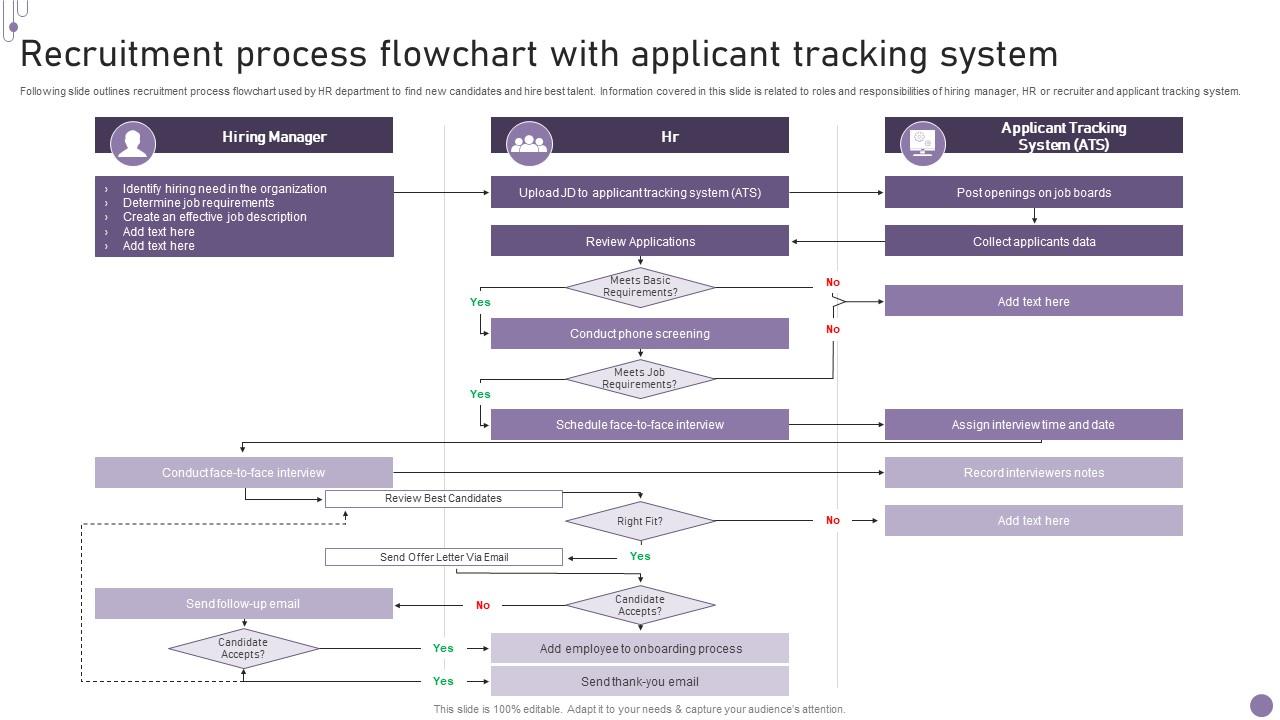
Following slide outlines recruitment process flowchart used by HR department to find new candidates and hire best talent. Information covered in this slide is related to roles and responsibilities of hiring manager, HR or recruiter and applicant tracking system.
People who downloaded this PowerPoint presentation also viewed the following :
Recruitment Process Flowchart With Applicant Tracking System with all 6 slides:
Use our Recruitment Process Flowchart With Applicant Tracking System to effectively help you save your valuable time. They are readymade to fit into any presentation structure.
FAQs for Recruitment Process Flowchart With
So most recruitment flowcharts hit the same basic steps: job posting, screening applications, first interviews, then maybe assessments or a second round. Reference checks come next, followed by the offer. Some places do a quick phone screen upfront - kinda depends on how picky they are. Oh, and onboarding sometimes gets lumped in since it's part of the whole hiring thing. Your company might shuffle these around or skip steps, but that's the general flow. I'd sketch out what you're doing now first - you'll probably spot where things get stuck or messy pretty quick.
Honestly, flowcharts are clutch for this stuff. No more confusion about who's supposed to call back candidates or handle scheduling - you just point to the chart. Everyone knows exactly when they jump in. The visual thing really helps too because you'll spot weird bottlenecks way faster than just talking through it. New people get up to speed instantly instead of asking a million questions about process. I'd start by sketching out what you're doing now (even if it's messy) then figure out what's missing. Way better than the guessing game most teams play.
Honestly, flowcharts are game-changers for this stuff. You'll catch all the obvious problems - like when candidates disappear into interview hell or nobody bothers following up (classic move). Different managers using completely random criteria for the same job? Yeah, the flowchart will expose that mess real quick. It shows you exactly where bias sneaks in too. Plus you can spot approval bottlenecks before they kill your best candidates. Just map out what you're doing now - I bet you'll be shocked at how many people bail because the process is way too complicated. Makes the problems super obvious when you see it laid out visually.
Honestly, just pick one stage at a time and add tech there first. AI job posting tools are clutch - they blast your listing everywhere automatically. Then maybe grab an ATS to sort through applications (way better than doing it manually, trust me). Video screening saves you from sitting through a million first-round calls. Assessment tools work great for technical stuff too. Oh, and those background check APIs are fast as hell compared to the old way. Just make sure whatever you pick actually integrates together - learned that one the hard way when our data was all over the place. Onboarding software's nice too but honestly that can wait.
Honestly, job descriptions are like your recruiting roadmap - everything flows from there. Once you've nailed down what you actually want, it shapes how you source candidates, what screening questions to ask, all that stuff. Without one? You're basically throwing darts blindfolded and wondering why you keep getting weird applicants. They keep you consistent too when you're comparing different people. I learned this the hard way - spent weeks interviewing random candidates because my initial description was garbage. Do yourself a favor and get this right upfront. It'll save you so much time later.
So add feedback loops after your main steps - screening, interviews, final picks. Most people totally skip this but it'll save you headaches later. Put little arrows that circle back when something's not working right. I'd throw in boxes for collecting input from hiring managers and candidates too - honestly, candidates sometimes have the best insights about your process being weird. Each feedback spot should connect to a "let's fix this" step. Don't go crazy though, just start with 2-3 loops or you'll make it too messy.
Honestly, track four main things: how long hiring takes, what candidates actually think of the process, whether your hiring managers are happy, and if you're getting good people. Check if candidates are bailing at certain points - that's usually where your flow sucks. Nobody wants to wait forever for updates, so see if you're actually speeding things up or just creating more steps. I'd probably ask your hiring managers straight up what's broken every few months. Their complaints will be way more useful than whatever metrics you're tracking in spreadsheets.
Just tailor each step to what you actually need. Tech jobs? Throw in coding tests after the phone screen. Healthcare needs licensing checks right away - obvious stuff. Sales is where it gets interesting though, I'd definitely add role-playing rounds because you can't fake that energy in person. Timeline matters too. Rushing to fill urgent roles means quicker decisions, but executive hires take forever anyway. Don't overthink the screening criteria - just focus on what'll make someone crush it in that specific job. Map out the must-haves first, then build everything around those.
Honestly, flowcharts are game-changers for recruiting - way better than just winging it every time. You won't forget steps, and the whole team follows the same process so there's less bias. New HR people can actually figure out what they're supposed to do too, which is nice. The visual part makes it super obvious when things get stuck - like candidates waiting forever for feedback from managers (ugh, we've all been there). You can track where you're losing good people at each stage. My advice? Map what you're doing now first, then figure out where it usually falls apart.
Honestly, quarterly reviews work for most companies, but it really depends on your situation. Growing fast? Check it monthly instead. The second you add new tools or change interview stages, update that thing immediately - I've watched teams use flowcharts from like 2019 and wonder why nothing works anymore. Short bursts work better than massive overhauls anyway. Set a calendar reminder so you don't forget (because you will). Also, whenever someone gives feedback about the process being broken, that's your cue to pull it up and fix whatever's not working.
Honestly, just map out every step and ask yourself if you'd actually want to deal with it. Communication is huge - candidates hate being left in the dark for weeks (seriously kills their excitement). Cut out pointless interview rounds and stick to whatever timeline you promise them. Even rejections deserve quick feedback. I'd automate status updates if possible - saves everyone time. The whole thing shouldn't feel like some weird corporate obstacle course, you know? Short delays between stages, realistic expectations, and actually treating people like humans instead of application numbers. Makes a massive difference in how they'll remember your company later.
So for tracking your recruitment flowchart, focus on time-to-fill and cost-per-hire first. Those are your bread and butter metrics. Source effectiveness is huge too - seriously, most people ignore where their best candidates actually come from and then wonder why their budget's all over the place. Monitor your interview-to-offer ratios and offer acceptance rates. Quality of hire scores matter if you can measure them properly. The flowchart thing is perfect for spotting where stuff gets stuck. My advice? Pick maybe 2-3 metrics that'll actually help your team right now. Don't go crazy trying to track everything at once.
Honestly, flowcharts are lifesavers for staying compliant during hiring. They force you to build in those legal checkpoints - like equal opportunity docs, proper interview questions, background checks - so nothing falls through the cracks when you're scrambling to fill positions. Way better than having compliance stuff buried in some manual that sits collecting dust. Plus they keep all your hiring managers on the same page, which is huge. I'd start with whatever compliance issues bite you most often and create decision trees around those. Visual processes just make it so much easier to spot potential discrimination or privacy issues before they become actual problems.
Write down every step from posting the job to getting someone started - reference checks, IT setup, all of it. Your flowchart should be dead simple so even that one hiring manager who's always disorganized can follow it. Who does what, and realistic deadlines for each part. Here's the thing though - build in spots where you actually stop and decide if someone's worth moving forward instead of just rubber-stamping everyone through. Oh, and definitely test this with your next hire because I guarantee it won't go exactly like you planned it on paper.
So feedback from candidates and hiring managers can really change up your whole recruitment process. Candidates might say it takes forever or they're confused about next steps - that's your cue to cut some stages or communicate better. Hiring managers complaining about candidate quality? Time to adjust your screening. You've got to collect this feedback after every hire though, not just randomly. Map their complaints to specific parts of your flowchart, then actually fix stuff. I do quarterly check-ins where I look at patterns and tweak things. Works way better than just hoping everything's fine.
-
My search for complete decks ended with SlideTeam. Such a surplus collection of HD PowerPoints. Moreover, their standard and widescreen formats have helped me in delivering bullseye presentations.
-
Professionally designed slides with color coordinated themes and icons. Perfect for enhancing the style of the presentations.Â