

Composition Of Internal Complaints Committee Training Ppt




Try Before you Buy Download Free Sample Product
 Impress Your
 Audience
 100%
100% Editable
 Save Hours
 of Time


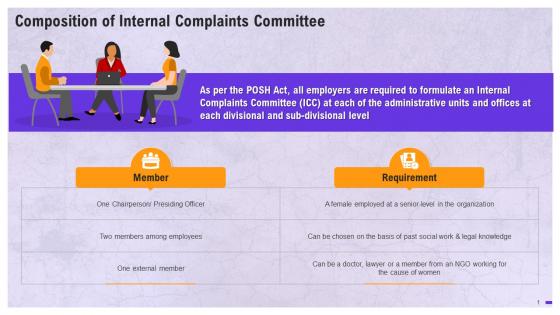
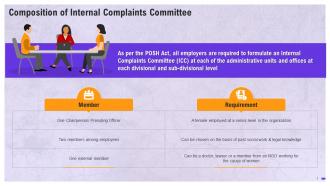
This slide depicts the composition of the Internal Complaints Committee as the POSH act mandates.
People who downloaded this PowerPoint presentation also viewed the following :
Composition Of Internal Complaints Committee Training Ppt with all 17 slides:
Use our Composition Of Internal Complaints Committee Training Ppt to effectively help you save your valuable time. They are readymade to fit into any presentation structure.









FAQs for Composition Of Internal Complaints
Look, your ICC training needs to cover the basics - how to investigate complaints, what actually counts as harassment, and keeping things confidential. Investigation techniques are huge. They'll need trauma-informed interviewing skills, evidence collection methods, plus how to write solid findings reports. Due process is non-negotiable too. Honestly, most people underestimate how tricky this stuff gets! You're basically teaching them to protect everyone's rights while creating a safer workplace. Oh, and don't forget refresher training every year - laws change and you don't want to get caught behind.
Start with a workplace assessment to figure out your actual risk areas. Male-dominated industry? Focus hard on bystander intervention stuff. Remote teams need training on digital harassment and weird virtual meeting dynamics - honestly that's becoming huge now. Survey your employees first about what they've actually seen or experienced, then build your role-plays around those real patterns instead of generic BS examples. HR complaints from the past are basically your roadmap. Some companies even use anonymized versions of their actual incidents, which hits way harder than made-up scenarios. It's all about making it relevant to what people actually deal with.
POSH Act 2013 is your bread and butter here - that's what drives all ICC stuff. You'll also want relevant IPC sections covering sexual harassment definitions. Your org's Service Rules are crucial since they lay out disciplinary procedures. Constitutional provisions on gender equality sound intimidating but they're honestly not that complex. Labor laws plus any state amendments should get a mention too. Oh, and definitely throw in real case examples - people zone out without practical scenarios showing how this legal stuff actually works in the workplace. Makes it way more relatable than just theory.
Role-playing is honestly a game-changer for ICC training. Your team gets to mess up in practice instead of fumbling through real complaints. They're actually working through those super awkward conversations and learning to stay calm when things get heated. It's way better than just memorizing policies – people can spot their own biases and get comfortable with the whole process. The key is using scenarios that mirror what you guys actually deal with. I mean, generic examples are fine but the realistic stuff hits different. Plus everyone builds confidence without the pressure of screwing up someone's actual case.
Oh man, so many committees mess up the basics. Poor documentation is huge - people forget to write stuff down properly. Personal bias creeps in way more than you'd think too. Some rush through everything or completely blow confidentiality (yikes). Training really saves your butt here - teaches you how to actually interview witnesses, what questions to ask, when you're in over your head and need outside help. Plus it forces you to check your own assumptions, which honestly we all need. Don't let your committee wing it on the first case.
Treat complaints like classified info - only talk details with ICC members working that specific case. Never drop hints around non-ICC people, even casual stuff. I've literally watched cases blow up because someone said something "innocent" at lunch. Lock up all documents (physical files secured, digital ones encrypted) and don't leave anything on your desk. Tell complainants upfront you'll keep things confidential but can't promise total secrecy since investigating means sharing some info. Explain what might get shared and with who. Honestly, being crystal clear from the start saves everyone headaches later.
Look at pre/post assessments to see if people actually retained anything. Feedback scores matter too - they'll tell you if the training clicked or if everyone just zoned out. Honestly, the real test is watching complaint handling times and investigation quality afterward. That's where you see who actually learned vs. who just showed up. Also track how many complaints get resolved early on, before they blow up. Anonymous surveys help gauge if people feel comfortable reporting stuff. Oh, and definitely do quarterly check-ins - you want to see if the workplace culture is actually improving or if it's still the same old mess.
Honestly, VR training scenarios work really well for this stuff - your ICC folks can practice handling complaints without the real-world pressure. Gamified online modules are solid too. Quiz formats, case simulations, that whole thing. Video demos with actual people beat PowerPoint slides every time, trust me on that one. Collaboration platforms let everyone bounce ideas off each other in real time, which is huge. Oh, and don't go crazy implementing everything at once - maybe start with interactive case studies since they're pretty easy to roll out first.
Start with different training formats - videos work for some people, but others need hands-on workshops or reading materials. Cover cultural perspectives on harassment that actually match your workplace diversity. Don't schedule everything during family dinner time if possible (honestly, people have lives). Materials should be in local languages, venues need to be accessible, and create spaces where questions feel safe. Oh, and survey people afterward - you'll figure out what bombed and what actually helped for next time.
Give your ICC people real communication frameworks and role-playing that actually matches workplace drama. They need active listening skills, de-escalation tactics, and ways to stay neutral when things blow up. This gets super messy with personal relationships involved - I've seen it firsthand. Train them to spot their own biases and know when to bail on a case. Practice scripts for awkward conversations where they can screw up without consequences. Oh, and definitely pair newbies with veterans who've handled complex situations before. That mentorship thing really works.
Hey! There's actually tons of ways to stay updated. Google alerts are clutch - just set them for "POSH Act updates" and "ICC guidelines." Online databases like Manupatra or SCC have all the latest case law, though fair warning, the legal speak gets pretty heavy. The Ministry of Women and Child Development drops helpful guidelines regularly too. Most orgs run refresher webinars throughout the year which are honestly way more digestible than reading through dense legal docs. I always forget to check for updates myself, so the automated alerts really save me.
Definitely dig into your old ICC cases - they're honestly way better than any training manual. After each case, have your team do a quick debrief while everything's still fresh. What tripped people up? Where were the evidence gaps? Which procedures caused headaches or delays? Those real situations make the best training scenarios. You can tackle the actual biases that came up, fix protocols that didn't work, and address knowledge gaps you discovered. Generic training modules are fine I guess, but your own cases? That's where the real learning happens. Way more targeted and useful.
Every 6-12 months, run follow-up training sessions for your ICC folks. Skip the boring PowerPoint stuff though – nobody's paying attention to that. Real case studies work way better, just anonymize them obviously. Let people actually practice interviewing techniques or work through decisions together. Mix things up by rotating who leads sessions or bringing in legal experts when needed. Oh, and definitely send a quick survey first to see what topics they want to cover. Keeps things focused on what they actually need instead of what you think they need. Way more effective than just rehashing the same theoretical stuff every time.
Honestly, real cases are a game-changer for ICC training. Pull anonymized stuff from your org or similar industries - way better than made-up scenarios. Walk through actual investigations, how they evaluated evidence, the whole decision process. Focus on the tricky ones where witnesses contradict each other or there's weird power dynamics involved. Those messy situations teach pattern recognition better than any textbook will. Facilitate good discussions about what worked, what bombed, different approaches they could've taken. Your team will actually remember this stuff when they're dealing with similar drama later. Trust me, it sticks.
Definitely do it twice a year if possible - annual training is the bare minimum but honestly feels like not enough. New people absolutely need training within their first 30 days, no exceptions there. Quick refreshers whenever policies change too, which seems to happen more often than it should these days. I'd throw in quarterly check-ins to go over any weird cases that popped up. The whole point is keeping everyone comfortable with the process so they don't freeze up when complaints come in. Set up your calendar now or you'll keep pushing it off!
-
This design is not only aesthetically pleasing but it has many uses making the cost worthwhile. The graphics look stunning, and you can edit them as per your needs.
-
Amazing slides! Unique, attractive, and easy to understand.