


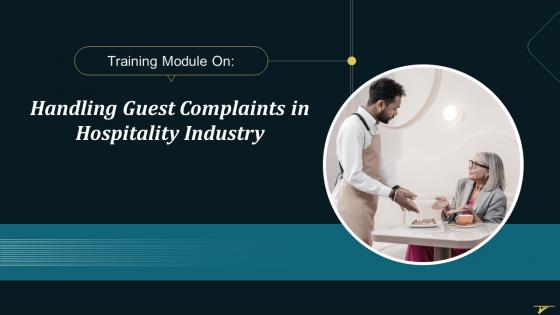
Handling Guest Complaints In Hospitality Industry Training Ppt




Try Before you Buy Download Free Sample Product
 Impress Your
 Audience
 100%
100% Editable
 Save Hours
 of Time


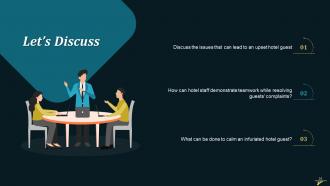
This PowerPoint Training Module on Handling Guest Complaints in Hospitality Industry, delves into the critical aspect of managing guest complaints to transform service challenges into opportunities for excellence. It begins by categorizing common complaints encountered in hotels and outlines the unexpected benefits of guest complaints. The PowerPoint Deck also introduces the concept of the Service Recovery Paradox and practical strategies for dealing with upset guests, tailored approaches for different complaint types, and essential dos and donts provide a comprehensive toolkit for hospitality professionals. The Module culminates with key takeaways and discussion questions to encourage reflection and learning.
People who downloaded this PowerPoint presentation also viewed the following :
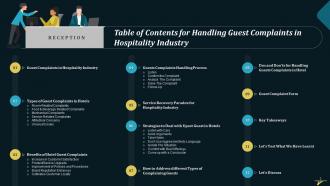
Content of this Powerpoint Presentation
Slide 3
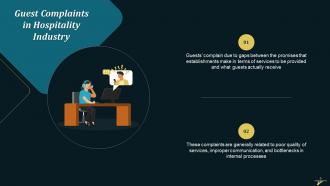
This slide provides information on guests’ complaints due to gaps between the promises that hotels make in terms of services to be provided and what the guests actually receives.
Slide 4
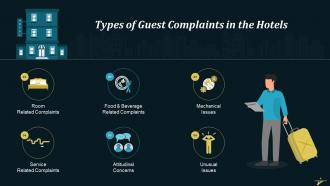
This slide provides information about types of guest complaints in hospitality industry. These are: Service-related complaints, attitudinal complaints, mechanical complaints, unusual complaints, room related complaints, and food & beverage related complaints.
Instructor’s Notes:
Types of guest complaints are:
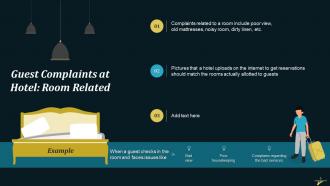
Room Related Complaints:
- Complaints related to a room include poor view, old mattresses, noisy room, dirty linen, etc.
- When guests look for online reservations, the pictures uploaded by the hotel should match with the room they have been assigned
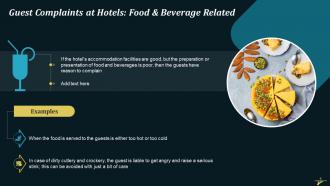
Food and Beverage Related Complaints:
- If the hotel's accommodation facilities are good, but the preparation or presentation of food and beverages is not good, then the guests will find a reason to complain
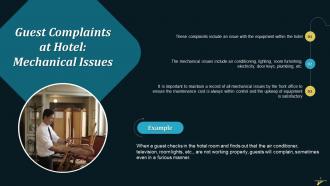
Mechanical Complaints:
- These complaints include an issue with the equipment within the hotel
- The mechanical issues include air conditioning, lighting, room furnishing, electricity, door keys, plumbing, etc.
- It is important to maintain records of all the mechanical issues by the front office to have a clear check of things that require maintenance
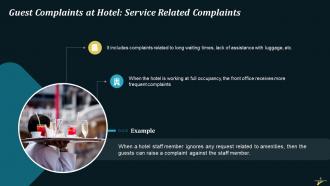
Service-Related Complaints:
- It includes complaints related to long waiting times, lack of assistance with luggage, etc.
- When the hotel is working at full occupancy, the front office receives more frequent complaints
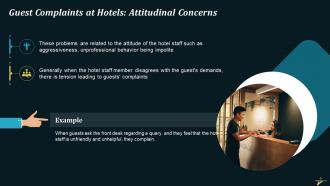
Attitudinal Complaints:
- These problems are related to the attitude of the hotel staff such as impoliteness, aggressiveness and unprofessional behavior
- Generally, when the hotel staff member disagrees with the guest's demands, there is tension leading to guests' complaints
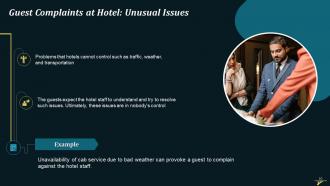
Unusual Complaints:
- Problems that hotels cannot control such as traffic, weather, and transportation
- Guests expect the hotel staff to understand and try to resolve such issues. Ultimately, these issues are uncontrollable
Slide 5
This slide provides information about the room related complaints of guests in hotels such as poor view, old mattresses, noisy room, dirty linen, etc.
Slide 6
This slide provides information about the food and beverage related complaints of guests in hotels. It explains that if the hotel's accommodation facilities are good, but the preparation or presentation of food and beverages is not good, then the guests have a reason to complain.
Slide 7
This slide provides information about the mechanical complaints of guests in hotels such as non-functional AC, lighting, room furnishing, electricity, door keys, plumbing, etc.
Slide 8
This slide contains information on service-related complaints by guests in hotels. It also explains that when the hotel is working at full occupancy, then service-related complaints are received more often by the front office.
Slide 9
This slide provides information about the attitudinal complaints of guests in hotels. It explains that these problems are related to the attitude of the hotel staff such as impoliteness, aggressiveness and unprofessional behavior.
Slide 10
This slide provides information about the unusual complaints of guests in hotels. It explains that the guests expect the hotel staff to understand and try to resolve such issues, but these issues are out of their control.
Slide 11
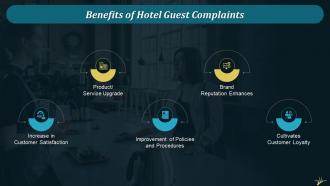
This slide provides information about the importance of hotel guests complaints such as customer satisfaction enhancement, product/service upgrade, improvement of policies and procedures, minimize damage to brand reputation, increase customer loyalty.
Instructor’s Notes:
Benefits of guests’ complaints are:
Increase in Customer Satisfaction:
- When guests share their experiences with the hotel staff, it helps the hotel to make changes and improve their services
- After receiving feedback, hotels should try to resolve the complaints immediately
- This will create a good impression on the guests and will satisfy them
Product/Service Upgrade:
- When a guest complains regarding service issues, it helps the hotel to upgrade its services
- It also helps to get insight on what areas of the hotel should be worked upon and upgraded
- By reading bad reviews, the hotel customer care team can find new good ideas for providing new services and in a manner that guests want
Improvement of Policies and Procedures:
- Hotels have policies and procedures designed for smooth running of business
- Negative feedback highlights flaws, and the hotel gets the idea about what needs to be improved
- Hotel management should analyze the feedback and make policy changes, if needed
Brand reputation Enhances:
- When feedback or complaint is resolved, and the guest is satisfied with the resolution, it helps to prevent any damage to the brand
Cultivates Customer Loyalty:
- When customer complaints and feedback are taken seriously and resolved, then the guests become loyal and spend more time and money with their increased stays and use of hotel services
- When a guest is loyal, they market the hotel to their friends and colleagues, acting as a brand advocate
Slide 12
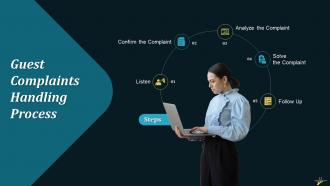
This slide provides information about guests’ complaints handling process. The steps are: Listen, confirm the complaint, analyze the complaint, solve the complaint, and follow up.
Instructor’s Notes:
Steps to handle guests’ complaints are:
Listen:
- Listening involves letting the customer speak, without interruption
- It also involves writing down notes
- These notes can be used to track customer complaints
Confirm The Complaint:
- This step involves the understanding of complaints by the customer service representative
- It involves the rephrasing and rewording of customer complaint
Analyze The Complaint:
- This step involves asking drill-down questions to understand the specific problem
- Based on guests' answers, the issue is analyzed and solutions sought
Solve The Complaint:
- This step involves attempting to find a viable solution for the customer’s complaints
- The solution may involve compensating guests with service coupons or discounts on their final bill
Follow Up:
- After providing the guests with best solution, ask for their feedback about the complaint resolution
- Enquire guest if they have any other issue that they want to be addressed
Slide 13
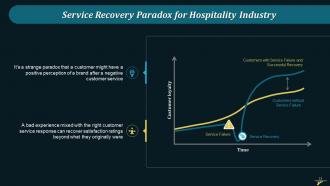
This slide covers information regarding how a customer can attain a positive perception of a brand even after encountering a bad experiences in a hotel.
Slide 14
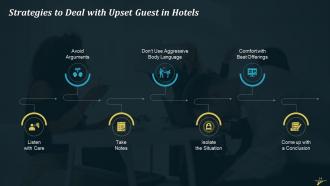
This slide provides information about dealing with angry guests and their complaints. The ways are: Listen with care, avoid arguments, take notes, don’t use aggressive body language, isolate the situation, offer immediate solution and arrive up with a conclusion.
Instructor’s Notes:
Recommendations to deal with upset guest in hotels are:
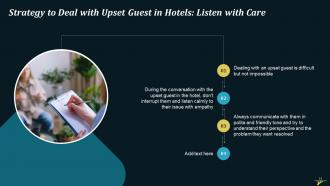
Listen with Care:
- Dealing with an upset guest is difficult but not impossible
- During the conversation with the upset guest in the hotel, don’t interrupt and listen calmly to their issue with empathy
- Always communicate with them in polite and friendly tone and try to understand their issues
Avoid Arguments:
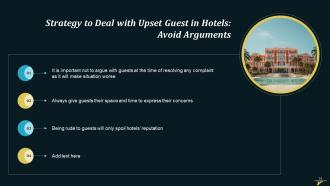
- It is important not to argue with guests at the time of resolving any complaint as it will make situation worse
- Always give guests space and time to express their concerns
- Being rude to guests will only spoil hotels' reputation
Take Notes:
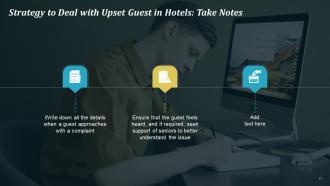
- Write down details when a guest approaches with a complaint
- Ensure that the guest feels heard, and if required, seek support of seniors to better understand the issue
Don’t Use Aggressive Body Language:
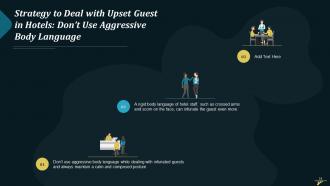
- Don’t use aggressive body language while dealing with infuriated guests; ensure you always maintain a calm and composed posture
- Rigid body language of hotel staff, such as crossed arms and scorn on the face, can infuriate the guest
Isolate the Situation:
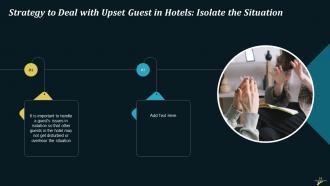
- It is important to handle guests’ issues in isolation so that other guests in the hotel do not get disturbed or overhear the situation
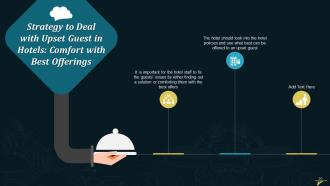
Offer Immediate Solution:
- Hotel staff must fix the guests' issues with an immediate solution to avoid unnecessary escalation of the situation
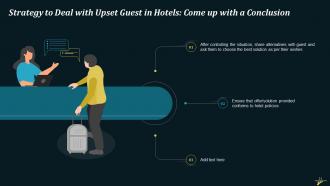
Come up with a Conclusion:
- After controlling the situation, share alternatives with guest and ask them to choose the best solution from their perspective
- Double check that offer/solution provided conforms with hotel policies
Slide 15
This slide provides information regarding the recommendation to deal with upset guests’ complaints by listening to them with care.
Slide 16
This slide provides information regarding a recommendation to deal with upset guests’ complaints by avoiding arguments. It also explains that it is important not to argue with guests at the time of resolving any complaint.
Slide 17
This slide provides information regarding the recommendation to deal with upset guests’ complaints by taking notes. It also explains that the guest must feel that he has been heard, and the hotel staff should seek support of a senior to handle the situation, if needed.
Slide 18
This slide provides recommendation on how to deal with upset guests’ complaints by avoiding aggressive body language as it is counterproductive.
Slide 19
This slide provides recommendation to deal with upset guests’ complaints by isolating the situation; this ensures other guests in the hotel do not get disturbed or overhear the issue.
Slide 20
This slide provides recommendation to deal with upset guests’ complaints by comforting guests with the best offers.
Slide 21
This slide provides information that post controlling a conflict situation, share alternatives with guests and ask them to choose the best solution as per their wishes.
Slide 22
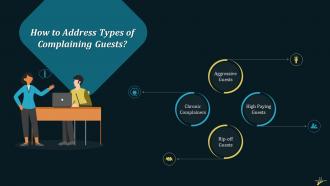
This slide provides information on types of complaining guests such as aggressive guests, high paying guests, rip-off guests, and chronic complainers. It also provides solutions on to resolve their issues.
Instructor’s Notes:
Types of complaining guests are:
Aggressive Guests:
- These types of guests are often loud and detailed. Remain calm and listen to them with complete attention
- Try not to give any excuses; and follow hotel policies and offer them a solution
High Paying Guests:
- These guests are willing to pay more in return for the best services
- Their way of complaining is reasonable and mannerly
- They listen patiently and respectfully
- If required, the hotel staff can ask more questions from these guests to resolve their issues
Rip-Off Guests:
- These guests are motivated towards getting discounts and complimentary offers from the hotel
- They do not have much interest in resolving the issue
- It is important for the hotel staff to respond with evidence and facts to complaints from such guests
Chronic Complainers:
- These guests are never satisfied and find fault in everything they see
- The hotel staff must be extremely patient with such guests
- Always listen to their issues and try not to get angry at any point
- Apologize and make them believe that their issue will be resolved
Slide 23
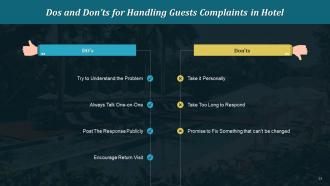
This slide provides information regarding the dos and don'ts while handling guests’ complaints in a hotel.
Slide 24
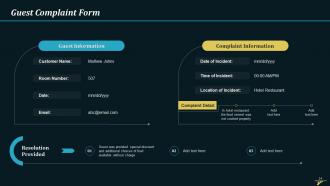
This slide showcases the complaint form for customers to escalate an issue. The major sections of the grievance form are customer information and complaint information. It also includes customer name and department along with incident details such as date, time and location.
Slide 25
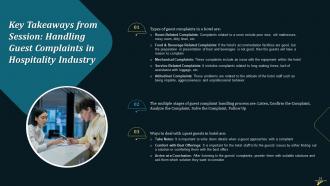
This slide lists the key takeaways of guests’ complaints in hospitality industry training session. A trainer can use this slide to highlight important concepts such as types of guests’ complaints, benefits of hotel guest complaints, handling process for guests’ complaints and ways to deal with angry customers.
Slide 42 to 57
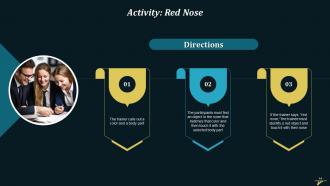
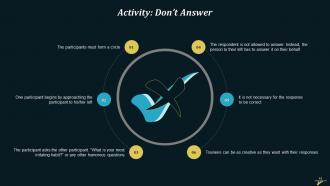
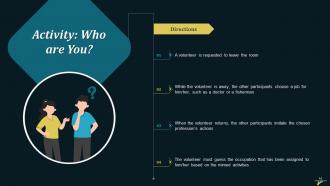
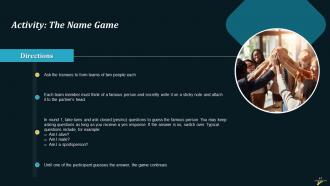
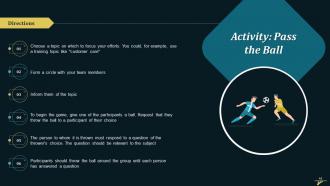
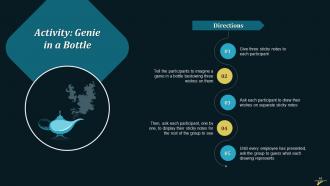
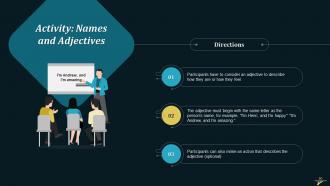
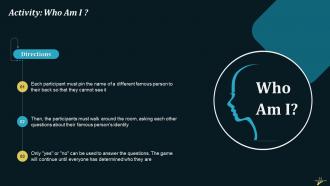
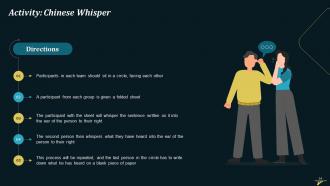
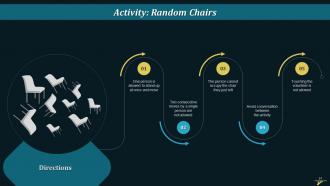
These slides contain energizer activities to engage the audience of the training session.
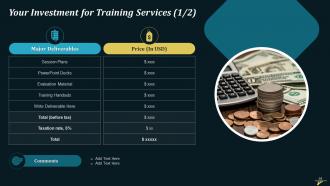
Slide 58 to 85
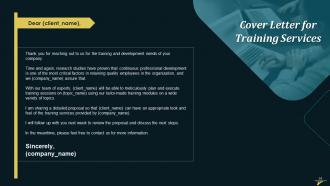
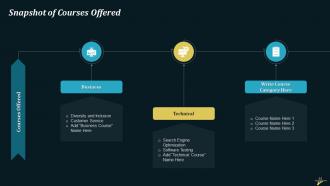
These slides contain a training proposal covering what the company providing corporate training can accomplish for the client.
Slide 86 to 88
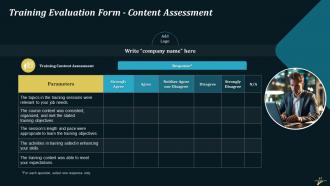
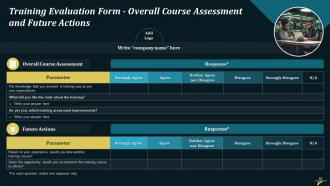
These slides include a training evaluation form for instructor, content and course assessment.
Handling Guest Complaints In Hospitality Industry Training Ppt with all 96 slides:
Use our Handling Guest Complaints In Hospitality Industry Training Ppt to effectively help you save your valuable time. They are readymade to fit into any presentation structure.


























FAQs for Handling Guest Complaints In Hospitality
Dude, you're gonna see the same stuff over and over. Dirty rooms are huge. Broken AC, crappy wifi, noisy neighbors - that whole mess. Staff being slow or rude pisses people off too. Oh, and billing screwups? Those make guests lose their minds because nobody wants to feel scammed. Food complaints happen constantly, plus broken amenities like pools being "closed for maintenance" for weeks. Here's the thing though - most of this is totally avoidable if you stay on top of maintenance and actually train your people. Keep tracking what complaints you get so you can fix patterns before they blow up.
Honestly, role-playing is huge for this stuff. Get your team practicing with real scenarios so they don't freeze up when someone's actually mad. Teach them that LAST method - Listen, Apologize, Solve, Thank. Works every time. But here's what really makes a difference: give your front-line people actual power to fix things. Let them comp meals or offer discounts without hunting down a manager. Nobody wants to wait around while staff asks for permission, you know? Start with 30-minute weekly sessions using complaints you've actually gotten. Way more effective than generic training nonsense.
Dude, you've gotta jump on those online reviews fast - Google, TripAdvisor, all that stuff. When guests blast you publicly, other people are totally watching how you respond. I learned this the hard way tbh. Acknowledge what went wrong, say sorry like you mean it, then offer to fix things. Don't get defensive even if the review seems unfair. The goal isn't really convincing that angry guest - it's showing future customers you actually care about problems. Always move the real conversation to email or phone though. Public back-and-forth looks messy.
Dude, quick responses are everything in hospitality. Guests just want to feel heard, you know? Like, I've literally seen people become regulars because we got back to them in under an hour - even for stupid minor complaints. It's wild how much that matters to them. The trick is hitting them back immediately with "got it, we're on this" then actually following through with the fix. Can't always solve everything instantly, but that fast acknowledgment stops them from getting really pissed off. Shows you're not ignoring them, which honestly might matter more than the actual problem itself.
Honestly, just log everything right away - guest name, room, what happened, when they told you. Don't use sticky notes (trust me on this one lol). Our centralized system saves so much headache later. Write down if they seemed really upset and what you promised them. Someone else might need to handle the follow-up, so make it super clear what's going on. Oh, and actually assign who's dealing with it - otherwise stuff just falls through the cracks. Start sorting complaints by type too. You'll catch patterns way faster and fix problems before they get worse.
Honestly, chatbots are a game-changer for handling complaints. Your guests can report issues any time of day instead of waiting around for someone to answer the phone. The bot grabs all the important stuff - room number, what's wrong, how urgent it is - then sends everything to the right team. For basic problems like WiFi being spotty or late room service, it can fix things on the spot. Your staff gets way better info too, so they're not playing 20 questions with every guest. Just make sure it knows when to hand off the tricky stuff to actual humans - nobody wants to argue with a robot about a serious problem.
Dude, complaint handling is seriously everything for customer satisfaction. Handle it right? You'll actually get MORE loyal customers than if nothing went wrong - crazy but true. Mess it up though and those bad reviews will spread everywhere. Quick response is key, plus actually listening to what they're saying. Most people honestly just want to feel heard, you know? And see that you give a damn about fixing their problem. I always tell my team - think of complaints as chances to shine, not headaches. Follow through matters too. Can't just apologize and disappear.
Here's what I'd do - acknowledge the complaint publicly but keep it super short and move things private ASAP. Like "Thanks for reaching out, we'd love to discuss this with you directly." Don't give details even if you're tempted to defend yourself (trust me on this one). Other guests will see you actually respond to issues, which is good. But all the real conversation happens over phone or email. That way you protect everyone's privacy but still look professional. Oh and definitely reach out to them privately first before doing anything else.
Check your review sites and social media daily - guests love airing grievances online. Walk around the property yourself because you'll catch stuff before they do (burnt lightbulbs, funky smells, whatever). Your front desk team needs to listen for hints during check-in. Someone saying "hopefully it's quiet" probably got burned before. Send surveys within 24 hours while everything's still fresh in their heads. Oh, and make sure staff can easily flag issues they overhear - you'd be surprised what people complain about in elevators.
Yeah, guests from different cultures handle complaints so differently. Americans? They'll just tell you exactly what's wrong and want it fixed ASAP. Japanese guests are way more subtle - you've gotta read between the lines when they're unhappy. Germans want the whole breakdown of your solution plan. What works is watching their communication style from the start. Some want that immediate "we're on it!" energy, others need the formal acknowledgment first even if fixing things takes time. I've learned you can usually tell pretty quick which approach will land better with each person.
Look, there are four things you need to track if you want to know if your complaints system actually works. Response time is obvious - how fast are you getting back to people? Then measure your resolution rate, like what percentage you're actually fixing. Watch for recurring complaints too, because if the same stuff keeps happening, you've got bigger problems. Oh, and definitely check satisfaction scores after you handle things - that's honestly the most telling metric. I'd say run these numbers monthly. You'll spot the weak points pretty quick and know where to focus your energy.
Following up after fixing complaints is honestly a game-changer for guest loyalty. Most places just solve the problem and move on, but when you actually check back later, guests feel like you genuinely care about them as people. A quick call or text asking "How's that AC working now?" shows you're invested in the outcome, not just crossing things off your list. It's pretty low-effort too - doesn't need to be some formal survey or whatever. You'll catch any lingering issues and honestly? It separates you from competitors who think their job ends when they hand over the room key.
First thing - just let them get it all out without jumping in. I know it's tempting to defend yourself but don't. After they're done, own whatever went wrong (even if it wasn't technically your fault). Then throw out a few different ways to fix it. Speed matters way more than people think here. I've literally watched angry customers flip to writing great reviews just because someone moved fast and genuinely cared. Oh, and definitely circle back later to check they're actually happy. Honestly, sometimes how you handle the mess becomes the thing they remember most.
Yeah, you definitely need management jumping in on the big complaints. Some guests won't calm down until they talk to "the boss" - just how it is. Plus your managers can actually do something about it, like comp rooms or bend policies that front desk can't touch. It shows you're taking their problem seriously instead of just passing them around to different staff members. Make sure your managers know how to handle pissed off guests though - I've seen some who just make things worse. But when it works? Total game changer for keeping guests happy.
Ugh, social media is like having a megaphone for every unhappy guest now. People post angry reviews on Facebook and Google before they'll even call you directly - it's wild. You've got to watch these channels like a hawk because one bad post can blow up fast. The weird part? Everyone's watching how you respond, so you're basically handling drama in public. But honestly, when you nail a good response, other potential guests see that you actually give a damn about fixing problems. Set up alerts for your place and try to respond within a few hours tops.
-
Amazing slides! Unique, attractive, and easy to understand.
-
I was able to find the right choice of PPT template for my thesis with SlideTeam. Thank you for existing.