

Consumer loyalty powerpoint presentation slides




Try Before you Buy Download Free Sample Product
 Impress Your
 Audience
 100%
100% Editable
 Save Hours
 of Time


Increase customer retention with our visually appealing Consumer Loyalty Powerpoint Presentation Slides. Showcase how a customer’s loyalty program can boost sales using this content ready topic-specific presentation deck. Incorporate consumer satisfaction PowerPoint templates to represent the steps of acquiring loyal clients. User retention PowerPoint complete deck covers various slides & represents related topics such as user retention strategy, consumer satisfaction, loyalty program strategy, client service, user success, customer lifetime value, customer database segmentation, ideas for loyalty program automation and many more. Furthermore, all slides given in this professionally designed consumer service presentation design are available with customization option, you can alter these by changing color text & style. A brand loyalty program can improve the return on your marketing. Marketing professionals can use these PPT visuals to attract & retain customers. Download this topic-specific user retention & engagement PowerPoint templates to represent tactics to encourage the client’s loyalty. Get all doubts out of their heads with our Consumer Loyalty Powerpoint Presentation Slides. They help dismiss all apprehensions.
People who downloaded this PowerPoint presentation also viewed the following :
Content of this Powerpoint Presentation
Slide 1: This slide introduces Consumer Loyalty. State Your Company Name and begin.
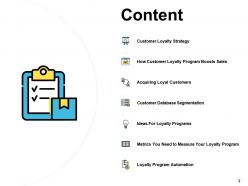
Slide 2: This slide shows Content of the presentation.
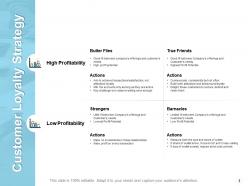
Slide 3: This slide presents Customer Loyalty Strategy with high and low profitability.
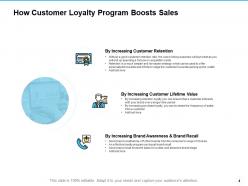
Slide 4: This slide describes How Customer Loyalty Program Boosts Sales.
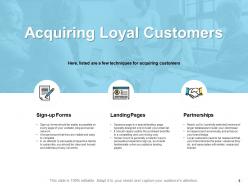
Slide 5: This slide represents Acquiring Loyal Customers through- Sign-up Forms, Landing Pages, Partnerships.
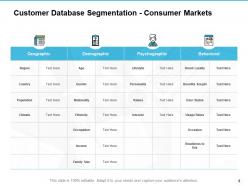
Slide 6: This slide showcases Customer Database Segmentation - Consumer Markets describing geographic, demographic, psychographic and behavioral factors.
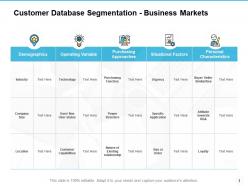
Slide 7: This slide shows Customer Database Segmentation - Business Markets.
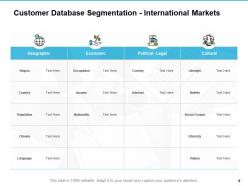
Slide 8: This slide presents Customer Database Segmentation - International Markets.
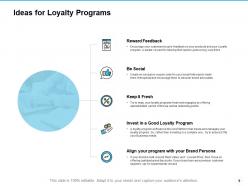
Slide 9: This slide displays Ideas For Loyalty Programs describing- Be Social, Invest in a Good Loyalty Program, Reward Feedback, Align your program with your Brand Persona, Keep It Fresh.
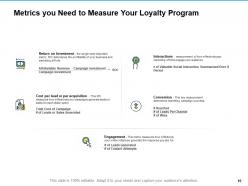
Slide 10: This slide represents Metrics You Need To Measure Your Loyalty Program.
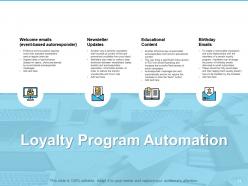
Slide 11: This slide showcases Loyalty Program Automation describing- Welcome emails, Newsletter Updates, Educational Content, Birthday Emails.
Slide 12: This slide displays Consumer Loyalty Icons.
Slide 13: This slide is titled as Additional Slidesfor moving forward.
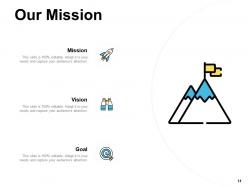
Slide 14: This is Our Mission slide with related imagery and text.
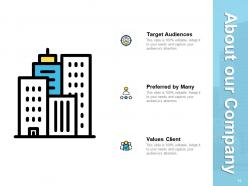
Slide 15: This is About our Company slide to show company specifications etc.
Slide 16: This is a Venn slide with text boxes.
Slide 17: This is Our Team slide with names and designation.
Slide 18: This is a Target slide. State your targets here.
Slide 19: This is an Idea Bulb slide to state a new idea or highlight information, specifications etc.
Slide 20: This is a Financial slide. Show your finance related stuff here.
Slide 21: This is a Timeline slide to show information related with time period.
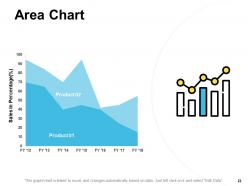
Slide 22: This slide displays Area Chart with two products comparison.
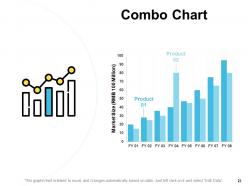
Slide 23: This slide showcases Combo Chart with two products comparison.
Slide 24: This is a Thank You slide with address, contact numbers and email address.
Consumer loyalty powerpoint presentation slides with all 24 slides:
Bring in brightness with our Consumer Loyalty Powerpoint Presentation Slides. Add color to the entire endeavour.

FAQs for Consumer loyalty
Customers want you to actually know them when they switch between your app, website, whatever. Personalization matters, but so does just solving their problems fast. Mobile has to work perfectly - most people are on their phones anyway. Trust is massive right now with all the privacy stuff going on. Loyalty programs are kinda meh unless they're actually good. Better to just consistently deliver value and listen when people complain. Oh, and make your whole customer journey less annoying - that beats fancy features every time. Actually responding to feedback goes surprisingly far too.
Okay so brand consistency is seriously important for getting people to stick around long-term. When your visuals, messaging, and overall vibe stay the same across everything, customers know what they're getting. It builds trust, you know? Inconsistent branding just looks sloppy and confuses people - like, are you even the same company? Eventually that reliability turns into real emotional connection. They're not just buying your stuff anymore, they're actually invested in who you are as a brand. You've gotta keep it consistent everywhere though - website, social, packaging, how your team talks to customers. I'd start by checking all your touchpoints for any weird inconsistencies.
Dude, customer service literally makes or breaks everything. People will stick with you if they feel heard - not just processed through some corporate machine. I've watched companies with okay products get crazy loyal customers purely because their support team actually gives a damn. Quick fixes matter, but honestly? Treating people like actual humans matters more. One terrible experience can destroy months of good ones though, so consistency is huge. Don't make your team follow rigid scripts either. Let them solve real problems.
Okay so basically when you actually engage with people on social media, they feel like you give a damn about them as humans, not just wallets. Respond to their comments, repost their stuff when they tag you - that kind of thing creates real conversations instead of you just shouting into the void. Everyone wants to feel like they're part of something, right? And honestly, when other customers see you helping people out publicly, it makes you look way more trustworthy. Just be consistent about it and don't sound like a robot. I'd say spend like 15-20 minutes each day actually interacting with your followers' posts.
Look, you need both the numbers and the feelings stuff. Start with repeat purchases and customer lifetime value - that's your bread and butter. NPS is honestly kind of meh but everyone expects it, so whatever. Track how much people actually engage with you too. Churn rates are huge for catching problems early. Don't sleep on those. Customer satisfaction surveys work great if you do them quarterly instead of constantly bugging people. The trick is mixing hard data with the touchy-feely sentiment tracking. Automate what you can, survey the rest.
Dude, personalization is seriously game-changing for keeping customers coming back - we're talking 80% boost in repeat purchases. I mean, think about it... when Netflix suggests exactly what you want to watch vs. some random show, which feels better? Same thing applies to your business. Use their purchase history and browsing data to customize emails and product recs on your homepage. Those are pretty easy starting points that won't break your brain to set up. The whole psychology behind it is that people want to feel understood, not like they're getting spammed with random stuff everyone else sees.
Ugh, the worst part is customers can bounce to competitors with literally one click - zero switching costs. Margins get crushed because everyone's racing to the bottom on price. Whatever makes you special? Copied in like two weeks, I swear. Expectations go crazy high too since people are always seeing flashier deals everywhere. My advice - skip the feature wars and price matching madness. Build real relationships instead. Focus on service that actually makes people *feel* something. Way harder for competitors to steal genuine emotional connections than your latest product update.
Dude, most loyalty programs are straight up boring - just generic discounts that feel meh. What actually works? Make it personal using customer data, and create those surprise moments that aren't just "buy 10, get 1 free." Tiered rewards are clutch if they're things people actually want - exclusive experiences, early access to cool stuff. Your best customers should feel genuinely special for sticking around. Oh, and whatever you do, keep it simple to use. Nobody wants to jump through hoops. Start by asking your top customers what'd actually get them excited. That's where the gold is.
Look, customer loyalty is way more about feelings than logic. Trust comes first - people won't stick around if they don't believe you'll deliver. Emotional attachment is massive too. Customers get hooked on brands that match their vibe or values, you know? There's this weird psychological thing where once someone picks your brand, they'll convince themselves it was the right choice just to avoid feeling stupid. Social proof works like crazy - we're all sheep following what everyone else does, honestly. Start with building real trust, then focus on those emotional connections through consistent experiences.
Honestly, it's pretty straightforward - when people change how they shop, their brand loyalty changes too. Like right now with everyone price-comparing on their phones while standing in stores? That kills the old "I always buy this brand" mentality. Social media makes it worse because your customers are constantly discovering new brands through TikTok or whatever. Younger shoppers especially will ditch brands super fast if they find something more sustainable or ethical. Oh, and habit-based buying is basically dead - people actually research stuff now. You've got to watch how YOUR specific customers behave and pivot your loyalty approach accordingly.
Honestly, reputation is like the foundation of everything with customer loyalty. People will literally choose a worse product if they trust the brand more - I've watched this happen so many times it's crazy. Your customers forgive mistakes when they believe in you. They'll defend you online, recommend you to friends, the whole thing. But mess up your reputation? Game over. Nobody wants to risk buying from a brand they can't trust. They'll actually spend extra money just to avoid you. So yeah, guard that reputation obsessively because once it's gone, your loyal customers disappear with it.
Reviews are seriously like digital word-of-mouth on steroids. When customers see you actually responding to feedback—good or bad—they know you're not just some faceless company. Negative reviews? Don't panic. How you handle them matters way more than the review itself. Quick responses show you care. I learned this the hard way with my cousin's bakery actually—ignoring reviews made things so much worse. Use that feedback to actually fix stuff too. Positive reviews help other customers feel confident buying from you. Just stay consistent with replies and set up notifications so you're not scrambling to catch up later.
So loyalty and repeat buying aren't quite the same thing, though people mix them up all the time. Some customers just keep buying because you're convenient or they're lazy about switching - that's behavioral stuff. Real loyalty is different though. Those customers actually *want* your brand over others, even if competitors have better prices or whatever. Honestly, those are the ones you really want because they won't bail the second someone offers them a discount. The trick is building that emotional thing, not just making it easy for people to keep buying from you.
Okay so loyalty totally depends on who you're targeting. Younger people? They'll bounce to competitors in a heartbeat for better deals or cooler experiences. Older customers stick with what they know works. Gen Z is brutal though - if your brand doesn't match their values, you're done. Higher-income folks are picky but loyal to premium stuff they actually like. Budget shoppers care way more about price than staying loyal to one brand. Oh and income affects how long people stick around too. You'd be smart to create different loyalty programs for each group instead of doing some one-size-fits-all thing.
Dude, AI tracking purchase habits is a game changer - you can send rewards people actually want instead of random junk. Mobile apps are clutch for checking points and getting notifications. Nobody wants to dig around on a website anymore. Gamification works too, like those little progress bars that somehow make you want to hit the next level? The real magic happens when you can predict what customers need before they realize it themselves. Oh and if your loyalty program isn't mobile-ready by now, you're basically shooting yourself in the foot.
No Reviews