Customer success model powerpoint presentation slides

Slide 1 of 22
Favourites Favourites

Try Before you Buy Download Free Sample Product

Audience Impress Your
Audience
Editable 100%
Editable
Time Save Hours
of Time
The Biggest Sale is ending soon in
0
0
:
0
0
:
0
0
Presenting customer success model PowerPoint deck with slides. This complete presentation comprises of total of 22 PPT slides. It covers all the aspects of the topic and includes all the major elements such as graphs and charts to make the work easy. This presentation has been crafted with an extensive research done by the research experts. Our PowerPoint professionals have incorporated appropriate diagrams, layouts, templates and icons related to the topic. The best part is that these templates are completely editable. Customize the colour, text and icon as per your need. Click the download button below to grab this customer success model presentation deck.

Content of this Powerpoint Presentation

Slide 1: This slide introduces Customer Success Model. State Your Company Name and get started.
Slide 2: This is an Agenda slide. State company agendas here in a professional manner.
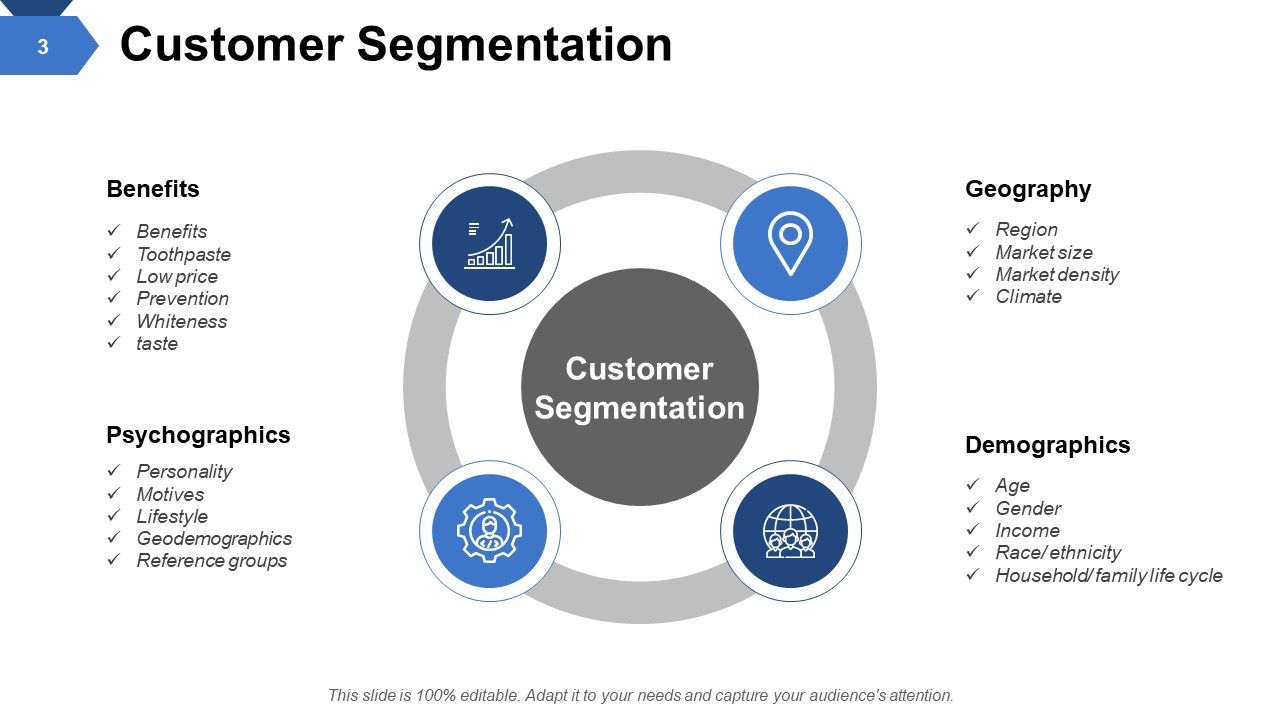
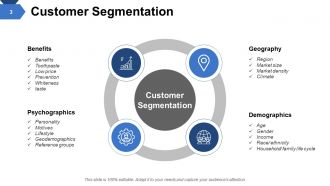
Slide 3: This slide presents Customer Segmentation segregated into- Demographics: Age, Gender, Income, Race/ ethnicity, Household/ family life cycle. Geography: Region, Market size, Market density, Climate. Psychographics: Personality, Motives, Lifestyle, Geodemographics, Reference groups. Benefits: Low price, Prevention.
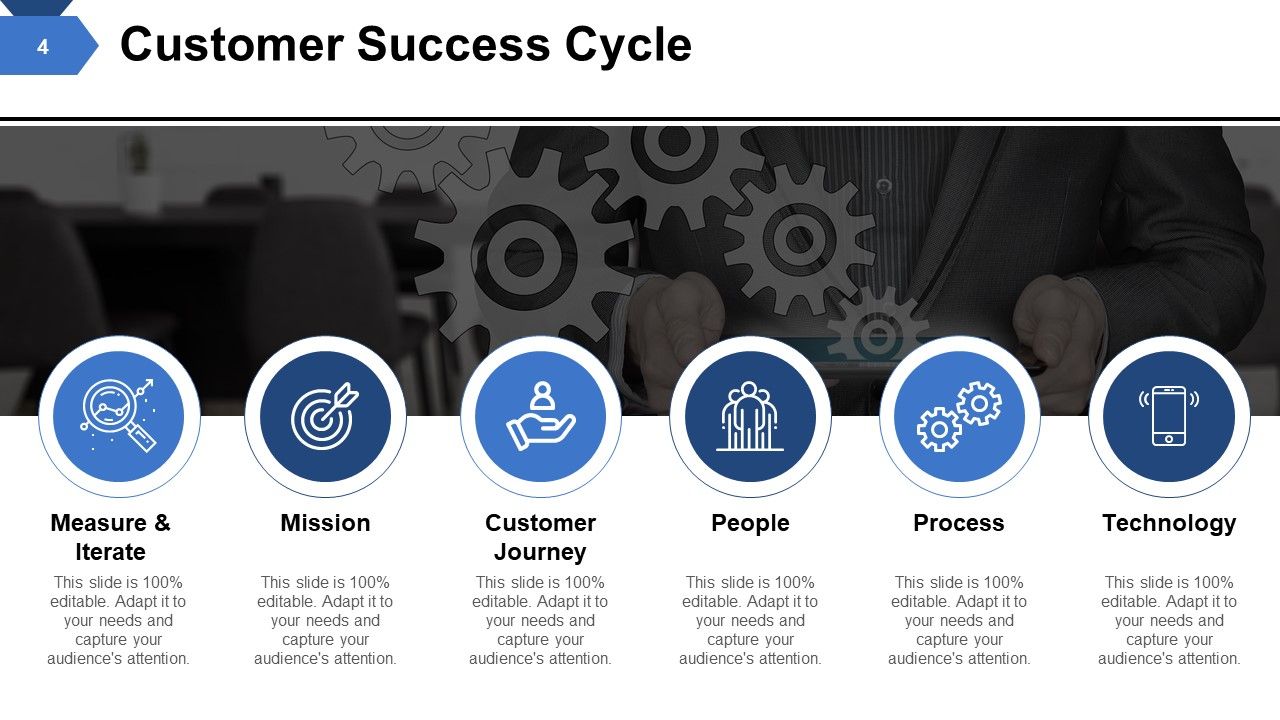
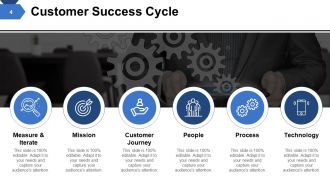
Slide 4: This slide presents Customer Success Cycle showcasing- Measure & Iterate, Mission, Customer Journey, People, Process, Technology.
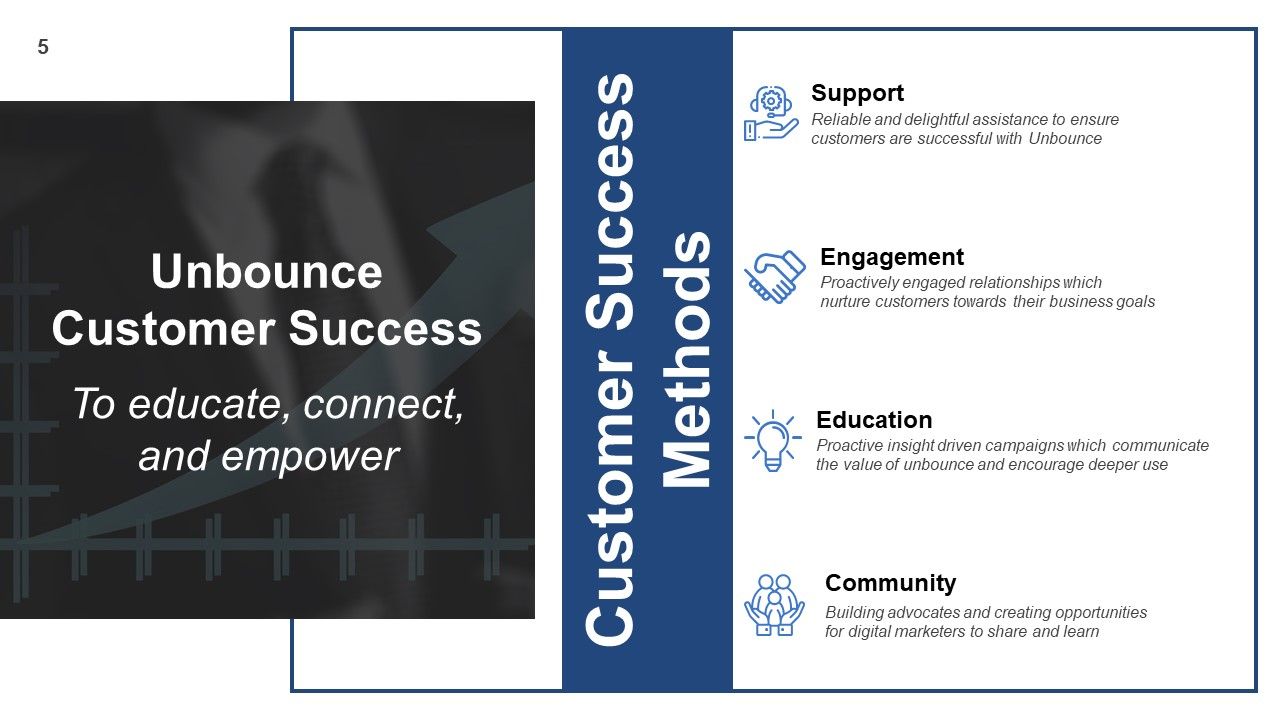
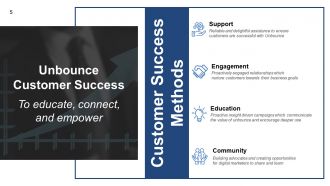
Slide 5: This slide presents Customer Success Methods divided into- Support, Engagement, Education and Community to gauge unbounce Customer Success.
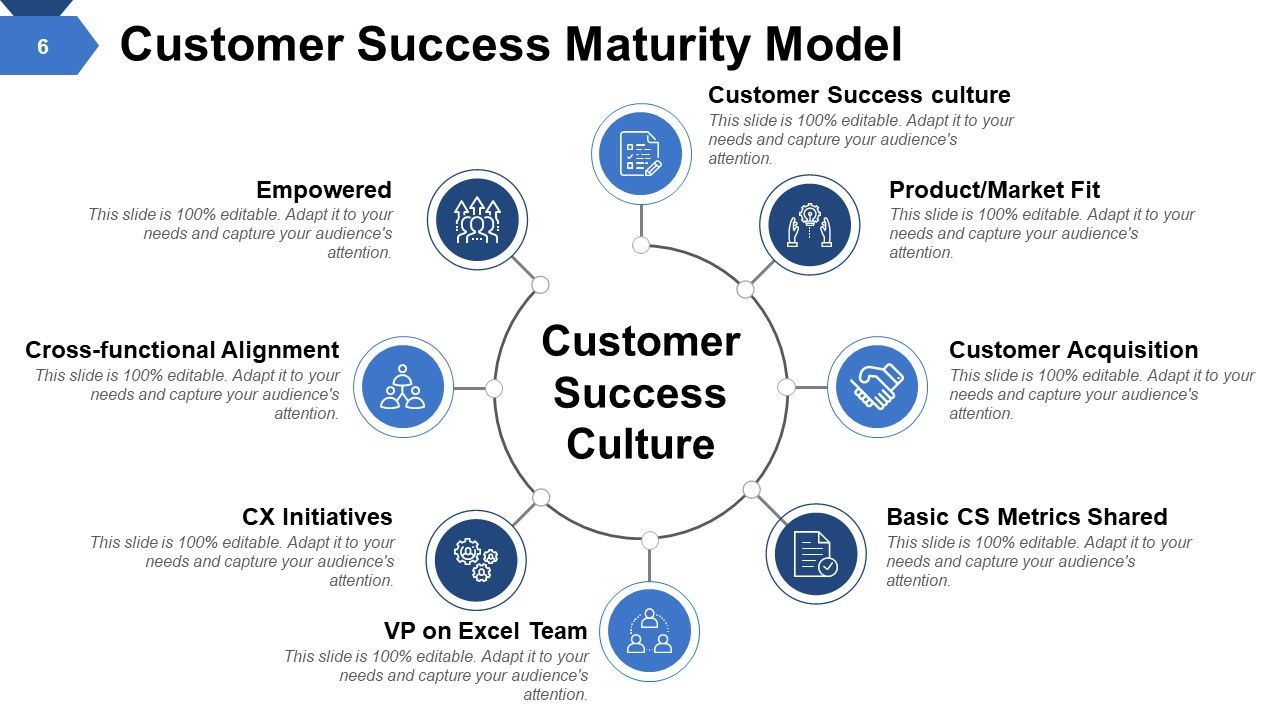
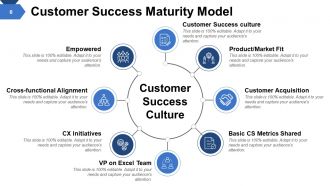
Slide 6: This slide showcases a Customer Success Maturity Model displaying- Customer Success culture, Customer Acquisition, Cross-functional Alignment, Product/Market Fit, Empowered, Basic CS Metrics Shared, CX Initiatives, VP on Excel Team, Customer Success Culture.
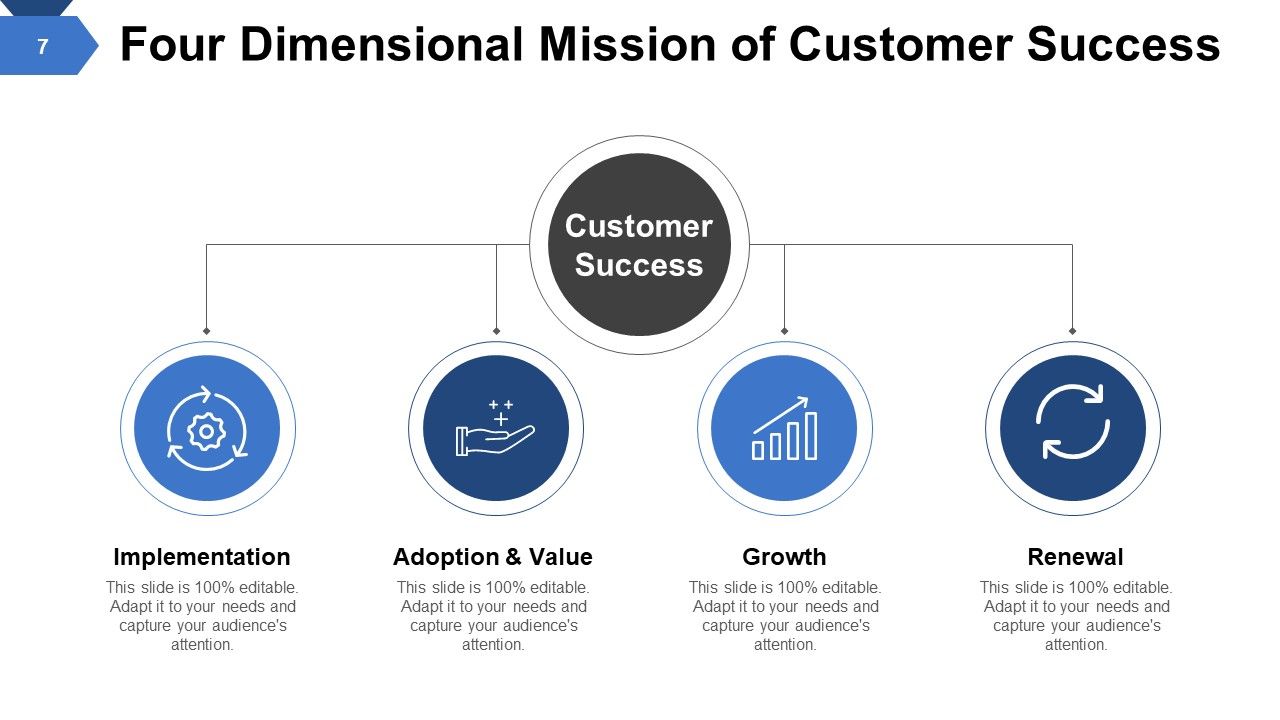
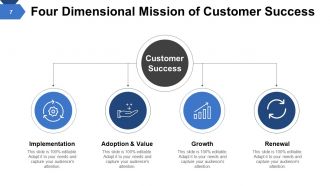
Slide 7: This slide shows Four Dimensional Mission of Customer Success showing- Customer Success, Adoption & Value, Implementation, Renewal, Growth.
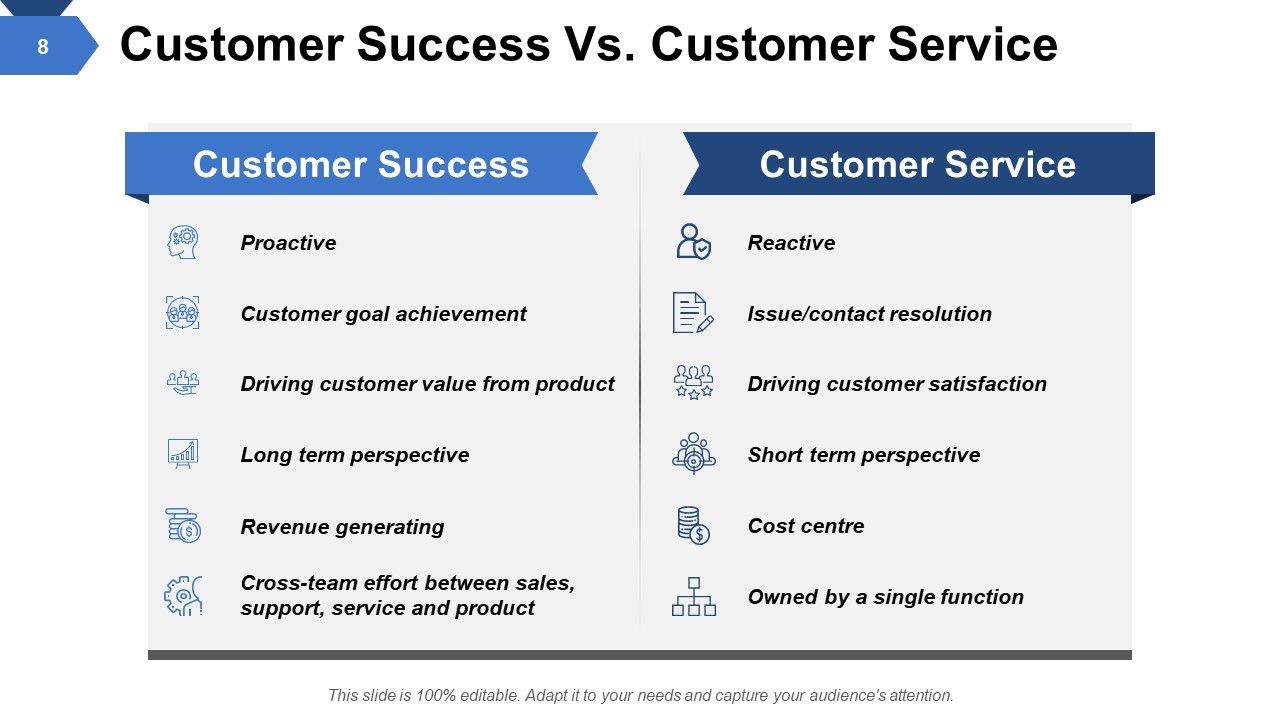
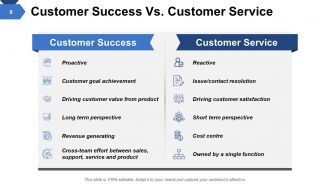
Slide 8: This slide showcases Customer Success Vs. Customer Service with the following points- Customer Service, Reactive, Issue/contact resolution, Driving customer satisfaction, Short term perspective, Cost centre, Owned by a single function, Customer Success, Proactive, Customer goal achievement, Driving customer value from product, Long term perspective, Revenue generating, Cross-team effort between sales, support, service and product.
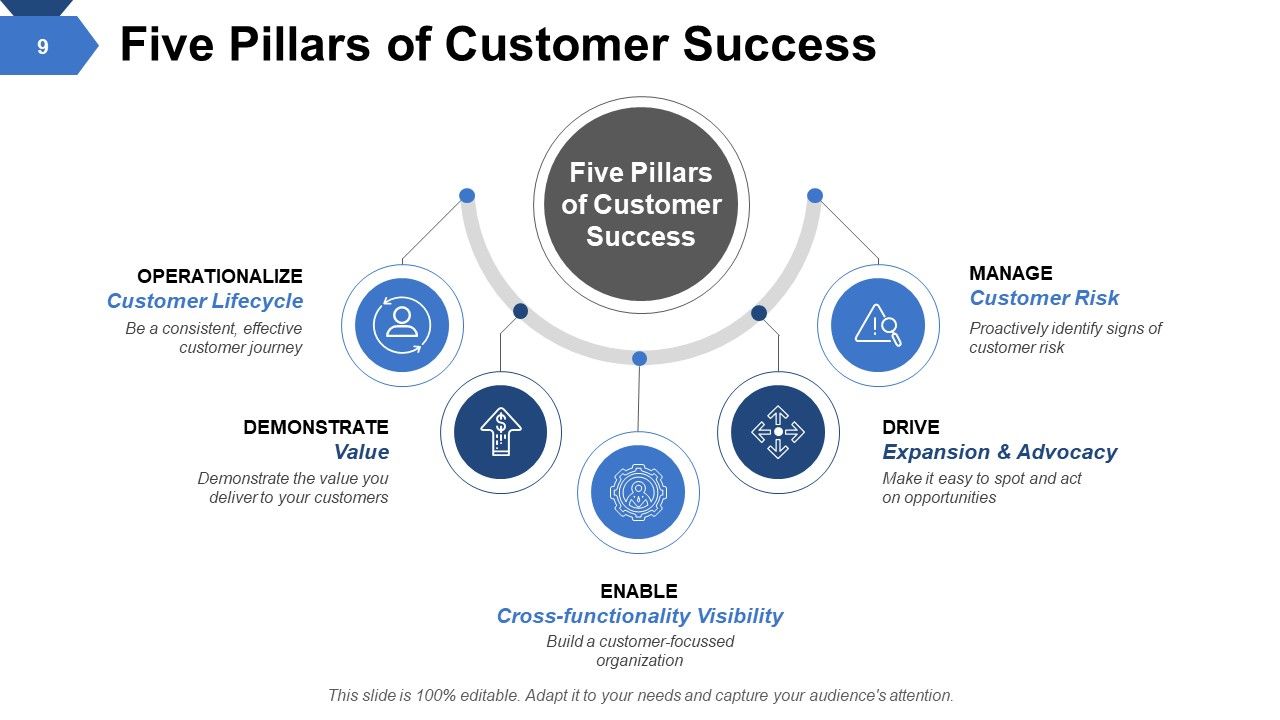
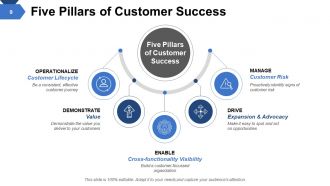
Slide 9: This slide shows Five Pillars of Customer Success namely- ENABLE, OPERATIONALIZE, DEMONSTRATE, DRIVE, MANAGE.
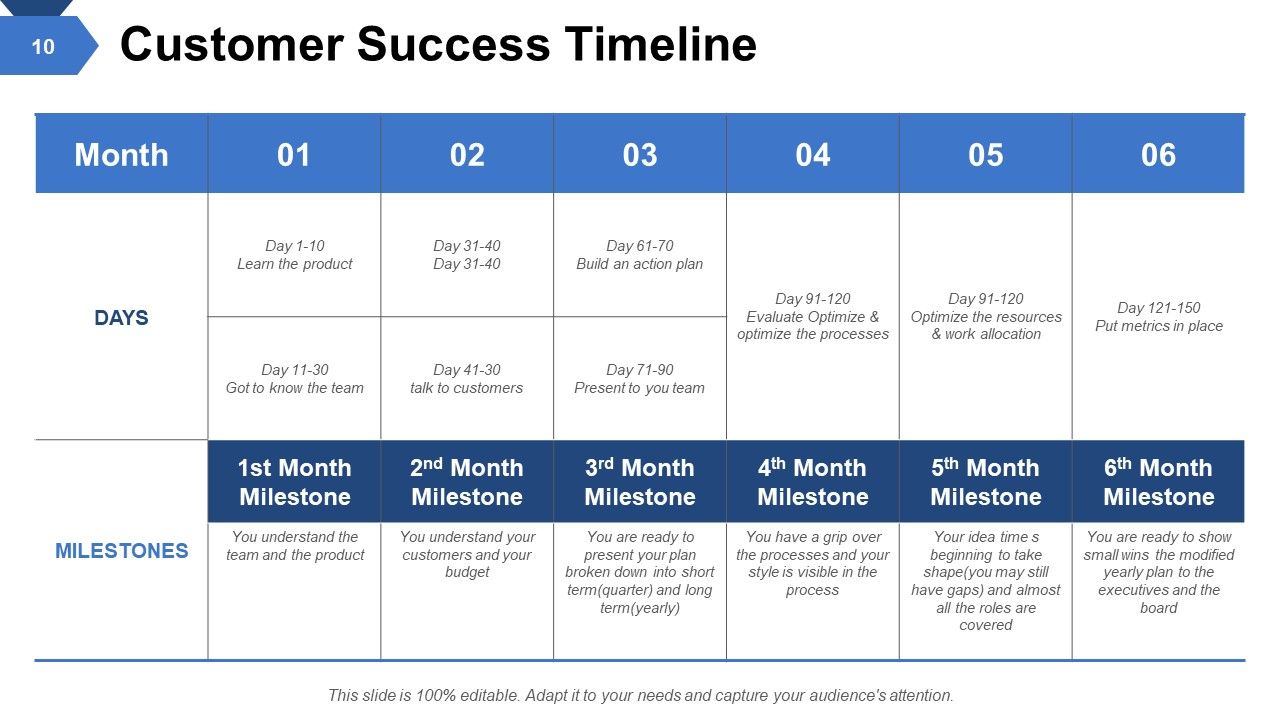
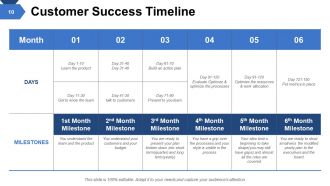
Slide 10: This slide shows a Customer Success Timeline. You can add customer success' evolution, growth factors etc. here.
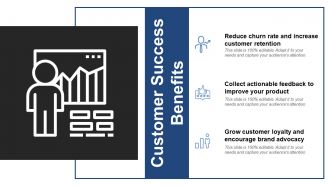
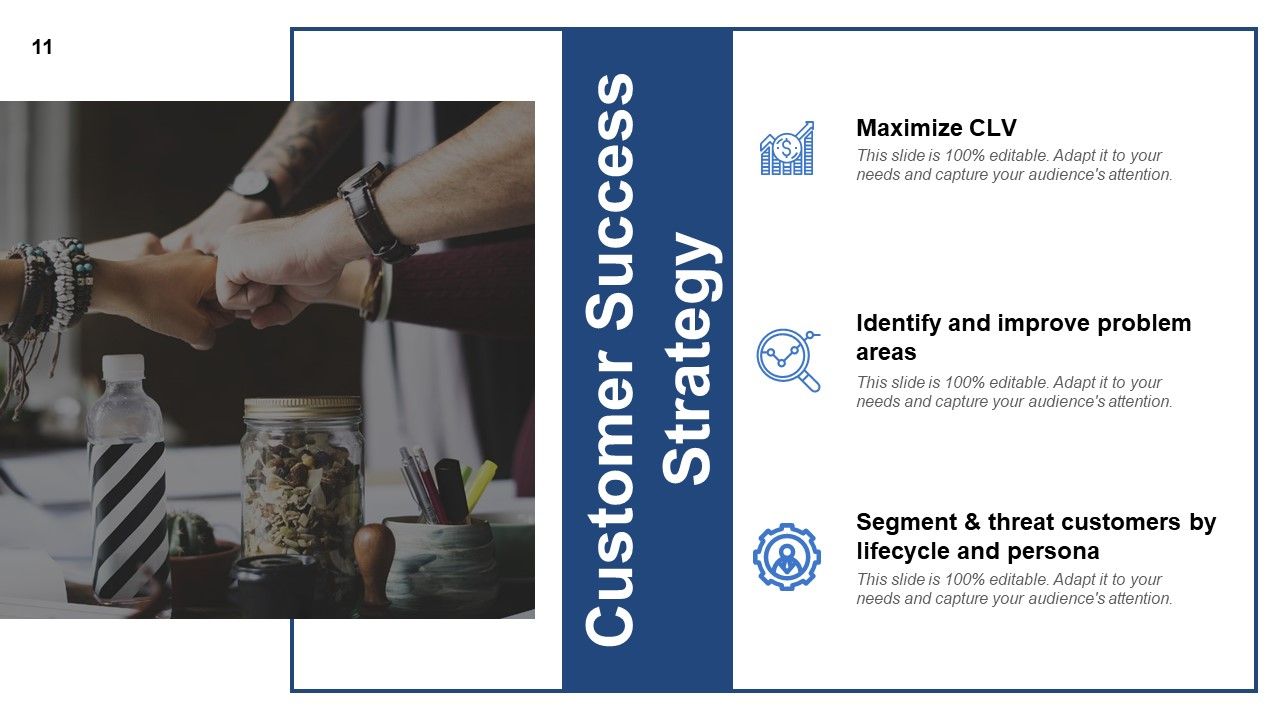
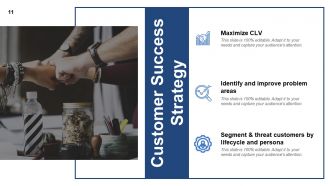
Slide 11: This slide shows Customer Success Strategy such as- Maximize CLV, Identify and improve problem areas, Segment & threat customers by lifecycle and persona.
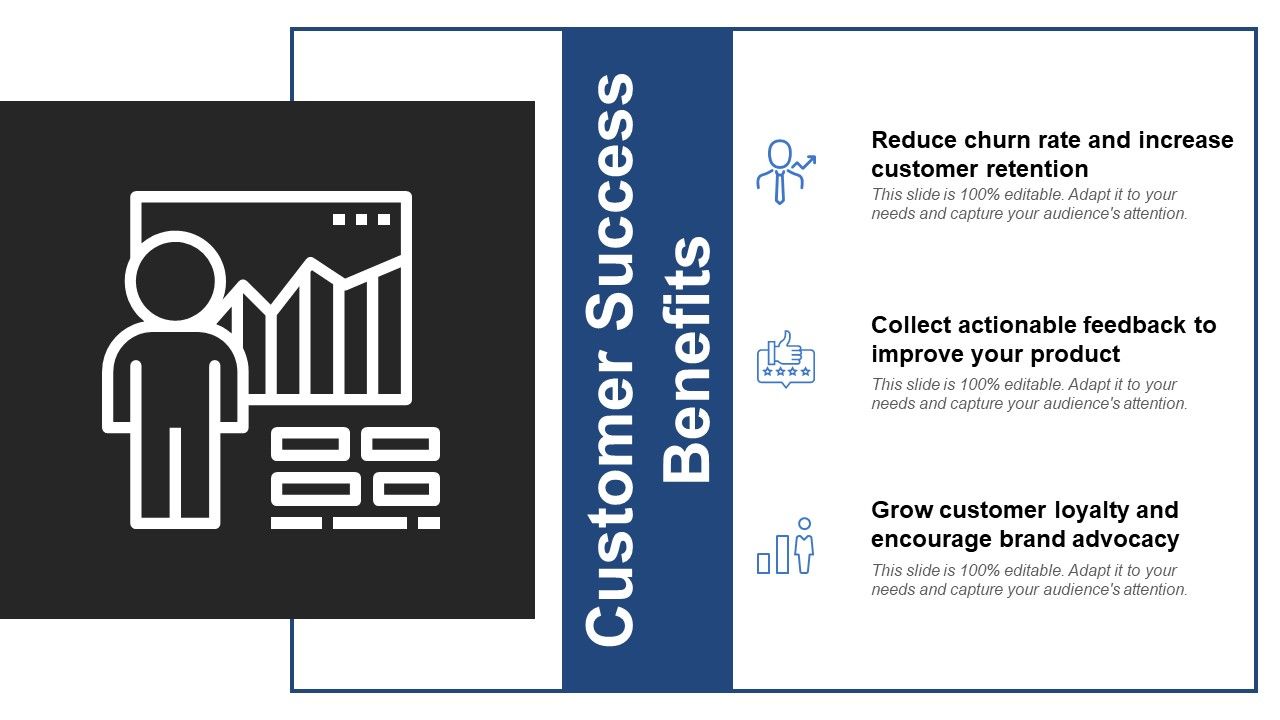
Slide 12: This slide presents Customer Success Benefits such as- Grow customer loyalty and encourage brand advocacy, Collect actionable feedback to improve your product, Reduce churn rate and increase customer retention.
Slide 13: This slide is titiled Additional slides. You may change the content as per need.
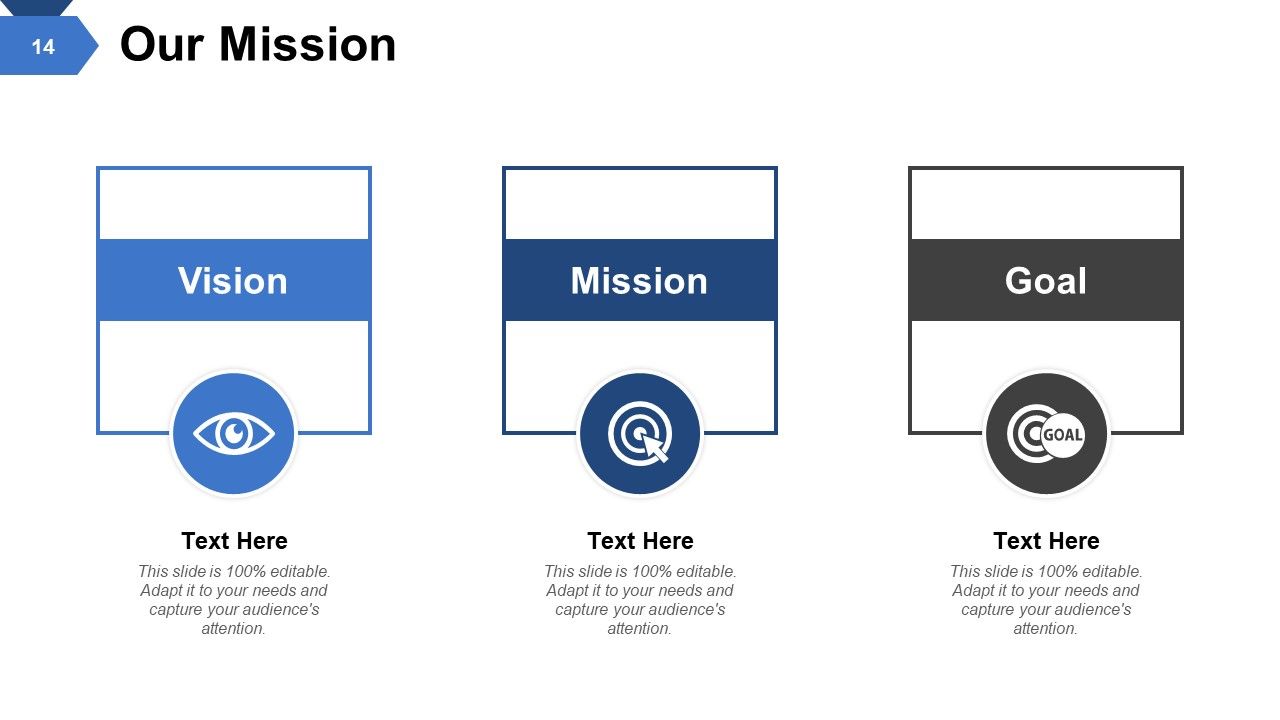
Slide 14: This is Our mission slide with Mission and Goal and text boxes to go with. State them here.

Slide 15: This is Meet Our team slide with names and designation to fill information for.
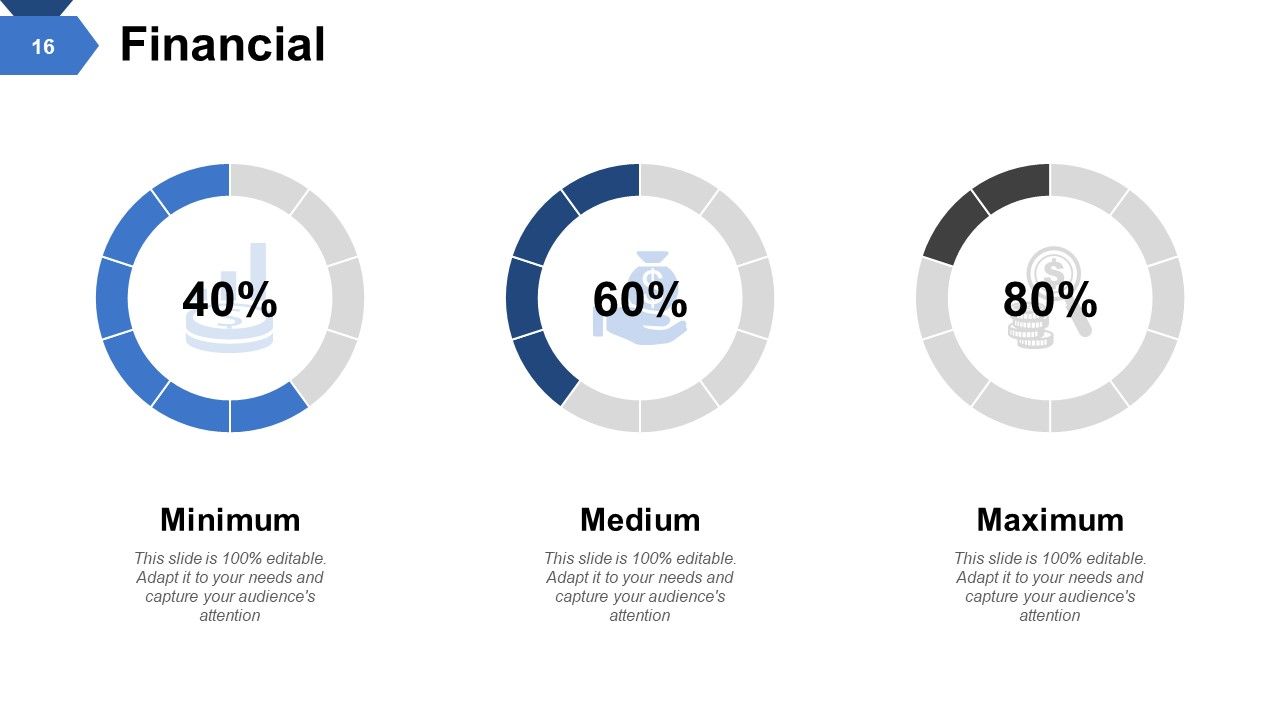
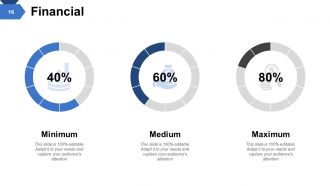
Slide 16: This slide presents Financial scores to display.
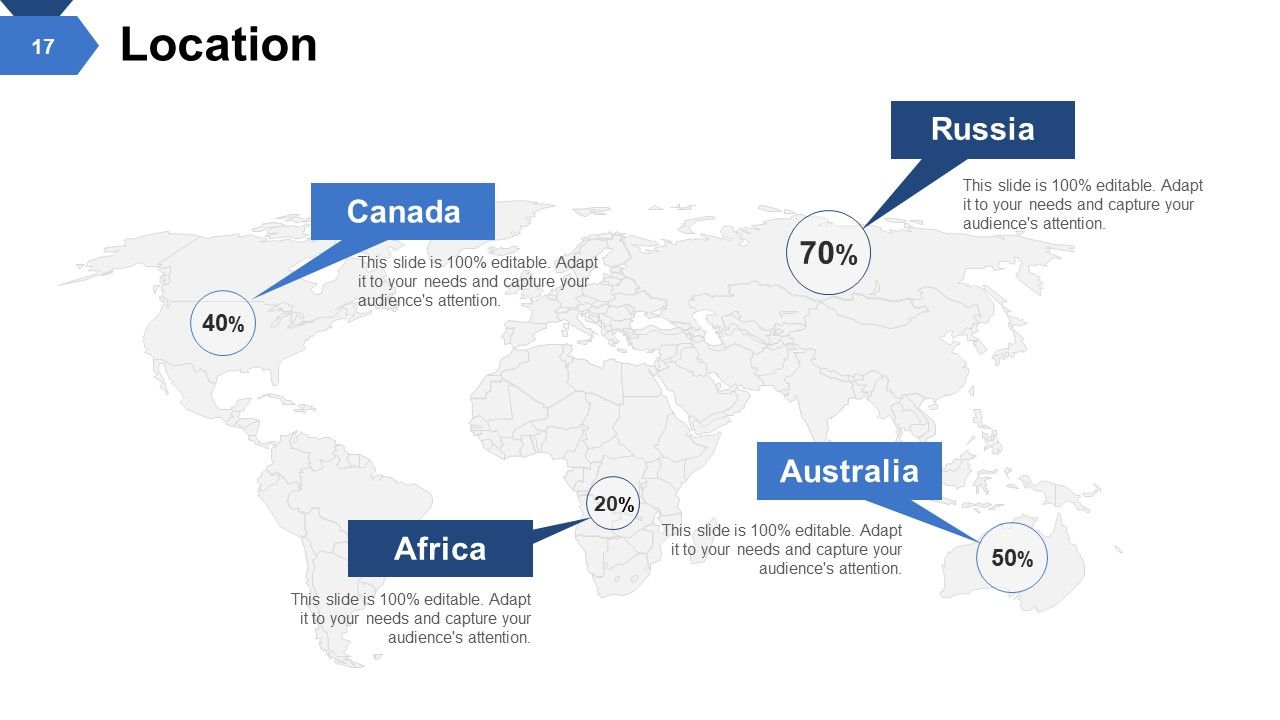
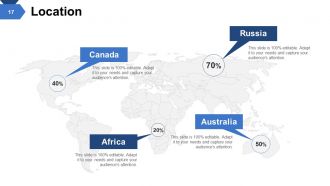
Slide 17: This is a Locations slide of world map top show global marketing, growth, presence etc.
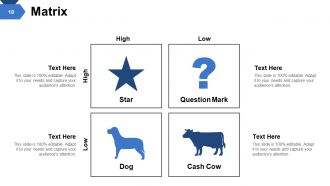
Slide 18: This slide presents a Low High Matrix for representing an information.
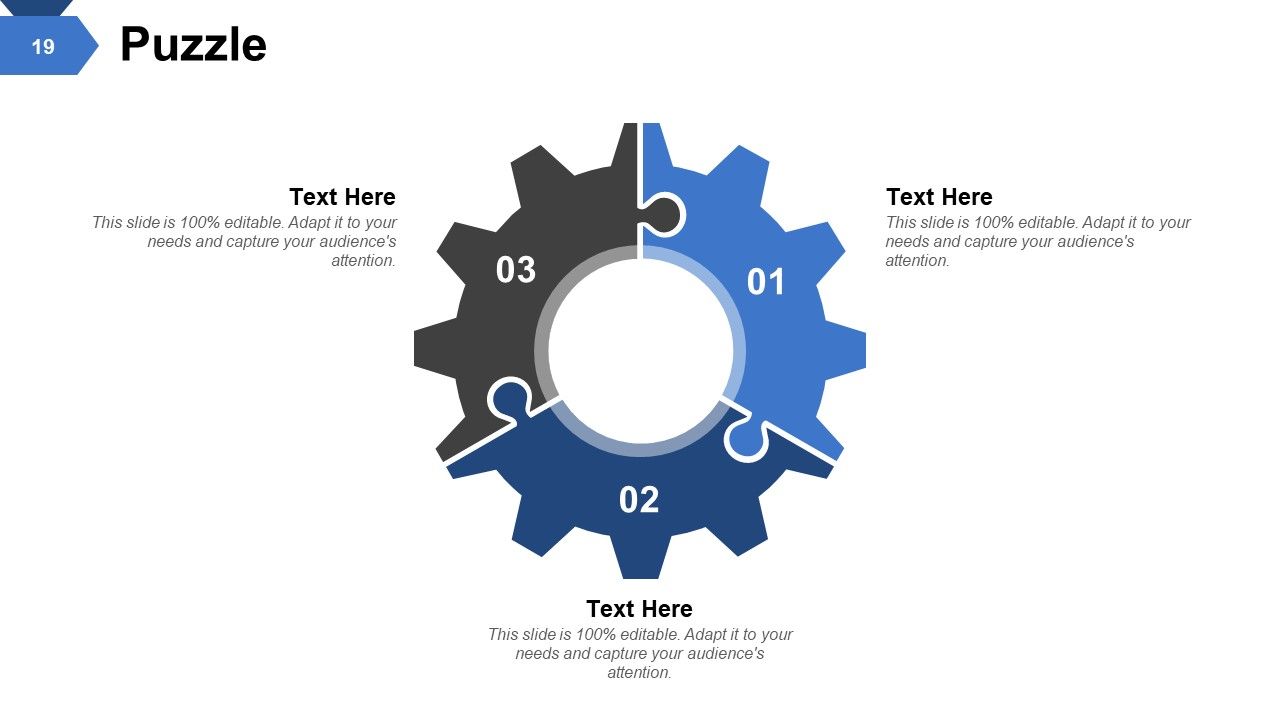
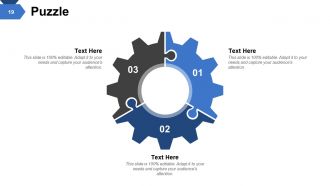
Slide 19: This slide presents a Puzzle image in gear form to display information, specifications etc.
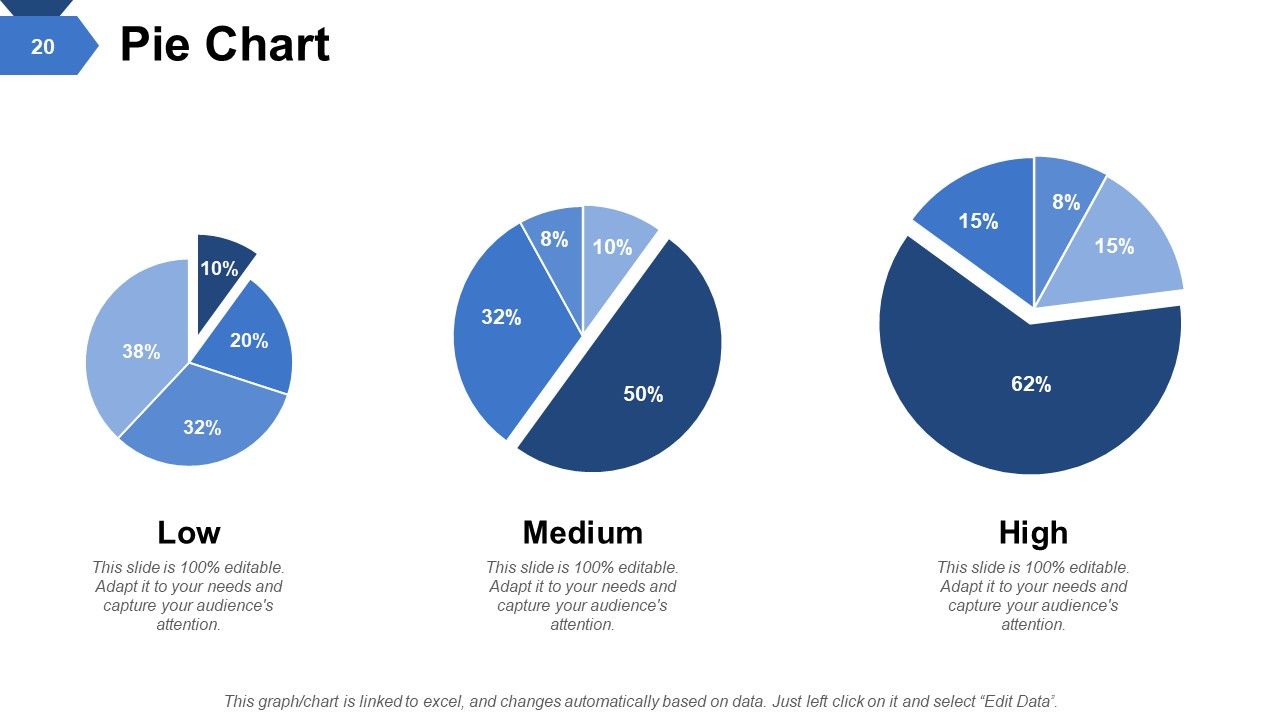
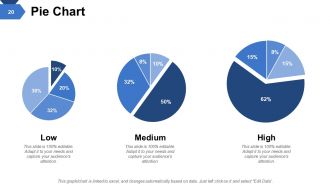
Slide 20: This is a Pie Chart slide to compare product/entities etc.
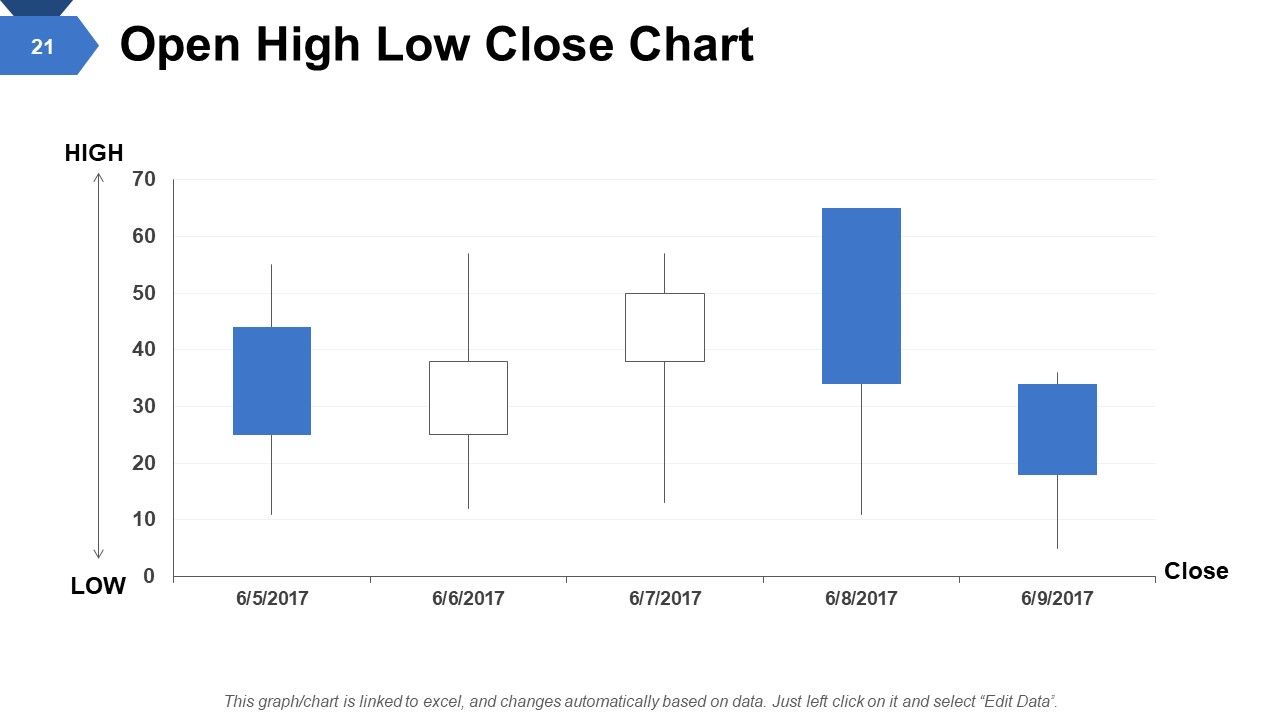
Slide 21: This is an Open High Low Close Chart slide to compare product/entities etc.
Slide 22: This is a Thank You slide with Email Address, Address# street number, city, state, Contact Numbers.

FAQs for Customer success model

You need four main things for customer success: segment your customers so you know who needs what attention, pick metrics that actually predict churn (not just vanity numbers), create solid onboarding plus regular check-ins, and build health scoring that spots problems before they blow up. Most teams totally botch the health scoring - they track pageviews instead of meaningful usage patterns. Also you'll want dedicated people for each segment and playbooks ready. Oh, and map out where customers usually bail in their journey. That's where you throw your resources first. Sounds obvious but it's crazy how many companies skip this step.

Look, the key is catching churners before they bail by watching usage drops and support tickets pile up. Track your best customers too - figure out what keeps them happy. I'd start simple with dashboards showing login frequency and which features people actually use (spoiler: it's probably not the fancy ones you spent months building). Set up health scores to flag risky accounts. Then you can reach out proactively instead of scrambling when they cancel. Way better than playing defense all the time.

Dude, customer feedback is literally everything for your success model. Without it, you're flying blind trying to guess what works. It shows you pain points, helps catch churn before it happens, and reveals where people actually get value from your product. Plus you can build better onboarding and health scoring that doesn't suck. I mean, different customer segments need totally different approaches, right? So collect feedback through surveys, calls, whatever - then actually use it to keep improving your strategy. Sounds obvious but most teams mess this up by not being systematic about it.

Track both hard numbers and the squishy stuff - retention rate, NPS, and revenue growth from current customers are your main ones. Time-to-value is huge though, like how fast do new people actually see results? I'm always checking satisfaction scores and support tickets too since those usually warn you before the big metrics tank. Oh and don't go crazy - pick maybe 3-4 things you can actually move the needle on first. You can always add more later once you've got those dialed in.

So Customer Support is reactive - they're putting out fires when customers hit problems. Customer Success is the opposite, more proactive stuff like helping customers hit their goals and spotting chances to sell more. Support = fixing what's broken. Success = making sure things don't break in the first place, honestly it's way smarter but harder to do well. One thing though - if you're setting both up, just make sure each team knows their lane. Nothing worse than customers getting bounced around or hearing conflicting advice from different people.

Honestly, focus on three big ones: Net Revenue Retention, Customer Health Score, and Time to Value. NRR shows if existing customers are actually growing or slowly dying - anything over 100% means you're golden. Customer Health Score is basically usage data + support tickets + engagement all rolled into one number that actually makes sense. Then Time to Value tracks how fast new customers have their first "holy shit this is awesome" moment. Yeah, churn rate matters too but those three will tell you everything about whether your CS team is crushing it or just... existing.

Look, CS platforms are game-changers - they pull all your customer data into one place and automatically flag when accounts are about to churn. Instead of scrambling to catch problems after they happen, you can actually get ahead of them. The automation handles the boring stuff like health score tracking and routine check-ins. Honestly, I've seen teams try to wing it with spreadsheets and... yeah, that doesn't end well. Map out how your customers move through their journey first, then pick a platform that handles the repetitive tasks. Your team gets to focus on actually building relationships instead of drowning in admin work.

Honestly, the hardest part is getting everyone on board. Leadership often sees customer success as just another expense instead of revenue generation - which is frustrating as hell. Sales teams don't want to share their data, and support gets weird about "their" customer relationships. Plus the talent shortage is insane right now. Everyone expects experienced CSMs to fall from the sky but won't invest in training. You'll need solid metrics to prove ROI fast, but that's tough when you're starting from scratch. My advice? Run a small pilot first and rack up some quick wins to build credibility.

Honestly, onboarding can make or break everything. Get customers to their "aha moment" fast or they'll bounce before you even have a chance. I've seen too many companies mess this up - their users never really adopt the product properly and just become these high-maintenance accounts that eventually churn anyway. You want people feeling confident and independent, not constantly needing your help. Set clear expectations upfront. Track how quickly new customers hit key milestones - that's your time-to-value metric right there. It's like teaching someone to ride a bike. Once they get it, they're hooked.

Honestly, stakeholder buy-in can make or break your whole CS strategy. Without executives backing you with actual budget, you're screwed from day one. Sales, marketing, and product teams all need to be on board too since CS impacts their work constantly. Different people care about totally different numbers though, which gets annoying - you have to tailor your pitch to what each department actually values. I've watched so many CS programs crash and burn because leadership saw it as some fluffy add-on rather than something that actually drives revenue. Find your internal champions first and get them excited about metrics that'll make their teams look good.

Honestly, personalization just makes people feel seen. Like Netflix keeping you glued to the screen with those spot-on recommendations - that's the magic right there. When you tailor stuff based on what customers actually do and want, they'll stick around way longer. You can segment audiences, customize onboarding, send targeted content. Even something tiny like adding their company name to email subjects bumps up engagement. I'd say start small though - don't try to personalize everything at once or you'll burn out your team.

Ditch the PowerPoint death by slides - role-playing actual customer situations works way better. Your team needs to know the product backwards and forwards, obviously, but here's what most people miss: teach them how to ask the right questions to dig into what's actually bugging customers. I've watched so many reps nail a demo then completely whiff on solving the real problem. Get them comfortable with your data tools and health scores too. Oh, and definitely pair newbies with your best people for call shadowing. Start small with easy accounts, then work up to the nightmare ones once they've got some wins under their belt.

Customer Success totally depends on what you're selling and who's buying. SaaS companies obsess over onboarding and churn metrics - makes sense when you've got thousands of users. But enterprise software? You'll need dedicated CSMs babysitting maybe 50 high-value accounts max. Retail goes full automation because honestly, there's no other way to handle that volume. Self-service everything. Healthcare and finance get weird though - compliance makes their success metrics super different from everyone else. Bottom line: match how intense your support is to how your customers actually use your stuff. Don't overthink it.

Look, if your CS goals don't match up with what the business actually cares about, you're basically shouting into the void. Map your activities to real KPIs like ARR or churn - that's how you get leadership to actually listen and give you budget. I learned this the hard way when I spent months obsessing over CSAT scores while our retention was tanking. Revenue growth and expansion numbers? That's what gets you a seat at the table. Short version: tie everything back to money and you'll never have to justify your team's existence again.

Break it down by ARR and how much they actually use your product - that's your starting point. Enterprise folks need the full royal treatment with dedicated CSMs. SMB customers? They're usually fine with automated stuff and self-serve options. Honestly, I'd prioritize whoever has the best expansion potential because that's where you'll make real money. Industry matters too - a SaaS client won't have the same pain points as some manufacturing company. Map your current customers into maybe 3 or 4 buckets, then build specific playbooks. Oh, and don't overthink the segments initially.

Ratings and Reviews

0% of 100
Review Form
Write a review
Most Relevant Reviews

No Reviews