


Crypto startup pitch deck financials projections for crypto startup business




Try Before you Buy Download Free Sample Product
 Impress Your
 Audience
 100%
100% Editable
 Save Hours
 of Time


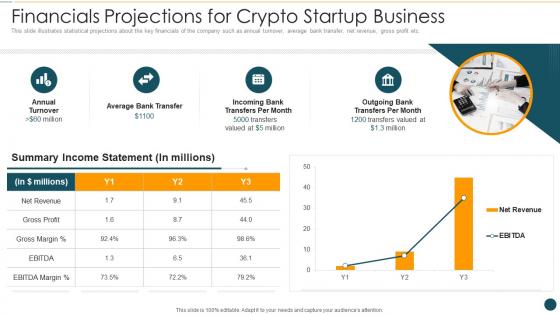
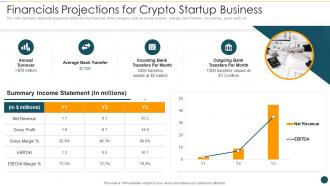
This slide illustrates statistical projections about the key financials of the company such as annual turnover, average bank transfer, net revenue, gross profit etc.
People who downloaded this PowerPoint presentation also viewed the following :
Crypto startup pitch deck financials projections for crypto startup business with all 7 slides:
Use our Crypto Startup Pitch Deck Financials Projections For Crypto Startup Business to effectively help you save your valuable time. They are readymade to fit into any presentation structure.






FAQs for Crypto startup pitch deck financials projections for
Token economics is where you gotta start - burn rate, runway, token velocity. Track your user acquisition costs vs lifetime value too since crypto users cost a fortune to get but can be super valuable. TVL matters big time for DeFi projects, obviously. Regulatory compliance will destroy your budget if you're not careful - seriously, it's always way more expensive than you think. I'd also model different market scenarios because crypto volatility will wreck your assumptions. Start with these basics then expand based on what you're actually building.
So blockchain adoption trends basically tell you how fast your market's growing and where the money is. Enterprise stuff? Way more predictable - if companies in your space are jumping in, you can probably bump up those B2B revenue forecasts. Consumer side's a total rollercoaster though. Don't get caught up in the "crypto moon" headlines - track real stuff like wallet creation and transaction volumes instead. Oh, and institutional money flows are huge indicators I always forget about. Build a few different scenarios into your projections because this space moves fast and you don't want to get blindsided.
Honestly, you gotta run at least three different scenarios - conservative, moderate, and aggressive volatility. Crypto can swing 30-70% on any random Tuesday, so build that into your models. Test both bull and bear markets that could last anywhere from 6-18 months. Don't just assume everything's gonna moon forever. Also factor in how different cryptos move together, plus how they correlate with traditional markets. I learned this the hard way in 2018... anyway, having multiple scenarios means you won't be totally blindsided when the market does its inevitable crazy thing.
Honestly, you'll need to build at least three scenarios into your projections - optimistic, realistic, and pessimistic. Regulations are all over the place right now. Factor in compliance costs, licensing fees, maybe losing certain markets if things get restrictive. Investors want to see you've actually thought this through, not just winged it. The pessimistic case should assume major crackdowns or operational limits. I'd update these quarterly since everything keeps changing. Oh, and label each projection clearly so people know which regulatory environment you're assuming. Makes a huge difference in how the numbers look.
Dude, tokenomics basically become your whole revenue model. You've gotta map out supply schedules, distribution, staking rewards, burn rates - all that stuff directly hits your cash flows. Honestly way more complex than traditional finance prepares you for. Token price assumptions drive everything from user acquisition costs to how you manage your treasury. I'd be super conservative with appreciation forecasts though, then model different adoption scenarios. Oh and start backwards - figure out your utility value prop first, then build realistic demand projections from there. It's a total mindbend at first.
Start with the basics - acquisition funnels first, then add retention cohorts and engagement stuff. DAU/MAU ratios are clutch, plus transaction frequency and LTV by cohort. Crypto users are way more volatile than regular SaaS though (like, ridiculously so), so stress-test everything. Conservative growth curves are your friend here. Model different scenarios for when the market inevitably tanks. Oh, and definitely peek at what similar projects are sharing publicly for benchmarks. Build it bottoms-up with actual data points instead of just dreaming about hockey stick growth - trust me on this one.
Honestly, just start with the basics and work your way up. Map out your must-haves for the first year or so - dev team salaries, servers, all that infrastructure stuff. Then there's the legal nightmare (crypto regulations are no joke and they'll drain your budget faster than you think). Don't forget marketing and compliance tools either. Make a few different scenarios based on how many users you might get, because crypto is just... unpredictable doesn't even cover it. I always throw in like a 30-40% buffer because weird regulatory stuff always comes out of nowhere. Look at similar startups but take their numbers with a grain of salt. Start tracking everything now in a spreadsheet.
Dude, transaction fees are crazy unpredictable - crypto volume swings are nuts. I'd say plan for fees to be like 60-70% of revenue, but definitely don't rely on them completely. Maybe add subscription tiers or premium features? Yield farming partnerships could work too, though that's getting pretty niche these days. The fee-only thing is honestly asking for trouble when markets tank. Pick 2-3 backup revenue ideas that actually make sense with what you're building. Model out different scenarios so you're not screwed when trading volume just vanishes overnight.
Marketing's gonna be brutal - customer acquisition runs 3-5x higher than normal businesses because most ad platforms still hate crypto. You'll be leaning hard on content, community stuff, and influencer deals instead of regular ads. Legal fees are the real killer though. Expect $50-100k annually just for compliance, plus ongoing regulatory monitoring and audit costs. I learned this the hard way - it's always more expensive than your initial estimate. Oh, and definitely pad both budgets by 20-30%. Regulatory changes happen fast and usually require expensive scrambling to stay compliant.
Honestly, you need real market data backing those numbers instead of just winging it. Check out 3-5 similar crypto startups - dig into their user growth, revenue hits, how fast they burned cash. I've watched way too many founders throw together these ridiculous hockey stick projections with zero research behind them. See how long competitors actually took to find product-market fit or hit breakeven. Their pricing moves will mess with your revenue forecasts too, so pay attention there. Use their paths as reality checks for your own stuff - beats pulling numbers out of thin air.
Oof, yeah crypto startups get hit way harder because it's basically double volatility. Inflation actually helps crypto adoption since people see it as a hedge - that part's good for projections. But when interest rates go up? Total nightmare. Funding disappears overnight because investors flee anything risky, and suddenly your runway calculations are garbage. The whole crypto market just amplifies whatever's happening economically too, which is honestly exhausting to track. I'd definitely model out different scenarios with various macro assumptions. Also stress-test your burn rate assuming high rates and zero funding availability - better to be paranoid than broke.
Look, you gotta build three different financial models for your crypto startup - realistic, optimistic, and pessimistic. Crypto's way too unpredictable for just one projection. Your realistic case is what you actually think will happen. Optimistic covers if everything goes right and adoption takes off. The pessimistic one? That's for when regulations screw you over or the market crashes hard. Trust me on this - investors will definitely ask about your worst-case scenario. I learned this the hard way tbh. Update them every quarter and you'll stay sane when things inevitably get weird.
Just use Excel or Google Sheets to start - investors expect spreadsheets anyway and they're super flexible. Most early-stage stuff doesn't need anything fancier, honestly. If you outgrow basic spreadsheets, Mosaic or Pigment are solid for dynamic forecasting. Token economics get tricky though - TokenTerminal helps, or you might need custom Python scripts for complex vesting schedules. I'd probably just stick with Excel unless you're doing something really wild with your tokenomics. Keep your assumptions easy to tweak since crypto moves so fast. Start basic, upgrade later when things get messy.
Dude, forget trying to predict one perfect outcome - crypto's way too insane for that. Build out like 3-4 different scenarios instead: best case, worst case, and something realistic in between. Each one should have different revenue numbers and burn rates. Honestly? Update these things monthly, or even weekly when the market's going nuts. Your cash runway is everything here - give yourself way bigger buffers than normal because crypto winters are brutal and fundraising just vanishes. I learned this the hard way last cycle. Always stress test against 50-80% drops and have a plan ready for cutting costs fast.
Quarterly updates are the bare minimum, but crypto moves so fast you'll probably need to do it monthly. Start with your big assumptions - token prices, how fast people are actually adopting, any regulatory curveballs. Then work those changes through your whole model. Actually document what you changed and why though, investors hate when you just randomly shift numbers around. I'd set up different scenarios too - best case, worst case, all that. Oh and track stuff that gives you early warning signs, like when the market suddenly goes sideways or competitors do something crazy. Way better to get ahead of it than scramble after.
-
Editable templates with innovative design and color combination.
-
Illustrative design with editable content. Exceptional value for money. Highly pleased with the product.