

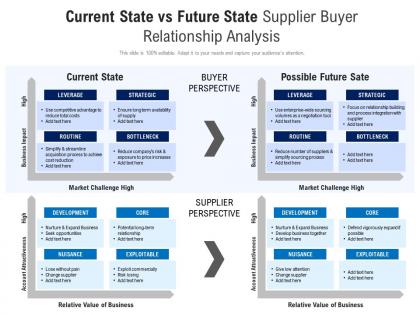
Current state vs future state supplier buyer relationship analysis




Try Before you Buy Download Free Sample Product
 Impress Your
Audience
 100%
Editable
 Save Hours
of Time


Our Current State Vs Future State Supplier Buyer Relationship Analysis are topically designed to provide an attractive backdrop to any subject. Use them to look like a presentation pro.
People who downloaded this PowerPoint presentation also viewed the following :
Current state vs future state supplier buyer relationship analysis with all 2 slides:
Use our Current State Vs Future State Supplier Buyer Relationship Analysis to effectively help you save your valuable time. They are readymade to fit into any presentation structure.


FAQs for Current state vs future state supplier
Trust is everything - without it, you're basically screwed from day one. Communication has to be rock solid too, no cryptic emails or ghosting when problems come up. Make sure whoever you're partnering with isn't gonna go bankrupt next month, because that's awkward. Quality needs to stay consistent (obvious but people mess this up constantly). Honestly, get everything in writing so you don't end up arguing about what "soon" actually means six months later. Oh, and align your goals upfront - you'd be surprised how many partnerships fail because people want totally different things.
Look, good communication with suppliers is honestly a game-changer. It stops those annoying misunderstandings that waste everyone's time and money. Set up monthly calls with your main suppliers - trust me on this one. Regular check-ins turn them from just another vendor into actual partners who'll have your back. They'll catch problems early, give you better pricing, and prioritize your orders when things get crazy (which seems to be all the time lately). Oh, and create some kind of shared dashboard for tracking how they're doing. You'll be amazed how much smoother everything runs.
Honestly, trust is what makes or breaks these supplier relationships. You don't want to get stuck micromanaging every little detail and renegotiating contracts constantly - that's exhausting for everyone. Suppliers will actually invest in your business when they trust you. They'll share new ideas, give you heads up on problems before they explode, better pricing too. Plus they won't just ghost you when things get busy (learned that one the hard way). The trick is being upfront about your own mess-ups and realistic timelines. Can't expect them to be transparent if you're not.
Look, before you jump in with any supplier, dig into three main things. Their finances first - pull credit reports and actually call their references (seriously, don't just file away the contact info like I always do). Visit their facilities if you can and check out their quality certs to see if they can handle what you need. Also look at their delivery history and how fast they respond when you reach out. Honestly, I'd test them with a small order first rather than going all-in right away. Better to find out they're flaky on a small scale than when you really need them.
Look, you'll need to watch a few key things: on-time delivery, quality scores (defect rates, complaints), and cost vs. what you budgeted. Financial health is huge too - last thing you want is them going under halfway through a project. Response time matters more than people think. Do they actually pick up the phone? Some places get all complicated with weighted scorecards, but honestly just pick 3-4 metrics that fix your biggest headaches. Set clear expectations upfront and check in quarterly. That's really all you need for solid supplier reviews.
Oh man, this stuff is way trickier than people think. Some cultures are crazy direct while others dance around problems - leads to total confusion about deadlines and quality standards. You'll need to adjust your whole negotiation game too. Like, building trust might take forever in certain countries when you just want to sign contracts and move on. Time differences are bad enough without accidentally insulting someone! Plus they all handle hierarchy and problem-solving differently. Honestly, do your homework on their cultural norms first. Maybe find someone who gets both perspectives to help translate the unspoken stuff.
Look, you gotta prove your worth before even talking money. Show them what problems you solve that nobody else can - speed, quality, whatever makes you different. I'd honestly document everything with real numbers because buyers eat that stuff up way more than just asking nicely. Don't just talk to procurement either, that's like negotiating with the wrong people half the time. Get tight with the actual users in operations or engineering. Make yourself harder to replace by getting integrated into their systems. Then when you do negotiate, you're coming from a partnership angle instead of begging.
So ERPs basically give you and your suppliers a shared window into each other's operations. Real-time data, automated ordering, better forecasting - all that good stuff. No more "hey where's my order?" email chains. Your suppliers can actually see your demand patterns, and you get insight into their capacity issues. Honestly, it's pretty game-changing once everyone's on board. The catch? You're kinda stuck if their systems go down or they decide to switch platforms. I'd start small - figure out what info would actually help your top 3 suppliers first, then build from there.
Dude, communication breakdowns are the worst - plus payment disputes and when expectations don't match up. It's basically relationship drama with paperwork lol. Set clear performance metrics from the start and do regular check-ins, not just crisis calls. Make sure payment terms are super obvious upfront. Also, actually learn what your suppliers can and can't do instead of just throwing demands at them. Honestly? Treat them like real partners where everyone benefits. I'd start by looking at your current relationships and figuring out where the gaps are. Those fixes will save you so much headache later.
Look, when you work with suppliers on actual problem-solving instead of just buying stuff, magic happens. They see your real challenges - not just what's on the purchase order. Since they're dealing with tons of other companies, they bring ideas from completely different industries that you'd never think of. It's almost like having a free R&D team that actually cares because they're making money when you succeed. The trick is being upfront about your bigger strategic headaches early on, not waiting until you're desperate. Two brains are always better than one, especially when one of those brains has seen this problem ten times before.
Honestly, the biggest thing is just not being a jerk with your power as the buyer. Pay people fairly and on time - delayed payments are such BS. Be upfront about what you actually need and when you need it, don't overpromise on your end either. Keep their confidential stuff confidential, obviously. When you're sourcing, give everyone a fair shot instead of just going through the motions. The whole "squeeze suppliers for every penny" mentality is pretty toxic. Yeah, you want good deals, but burning bridges isn't worth it. Build actual relationships where both sides win something.
Look, shared value is just finding ways where you and your supplier both come out ahead instead of constantly battling each other. Way less draining than fighting over every cent, trust me. Focus on stuff like sustainability projects that cut costs for everyone, or innovations that boost both your margins. The whole vibe shifts from adversarial to actually working together. I mean, who has energy for constant negotiation wars anyway? Start by figuring out where your long-term goals line up with your biggest suppliers - those overlap areas are pure gold for building win-win initiatives.
Macro stuff totally flips your whole supplier relationship on its head. Inflation hits and suddenly everyone's scrambling with pricing. Interest rates mess with cash flow, so payment terms get weird. Currency swings? Your overseas suppliers either become dirt cheap or ridiculously expensive basically overnight. During uncertain times, both sides get jumpy about long commitments - you'll see way more short contracts and protective language everywhere. Honestly, recession fears make everyone way more conservative than usual. My take? Build some backup scenarios into your supplier planning and watch those economic indicators. You don't want to be the person who gets blindsided when things shift.
Honestly, start with quarterly check-ins and monthly scorecards - that's your bread and butter. Real-time dashboards help too, but don't get too fancy at first. Make feedback forms that actually cover the stuff that matters: quality, delivery times, how well they communicate (this one's huge), and costs. What really works is making it go both ways - let them tell you what's not working on your end too. I'd focus on your top 3 suppliers first since trying to do everyone at once is just chaos. Face-to-face meetings beat emails for the serious stuff. Keep it specific and timely instead of those useless year-end reviews nobody remembers.
So you basically need backup suppliers lined up before things go sideways. Map out at least two alternatives for your critical stuff - trust me, your main supplier will drop the ball at the worst possible moment. Have clear steps for who to call when. It's like keeping a spare tire in your car, you know? Without a plan, you're just panicking during a crisis and throwing money at quick fixes. Your stakeholders will be stressed, projects get delayed, the whole mess. Honestly, I'd start identifying backup options today rather than waiting.
-
It saves your time and decrease your efforts in half.
-
Unique design & color.