


Current State Vs Future State Analysis Acquisition Marketing Business Organization Management




Try Before you Buy Download Free Sample Product
 Impress Your
 Audience
 100%
100% Editable
 Save Hours
 of Time


Our Current State Vs Future State Analysis Acquisition Marketing Business Organization Management are topically designed to provide an attractive backdrop to any subject. Use them to look like a presentation pro.
People who downloaded this PowerPoint presentation also viewed the following :
Current State Vs Future State Analysis Acquisition Marketing Business Organization Management with all 12 slides:
Use our Current State Vs Future State Analysis Acquisition Marketing Business Organization Management to effectively help you save your valuable time. They are readymade to fit into any presentation structure.
-

Current State Vs Future State Analysis
-
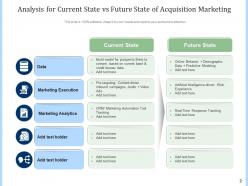
Analysis for Current State vs Future State of Acquisition Marketing
-

Broker doing Stock Current State vs Future State Analysis
-
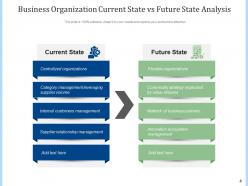
Business Organization Current State vs Future State Analysis
-
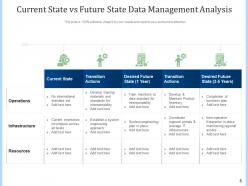
Current State vs Future State Data Management Analysis
-
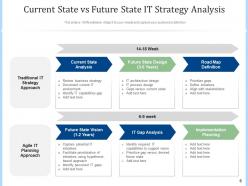
Current State vs Future State IT Strategy Analysis
-
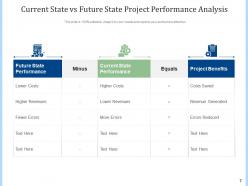
Current State vs Future State Project Performance Analysis
-
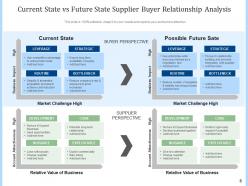
Current State vs Future State Supplier Buyer Relationship Analysis
-
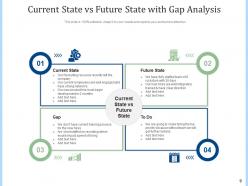
Current State vs Future State with Gap Analysis
-
Image representing Organizational Current State vs Future State Analysis
-
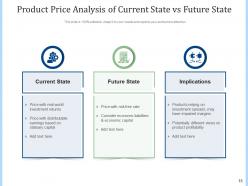
Product Price Analysis of Current State vs Future State
-

Thank You
FAQs for Current State Vs Future State Analysis Acquisition Marketing
You need four main things: solid audience targeting, multiple channels, messaging that actually resonates, and proper tracking. Figure out exactly who you're targeting and where they spend time online - none of that shotgun approach BS. Hit different pain points across paid search, social, content, partnerships, whatever works. Don't forget about nurturing people who aren't ready to buy yet (that's like half your potential customers right there). Tracking is huge because you want to optimize based on real acquisition costs, not fluffy engagement numbers. I'd honestly start by looking at where your current funnel is bleeding leads first.
Track your whole customer journey, not just vanity metrics like clicks. CPA, customer lifetime value, and conversion rates by channel - that's what actually matters for your bottom line. ROAS is obviously crucial too. Attribution gets super complicated but honestly? Just start with last-click and build from there. UTM parameters and conversion pixels are your best friends here - they'll show you which campaigns bring in leads that actually pay you. I get way too obsessed with the data sometimes, but focus on quality conversions over everything else.
So basically you don't want to blast the same message at everyone and hope it sticks. Customer segmentation is just splitting your audience into groups - like by age, behavior, whatever makes sense for your business. Think about it: a college kid isn't gonna respond to the same ad as some suburban parent, right? Pretty obvious but tons of companies still mess this up. When you actually tailor your messaging to each group, you'll see way better conversion rates and spend less money getting customers. I'd start small though - pick your top 2 or 3 segments and test different messages for each one.
Honestly, paid search and social ads work great for most people. Google's solid because you're hitting people already looking for your stuff. Facebook and LinkedIn are good too - you can get super specific with who sees your ads. Email still kills it for ROI though, assuming you can actually get people to sign up without being annoying about it. Oh, and if your audience skews younger, Instagram and TikTok are where it's at right now. But here's the thing - don't spread yourself too thin. Pick maybe two channels where your people actually are, test the hell out of everything, then pour more money into whatever's working.
So content marketing is basically about helping people before you try to sell them anything. Instead of being pushy with ads, you create stuff that actually solves their problems - blog posts, videos, whatever works. People find you when they're already looking for answers, which is honestly way better than interrupting them with random ads. You want to think about where they are in their buying process too. Like, are they just figuring out they have a problem, or are they ready to pick a solution? Start with what's really bugging your audience, then make content that helps while showing you know your stuff. It's less salesy but way more effective.
Talk about what they'll actually gain, not just product specs. Grab them fast with your headline - people bail in literally 2 seconds if you don't hook them. I always go for emotional stuff but then back it up with real numbers ("Save 3 hours weekly" hits way harder than just "save time"). Your call-to-action needs urgency without being annoying about it. Different audiences respond to totally different messaging, so don't assume what works for one group works for everyone. Start testing 3-4 versions and see what the numbers tell you.
Dude, UX is huge for acquisition costs and conversions. Think about it - you're paying to get people to click, but if your landing page sucks or the signup is a mess, you're basically lighting money on fire. I've watched perfectly targeted campaigns completely bomb because the user experience was trash. The whole journey matters, not just driving traffic. Oh, and start with your biggest conversion paths - find where people are dropping off and fix those pain points first. Makes way more sense than trying to optimize everything at once.
Honestly, everything's changing because third-party cookies are dying. Privacy stuff is huge now - like how iOS makes apps beg for tracking permission, which is kinda satisfying tbh. Customer journeys are getting wild too. People hit like 8 touchpoints before buying anything. AI personalization isn't fancy anymore, it's just expected. And influencer marketing? Everyone's ditching the mega-influencers for smaller creators. I'd check what data you're actually collecting first. Most people think they're getting good first-party data but really aren't.
Dude, reviews are like conversion magic for your ads. People literally won't buy without checking what others say first - I do it for everything, even like $5 purchases lol. Drop review snippets right into your Google ads and splash customer stories on your landing pages. The trick is putting them where people are actually deciding whether to trust you or bounce. Oh, and those star ratings? Pure gold for killing the "is this sketchy?" vibe. Start collecting reviews however you can, then stick the good ones everywhere prospects will see them. Honestly makes such a difference in your conversion rates.
Honestly? Most people spread themselves way too thin trying to hit every platform instead of just focusing where their customers actually are. You'll blow your budget super fast. Don't launch campaigns without A/B testing first - I've watched so many teams skip this and regret it. Set up attribution tracking from the start too, otherwise you're flying blind on what's working. Oh, and everyone gets obsessed with new signups but forgets about keeping people around. That's backwards thinking if you ask me. Test small stuff first, then throw money at whatever's actually converting.
Look at your funnel metrics and see where people actually drop off - that's where the magic happens. Track which sources bring quality leads, not just traffic. Most companies get obsessed with impressions and stuff like that, but honestly? The real value is seeing how users behave after they sign up. Set up proper attribution tracking so you can follow the full customer journey. Then double down on what's working and ditch what isn't. Oh, and audit your current tracking setup first - you'd be surprised how broken most setups are.
First things first - calculate your customer acquisition cost and lifetime value. Shoot for at least 3:1 ratio or you're gonna bleed money. I'd split your budget 70/30 between what's already working and new experiments. Facebook ads are tempting but don't dump everything there immediately (learned that the hard way). Creative costs, landing pages, analytics tools - they add up fast so factor those in. Keep about 15-20% aside because you'll definitely need to pivot when things don't go as planned. Honestly, start small and scale what actually converts instead of gambling big upfront.
Okay so lookalike audiences are honestly a game-changer. You upload your best customers and the platform finds people who act just like them. Way better than guessing with random demographics. I mean, the algorithm is creepy good at spotting patterns you'd never see yourself. Your click rates and conversions usually jump 2-3x compared to just targeting interests. Oh and pro tip - start with your highest value customers first, that audience almost always crushes it from day one. Makes acquisition costs way cheaper too.
Honestly, just track three main things: what it costs to get a customer (CAC), how much they're worth over time (CLV), and the ratio between them. Break down your acquisition costs by channel - ads, organic, referrals, whatever you're using. Then see how much revenue each customer actually brings in. The sweet spot is when CLV hits at least 3x your CAC, though some industries are different. I'd also watch how long it takes for customers to pay for themselves and which channels convert best. Sounds like a lot but once you start calculating monthly, you'll spot the winners fast.
Honestly, partnerships are a game-changer because you're basically borrowing someone else's audience and trust. Way smarter than grinding it out alone. Look for brands that complement yours - like, their customers would actually want your stuff, not just whoever has the biggest following. Co-marketing, referrals, cross-promos, whatever works. I know this sounds obvious but I've seen companies literally double their customer acquisition just by teaming up with the right partners. Start small though - pick maybe 3-5 potential partners and suggest a tiny test campaign first. No point going all-in before you know if it'll work.
-
Understandable and informative presentation.
-
Helpful product design for delivering presentation.
-
Excellent template with unique design.
-
Very unique and reliable designs.
-
Unique research projects to present in meeting.
-
Understandable and informative presentation.
-
Excellent design and quick turnaround.
-
Out of the box and creative design.