


Data Engineering Powerpoint Ppt Template Bundles





Try Before you Buy Download Free Sample Product
 Impress Your
 Audience
 100%
100% Editable
 Save Hours
 of Time


Elevate your data infrastructure with our cutting-edge Data Engineering solution. Streamline the entire data lifecycle from ingestion to transformation and delivery, ensuring seamless data flow across your organization. Harness the power of advanced data pipelines, allowing for efficient extraction, transformation, and loading ETL processes. Our robust architecture ensures scalability and performance, handling diverse data sources effortlessly. Empower your teams to make data-driven decisions with confidence, thanks to our reliable and agile Data Engineering platform. Whether you are managing big data or fine tuning intricate datasets, our solution provides the foundation for a resilient and efficient data ecosystem. Revolutionize your data management choose our Data Engineering solution for a future-proof and optimized data infrastructure.
People who downloaded this PowerPoint presentation also viewed the following :
Data Engineering Powerpoint Ppt Template Bundles with all 24 slides:
Use our Data Engineering Powerpoint Ppt Template Bundles to effectively help you save your valuable time. They are readymade to fit into any presentation structure.










FAQs for Data Engineering Powerpoint
So data engineers are like the plumbers - they build pipelines and handle all the messy infrastructure stuff to move data around. Data scientists? They're the ones actually digging into that clean data to find patterns and answer business questions. Engineers build the highway, scientists drive on it, you know? Honestly, the pay is pretty similar for both these days. But yeah, it comes down to what clicks with you - do you get excited about building rock-solid systems, or would you rather be the detective finding insights in spreadsheets? Both are solid career moves.
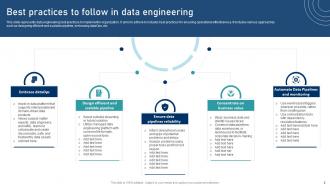
Build quality checks into every step of your pipeline, not just the end. Check for nulls, data types, and ranges right when data comes in. Automated alerts are honestly a lifesaver - I learned this the hard way trying to check everything manually. Set up monitoring during transformations to catch weird drift or anomalies. Data profiling helps you track completeness and consistency over time, which is pretty useful. Make quality checks part of your regular workflow instead of something you remember later. Start with your most critical data, then expand from there.
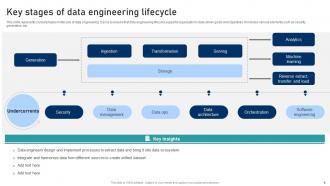
So ETL is basically how you turn messy data into something useful. You pull data from databases, APIs, whatever sources you've got, then clean and restructure it so it actually makes sense. After that you dump it into your data warehouse. The transformation part is honestly where things get tricky - that's where all the real work happens. Oh, and lots of teams are doing ELT now instead, loading first then transforming with tools like dbt. Way easier sometimes. I'd start by figuring out what data sources you're working with and what you actually need to change about them.
Dude, cloud platforms completely change the game for data engineering. You don't have to mess with setting up servers anymore - just fire up AWS Redshift or Azure Data Factory and you're good to go. The speed is wild, honestly. Auto-scaling storage, serverless stuff, ML services that would've taken forever to build yourself. Though you'll need to figure out their weird pricing models and learn their specific tools, which can be a pain. My advice? Start with a free tier somewhere and play around before you go all-in on migrating everything.
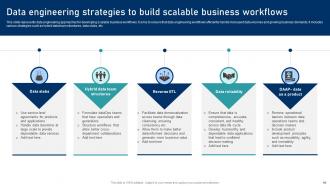
Honestly, separation of concerns is huge - split your ingestion, processing, and serving so you can scale them separately. Things WILL break (learned this the hard way), so build retry logic and dead letter queues from the start. Make everything idempotent so you can rerun stuff safely. Start with schema versioning day one, even though it feels excessive. You'll thank yourself later. Monitoring is critical - you need to see what's happening with your data flow. Don't get distracted by flashy new tools; stick with boring, proven tech. Oh, and plan your partitioning strategy early because changing it later is absolutely painful.
Honestly, most people skip the boring stuff but data ownership is huge - get someone who actually understands the business to own each domain. Automated quality checks will save your sanity later, trust me. Documentation is where everyone fails miserably, so build it into your tools instead of hoping people remember. dbt's solid for tracking transformations, and schema registries help too. Don't try to boil the ocean though - pick one dataset that actually matters and nail that first. Oh, and approval workflows for prod changes aren't optional. I learned that one the hard way!
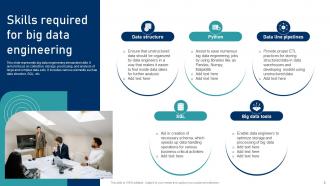
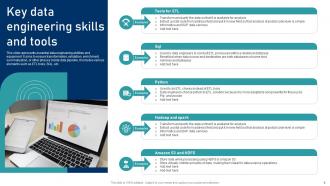
Honestly, most data engineering stacks look pretty similar now. Python and SQL are must-haves - no getting around those. Cloud-wise you've got AWS, GCP, and Azure all fighting for space, plus warehousing tools like Snowflake or BigQuery. Spark's everywhere for big data processing, though heads up - it's kind of a pain to learn at first. Docker handles containers, Airflow does scheduling and workflows. Oh and Kafka if you're doing real-time stuff. My take? Just pick one cloud platform and really nail it before jumping around to others.
Kafka and Flink are your best bets for streaming data - they'll process stuff as it comes in instead of waiting around. AWS Kinesis works too if you're already on Amazon. Storm's basically dead at this point, don't even bother. Set up event-driven processing so data gets handled immediately when it arrives. Most streaming frameworks can do windowing and aggregations automatically. Here's the thing though - figure out what actually needs real-time processing first. Sometimes "close enough" real-time is way easier to build and honestly works just fine for most use cases.
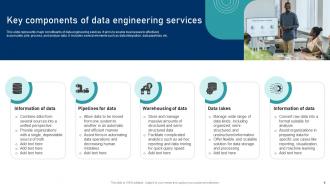
So data warehouses are where you dump all your cleaned-up data so people can actually use it for reports and stuff. Raw data comes from everywhere and it's a total mess - warehouses fix that by organizing everything properly. Your analysts will thank you because they won't be constantly dealing with garbage data anymore. It's like... imagine trying to find something important when all your files are just thrown on your desktop (guilty as charged). Start with figuring out what questions your business actually wants answered first. That'll tell you how to structure everything. Short version: warehouses make data useful instead of chaotic.
So ML basically sits right in your data pipeline - you're taking clean data, running it through models, then dealing with whatever comes out. Raw data flows through ETL, gets feature engineered, trains your models, spits out predictions, then goes back to your warehouse. Here's the thing though: ML models are incredibly finicky about data quality. Like, one messy field can wreck everything. Most of your time ends up being pipeline work - retraining, version control, serving predictions when things get busy. Oh, and automate your feature pipelines first. Trust me on that one, that's where everything bottlenecks.
Ugh, big data is such a pain. The volume alone will murder your budget - we're talking terabytes that'll crash everything if you're not careful. Data quality? Total mess when you're pulling from like 20 different sources with random formats. Real-time processing gets insanely complex too, especially when you need those sub-second responses. I swear it's like drinking from a fire hose sometimes (probably overused that analogy but whatever). Start small though, get decent monitoring tools, and nail down your data governance before scaling. Trust me on that last part.
So you'll probably want to check out workflow tools like Airflow, Prefect, or Dagster - they're pretty solid for this stuff. Basically you write your data pipelines as code and they handle all the scheduling and dependencies between tasks. Honestly, seeing those green checkmarks when everything works is weirdly addictive lol. First thing though - map out what you're currently doing and how everything connects. Then pick whichever platform your team won't hate using. Oh and definitely set up monitoring so you know when things break (because they will).
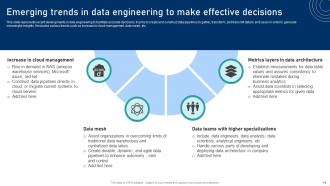
Honestly, streaming analytics and DataOps automation are huge right now. Data mesh is getting tons of buzz too - though I'm still not totally sold on it for smaller teams. Everything's going cloud-native and serverless, which makes sense since who wants to manage infrastructure anymore? AI monitoring for data quality is pretty slick and cuts down on so much tedious checking. Privacy frameworks are everywhere because of all the new regulations popping up. I'd start with streaming stuff first, then check out dbt for transformations. Those'll give you the best bang for your buck.
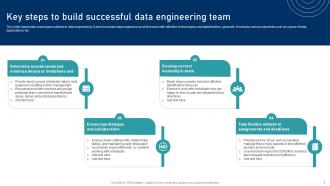
Honestly, you gotta figure out what they actually need vs what they think they need - there's usually a gap. I'd start with regular check-ins about upcoming projects so you're not both stressed when deadlines hit. Most problems I've seen come from confusion about data formats and what's even available. Document your pipelines clearly and give them a heads up when data quality gets wonky or schemas change. Oh, and learn their tools a bit - Python, R, whatever they prefer. Makes it way easier to structure things how they want. Just ask them what's driving them crazy right now, that's your starting point.
Okay so first things first - nail down SQL and Python. Those two will carry you through most interviews, trust me. Programming is obviously huge, but don't sleep on the soft skills either. Communication matters way more than people think, especially when you're explaining stuff to stakeholders who have no clue what a data pipeline even is. Cloud platforms like AWS or Azure are pretty much expected now. Oh, and you'll want to get familiar with ETL processes and tools like Spark or Airflow. The whole tech landscape moves ridiculously fast though, so focus on the fundamentals first. Problem-solving skills are clutch too.
-
Topic best represented with attractive design.
-
Satisfied with the way SlideTeam resolved my query regarding the right business PPTs that I was having difficulty finding. I found the perfect match with their assistance.