


Data Pipeline Powerpoint Ppt Template Bundles




Try Before you Buy Download Free Sample Product
 Impress Your
Audience
 100%
Editable
 Save Hours
of Time


Our Data Pipeline Powerpoint Ppt Template Bundles are topically designed to provide an attractive backdrop to any subject. Use them to look like a presentation pro.
People who downloaded this PowerPoint presentation also viewed the following :
Data Pipeline Powerpoint Ppt Template Bundles with all 17 slides:
Use our Data Pipeline Powerpoint Ppt Template Bundles to effectively help you save your valuable time. They are readymade to fit into any presentation structure.
-

Data Pipeline
-
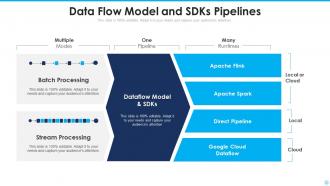
Data Flow Model and SDKs Pipelines
-
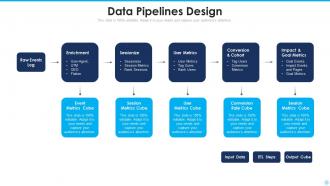
Data Pipelines Design
-
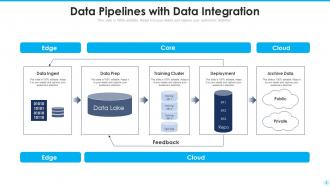
Data Pipelines with Data Integration
-
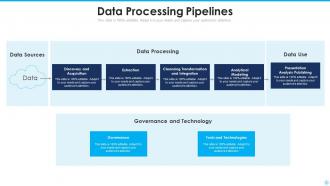
Data Processing Pipelines
-
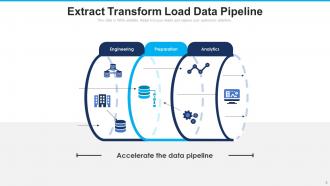
Extract Transform Load Data Pipeline
-

Fast Data Pipelines with Streaming Analysis and Transactions
-

Hybrid Multi Cloud Data Pipelines
-

Kafka Open Source Stream Processing Data Pipelines
-

Stream Processing Data Pipelines
-

Work Load Automation Data Pipelines
-

Thank You
-

-

-

-

-

FAQs for Data Pipeline Powerpoint
So basically you've got four main pieces: getting data in, cleaning it up, storing it somewhere, and managing the whole process. It's kinda like an assembly line - if one part breaks down, everything gets backed up. Oh and definitely build in monitoring because I swear things always crash at like 2am on weekends. Don't just pick one platform and try to jam everything in there. Map out your data flow first, then find tools that actually fit each step. Trust me on this one.
So data ingestion is just how you collect raw data - could be streaming from APIs, batch files from databases, whatever. Processing comes after that. You're cleaning it up, transforming it, making it actually usable for analysis. I always think of ingestion like turning on a hose and processing is where you filter out all the junk. Short bursts work better than long ones sometimes. Your processing has to match how you're ingesting though - streaming data needs different treatment than big batch uploads. Otherwise you'll end up with a mess.
Ugh, data pipelines are such a pain. Quality issues will eat your soul - I swear you'll spend 80% of your time just cleaning garbage data. Different formats everywhere that refuse to work together. Then your data explodes overnight and everything breaks. Honestly, distributed system monitoring is where I lose my mind the most. Error handling? Good luck with that mess. Start small though, seriously. Build monitoring right away (trust me on this one), and just assume your data will be way messier than expected.
Dude, first thing I'd do is profile your pipeline to see where it's actually choking. Break your datasets into chunks that can run in parallel - huge difference. Parquet files instead of CSV will blow your mind, the speed difference is insane. Cache stuff you access a lot, obviously. Not everything needs real-time processing either (learned that one the hard way). Focus on whatever's slowest first since that's your real bottleneck. Oh, and constantly monitor performance - you'll catch issues before they become nightmares.
So ETL is like the workhorse of data stuff - you pull raw data from wherever (databases, APIs, random files), clean it up and reshape it so it actually makes sense, then dump it into your data warehouse or whatever. Concept's pretty simple but oh man, real-world data is a nightmare. Quality issues everywhere. I'd say start small and build up complexity as you figure out how weird your data gets. The transforms need to run reliably though, and you'll want good error handling because things will break. Trust me on that one.
So streaming processes data as it comes in - like a conveyor belt that never stops. Batch waits and handles everything in chunks, more like loading up a truck first then driving it somewhere. You'll get instant results with streaming, but honestly the infrastructure gets pretty messy and you might deal with data arriving out of order. Batch is way easier to set up and handles heavy processing better, though your data won't be super fresh. Go with streaming if you need real-time alerts or live dashboards. Otherwise batch works fine for most stuff.
Start with logging and alerts - seriously learned this lesson when my pipeline broke for 3 days and nobody knew. Track the obvious stuff like execution times and failure rates, but also business metrics like record counts. Automated validation checks will save you from schema changes (those are the worst). Don't set alerts for every tiny thing or you'll hate your phone. Pick one important pipeline to start with instead of trying to do everything at once. Document dependencies too - future you will thank present you. Monitor both technical and business stuff so you actually know what's happening.
Don't wait until the end to check your data quality - that's a recipe for headaches. Build validation rules right at ingestion: nulls, dupes, formatting weirdness, all that stuff. Monitor everything and set up alerts so you catch issues fast. The sooner you spot bad data, the easier your life gets. Automated tests between pipeline stages are clutch. Also make dashboards that people will actually use (half the ones I see just collect digital dust). Define what good data looks like for your specific situation first, then measure against it consistently. Start with just a few key checks and grow from there.
Depends what you're building tbh. Airflow's great for orchestration, Kafka handles streaming really well. If you're on AWS, Glue and Step Functions work fine - Google has Dataflow and Cloud Composer too. dbt is solid for transformations. Honestly the whole ecosystem moves crazy fast, I can barely keep up lol. Simple batch stuff? Just use Python with pandas and throw some cron jobs at it. Spark's still the go-to for big data though. My take - stick with whatever your team already knows first, then expand. Don't overcomplicate things from day one.
Build error handling into your pipeline from the start - trust me on this one. Retry logic with exponential backoff handles those annoying transient failures, and dead letter queues catch the stuff that just won't process no matter what. Circuit breakers are honestly a lifesaver when your downstream services start choking. Oh, and definitely implement checkpointing so you can pick up where you left off instead of starting over (I've wasted way too many hours reprocessing data). Make your operations idempotent if you can. Focus on your biggest failure points first.
Start with encrypting everything - data sitting around and data moving between systems. Set up proper access controls so only the right people can touch stuff. Honestly, data masking is non-negotiable if you're dealing with sensitive info. PII leaks are a nightmare you don't want to deal with. Segment your network to keep pipeline stuff isolated. Log everything for monitoring weird activity. Your APIs need securing too, obviously. Oh, and run security audits regularly - can't stress that enough. Maybe do an assessment first to see where you're most vulnerable? That way you're not just throwing solutions at random problems.
Honestly, it's way easier than it sounds. Most data pipelines just use APIs and connectors to grab stuff from AWS S3, BigQuery, Azure - whatever you're using. Tools like Airflow or Databricks do most of the work for you, which is nice because who wants to deal with that manually? The best part is everything auto-scales, so you don't stress about infrastructure breaking when data volumes spike. I'd start by figuring out where your data lives and where it needs to go. Then just pick something with connectors that match your setup. Fivetran's super simple if you want plug-and-play.
Honestly, go with managed services first. You'll save yourself so much time not having to build monitoring and scaling from scratch. Your team can actually work on data stuff instead of fixing servers at 2am (been there, not fun). Sure, you're stuck with their pricing and can't customize everything, but most companies don't need that level of control anyway. Building your own setup gives you total flexibility, but it's a massive time sink. You'd need dedicated engineers just for maintenance. Only go custom if you have really weird requirements that managed services can't handle.
So basically data pipelines let you analyze stuff as it happens instead of waiting around for those overnight batch jobs. It's like watching live TV vs catching up on old episodes, you know? Your pipeline grabs data from clicks, purchases, sensors - whatever - then processes it so your dashboards can show what's happening right now. Kafka's pretty solid for this kind of streaming setup. Honestly though, figure out what you actually need in real-time first. Most stuff can wait a few hours and you'll save yourself a headache.
Track throughput first - how much data you're pushing through per day. Then watch latency (ingestion to availability time), error rates, and data freshness. CPU and memory usage matter too, catches bottlenecks before they wreck everything. I swear, so many teams get obsessed with raw throughput numbers but their latency is terrible - totally defeats the purpose. Set alerts when stuff goes outside normal ranges. Dashboard the trends so you can actually see problems coming instead of firefighting constantly. Error rates are usually the first thing to spike when something's about to break.
-
Amazing product with appealing content and design.
-
Great product with highly impressive and engaging designs.