

Defining Buyer Journey Map Real Estate Marketing Plan Sell Property




Try Before you Buy Download Free Sample Product
 Impress Your
 Audience
 100%
100% Editable
 Save Hours
 of Time


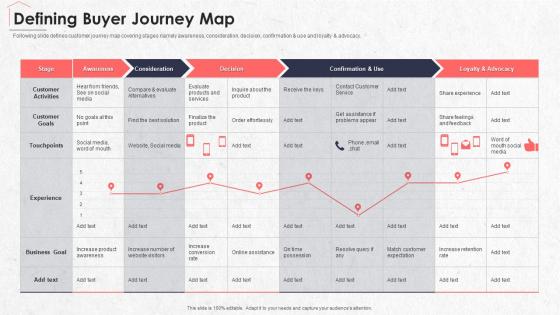
Following slide defines customer journey map covering stages namely awareness, consideration, decision, confirmation and use and loyalty and advocacy.
People who downloaded this PowerPoint presentation also viewed the following :
Defining Buyer Journey Map Real Estate Marketing Plan Sell Property with all 6 slides:
Use our Defining Buyer Journey Map Real Estate Marketing Plan Sell Property to effectively help you save your valuable time. They are readymade to fit into any presentation structure.





FAQs for Defining Buyer Journey Map Real Estate Marketing
So basically there are three stages buyers go through. First is awareness - they figure out they actually have a problem that needs solving. Then consideration where they're digging into different options. Finally decision stage when they're ready to pull the trigger. For awareness, create educational stuff about their pain points. Consideration is more like comparison guides and case studies. Decision stage? That's demos, free trials, pricing info. The dating analogy actually works pretty well here - notice, get to know, commit. Just map out what questions they're asking at each point and make content that answers those. Way easier than trying to guess what they want.
Look, pain points are what separate a useful buyer journey map from total BS. You'll spot exactly where customers hit walls - maybe they're bailing at checkout because surprise shipping fees pop up. Fix that specific mess instead of guessing what's wrong. Honestly, most people skip this step and wonder why their maps don't work. Start with the friction points first. Where do people actually get stuck or annoyed? Once you nail those down, your journey map becomes this solid problem-solving blueprint rather than some theoretical flowchart that looks nice but doesn't help anyone.
Miro and Mural are your best bets for buyer journey mapping - super easy to collaborate and move stuff around visually. Lucidchart's solid if your team's already on it. UXPressia and Smaply are more specialized with built-in templates and persona stuff, which is nice. Honestly, Google Drawings works fine for basic maps if you're just starting out. Canva too, though that feels weird for business stuff lol. My take? Start with whatever tool you already know, then switch later if you need fancier features. Don't overthink it - the mapping process matters way more than the tool.
Honestly, buyer personas are everything when it comes to journey mapping. They're who's actually going through each stage and why they're doing it. Skip the solid personas and you're basically guessing at motivations, concerns, how people like to research stuff. Different personas take different paths too - that's why some companies end up with like 5 different journey maps (gets messy real quick). Your personas shape the emotions and pain points at every single touchpoint. Oh, and definitely validate your personas with real customer data first. Otherwise you'll build something that looks pretty but totally misses the mark on what's actually happening.
Honestly, conversion rates at each journey stage are your best bet - that's what really matters. Track your customer acquisition costs and see how long people take to actually convert. Drop-off points between stages will tell you everything about what's broken. Customer satisfaction and retention rates matter too since the whole point is making their experience better, right? Email opens and content engagement at different touchpoints give you good insight. Oh, and don't try tracking everything at once - pick maybe 3-4 metrics that actually connect to your business goals or you'll go crazy with data.
Honestly, journey maps are game-changers for finding where people bail on your site. Pick one type of customer and literally walk through everything they do - seeing your ad, hitting your homepage, whatever. Map their thoughts at each step. I promise you'll find stuff that's been killing your sales without you realizing it. Like maybe your checkout's confusing or your pricing doesn't make sense. Companies fix these obvious issues and boom - 20-30% better conversions. It's wild how we miss things right in front of us.
Honestly, the worst thing you can do is just guess what customers are thinking instead of actually talking to them. I've seen so many teams (including mine lol) create these super clean, linear maps that look nothing like reality. Real buyers jump around everywhere - they'll research, then ghost you for months, then suddenly want a demo. Get your sales and support people involved too, not just marketing. They hear the actual complaints and questions. Oh, and don't treat it like homework you do once. Update that thing every few months or it becomes useless pretty fast.
Honestly, I'd say quarterly at minimum. Tech moves so damn fast though - if you're in that world, maybe every 2-3 months makes more sense. Slower industries? Twice a year could work. Watch for the obvious stuff: customer behavior shifts, new product launches, feedback that makes you go "wait, that's not right." I always tie mine to quarterly reviews since I'm doing those anyway. The worst thing is building this detailed map and then ignoring it for a year. You'll end up with these weird assumptions that don't match reality anymore.
Oh totally! Journey maps work way better when you connect them to everything else you're doing. Create blog posts for awareness, case studies for consideration, demos for decision-making - that kind of thing. Social media gets easier too since you'll know which platforms matter at different stages. Honestly, I've watched teams blow their entire budget on random campaigns that don't connect to anything. The trick is syncing your content calendar with those journey stages. Makes every interaction feel like it actually belongs there instead of just... existing. Trust me, your prospects will notice the difference.
Honestly, you need separate maps for each group because a 25-year-old shops completely different than someone who's 60. Pick your main segments first - maybe by age or income, whatever makes sense for your thing. Then dig into how each group actually behaves, where they hang out online, what drives them. I'd probably start with just your top 2-3 groups though, otherwise it gets crazy overwhelming. The trick is backing this up with real data from surveys or interviews, not just guessing. Oh and don't assume - I learned that the hard way! Each persona needs different touchpoints and messaging that actually resonates with them.
Okay so emotions totally make or break whether people actually buy stuff. Map out how customers feel at each step - like they're pumped when discovering your product, but then get all anxious comparing options. Most companies completely ignore this (which is dumb tbh). Add emoji or emotion words to your customer journey map. Survey people about how they felt during the process. Check where everyone's dropping off - it's usually when they're stressed out. Then fix the crappy emotional moments and boost the good ones. Way more effective than just focusing on features and pricing.
Honestly, buyer journey maps are like a cheat code for finding where you're bleeding prospects. Map out each touchpoint and compare it to what buyers actually want at that moment - mismatches = your gaps. I used to push demos way too early when people were still figuring out their problem (rookie move). The visual makes it crazy obvious where you're missing content or follow-up stuff. Just audit your current flow against the map and fix the spots where you're losing the biggest deals first. Way easier than guessing what's broken.
Honestly, just get everyone in a room together first - schedule those cross-department workshops with sales, marketing, customer success, and product. Each team brings their own customer data and insights to the table. The key thing I've noticed? When people feel like they're actually building something instead of just following orders, they buy in way faster. Oh and definitely assign clear roles upfront - that saves you so many headaches later. Regular check-ins keep things moving. But here's what really matters: connect the journey map results back to what each department actually cares about achieving.
Yeah, cultural differences totally mess with buyer journeys - learned this the hard way at my last job. Germans want tons of research time while Americans make quick decisions. Trust is huge in some cultures; they need months of relationship-building before buying anything. Others just want the best price upfront. Direct communication works great in the US but can feel rude in Asia. Honestly, you can't just translate your existing map and call it done. Each market needs its own journey map based on local habits. Interview actual customers in each region first - way more valuable than any research report.
Talk to your actual customers first—don't just guess what they want. I'd mix interviews with surveys plus whatever data you've got from analytics. Here's something weird I learned: asking "what almost made you quit?" during calls reveals SO much more than typical questions. Map out the logical steps but also those emotional moments where people get frustrated or excited. Your sales team probably hears complaints all day, so include them in research sessions too. Oh, and feelings matter way more than rational stuff when people make decisions. Get info from different places, not just one.
-
Fantastic collection of visually appealing PowerPoint templates. They certainly uplift the look of the presentation.
-
The customer care of SlideTeam is very responsive. I was having a payment issue and they fixed it for me in no time.