

Developing Leadership Pipeline Through Succession Planning Powerpoint Presentation Slides





Try Before you Buy Download Free Sample Product
 Impress Your
Audience
 100%
Editable
 Save Hours
of Time


Every organization wants the right succession plan to guide, train and prepare its existing talent pool for future roles. Succession planning is a process of developing future leaders for critical roles within the organization. Our presentation Developing Leadership Pipeline through Succession Planning will assist organizations that want to meet their objective of having the right talent at the right place and at right time through a succession planning program. At first, companies can use how we performed section to understand their past performance and slides namely workforce trends, and why we need to invest in succession planning to ensure improvement in business performance. Organizations can successfully introduce, implement and track succession plans using slides such as establishing future business goals, introducing succession planning programs, identifying key positions, and employee development plans, preparing staff for future roles, and monitoring succession planning programs. Lastly, the dashboard section will assist organizations in evaluating their business performance. Download this template now.
People who downloaded this PowerPoint presentation also viewed the following :
Content of this Powerpoint Presentation
Slide 1: This slide displays the title Developing Leadership Pipeline Through Succession Planning.
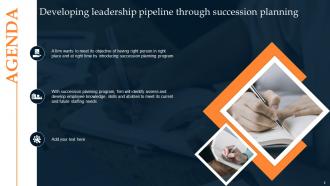
Slide 2: This slide displays the title AGENDA.
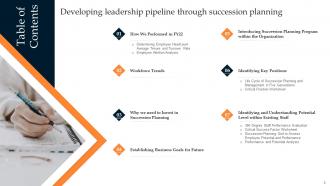
Slide 3: This slide exhibit table of content.
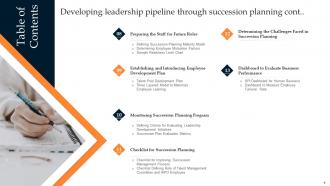
Slide 4: This slide exhibit table of content.
Slide 5: This slide exhibit table of content- How We Performed in FY22.
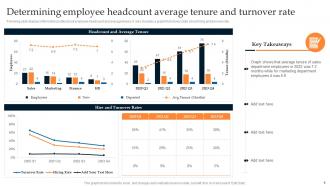
Slide 6: Following slide displays informational stats about employee headcount and average tenure.
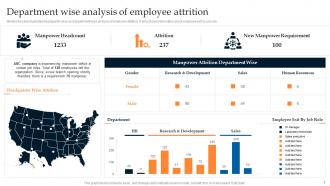
Slide 7: Mentioned slide illustrates headquarter wise and department wise analysis of employee attrition.
Slide 8: This slide showcase the further table of content.
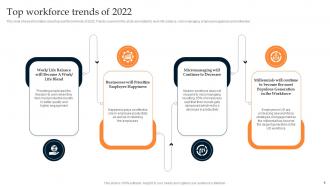
Slide 9: This slide shows information about top workforce trends of 2022.
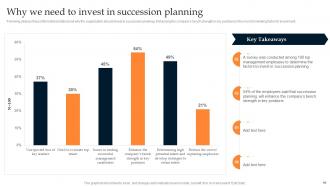
Slide 10: Following slide portrays informational stats about why the organization should invest in succession planning.
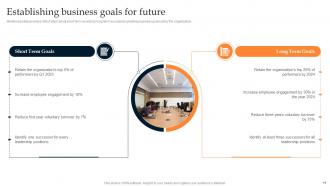
Slide 11: Mentioned slide provides information about short-term as well as long-term succession planning business goals set by the organization.
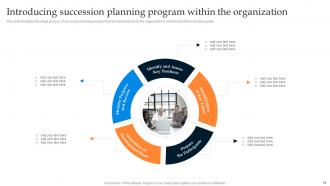
Slide 12: This slide illustrates five stage process of succession planning program that will be introduced by the organization to meet its short term business goals.
Slide 13: This slide exhibit table of content- Identifying Key Positions.
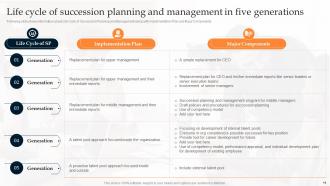
Slide 14: Following slide shows information about Life Cycle of Succession Planning and Management along with Implementation Plan and Major Components.
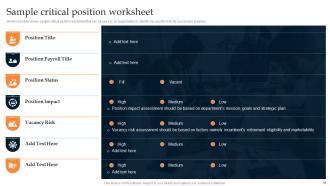
Slide 15: Mentioned slide shows sample critical position worksheet that can be used by an organization to identify key positions for its succession planning.
Slide 16: This slide exhibit table of content- Identifying and Understanding Potential Level within Existing Staff.
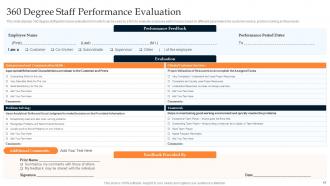
Slide 17: This slide displays 360 degree staff performance evaluation form.
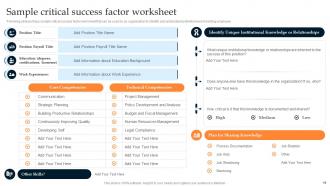
Slide 18: Following slide portrays sample critical success factor worksheet that can be used by an organization to identify and understand potential level of existing employee.
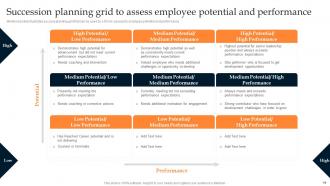
Slide 19: Mentioned slide illustrates success planning grid that can be used by a firm to assess its employee potential and performance
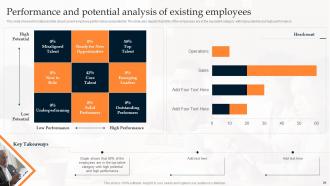
Slide 20: This slide shows informational stats about current employee performance and potential.
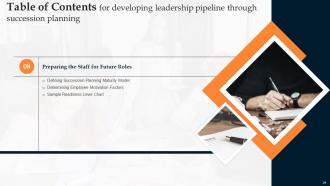
Slide 21: This slide exhibit table of content- Preparing the Staff for Future Roles.
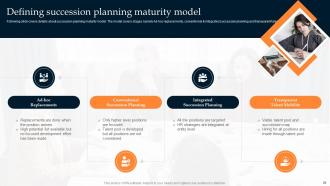
Slide 22: Following slide covers details about succession planning maturity model.
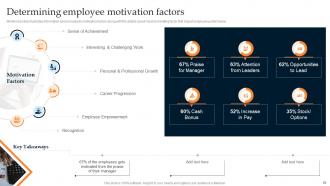
Slide 23: Mentioned slide illustrates information about employee motivation factors along with the details about most dominating factor that impact employee performance.
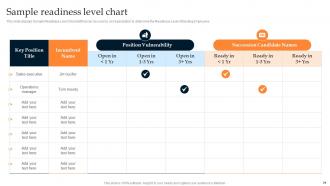
Slide 24: This slide displays Sample Readiness Level Checklist that can be used by an Organization to determine the Readiness Level of Existing Employees
Slide 25: This slide exhibit table of content- Establishing and Introducing Employee Development Plan.
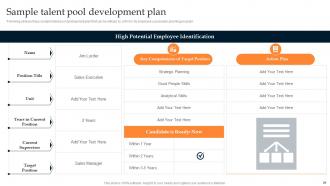
Slide 26: Following slide portrays sample talent pool development plan that can be utilized by a firm in its employee succession planning program.
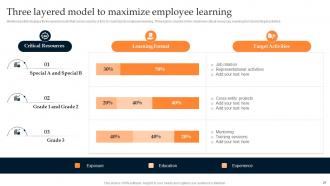
Slide 27: Mentioned slide displays three layered model that can be used by a firm to maximize its employee learning.
Slide 28: This slide exhibit table of content- Monitoring Succession Planning Program.
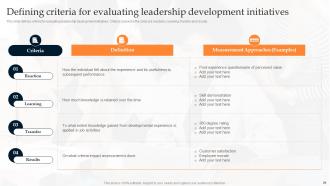
Slide 29: This slide defines criteria for evaluating leadership development initiatives.
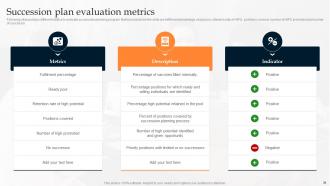
Slide 30: Following slide portrays different metrics to evaluate succession planning program.
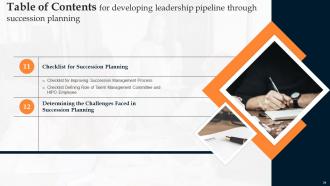
Slide 31: This slide showcase further table of content.
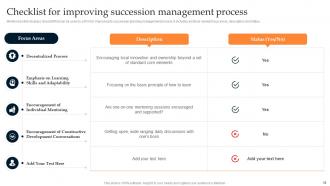
Slide 32: Mentioned slide displays checklist that can be used by a firm for improving its succession planning management process.
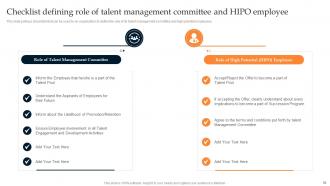
Slide 33: This slide portrays checklists that can be used by an organization to define the role of its talent management committee and high potential employees.
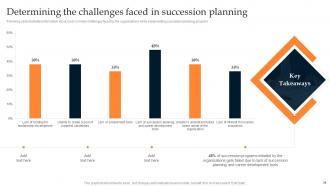
Slide 34: Following slide illustrates information about most common challenges faced by the organizations while implementing succession planning program.
Slide 35: This slide exhibit table of content- Dashboard to Evaluate Business Performance.
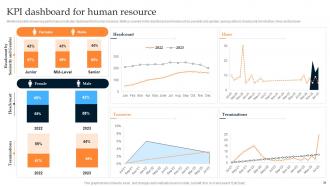
Slide 36: Mentioned slide shows key performance indicator dashboard for human resource.
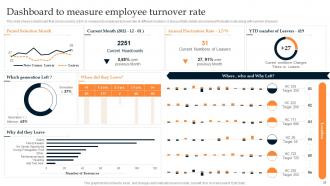
Slide 37: This slide shows a dashboard that can be used by a firm to measure its employee turnover rate at different locations.
Slide 38: This is the icons slide.
Slide 39: This slide presents title for additional slides.
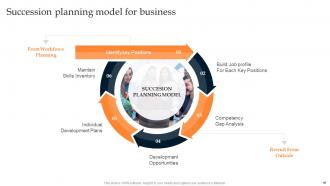
Slide 40: This slide showcase Succession planning model for business.
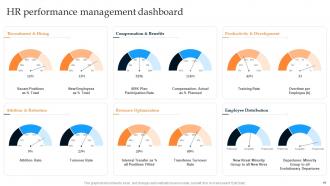
Slide 41: This slide showcase HR performance management dashboard.
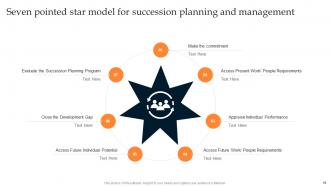
Slide 42: This slide showcase Seven pointed star model for succession planning and management.
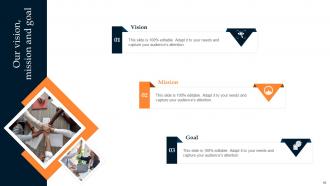
Slide 43: This slide presents your company's vision, mission and goals.
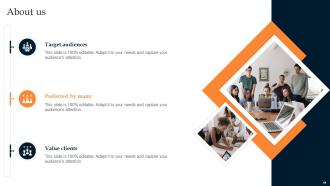
Slide 44: This slide shows about your company, target audience and its client's values.
Slide 45: This slide depicts 30-60-90 days plan for projects.
Slide 46: This slide shows roadmap of company.
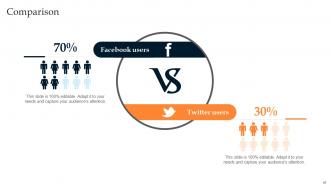
Slide 47: This slide shwcase Comparison.
Slide 48: This slide depicts posts for past experiences of clients.
Slide 49: This slide shows puzzle for displaying elements of company.
Slide 50: This slide showcase Mind map.
Slide 51: This slide showcase Our goal.
Slide 52: This is thank you slide & contains contact details of company like office address, phone no., etc.
Developing Leadership Pipeline Through Succession Planning Powerpoint Presentation Slides with all 57 slides:
Use our Developing Leadership Pipeline Through Succession Planning Powerpoint Presentation Slides to effectively help you save your valuable time. They are readymade to fit into any presentation structure.






FAQs for Developing Leadership Pipeline Through Succession Planning
Adaptability's the big one - everything changes so fast now. You'll also need solid emotional intelligence since you're dealing with different personalities constantly. Remote work makes communication way harder than it used to be, so that's critical too. Being okay with uncertainty helps a lot because you rarely have all the info when making decisions. Oh, and curiosity matters more than people think - the best leaders I know ask great questions and actually listen to answers instead of just waiting for their turn to talk. I'd pick one of these to work on this quarter and go from there.
Look for the ones who jump in when things get messy and actually pay attention during meetings. They're asking good questions, volunteering for the crappy projects nobody wants, smoothing over team drama without being told to. The best candidates? Usually not the ones kissing up for promotions - just people doing solid work consistently. Give them stretch assignments and pair them with mentors. Start small though, let them handle lower-stakes projects first. You want them to mess up and learn before it really matters. Oh, and create space where failure won't tank their career.
Dude, emotional intelligence is everything in leadership. I mean, you can be brilliant at the technical stuff, but if you can't handle your own stress or notice when your team's falling apart? You're screwed. Great leaders get their own emotional patterns first - like what sets them off and why. Then they figure out how to actually connect with people. It builds trust way faster than just barking orders. My old boss was terrible at this and everyone hated working for him. Start paying attention to your triggers. Notice how you react when things go sideways - that's where the real work begins.
Honestly, mentorship programs work so well for developing leaders. You can't beat that real-world experience from someone who's actually been there. The feedback is way more personalized than any training session. Your mentees get to practice making decisions with someone who's already screwed up and learned from it (which is honestly the best teacher). Builds their confidence too. Just make sure you pair people carefully - personality fit matters more than you'd think. I'd start small, maybe 5-6 pairs to see what clicks with your team culture before going bigger.
Look, forget generic leadership fluff - nobody has time for that. Figure out what your managers actually struggle with day-to-day, then build training around those real scenarios. Mix it up too: workshops, mentoring, maybe some peer groups where they can complain to each other (kidding, but not really). One-shot training sessions are basically useless. You need ongoing development with regular check-ins. Oh, and this is crucial - get the executives on board first. Seriously, if they're not visibly supporting it, you're wasting everyone's time. I've watched so many programs crash because leadership paid lip service but didn't actually care.
Dude, cultural stuff makes a HUGE difference in leadership. Some people want super direct feedback, others need you to be way more subtle about it. Hierarchy expectations are all over the place too - I've seen this play out so many times at work. What works with one team totally bombs with another. You should probably get some cultural training if you're managing diverse groups. The trick is adapting without becoming fake. Don't completely change yourself, but be flexible with your approach. It's honestly pretty cool how much culture influences what motivates people.
Honestly, 360-degree feedback is probably your best move here - gets input from your team, boss, and peers so you're not flying blind. One-on-ones with your direct reports are gold though, assuming you ask decent questions and they actually trust you enough to be honest. StrengthsFinder or EQi 2.0 work well for the self-reflection piece. Employee surveys and performance data show if your style's actually moving the needle. Oh, and don't try to do everything at once - pick one method first or you'll just drown in feedback. Start small and add more as you go.
Honestly, 360 reviews are clutch for this - plus regular mentor check-ins and peer sessions. What's worked best in places I've seen is these "feedback cafes" they'd do monthly. Leaders would practice giving real feedback on actual situations they were dealing with. Way less awkward than formal reviews, you know? Thing is, it can't be a one-and-done deal. Keep it rolling consistently. And people need to feel safe enough to be honest instead of just saying nice things. Maybe start by tacking on 15 minutes of feedback time to whatever leadership meetings you're already doing?
Dude, adaptability is everything in leadership. Your team's watching how you handle chaos, and trust me - there will be chaos. Plans blow up. People need different approaches. You've got to roll with it. Start small though. Switch up your morning routine or tackle problems differently than usual. Get feedback from people (even when it stings a bit). Look at how other leaders dealt with major curveballs - there's gold in those stories. The biggest shift? Stop seeing change as this scary thing. It's actually where the best opportunities hide.
Look, managing people today is wild compared to even five years ago. You've got remote teams scattered everywhere, tons of data to help you make decisions, and honestly? Sometimes I feel like I'm drowning in new apps every week. AI can show you crazy insights about how your team's doing, which is pretty cool. But here's the thing - don't let all this tech replace actual human moments. Those real conversations still matter most. My advice? Just pick one tool that fixes an actual headache you're dealing with. Master that first, then add more later.
Three main things to work on: knowing your own biases, getting different viewpoints, and making sure people feel safe speaking up. We all have biases - just admit they're there. When you're making decisions, actively ask people who think differently than you do. Oh, and those one-on-ones are super helpful since people open up way more in smaller conversations. Here's what really matters though - you have to actually DO something with the feedback you get. People notice when you make changes based on what they said. Pick one thing someone suggested this week and try it out.
Honestly, just treat failure like data instead of some personal attack on your character. Ask yourself what specific decisions led to this mess and what you'd do differently next time - way more useful than beating yourself up. I used to spiral after mistakes but realized it's just wasted energy. Also, be open about your screw-ups with your team. When they see you discussing what went wrong without drama, they'll actually take more risks and innovate. Write down what you learn though - you'll forget otherwise, and that defeats the whole point.
Oh totally, good leaders make all the difference for engagement. People stay when their boss actually gives a damn about them and knows how to communicate clearly. I've watched this happen so many times - crappy managers drive everyone away, but the good ones? Their teams are way more motivated and actually stick around. You'll see better performance too. Here's what bugs me though - most companies just do these useless training workshops instead of real development. Focus on coaching skills and building actual trust. That's where the magic happens.
Figure out what your company actually cares about - like, the real priorities, not just what's in the mission statement. Once you know that, be honest about your skills and what you want to improve. Pick 2-3 things to work on that you're genuinely interested in AND that'll help your org move forward. No point getting better at presentations if they desperately need tech people, you know? Touch base with your manager regularly since things change fast. Oh, and don't spread yourself too thin - better to nail a few areas than be mediocre at everything.
Dude, you've gotta keep learning if you want to lead well. The business world changes so fast - new tech, management styles, industry shifts. If you're not staying current, you'll get left behind. What I've noticed is that learning itself changes how you think. Makes you more curious and resilient, which your team picks up on. I mean, nobody wants to follow someone who thinks they know everything already, right? The trick is being consistent about it. Maybe podcasts while you drive, reading leadership books monthly, taking actual courses. Whatever works for your schedule. Just pick something and stick with it - that's honestly the hardest part.
-
Easily Editable.
-
The pricing page of this website is very sorted. I felt no pain while buying the PPTs.