


Succession Management Powerpoint Presentation Slides





Try Before you Buy Download Free Sample Product
 Impress Your
 Audience
 100%
100% Editable
 Save Hours
 of Time


The workforce redeployment is a key element of doing any business. In this way, our expert designers have made this Succession Management PowerPoint Presentation Slides to satisfy all your significant business needs. Our business succession planning presentation slideshow features different slides, for example, succession and career planning overview, manage the ongoing process, employee competency and assessment grid, performance improvement plan, key development practices, development of succession and career plan, succession planning backup summary and so on. Progression management is very important for employees or business professionals, so they can gradually move towards success. This succession planning in HRM PPT format can aid and guide the onlookers to understand the topic clearly. Download this career development PPT layout to showcase different steps involved to reach the set goals. This succession assessment Presentation can make your presentation a success. Our Succession Management Powerpoint Presentation Slides give good value for money. They also have respect for the value of your time.
People who downloaded this PowerPoint presentation also viewed the following :
Content of this Powerpoint Presentation
Slide 1: This slide introduces Succession Management. State Your Company Name and begin.
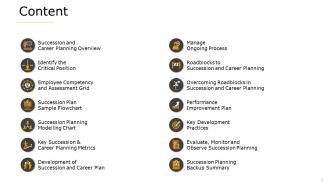
Slide 2: This slide shows Content of the presentation.
Slide 3: This slide presents Succession and Career Planning Overview.
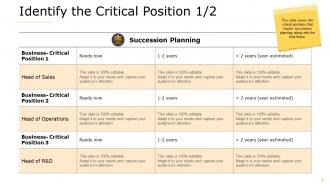
Slide 4: This slide displays Identify the Critical Position that require succession planning along with the time frame.
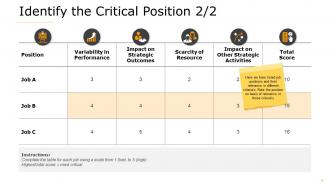
Slide 5: This is another slide representing Identify the Critical Position in tabular form.
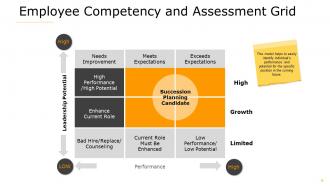
Slide 6: This slide showcases Employee Competency and Assessment Grid to identify individual’s performance and potential for the specific position in the coming future.
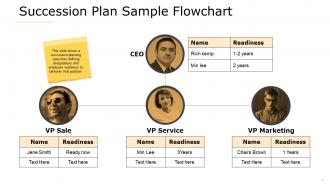
Slide 7: This slide shows Succession Plan Sample Flowchart defining designations and employee readiness to takeover that position.
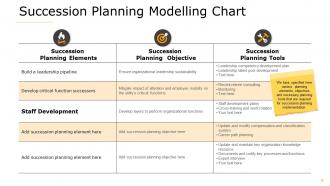
Slide 8: This slide presents Succession Planning Modelling Chart describing various planning elements, objectives and necessary planning tools that are required for succession planning implementation.
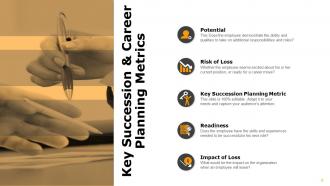
Slide 9: This slide displays Key Succession & Career Planning Metrics describing- Potential, Risk of Loss, Key Succession Planning Metric, Readiness, Impact of Loss.
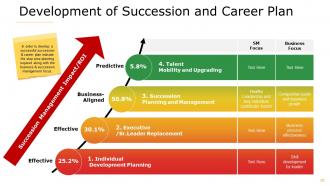
Slide 10: This slide represents Development of succession and career plan with data in percentage.
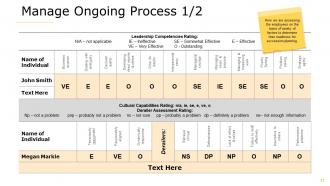
Slide 11: This slide showcases Manage Ongoing Process by assessing the employees on the basis of variety of factors to determine their readiness for succession planning.
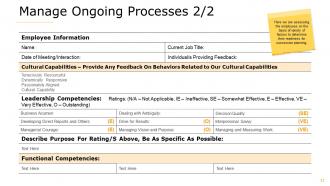
Slide 12: This is another slide for Managing Ongoing Processes.
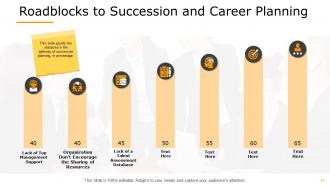
Slide 13: This slide shows Roadblocks to Succession and Career Planning.
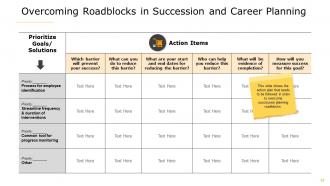
Slide 14: This slide shows the action plan that needs to be followed in order to overcome Roadblocks in Succession and Career Planning.
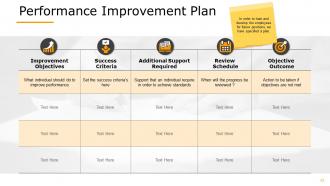
Slide 15: This slide presents Performance Improvement Plan to train and develop the employees for future positions.
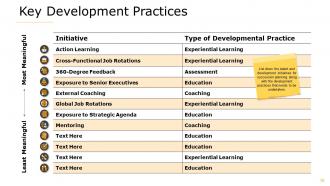
Slide 16: This slide displays Key Development Practices in tabular form.
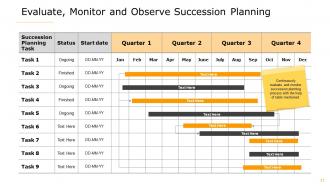
Slide 17: This slide represents Evaluate, Monitor and Observe Succession Planning.
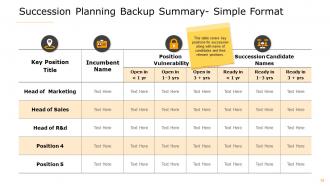
Slide 18: This slide showcases Succession Planning Backup Summary- Simple Format covering key positions for succession along with name of candidates and their relevant positions.
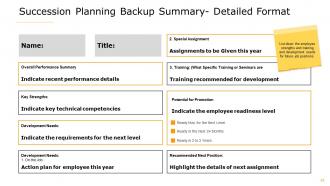
Slide 19: This slide shows Succession Planning Backup Summary- Detailed Format listing employee strengths and training and development needs for future job positions.
Slide 20: This slide reminds about a 15 minutes coffee break.
Slide 21: This slide is titled as Post It. Post your important notes here.
Slide 22: This is Meet Our Team slide with names and designation.
Slide 23: This is a Comparison slide to state comparison between commodities, entities etc.
Slide 24: This is About Our Company slide to show company specifications etc.
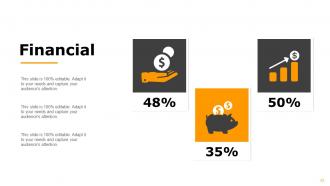
Slide 25: This is a Financial slide. Show your finance related stuff here.
Slide 26: This is a Target slide. State your targets here.
Slide 27: This is a Puzzle slide with text boxes.
Slide 28: This is a Lego slide with additional text boxes.
Slide 29: This slide displays Magnifying Glass to highlight information.
Slide 30: This is a Thank You slide with address, contact numbers and email address.
Succession Management Powerpoint Presentation Slides with all 30 slides:
Folks feel impressed enough to contribute due to our Succession Management Powerpoint Presentation Slides. You will acquire crowd funding.









FAQs for Succession Management
So you'll need to figure out who your high-potential people are first - map out your critical roles and see who could actually fill them. Then comes the fun part (kidding, it's tedious): building development plans with mentoring and stretch assignments. Track their progress with regular assessments since things change all the time. Document everything and be super clear about expectations with potential successors. Oh, and definitely start with your most important positions before expanding - don't try to do everything at once or you'll burn out. The whole process takes forever but honestly it's one of those things that'll save you later.
Look for people who get stuff done but also act like leaders even without the title. Initiative-takers are gold - plus anyone who naturally mentors others or handles messy situations well. Performance reviews are fine, but honestly? Peer feedback tells you way more. Notice who people actually ask for help (not just who they're supposed to). I'd set up some stretch assignments to test them out. Cross-functional projects are perfect for this. Keep a running list and chat regularly with your leadership team about who's ready for what next. Trust me, the obvious choices aren't always the right ones.
Hey! So mentorship is honestly the secret sauce for succession planning. You're basically creating a knowledge transfer pipeline - your experienced leaders work directly with high-potential people instead of everyone just winging it. Way better than those snooze-fest leadership seminars, right? Mentors catch skill gaps early and help build the relationships future leaders actually need. The trick is keeping it structured but not overly rigid. Real-world context beats textbook theory every time. It's how you develop people who'll actually be ready when the time comes.
Don't treat succession planning like some separate thing you do once a year. During performance reviews, flag your high-potential people - most companies are terrible at this connection, honestly. Your leadership programs and mentoring should target future succession needs too. Oh, and make sure recruiting knows about upcoming gaps so they're not scrambling later. Use the same conversations for both current development and future planning. I'd set up quarterly talent reviews that cover immediate needs plus who's ready for what down the road. It's really about connecting dots you're already gathering.
Honestly, I'd focus on internal fill rates first - you want like 70-80% of leadership spots filled from within. Time-to-fill for critical roles is huge too. Also check how many ready candidates you have per key position (this one really shows if you're screwed or not). Retention rates for your high-potential people matter obviously. I'd also compare performance ratings between internally promoted leaders vs external hires - sometimes the outside people actually do better, which is awkward but good to know. Oh and engagement scores for succession program participants, since happy people don't bail. Review quarterly so you can fix things fast.
Look, you can't just slap diversity onto succession planning at the end - build it in from day one. Expand your talent sourcing beyond the obvious high-performers who mirror current leadership. Track diversity numbers in your pipeline religiously. Honestly, I'm shocked how many companies still botch this basic stuff. Development programs for underrepresented groups? Non-negotiable. Your succession committees need diversity too, since homogeneous groups just pick mini-mes of themselves. Oh, and set actual targets for your leadership pipeline. Hold managers accountable or nothing changes.
Honestly, your leadership style totally changes how you pick future leaders. Collaborative types usually get everyone involved in spotting talent and creating clear advancement paths. Autocratic leaders? They just handpick whoever they like - kinda risky if you ask me. Transformational leaders are all about mentoring and giving people challenging assignments to grow. Meanwhile, transactional ones stick to formal programs and metrics. Oh, and definitely get outside opinions on your talent pipeline. You don't want blind spots messing up something this important for your company's future.
Honestly, every 6 months if you can manage it. I know that sounds like a lot, but people move around constantly - promotions, departures, skill changes. That star employee you had your eye on? They might've switched departments or honestly just aren't the right fit anymore. Business needs shift too, so the leadership qualities you wanted last year could be totally different now. I'd set a calendar reminder and just treat it like any other big review. Once a year is the bare minimum, but twice yearly keeps you way more on top of things.
Honestly, the biggest mess-ups I see are when leadership doesn't actually care, companies wait way too long to start, and they only worry about C-suite replacements. Mid-level folks get totally ignored. Plus nobody wants to have these conversations - super awkward! Start talking about this stuff early and make it routine, not some annual thing. Give your rising stars real development opportunities and actually track how they're doing. Here's the kicker though - tie succession planning directly to exec performance reviews or they'll just blow it off. Pick maybe 3-5 must-have roles first and go from there.
Honestly, tech makes succession planning way less of a headache. Start with what you already have - most companies don't even realize their current HR systems can track performance and skills in one spot. Analytics tools are pretty solid for spotting future leaders and catching potential gaps early. Learning platforms help you actually develop people instead of just hoping they'll figure it out. Oh, and those digital assessment tools? Way better than the old "gut feeling" approach to picking leaders. I'd audit your existing tech first though - you might be sitting on unused features that could save you tons of time.
Your company culture pretty much determines how succession planning plays out. Companies that prioritize mentorship and internal growth? They'll focus on developing people from within. More competitive, results-focused places tend to hire externally or fast-track promotions. I've watched collaborative organizations try to force aggressive succession processes - honestly, it's painful to see because it never works. People just resist or ignore it entirely. You really need to match your approach to what employees already expect. Otherwise you're fighting an uphill battle that you won't win.
Oh man, external stuff can completely mess with your succession plans. Economic crashes make people retire early or you're suddenly fast-tracking leaders with no budget. COVID was wild - everyone scrambled to promote anyone who actually understood tech. Market changes mean you need totally different skills than you planned for. Industry disruption? Your whole pipeline might be useless overnight. I swear it's like playing darts blindfolded sometimes. You've got to build in flexibility so when things go sideways, you can actually pivot to the leadership you need instead of being stuck with what you thought you wanted.
Be upfront about having a succession plan - that's totally fair for everyone to know. Just don't get into specifics about who's being considered for what. That stuff creates unnecessary office drama, trust me. Have detailed conversations privately with people actually in your pipeline though. They deserve to know about their development opportunities and potential paths forward. For everyone else? Focus on how succession planning helps the whole team by creating stability. Honestly, I'd start by figuring out who needs what level of detail first - makes the rest way easier.
Honestly, you've gotta start building your bench before you actually need people. Map out 2-3 potential replacements for each critical role - trust me, I've watched companies panic when someone walks out the door unexpectedly. Get your high-potential folks doing stretch assignments or working across departments. Also set up mentoring programs so all that institutional knowledge doesn't just walk out with whoever leaves. The biggest mistake? Only thinking about this during annual reviews. Update your plans every few months instead. Way better than scrambling last minute when someone drops their resignation letter on your desk.
Dude, succession planning has some tricky legal stuff you can't ignore. Employment contracts and non-competes are huge - last thing you need is people bailing mid-transition. Tax implications get wild too, especially with ownership transfers. If you're in a regulated industry, certain roles need specific certifications which complicates things. Promoting internally? Watch out for fiduciary duty issues and conflicts of interest - that's where companies sometimes trip up. Seriously though, loop in your lawyers from the start. I've seen too many people treat this as paperwork to handle later and it always bites them.
No Reviews