


Succession planning template 1 ppt presentation examples




Try Before you Buy Download Free Sample Product
 Impress Your
 Audience
 100%
100% Editable
 Save Hours
 of Time


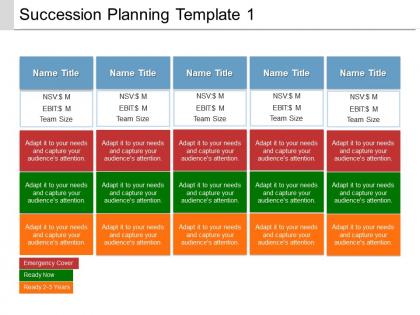
For better leadership of your business operations, you can simply make effective use of our professionally developed Succession planning PPT template design. It will help in improving your business model which helps in streamlining your company operations and structure. This succession management PowerPoint image diagram implies to smartly change your leadership or management structure to the new perspective. Also, define the stages info-graphically with this succession plan PPT layout model. It helps in identifying the potential leadership which may help in accomplishing your company long term goals and targets. You can also define the change in responsibilities and role with this succession planning process PowerPoint model. Along these lines, essentially tap on the download interface offered underneath to simply start exploring more about the same. It would help in developing a compelling business structure for your business advancement and achievement. Utilize this progression plan PowerPoint format to conceptualize your thoughts into an expert report. When you role the importance that presentations play in any successful business then you?d understand why having a powerful presentation is important. Our Succession Planning Template 1 Ppt Presentation Examples are there to help you produce powerful presentations.
People who downloaded this PowerPoint presentation also viewed the following :
Succession planning template 1 ppt presentation examples with all 5 slides:
Create an alliance with our Succession Planning Template 1 Ppt Presentation Examples. Be assured of a lasting pact.




FAQs for Succession planning template 1
Look, succession planning isn't rocket science but most companies still mess it up. First thing - figure out which roles would actually hurt if someone left tomorrow. Then spot your high-potential people who could potentially fill those gaps. Individual development plans are where the magic happens - mentoring, training, those "holy crap I'm in over my head" stretch assignments that actually teach you stuff. Document everything too (I know, boring). Set up timelines for immediate, short-term, and long-term replacements. Review regularly so you're not scrambling when Dave from accounting suddenly retires. Start with your biggest pain points first.
Start with your performance reviews - who's crushing it consistently? Look for people others naturally turn to for help, even if they're not managers yet. Cross-functional projects are honestly your best friend here because they show who can handle ambiguity and work with different teams. I'd set up monthly talent chats with your leads too. Watch for the ones mentoring others or stepping up when things get messy. Don't be that person who waits until someone quits to realize you should've been developing their backup - been there, it sucks.
Honestly, mentorship is everything when it comes to succession planning. You can't just slap a title on someone and expect them to figure it out. Pairing your experienced people with high-potential folks creates this knowledge transfer that actually works - like downloading someone's brain over months instead of panicking during a two-week handover (been there, not fun). It's how you pass along relationships, institutional knowledge, and all those unwritten rules that keep things running. My advice? Start identifying those key mentor pairs now and block out regular time for them to actually connect.
Honestly, once a year is the bare minimum but don't just set it and forget it. Any big changes - key people leaving, restructuring, new business direction - should trigger an immediate update. I've watched too many places get blindsided because they ignored this stuff. Your business changes constantly, right? So should your plans. Maybe do quarterly check-ins to see if roles shifted or your rising stars moved around. Block some time next month for your first real review - you'll thank yourself later when you're not scrambling.
Track your internal fill rates for key roles and how long succession actually takes when it happens. Retention of high-potential people is huge - are they sticking around and moving up at a decent pace? Leadership readiness scores help too, basically measuring if your pipeline is actually ready when someone needs to step up. Honestly, employee engagement tells you a lot since people leave when they can't see where they're going. The best metric though? Compare how internally promoted leaders perform vs external hires in year one. Set up quarterly tracking so you catch problems before they blow up on you.
Honestly, tech has made succession planning so much better than those awful spreadsheet days. Start with getting all your talent data digital - that's your base for everything. Talent management platforms are great because they track skills, performance, and career paths in one spot. AI actually finds high-potential people by catching patterns you'd probably miss (which is kind of wild when you think about it). Automated workflows keep development plans moving, and digital learning lets you train successors from anywhere. The best part? Real-time dashboards show you succession readiness across the whole company. Game changer for sure.
Honestly, the hardest part is getting people to actually want this change - leadership included. Everyone gets super protective of their turf and freaks out about being replaced, which makes sense I guess. Most companies also wait forever to spot talent and develop it properly. Resources are always tight for training programs too. Oh, and just when you've invested in someone promising? They'll probably bounce for a better offer somewhere else. My advice: nail down leadership commitment first, then build those clear development tracks. Otherwise you're just spinning your wheels.
Honestly, succession planning is like giving your employees a roadmap for their future - and that's everything for keeping them around. People stick with companies when they can actually see where they're headed next. Nobody wants to feel trapped in the same role forever, right? Map out realistic career paths for your best performers and show them you're invested in their growth. It creates this loyalty that's hard to fake. Plus when employees know you're prepping them for bigger things, they'll actually give a damn about their work. Trust me, the engagement difference is night and day.
Honestly, just match your message to your audience - board members need different details than regular employees. Start with key stakeholders, then work your way down. Be transparent about timelines and criteria, but don't spill everything about early plans since they'll probably change anyway. People really want clarity on how this affects their current job and where they can grow. Oh, and create some kind of simple matrix showing who gets what info and when - saves you from having to figure it out each time. Keep everyone updated regularly because this stuff evolves constantly.
Look, you can't just cross your fingers and hope diversity magically appears in your leadership pipeline. Hunt for high-potential people from underrepresented groups early on - don't wait until you're filling C-suite roles to panic about this. Create development programs specifically for them. Mix up your mentorship so it crosses demographic lines, and honestly? Check if your current leadership criteria have weird hidden biases baked in. Give diverse candidates those stretch assignments that'll put them on everyone's radar. Oh, and track your pipeline demographics regularly - when gaps show up, actually do something about it.
Honestly, succession planning is like the secret sauce for keeping your culture strong. People get way more invested when they see actual growth happening around them - not just those bullshit "we value career development" posters in the break room. You're basically building a pipeline of people who already get your company's vibe, which beats hiring random outsiders every time. The trick is being obvious about it. Let your team see you developing talent. Shows you're thinking about their future instead of just panicking when Jim from accounting suddenly quits. Plus you keep all that knowledge in-house.
Look, I get it - succession planning feels like a luxury when you're drowning. But here's the thing: cross-training your best people actually saves your butt right now. Someone calls in sick? Boom, you've got coverage. For each key role, pick 2-3 people who could potentially step up. Give them little stretch projects, some mentoring - honestly, most people love that stuff. You're basically killing two birds with one stone: developing tomorrow's leaders while fixing today's staffing headaches. Start with your most critical spots first, then work your way down. It's less overwhelming that way.
Look, you can't just count on internal people for succession planning - that's putting all your eggs in one basket. Sometimes your dream successor literally doesn't exist on your current team, which sucks but happens. Outside hires shake things up with fresh ideas and skills your company probably needs anyway. Plus, knowing there's external competition keeps your internal candidates on their toes. Here's the thing though - don't wait until you desperately need someone to start building those relationships. Network with potential candidates now so you're not panicking later when a key position opens up.
Dude, start this way before people actually bail - biggest screwup I see everywhere. Pick your must-have roles and grow people internally through mentoring and cross-training. Write down all the critical stuff so knowledge doesn't disappear when someone leaves. Super boring but you'll thank yourself later! Have old and new leaders overlap for a few weeks minimum. Oh and tell your team what's happening - nobody likes getting blindsided by leadership changes. Honestly, most places wait until someone gives notice then scramble like crazy.
Ugh, the worst thing you can do is wait too long to start this stuff. I see people panic when their key person gives notice and they've got zero backup plan. Don't make it all secretive either - that just pisses everyone off when they find out later. And please don't just promote your clone! You need different perspectives, not another version of yourself. Honestly though, treat it like an ongoing thing, not some project you finish once. People's goals change constantly. Start mapping out who could move where, even if succession feels like it's years away. Trust me on this one.
-
Editable templates with innovative design and color combination.
-
Appreciate the research and its presentable format.