

Succession And Career Planning Powerpoint Presentation Slides





Try Before you Buy Download Free Sample Product
 Impress Your
 Audience
 100%
100% Editable
 Save Hours
 of Time


Motivate and engage your employees for continued growth & development with this content ready Succession and Career Planning Powerpoint Presentation Slides. Incorporate professionally designed replacement planning presentation graphics to showcase the process of talent development to meet organizational needs. The career Path & success planning PowerPoint complete deck contains ready-to-use slides such as succession & career planning overview, identify the critical position, employee competency & assessment grid, sample flowchart, modelling chart, key succession & career Planning metrics, development of career plan, manage ongoing process, roadblocks of succession management, performance improvement plan, key development practices, succession planning backup summary, detailed format, etc. identify and understand developmental needs of your employees using talent pool management PPT visuals. Utilize visually appealing career progression planning PowerPoint templates to make your employees understand their career path. Download this professional-looking Human resource planning presentation deck to evaluate, monitor & observe succession planning. Don't allow the applause to go to your head with our Succession And Career Planning Powerpoint Presentation Slides. It helps downplay achievements.
People who downloaded this PowerPoint presentation also viewed the following :
Content of this Powerpoint Presentation
Slide 1: This slide introduces Succession and career planning. State Your Company Name and begin.
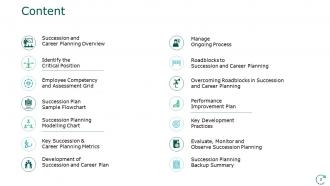
Slide 2: This slide shows Content of the presentation.
Slide 3: This slide presents Succession and Career Planning Overview.
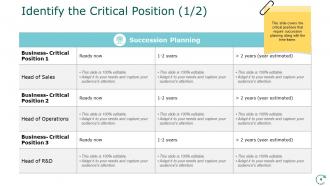
Slide 4: This slide displays Identify the Critical Position that require succession planning along with the time frame.
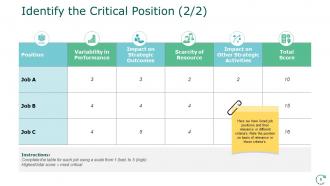
Slide 5: This is another slide representing Identify the Critical Position in tabular form.
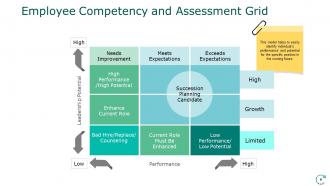
Slide 6: This slide showcases Employee Competency and Assessment Grid to identify individual’s performance and potential for the specific position in the coming future.
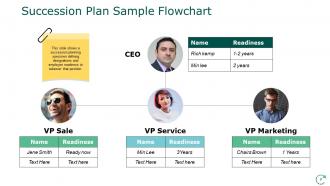
Slide 7: This slide shows Succession Plan Sample Flowchart defining designations and employee readiness to takeover that position.
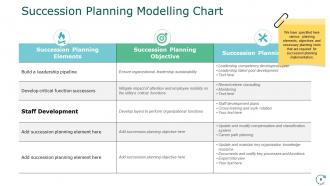
Slide 8: This slide presents Succession Planning Modelling Chart describing various planning elements, objectives and necessary planning tools that are required for succession planning implementation.
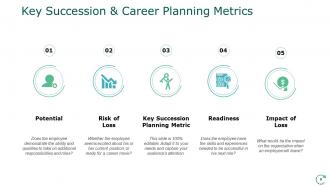
Slide 9: This slide displays Key Succession & Career Planning Metrics describing- Potential, Risk of Loss, Key Succession Planning Metric, Readiness, Impact of Loss.
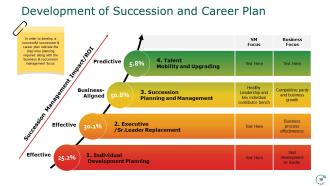
Slide 10: This slide represents Development of succession and career plan with data in percentage.
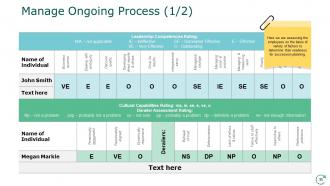
Slide 11: This slide showcases Manage Ongoing Process by assessing the employees on the basis of variety of factors to determine their readiness for succession planning.
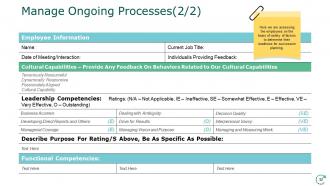
Slide 12: This is another slide for Managing Ongoing Processes.
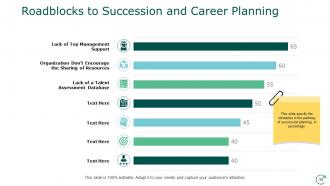
Slide 13: This slide shows Roadblocks to Succession and Career Planning.
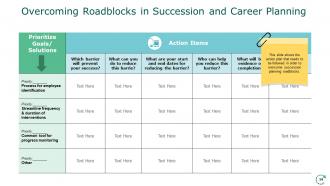
Slide 14: This slide shows the action plan that needs to be followed in order to overcome Roadblocks in Succession and Career Planning.
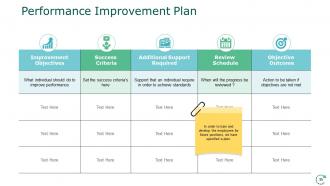
Slide 15: This slide presents Performance Improvement Plan to train and develop the employees for future positions.
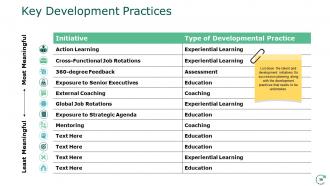
Slide 16: This slide displays Key Development Practices in tabular form.
Slide 17: This slide represents Evaluate, Monitor and Observe Succession Planning.
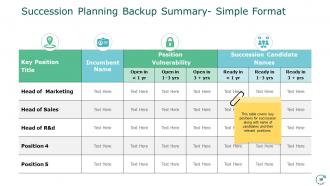
Slide 18: This slide showcases Succession Planning Backup Summary- Simple Format covering key positions for succession along with name of candidates and their relevant positions.
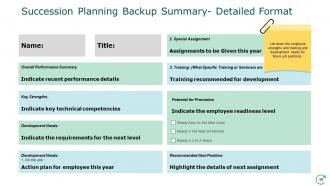
Slide 19: This slide shows Succession Planning Backup Summary- Detailed Format listing employee strengths and training and development needs for future job positions.
Slide 20: This slide reminds about a 15 minutes coffee break.
Slide 21: This slide is titled as Post It. Post your important notes here.
Slide 22: This is Meet Our Team slide with names and designation.
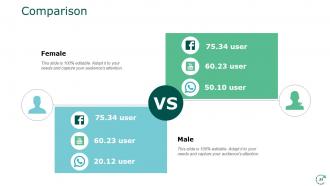
Slide 23: This is a Comparison slide to state comparison between commodities, entities etc.
Slide 24: This is About Our Company slide to show company specifications etc.
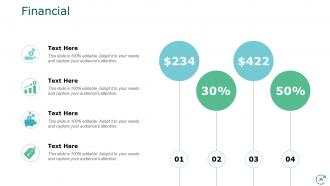
Slide 25: This is a Financial slide. Show your finance related stuff here.
Slide 26: This is Our Goal slide. Show your important goals here.
Slide 27: This is Our Mission slide with related imagery and text boxes.
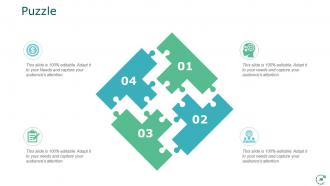
Slide 28: This is a Puzzle slide with text boxes.
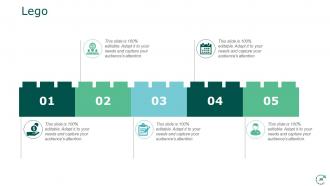
Slide 29: This is a Lego slide with additional text boxes.
Slide 30: This slide displays Magnifying Glass to highlight information.
Slide 31: This is a Thank You slide with address, contact numbers and email address.
Succession And Career Planning Powerpoint Presentation Slides with all 31 slides:
Use our Succession And Career Planning Powerpoint Presentation Slides to effectively help you save your valuable time. They are readymade to fit into any presentation structure.










FAQs for Succession And Career Planning
Honestly, start with mapping out your most vulnerable positions - that's where you'll get burned if someone leaves suddenly. Then figure out who your high-potential people are and what specific gaps they need to fill. The development piece is where most companies totally drop the ball though. They just throw people into roles and hope for the best! Build actual development plans that prepare them for bigger responsibilities. Document everything because priorities change and you don't want to start from scratch every time. Oh, and definitely create a pipeline so you're not panicking when key people give notice.
Honestly, you've gotta define what "high-potential" even means first - learning agility, leadership stuff, business smarts, whatever matters to your company. Use performance reviews and 360 feedback to spot who handles stretch assignments well. The surprising candidates are usually the best ones! Give them real opportunities: cross-functional projects, mentoring, face time with senior leaders. Don't just wait around hoping talent appears magically. Quarterly talent reviews help you track progress and tweak their development plans. Being intentional about it makes all the difference.
Good mentoring is what actually makes succession planning work. Otherwise you're just crossing your fingers that people will magically develop leadership skills. I've seen companies spend forever identifying "high-potential" employees, then do absolutely nothing to help them grow - such a waste. The best part is when senior leaders share all that unwritten knowledge about how things really work around here. You know, the stuff that never makes it into any manual. Match your experienced people with rising talent strategically. Short sentences work too. Don't just hope it'll happen naturally.
Think of succession planning as your backup plan for when people bail unexpectedly. You'll want to spot your most important roles first, then figure out who could actually handle them with some training. Document everything these key people do - trust me, you don't want to be guessing later. The whole point is avoiding that panic scramble when someone gives their two weeks notice or just disappears. Map out realistic timelines for transitions too. Honestly, most companies think they can wing it until they're suddenly stuck trying to replace someone critical. Both planned exits and surprise departures need coverage.
Honestly, most companies just procrastinate until it's too late. They obsess over CEO succession but ignore mid-level roles completely. Then someone quits unexpectedly and they're totally screwed. HR loves hiding these plans in filing cabinets too - like, what's the point if no one sees them? The worst part is relying on "feelings" about who should get promoted instead of actual performance data. Start planning now, even for regular manager positions. And actually tell your high-potential people what their development path looks like. Seems obvious but you'd be surprised how many places skip this step entirely.
Honestly, tech makes succession planning way less painful than it used to be. HR platforms can automatically assess talent and spot your high-potential people through data instead of guesswork. You'll actually see career paths mapped out digitally - beats those old binders everyone ignored. AI predicts who might quit and suggests training for future leaders. Cloud systems let your team collaborate on decisions instantly. My advice? Start small - digitize what you have first. Even a basic spreadsheet is better than random sticky notes everywhere (though we've all been there).
Start with internal fill rates - you want like 70-80% of key roles filled from within. Time-to-fill matters big time too; if it's taking months to replace people, something's broken. High-potential employee retention is critical (what's the point if your best people keep leaving?). Compare how your internal promotions perform versus external hires in year one. Employee surveys help too - are people actually seeing career paths? Honestly, don't go crazy trying to measure everything. Pick 2-3 metrics that make sense for your company and stick with tracking those consistently.
Honestly, you've got to build diversity right into your succession planning - can't just slap it on later. First thing? Audit who's actually getting developed for leadership roles right now. Then go hunting for high-potential people from underrepresented groups and create real development programs for them. So many companies whine about "can't find diverse candidates" but they're literally looking in the exact same spots every time. Make your mentorship stuff, stretch assignments, all that leadership training actually accessible to everyone. Oh, and track it with actual numbers - being intentional about this is everything.
Honestly, succession planning is huge for keeping people engaged. Employees stick around way longer when they can actually see a path forward at your company. Nobody wants to feel stuck, you know? The mentoring and development talks that come with it make people feel like you actually care about their growth. I've seen retention rates jump just from those conversations alone. Your best performers especially eat this stuff up - they want to know you're investing in them. Start there with your key people and you'll see the difference pretty quick. It's one of those things that pays off almost immediately.
Once a year minimum, but that's honestly cutting it close. Big changes like restructuring or someone leaving should trigger an immediate update - don't wait around. I do quick quarterly check-ins too, just to see if people are still where you think they are. These plans go stale so fast it's ridiculous. Major tip: set that calendar reminder right now and make someone specifically own this process. Otherwise you'll be like "oh yeah, succession planning" every few months but never actually do it. Trust me on that one.
Ok so three big things to watch out for: employment law, corporate governance, and taxes. Don't mess up labor laws when promoting people - discrimination lawsuits are no joke. Check your corporate bylaws too because some companies need board approval for major leadership switches. Tax stuff is where it gets messy though (seriously, why is executive comp so complicated?). You've got to figure out how compensation transfers work and any estate planning weirdness. My advice? Loop in your lawyers from day one. Way easier than scrambling to fix compliance issues later when everything's already in motion.
Honestly, it's mostly about scale. Small businesses like yours just need to figure out who'd step into one or two critical spots - maybe family or your best employees. Meanwhile, big corporations are drowning in red tape with board approvals and formal development programs that drag on forever. You've actually got it easier because you can pivot quickly and make decisions without committees (lucky you). Large companies deal with regulatory stuff we don't even think about. Start simple - just figure out who could realistically handle your most important roles if something happened tomorrow.
Honestly, family businesses are the worst for this stuff - emotions and money don't mix well. Healthcare and finance companies get screwed by all the licensing requirements too. Takes forever to get certified. Professional services have this weird thing where clients just follow their favorite person when they leave, so good luck keeping them around. Oh, and farming? Total nightmare with land ownership being so complicated, plus the whole seasonal money thing. My dad's friend went through that mess. Basically start planning this way sooner than feels necessary.
Think of succession planning like building your dream team roster - not just promoting from within. Figure out which critical roles might need outside expertise, especially for stuff like digital transformation. Start networking NOW, not when someone quits. Build relationships through industry events, executive search firms, maybe even bring people on as advisors first. Having a "warm bench" of vetted external talent you already know is honestly a game-changer. When succession hits (and it will), you won't be frantically searching LinkedIn at midnight trying to find someone who gets your company culture.
Be upfront about the "why" first - this is about growth and keeping the business strong, not axing people. Honestly, the worst thing you can do is drop it all at once because then everyone freaks out and starts gossiping. Roll it out in waves instead. Managers first, then the people directly involved, then everyone else. Get your high-potential folks into development talks early. But here's the key - make sure you're talking about opportunities for everyone, not just your golden children. Frame the whole thing as investing in their futures and always give people concrete next steps for growing.
-
It saves your time and decrease your efforts in half.
-
Unique and attractive product design.
-
Great designs, really helpful.
-
Use of icon with content is very relateable, informative and appealing.
-
Perfect template with attractive color combination.