


Digital Forensic Powerpoint Ppt Template Bundles




Try Before you Buy Download Free Sample Product
 Impress Your
 Audience
 100%
100% Editable
 Save Hours
 of Time


Introducing our comprehensive PPT on Digital Forensics your definitive guide to unlocking the intricacies of modern investigative techniques. Dive into the dynamic realm of E Forensics and Cyber Investigation with this meticulously crafted resource. Discover the art of Digital Evidence Analysis, unveiling concealed insights crucial for resolving cybercrimes and security breaches. This presentation empowers you to navigate the digital landscape, equipping you with advanced methodologies and tools to unearth vital clues, expose vulnerabilities, and ensure digital safety. Delve into the world of data recovery, encryption analysis, and cyber incident response, as you master the science of E Forensics. Elevate your investigative prowess and fortify your cybersecurity armory with this indispensable PPT.
People who downloaded this PowerPoint presentation also viewed the following :
Digital Forensic Powerpoint Ppt Template Bundles with all 21 slides:
Use our Digital Forensic Powerpoint Ppt Template Bundles to effectively help you save your valuable time. They are readymade to fit into any presentation structure.
-

Digital Forensic
-
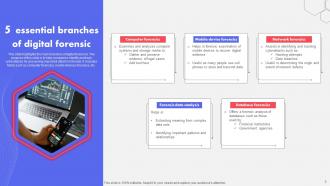
5 essential branches of digital forensic
-
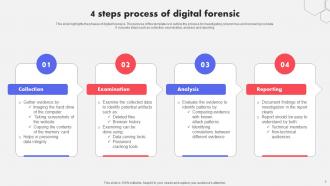
4 steps process of digital forensic
-
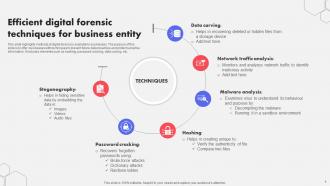
Efficient digital forensic techniques for business entity
-
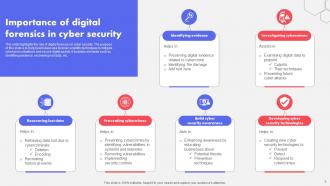
Importance of digital forensics in cyber security
-
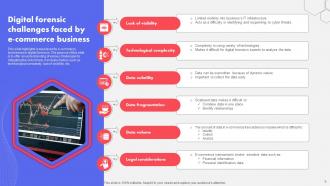
Digital forensic challenges faced by e commerce business
-
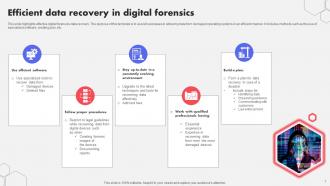
Efficient data recovery in digital forensics
-
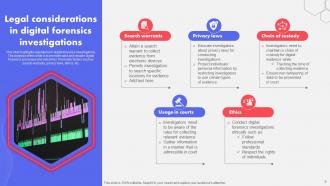
Legal considerations in digital forensics investigations
-
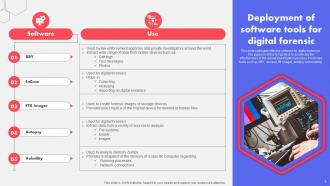
Deployment of software tools for digital forensic
-
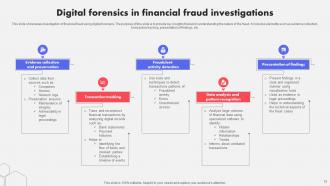
Digital forensics in financial fraud investigations
-
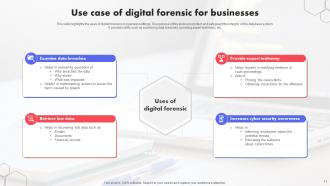
Use case of digital forensic for businesses
-
Icon for investigation of data breach with digital forensic
-

Thanks for watching
-

-

-

-

-

-

-

-

FAQs for Digital Forensic Powerpoint
So basically you're playing detective but with computers instead of fingerprints. First thing - don't touch anything until you've made forensic copies of everything. You're hunting for the who, what, when, and how of whatever cyber mess happened. Document everything properly because if this goes to court, sloppy work means your evidence gets tossed. Honestly, half the job is just not screwing up the chain of custody. Analyze the digital breadcrumbs, preserve what you find, then present it in a way that makes sense to people who barely know how to reset their WiFi.
Honestly, personal devices are so much easier to work with than enterprise stuff. You're just dealing with one person's data - their browser history, files, texts, whatever. Live imaging usually works fine too. But enterprise systems? Ugh, totally different story. Network logs everywhere, multiple servers, databases, tons of users with different access levels. The compliance side alone will make your head spin. Personal device cases might wrap up in a few hours if you know what you're doing. Enterprise investigations though? You'll be stuck for weeks minimum, sometimes months depending on how messy their setup is.
Dude, chain of custody is everything for digital evidence. Without it, your case falls apart even if you've got smoking gun proof. Document who touched what device and when - literally every handoff needs recording. I learned this the hard way watching prosecutors lose slam-dunk cases over sloppy paperwork. You track it from the second you grab that phone or laptop until it hits the courtroom. Miss one link? Defense attorney's gonna tear you apart. Short version: never break the chain, document everything obsessively.
You'll mostly deal with computer hard drives, phones, network logs, and cloud storage stuff. Email and social media are massive - honestly it's crazy how much people document their own lives online. Browser history, deleted files you can recover, system logs, file metadata... all gold mines. Two things that'll make your life way easier: document your chain of custody religiously from the start, and always make forensic images before you touch anything. Trust me on this - lawyers will grill you later about every step you took. Way better to have it all locked down from day one than scramble to explain gaps.
So basically, digital forensics is like playing detective after hackers hit your systems. You dig through what they did - how they got in, where they went, what they stole. Then you can actually fix those weak spots before someone else uses them. The data you collect becomes super useful for your security tools too, since they can watch for the same attack patterns later. Honestly, just having good forensic skills sometimes scares off attackers who know you'll catch their methods. Oh, and definitely start documenting your response process now - future you will be grateful when chaos hits.
Honestly, encrypted data is a nightmare to deal with. You can't access anything without the key, and suspects obviously won't cooperate. AES-256 is basically impossible to crack - brute force would take forever. Full disk encryption, secure messaging apps, encrypted cloud storage... it's all locked down tight. Memory dumps sometimes have the keys sitting there, which is lucky when it happens. Implementation flaws are another angle, but rare. Legal orders for decryption help sometimes, though not always. The whole thing's frustrating but that's kinda the point of encryption, right?
Look, digital forensics is your best friend here. You're basically building a timeline showing when files got accessed, copied, or moved around - and who did it. File metadata and network logs are gold. Email forensics is clutch since people love sending stolen stuff that way. Chain of custody matters big time though. Get forensic images of everything right away before someone starts deleting evidence (because they will). The tricky part? You need to prove intent, not just that someone accidentally copied files. Network activity logs usually tell the whole story if you know what you're looking for.
Okay so start with **Autopsy** and **FTK Imager** for disk stuff, plus **Wireshark** for network analysis. **Volatility** handles memory dumps really well. Getting clean forensic images is honestly where most people mess up first. If you've got money, **EnCase** and **Cellebrite** are what everyone uses professionally. But **SANS SIFT** workstation is solid and free - covers most cases you'll see. Oh and grab **HxD** for hex editing and **Timeline Explorer** for artifacts. Start with Autopsy and SIFT though. Free tools that'll handle like 80% of your work, and you can always upgrade later once you know what you're doing.
Yeah, cloud forensics is a total nightmare honestly. Data gets spread across servers in different countries, so you're not just dealing with one jurisdiction anymore. Can't simply image a drive like the old days. The evidence might be sitting in three different data centers with completely different laws. Cloud providers have their own retention rules too - they'll wipe stuff without warning you. Chain of custody becomes this whole mess since you're trusting their logs and timestamps. Oh, and definitely reach out to the provider ASAP. You'll want to know their preservation policies before everything gets auto-deleted on you.
Look, digital forensics is all about walking this weird tightrope. Privacy vs getting justice - you're basically rifling through someone's entire digital life looking for evidence. Pretty invasive stuff, honestly. Chain of custody is huge too since sloppy work means your evidence gets tossed. Stay objective though, don't let your gut feelings mess with the analysis. Oh and document literally everything you do - your methodology, every step. I can't stress that enough. Follow the protocols religiously because one screwup tanks the whole case and probably your career too.
So digital forensics is basically like being a detective after you've been hacked. First thing - start grabbing those logs right now, don't wait around because that evidence disappears fast. You can trace exactly what the hackers did, when they broke in, what files they touched. Honestly, it's pretty wild how much you can reconstruct from the digital breadcrumbs. The analysis shows you which vulnerabilities they used too, so you can actually fix the real problems. And if you end up dealing with lawyers or regulators later? You'll definitely need that paper trail.
Dude, mobile forensics has completely flipped everything upside down. These phones are basically encrypted fortresses now - way harder to crack than the old computer cases we used to handle. Plus there's just SO much more data. Location logs, app histories, messages across like 10 different platforms. And don't even get me started on how many devices each person carries now. Phones, tablets, smartwatches... it's nuts. The worst part? Software updates happen constantly so your tools become outdated fast. Honestly you'll need specialized training for this stuff because regular computer forensics won't help much anymore.
Honestly, AI and machine learning tools are crushing it right now - they'll churn through huge datasets way faster than doing it manually. Cloud forensics is pretty much mandatory since everyone's stuff is spread across like five different platforms. Crypto investigations are getting crazy sophisticated with blockchain analysis. Mobile extraction keeps evolving because phones update their security constantly (which is annoying but makes sense). Oh, and quantum computing could eventually break all our encryption methods... that's a fun thought to keep you up at night. You should probably get comfortable with at least one AI forensics platform soon.
Oh man, international digital forensics is such a headache. Different countries have completely different rules about data privacy and what counts as valid evidence. GDPR in Europe is super strict compared to US laws, for example. You'll run into issues with search warrants, MLATs for cross-border stuff - honestly the whole thing makes my brain hurt sometimes. What's legal in one place might get you in serious trouble somewhere else. Definitely talk to lawyers who know each country's rules before you start anything. Trust me on this one - better safe than screwed over by regulations you didn't know about.
Honestly, start with the technical stuff - Python, networking, computer systems. For certs, EnCE and CCE are solid, plus GCFA if you can swing it. SANS courses are crazy expensive but they're legit (definitely make your employer pay lol). Mobile forensics is massive right now, so get into that. You'll also want database skills and cloud storage knowledge. Oh and legal basics help since you might end up in court. Before dropping cash on expensive certs though, mess around with free tools like Autopsy first. Gets you actual hands-on experience.
-
I am so thankful for all of the templates I've found on your site. They have saved me hours every week and helped make my presentations come alive. Keep up with these amazing product releases!
-
Placing an order on SlideTeam is very simple and convenient, saves you a lot of your time.